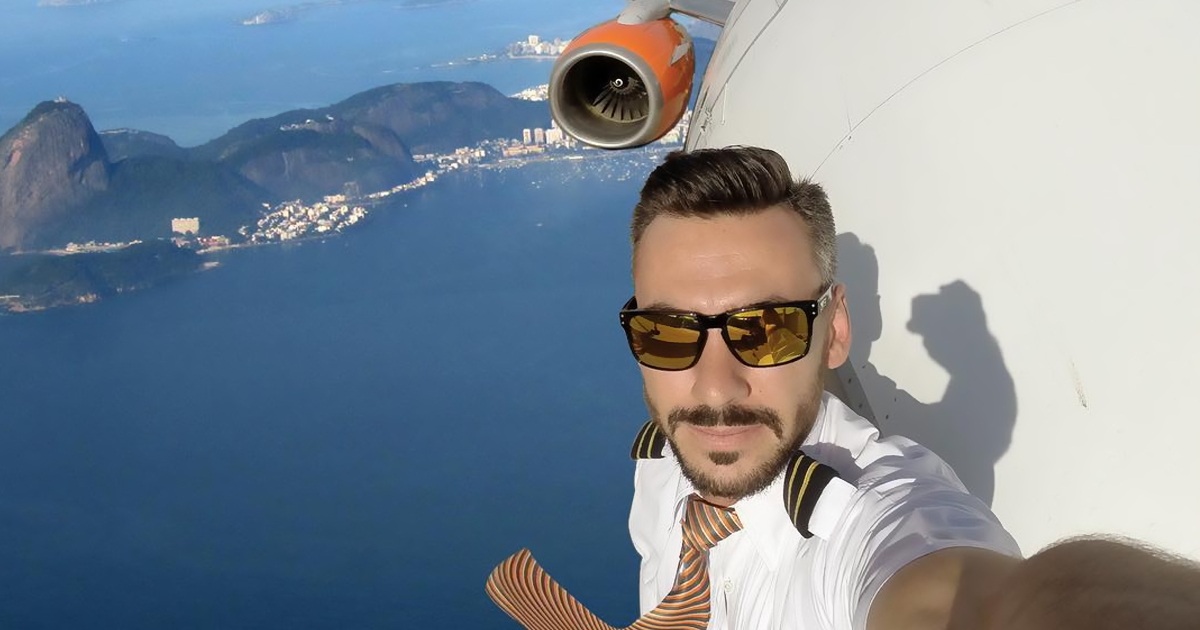
At first glance, the photos looked like the kind of thing that makes airline passengers reconsider every life choice that led them to Seat 24B. A pilot appeared to be leaning out of a cockpit window mid-flight, snapping selfies like he was taking a scenic drive instead of operating a machine moving hundreds of miles per hour. The internet, naturally, did what the internet does best: gasped, shared, panicked, and appointed itself chief aviation investigator.
But the real story behind those viral pilot mid-flight selfies is far less terrifying and a lot more interesting. The images that sparked the uproar were not evidence of a reckless pilot turning the flight deck into a social media studio. They were edited composites designed to look outrageous. In other words, what went viral was not a real in-flight stunt but a very convincing illusion with excellent lighting and a mischievous understanding of internet psychology.
That does not mean the story is trivial. Quite the opposite. The moment says a lot about how quickly scary-looking aviation content spreads, why cockpit selfies trigger such a strong reaction, and where the line really sits between harmless image-making and genuine cockpit distraction. So let’s separate the turbulence from the truth.
The Photo That Made Everyone Grip the Armrest
The viral images centered on Brazilian pilot Daniel Centeno, whose social posts seemed to show him half outside the cockpit while cruising through postcard-worthy skies. To the average viewer, the photos looked wildly unsafe. To aviation people, they looked suspicious for a much simpler reason: physics had apparently taken the day off.
His hair was suspiciously calm. Reflections did not match the supposed moment. Some backgrounds appeared too perfect, too repeated, or too clean. And once the images were more closely examined, the explanation became clear. These were manipulated pictures, not documentary proof that a pilot had turned a commercial jet into the world’s least appropriate selfie booth.
That distinction matters. Viral pilot photos often get interpreted as direct evidence of what is happening in the cockpit right now, in real time, with your luggage still circling somewhere in the emotional baggage claim of your mind. But in this case, the “danger” was mostly visual theater. The photos were designed to provoke awe, confusion, and maybe a few comments from strangers typing in all caps. Mission accomplished.
Why People Believed the Mid-Flight Selfies So Fast
Because the image was built to trigger a gut reaction
Scary aviation images do not have to be true to feel true. A cockpit is already a high-stakes setting in the public imagination. Add a pilot, a selfie angle, some clouds, and the suggestion of rule-breaking, and suddenly the image does all the storytelling before facts even show up to work.
That is part of why these viral pilot selfies traveled so quickly. They landed in the sweet spot where spectacle beats nuance. Most viewers do not know which cockpit windows open, what phases of flight are most sensitive, or how flight deck rules differ between airlines, private pilots, corporate operations, and training flights. So when a photo screams danger, people tend to hear danger, too.
Aviation looks dramatic even when it is boring
And let’s be honest: aviation has a branding problem when it comes to appearances. A perfectly normal cockpit photo can already look intense. Pilots are surrounded by glass, instruments, cloud layers, flashing light, and views that make ordinary jobs feel unfairly grounded. Even routine flight deck imagery looks cinematic. That makes it easier for a fake or exaggerated image to slip past people’s skepticism.
In other words, the internet saw a dramatic photo, added a little panic seasoning, and served it hot.
Not All Pilot Selfies Are the Same
This is where the story gets much more useful. The fake image may not have been a real safety threat, but the broader question people asked was still fair: can pilots take photos in the cockpit at all?
The answer is not a simple yes or no. It is more like: sometimes, under certain conditions, with the right equipment, policies, and timing, but absolutely not whenever someone feels like becoming the main character over Kansas.
The sterile cockpit rule is the big dividing line
In U.S. aviation, the “sterile cockpit” rule exists to keep pilots focused during critical phases of flight. That typically means taxi, takeoff, landing, and operations below 10,000 feet. During those periods, nonessential activity is off-limits. No casual chatter, no unnecessary fiddling, no side quests, and definitely no “hold on, this sunset would crush on Instagram.”
That rule exists for a reason. Critical phases of flight are high-workload moments. Small distractions can grow teeth fast. Even something that seems minor, like looking down, adjusting a device, or talking about something unrelated, can steal attention at exactly the wrong time.
Commercial airline rules are stricter than many people realize
For airline operations under Part 121, U.S. rules also restrict personal use of wireless devices on the flight deck while the aircraft is being operated. That means the modern smartphone is not just a camera. It is a personal electronic device with communication capability, which raises an entirely different regulatory issue.
This is why discussions about cockpit selfies often get muddled. There may not be a single simple rule that says “photos are evil,” but the combination of distraction rules, duty-station rules, sterile cockpit requirements, airline policy, and equipment restrictions makes the answer highly context-dependent.
So yes, a dramatic photo from a cockpit can be totally improper. But another cockpit image, taken with approved equipment during a noncritical phase under controlled procedures, may be completely acceptable. Same sky. Very different story.
How Some Cockpit Photography Can Be Done Safely
One of the most useful corrections to the panic narrative is that some airlines and pilot programs have allowed tightly controlled cockpit photography during nonessential phases of flight. The key phrase there is “tightly controlled.” We are not talking about a captain free-handing a selfie stick over the glare shield like a cruise director with a private pilot certificate.
In controlled setups, cameras may be mounted rather than handheld. Captures may be timed rather than manually snapped. The activity may be limited to cruise, when workload is lower and procedures allow it. There may also be internal approval, training, and equipment guidance layered on top. In short, the image can be part of a system rather than an impulse.
That is an important distinction for readers and travelers. The existence of cockpit imagery online is not, by itself, proof of dangerous behavior. Some of it is carefully managed. Some of it is taken when the pilot is not at the controls. Some of it comes from noncommercial operations where different rules apply. And some of it is edited so heavily that it belongs in the fiction aisle.
Where the Real Risk Begins
Here is the part where the article puts the snacks down and gets serious. While the specific viral selfies were not real in-flight stunts, distraction in the cockpit is absolutely a real safety issue. Investigators and safety experts have said so for years, and not in a vague, hand-wavy “phones are bad” way. They have the reports, the incidents, and the cautionary language to back it up.
Distraction is not just about selfies
One reason this topic matters is that distraction rarely arrives wearing a T-shirt that says HELLO, I AM THE PROBLEM. It often looks ordinary. A quick glance. A head-down task. A nonessential conversation. A device used for one second too long. A task that seems harmless because nothing bad happened the last ten times.
NASA’s Aviation Safety Reporting System has documented how interruptions and distractions contribute to errors, including altitude deviations, missed restrictions, and failures in monitoring. Those findings are useful because they show the issue is not limited to social media vanity. A distracted cockpit is a distracted cockpit, whether the trigger is a phone, paperwork, a conversation, or some other competing task.
There has been at least one fatal selfie-linked crash
This is also why it would be irresponsible to shrug off the whole subject as “internet drama.” In 2015, investigators said a pilot taking selfies likely contributed to a fatal crash of a small plane near Denver. That was not a commercial airline case, but it was a stark reminder that attention is a finite resource in flight. When it gets diverted, the consequences can be immediate and unforgiving.
The NTSB has separately warned that nonoperational use of portable electronic devices can divert attention from activities necessary for safe operation, both in the air and on the ground. That warning may not sound flashy, but in aviation, boring language often carries the loudest meaning.
Newer concerns show the problem is not going away
Recent industry reporting has kept the issue alive, with concerns about pilots filming videos during key phases of operation and even cases in which recording equipment reportedly interfered with cockpit controls. That does not mean every cockpit clip online is reckless. It does mean the industry is still grappling with a very modern tension: the urge to document versus the duty to focus.
Social media rewards visibility. Aviation rewards discipline. Those are not always natural roommates.
What Passengers Should Actually Take From This Story
If you are a traveler, the most reassuring truth here is also the least viral one. Modern airline safety is built on layers: rules, checklists, sterile cockpit procedures, monitoring, crew coordination, company policy, and regulatory oversight. One scary image on social media does not override that system.
At the same time, passengers are not wrong to care. Public trust in pilots depends not just on safety, but on visible professionalism. Even when a photo is legal or staged, people judge it emotionally. A cockpit is not like a beach, a coffee shop, or your cousin’s suspiciously overfiltered engagement shoot. It represents responsibility. So when images from that space look careless, the public reacts.
That reaction may be messy, but it is not irrational. Flying requires trust. Trust does not love ambiguity.
The Bigger Lesson: Viral Does Not Mean Accurate
The Daniel Centeno saga ended up being less a story about a daredevil pilot and more a case study in how internet visuals hijack common sense. The fake cockpit selfies looked outrageous enough to be shared, believable enough to confuse people, and aviation-flavored enough to trigger real anxiety. It was a perfect storm of aesthetics, assumptions, and social media velocity.
But the deeper lesson is more valuable than the debunking itself. A photo can be fake and still point toward a real issue. In this case, the photo was misleading, but the conversation it sparked touched on a genuine safety topic: cockpit distraction. That is why the most honest takeaway is not “everyone overreacted.” It is “the image was false, but the concern behind the reaction was understandable.”
Or, put more simply: the pilot in the viral image was not turning the flight deck into a selfie carnival, but real aviation professionals still have good reason to treat cameras and devices with caution. The internet got the facts wrong and the instinct half right. That is actually pretty on-brand.
Final Approach
Pilot mid-flight selfies went viral because they looked like a nightmare. They were not. The images were manipulated, the apparent danger was exaggerated, and the sky did not briefly become a lawless photo studio. But the backlash revealed something worth paying attention to: people want reassurance that the people flying the plane are, in fact, flying the plane.
That reassurance does not come from pretending cameras never belong near aviation. It comes from context, discipline, and rules. A staged or approved cockpit image taken under proper conditions is one thing. A distracted pilot chasing content during a critical phase of flight is another thing entirely. The difference between those two scenarios is the difference between harmless spectacle and real risk.
So no, those famous selfies were not as risky as many thought. But the broader question they raised still matters. In aviation, the coolest image in the world is never worth more than full attention on the controls. The clouds can wait. Your followers can absolutely wait. And if the internet has to survive five extra minutes without a dramatic cockpit shot, it will somehow find the strength.
Related Experiences: Why This Story Hits People So Hard
One reason stories like this spread so quickly is that almost everyone who flies has had a moment of quiet vulnerability on an airplane. You board confidently, stash your bag like a seasoned traveler, and then, somewhere between taxi and takeoff, your brain politely whispers, “By the way, we are in a metal tube trusting strangers and math.” That is why a viral image of a pilot apparently clowning around mid-flight lands with such force. It taps straight into the part of travel that already feels slightly miraculous and just a tiny bit terrifying.
Many passengers have had the experience of seeing something online before a trip and carrying that feeling with them to the airport. It could be turbulence videos, near-miss headlines, or some dramatic cockpit clip stripped of context. The image sits in the mind like an uninvited travel companion. Then you hear a thump during boarding, someone jokes about turbulence, and suddenly your imagination is writing a disaster movie on a very low budget. In that emotional setting, a fake or exaggerated pilot selfie does not feel like internet fluff. It feels personal.
There is also the experience of aviation enthusiasts, who often see this topic from the opposite direction. Many avgeeks genuinely love cockpit photography because it offers a rare look at a highly skilled profession. Sunrise over a cloud deck, a city grid at dusk, lightning far off on the horizon, the clean geometry of a runway lined up at dawn, all of that can inspire awe rather than fear. For those fans, a cockpit image can deepen respect for pilots and remind people how much precision goes into each flight. That is why debates over pilot selfies are so heated. One person sees artistry and access. Another sees distraction and danger. Both are reacting to the same image, but bringing very different experiences to it.
Pilots and instructors have their own version of this experience, too. In aviation training, people learn early that distractions are sneaky. They do not always arrive as obvious recklessness. Sometimes the distraction is a checklist done out of order, a conversation that lasts too long, or a device that steals just enough attention to matter. Ask enough pilots and many will tell you some variation of the same lesson: flying punishes misplaced attention with almost rude efficiency. That culture of discipline is one reason some professionals cringe at social-media-friendly cockpit behavior even when no regulation has technically been broken. They know how thin the margin can feel when workload spikes unexpectedly.
Then there is the experience of everyday internet users who have grown tired of being emotionally manipulated by viral content. Stories like this feel familiar because they follow a pattern: shocking image, instant outrage, delayed correction, and then a collective shrug once the truth finally catches up. By that point, the photo has already done its job. It has hijacked attention. In that sense, the pilot selfie story is not just about aviation. It is about modern media habits. People are learning, often the hard way, that dramatic visuals deserve a second look before they earn a first panic.
That is why this topic resonates beyond one fake image. It sits at the intersection of trust, fear, professionalism, and the internet’s endless appetite for spectacle. We want pilots to be calm, competent, and boring in the best possible way. We want social media to be entertaining but not misleading. And we want the truth before our heart rate gets involved. Those are very human expectations, which is exactly why a supposedly dangerous mid-flight selfie could go viral in the first place.