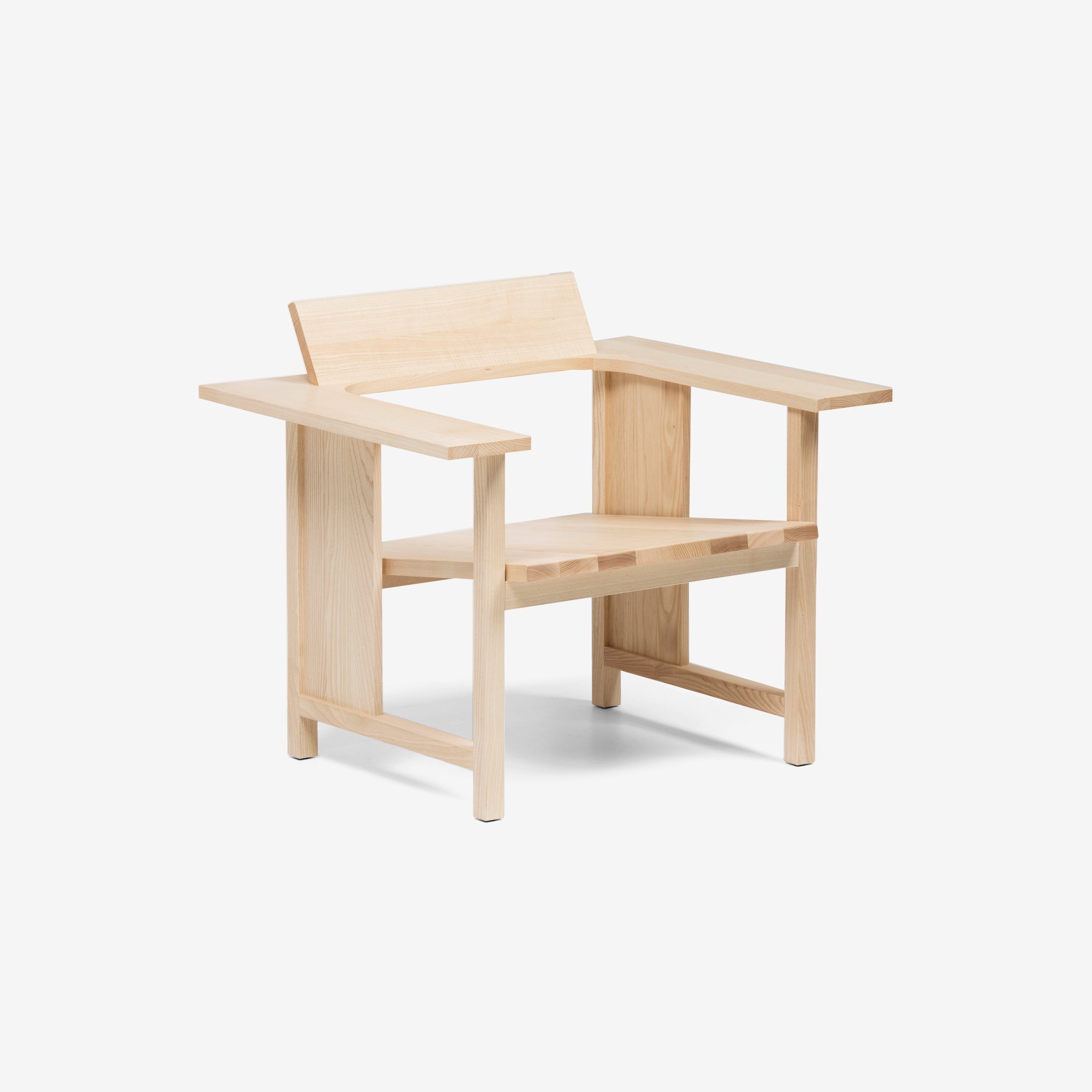
Some chairs enter a room politely. Others clear their throat, adjust the lighting, and quietly announce that the room has been underperforming. Donald Judd-inspired minimal wooden chairs belong to the second group. They are not flashy. They do not have swooping arms, tufted cushions, or legs that look like they trained for a marathon. Instead, they rely on planes, proportions, honest wood, and the radical confidence of not trying too hard.
The phrase “Donald Judd-inspired” does not mean “copy the master and hope nobody notices.” In fact, authentic Donald Judd furniture is a serious design category of its own, made to original specifications and closely tied to the artist’s spaces in New York and Marfa, Texas. The better way to understand the influence is through principles: flat boards, clear structure, useful geometry, visible material, and a refusal to decorate what already works. In other words, these chairs are minimal, but they are not empty. They have opinions. Very straight-edged opinions.
Below are five favorite minimal wooden chairs that echo the Judd spirit without pretending to be Judd furniture. Some are sculptural lounge pieces. Some are quiet dining or occasional chairs. All of them share the same design language: wood first, form second, fuss never.
What Makes a Chair “Donald Judd-Inspired”?
Donald Judd began designing furniture out of necessity, not as a side hustle for stylish people with unusually expensive coffee tables. His furniture grew from practical needs in his living and working spaces, especially at 101 Spring Street in New York and later in Marfa. By the 1980s, he had developed a vocabulary of beds, desks, shelves, benches, tables, and chairs that looked simple at first glance but became more interesting the longer you looked.
Judd’s famous Chair 84 is a helpful reference point. It used flat boards and a box-like structure, with subtle variations beneath the seat: shelves, slants, recesses, and dividers. The design was direct, but not lazy. It proved that a chair could be both furniture and spatial argument. Judd himself made an important distinction: a chair is a chair, not a sculpture wearing a seatbelt. That idea matters because it keeps the discussion grounded. Good minimal furniture must still do its job.
Key Design Traits to Look For
- Planar construction: Broad, flat surfaces instead of fussy curves.
- Honest materials: Pine, oak, ash, walnut, spruce, plywood, or other woods allowed to show their character.
- Geometric clarity: Rectangles, boxes, planks, wedges, and intersecting planes.
- Functional presence: The chair should look architectural, but it still needs to support a human body.
- Visual restraint: No ornament doing cartwheels for attention.
1. Plane Furniture Plank Chair by Michael Boyd
The Plane Furniture Plank Chair by Michael Boyd may be the most literal spiritual cousin in this group. It is slim, planar, and almost diagrammatic. The chair looks as if someone took the basic idea of “seat plus back” and reduced it until only the essential gesture remained. That could sound cold, but the result is surprisingly warm because the material does so much of the talking.
The Plank Chair is not a cloud. It is not trying to be a nap chair, a movie-night throne, or a place to disappear under a blanket with soup. Its purpose is sharper. It works as an occasional chair, a sculptural accent, or a quiet punctuation mark in a room that already has softer furniture. Think of it as the chair equivalent of a perfectly placed comma: small, precise, and weirdly powerful.
Why It Works
The Plank Chair captures the Judd-inspired idea that form can be spare without becoming boring. Its narrow profile makes it useful in entryways, gallery-like living rooms, bedrooms, and office corners where a bulkier chair would feel like an overenthusiastic guest. The strong vertical and horizontal lines also make it easy to pair with simple wood tables, built-in shelving, or concrete floors.
Best for: design collectors, small-space minimalists, and anyone who believes a chair can be both furniture and a very quiet mic drop.
2. Mattiazzi Clerici Lounge Chair by Konstantin Grcic
Konstantin Grcic’s Clerici Lounge Chair for Mattiazzi takes minimal wooden seating in a calmer, more monastic direction. The design has been described through ideas of serenity, simplicity, and traditional form refined to a high level. That makes sense: it looks like a chair that has meditated longer than most of us have owned our email addresses.
The Clerici Lounge Chair uses solid wood construction and generous proportions. Compared with some Judd-inspired plank chairs, it is more relaxed and inhabitable. It does not abandon geometry; it softens it. The chair feels appropriate for a reading room, a museum lounge, a pared-back living space, or a bedroom corner where you want quiet but not austerity.
Why It Works
The beauty of Clerici is that it understands restraint without turning comfort into a casualty. The frame has weight and presence, but the proportions invite actual sitting. This is important because some minimal chairs look stunning until you spend twenty minutes in them and begin negotiating with your spine. Clerici avoids that trap by balancing architectural mass with human scale.
Choose it if you want the Judd-inspired language of solid wood and clear geometry, but with a softer, lounge-friendly personality. It is less “strict cube in the desert” and more “quiet afternoon in a very well-edited room.”
3. Frama Studio Atelier Chair
The Frama Studio Atelier Chair is another strong example of box-frame minimalism. Inspired by traditional framed seating silhouettes, it uses spruce, linen, and foam to create a chair that feels direct, modest, and quietly stylish. It has the kind of simplicity that makes you think, “I could draw that,” right before realizing you absolutely could not design it as well.
What makes the Atelier Chair compelling is its blend of utility and atmosphere. It is minimal, but not severe. The cushion gives it softness, while the wooden frame keeps the design grounded and architectural. It can stand alone as an accent chair or sit against a wall where its rectangular frame becomes part of the room’s composition.
Why It Works
The Atelier Chair succeeds because it does not treat minimalism as a dare. It is not asking how little comfort a person can tolerate in the name of good taste. Instead, it uses a straightforward frame and natural materials to create a chair that feels calm, functional, and easy to place.
This is a smart pick for interiors that mix Scandinavian restraint, Japanese-inspired simplicity, and American modernist warmth. It works especially well with limewashed walls, pale wood floors, raw plaster, soft wool rugs, and ceramics that look like they came from a tasteful person’s vacation in a coastal village.
4. Kalon Studios Rugosa Chair
Kalon Studios’ Rugosa Chair is broader, softer, and more lounge-oriented than the sharper plank chairs on this list. Still, it belongs in the conversation because of its use of broad wooden planks, straightforward form, and honest material expression. The Rugosa Chair has the confidence of a minimal wooden chair and the hospitality of a weekend house with good bread on the counter.
The chair is made with substantial wood elements and upholstered cushions, with versions in woods such as sugar pine, black walnut, cedar, white oak, and ash. Its proportions are designed for long reading sessions, relaxed conversation, and the kind of sitting where one leg inevitably gets tucked underneath you despite every posture expert’s objections.
Why It Works
The Rugosa Chair expands the definition of Judd-inspired minimalism. It is not a strict box chair, but it shares the same devotion to clarity, material, and proportion. Its planks give it a strong visual structure, while the cushions make it far more forgiving for everyday lounging.
This is the chair for someone who loves minimalist design but does not want their living room to feel like a beautifully photographed waiting room for philosophers. It brings warmth, softness, and a touch of coastal ease without slipping into overdecorated territory.
5. Roll & Hill Three Plane Chair by Campagna
The Three Plane Chair by Campagna for Roll & Hill might be the most geometrically playful of the five. It is built from simple wooden forms that intersect to support the body: a circle, a rectangle, and an irregular quadrilateral. That sounds like the beginning of a design-school riddle, but the result is surprisingly approachable.
The chair’s appeal is right there in the name. It is about planes meeting planes. The shape is rigid and minimal, yet the wood keeps it from feeling clinical. Available in wood species such as white oak and black walnut, it bridges sculpture, craft, and usable seating with an almost graphic clarity.
Why It Works
The Three Plane Chair is ideal for people who want a statement chair without visual shouting. It has enough geometry to anchor a room, but it does not need dramatic upholstery or decorative hardware to make its point. It is also compact enough to work as an occasional chair, entry chair, gallery-style accent, or pair beside a low table.
Best for: modern interiors, art-forward apartments, design studios, and anyone who has ever looked at a chair and thought, “Nice, but could it be more like a beautiful wooden theorem?”
How to Choose the Right Minimal Wooden Chair
Minimal wooden chairs look simple, but choosing one requires more thought than clicking “add to cart” while your coffee is still hot. Because these chairs use fewer visual tricks, every detail matters more: scale, wood tone, joinery, comfort, finish, and where the chair will live.
Match the Chair to the Job
Before falling in love with a chair’s silhouette, decide what you need it to do. A Plank Chair or Three Plane Chair may be perfect as a sculptural accent, but a lounge chair like the Rugosa or Clerici is better for long reading sessions. Dining and desk chairs need upright support. Lounge chairs need depth. Occasional chairs mostly need to look fantastic and provide a place to sit while tying your shoes.
Pay Attention to Wood Tone
Wood is never just “brown.” Pine can feel pale and casual. Ash is clean and modern. Oak brings durability and familiar warmth. Walnut reads darker and more formal. Spruce can feel light, Nordic, and humble. When choosing a minimal wooden chair, consider nearby floors, tables, cabinetry, and trim. Matching everything perfectly is not necessary; in fact, it can look a little showroom-ish. Aim for harmony, not a wood-tone hostage situation.
Consider Comfort Honestly
Minimalism is not an excuse for suffering. If you plan to sit for hours, look for cushions, a supportive back angle, or a generous seat. If the chair is mostly visual, a more rigid form may be fine. A good rule: if the chair will be used daily, comfort gets a vote. If it is used occasionally, sculpture can speak a little louder.
Styling Donald Judd-Inspired Wooden Chairs at Home
The easiest way to ruin a minimal wooden chair is to over-style it. These pieces need breathing room. They are at their best when placed where their edges, shadows, and proportions can be seen. Think negative space, natural light, and restrained surroundings.
Use One as a Sculptural Accent
A single minimal wooden chair can transform an empty corner. Place it near a floor lamp, a low stack of books, or a simple side table. Avoid piling it with seven pillows, a throw blanket, a tote bag, and your emotional support laundry. Let the chair be the chair.
Pair with Textural Warmth
Because Judd-inspired chairs can be visually austere, they benefit from tactile contrast. Try wool rugs, linen curtains, clay vessels, handmade ceramics, leather, raw plaster, or woven baskets. The goal is not to decorate the chair but to give it a room that understands its vocabulary.
Let Repetition Do the Work
If you use multiple minimal wooden chairs around a dining table, repetition becomes the design feature. A row of simple chairs can create rhythm and calm. Pair them with a heavy wood table for a strong architectural effect, or use them with a lighter table to keep the room airy.
Why These Chairs Still Feel Fresh
The ongoing popularity of Donald Judd-inspired minimal wooden chairs says something about how many people are tired of furniture that tries too hard. In a world full of visual noise, there is relief in a chair that has one job and performs it with discipline. These chairs are not trend-proof because they are boring; they are trend-resistant because they are clear.
They also fit many current interiors: warm minimalism, Japandi, modern rustic, gallery-style lofts, desert modern, Scandinavian design, and even traditional homes that need one crisp counterpoint. A minimal wooden chair can make a room feel more intentional without demanding a total personality transplant.
Experience Notes: Living With Donald Judd-Inspired Minimal Wooden Chairs
Living with a Donald Judd-inspired wooden chair is different from admiring one online. In photos, the chair is pure composition: planes, shadows, wood grain, and perfect negative space. In real life, it has to deal with humans, which is where things get interesting. You notice how the chair changes the rhythm of a room. It does not just fill space; it organizes it. Put one in a corner, and suddenly that corner looks intentional instead of forgotten. Place one beside a low table, and the room starts whispering words like “gallery,” “calm,” and “please stop buying random throw pillows.”
The first experience is usually visual. These chairs create lines that make surrounding clutter look even more suspicious. A minimal wooden chair has a funny way of holding everything accountable. The stack of magazines nearby looks either charming or chaotic. The lamp looks either sculptural or like it wandered in from another apartment. This is one of the practical benefits of strong minimal furniture: it teaches the room to behave.
The second experience is tactile. Wood has temperature, grain, and small irregularities that make it feel alive. Even a highly refined chair has a material presence that metal or plastic rarely matches. Pine may feel honest and humble. Walnut feels grounded and serious. Oak is dependable, like the friend who brings tools when everyone else brings opinions. Over time, the chair becomes less of an object and more of a familiar landmark in the home.
Comfort depends on the design. A strict plank chair is best for shorter sitting, conversation, entryway use, or visual impact. A cushioned piece like the Rugosa or Atelier Chair is easier to live with every day. This is where buyers should be honest. If you want a chair for two-hour reading sessions, choose one with generous proportions and cushioning. If you want a chair that makes your living room look edited and intelligent, a more sculptural piece can do the job beautifully.
Maintenance is refreshingly simple but not nonexistent. Minimal wooden chairs show dust, scuffs, and sunlight exposure in direct ways because there is nowhere for wear to hide. Use felt pads under the legs, avoid placing the chair in harsh direct sun for long periods, and clean it according to the maker’s finish instructions. Do not treat a carefully finished chair like a cutting board with legs. Wood rewards gentle care.
The biggest surprise is emotional. A good minimal wooden chair can make a home feel quieter. Not empty, not cold, just quieter. It gives the eye a place to rest. It proves that useful objects can be beautiful without shouting about it. In a culture where many products are designed to grab attention immediately, a Judd-inspired chair offers a slower pleasure. It asks you to look, sit, notice, and then maybe remove three unnecessary things from the room. Honestly, that might be the real luxury.
Conclusion
Donald Judd-inspired minimal wooden chairs remain compelling because they reduce furniture to its most essential conversation: material, form, proportion, and use. The Plane Furniture Plank Chair, Mattiazzi Clerici Lounge Chair, Frama Studio Atelier Chair, Kalon Studios Rugosa Chair, and Roll & Hill Three Plane Chair each interpret that conversation differently. Some are severe and sculptural. Others are soft and livable. All of them prove that minimal wooden chairs can have character without ornament, warmth without clutter, and presence without drama.
The best choice depends on how you live. For a visual statement, choose a strong planar chair. For daily comfort, choose a lounge-friendly design with cushions and generous proportions. For a room that needs focus, choose wood, geometry, and restraint. Minimalism, at its best, is not about owning less for the sake of less. It is about giving more attention to what remains.