Ounces look simple until they stroll into your kitchen wearing two different hats. One minute an ounce means weight, the next minute it means volume, and suddenly your brownie batter is behaving like wet cement. The good news? Learning how to measure ounces is not hard once you understand one key rule: ounces and fluid ounces are related by name, not by job description.
In everyday American cooking, baking, nutrition labels, shipping, and meal prep, ounces appear everywhere. A recipe may ask for 8 ounces of pasta, 2 ounces of chocolate, 4 fluid ounces of milk, or a 1-ounce serving of nuts. Those are not all measured the same way. Some need a kitchen scale. Others need a liquid measuring cup. Some can be converted with tablespoons. Others should never be guessed unless you enjoy culinary suspense.
This guide explains how to measure ounces accurately, how to tell weight ounces from fluid ounces, what tools to use, common conversions, and how to avoid the measurement mistakes that make cookies tough, sauces watery, and smoothies big enough to qualify as a small pond.
What Is an Ounce?
An ounce, abbreviated as oz, is most commonly used in the United States as a unit of weight. When a package says “net wt. 12 oz,” it is talking about how heavy the food is, not how much space it takes up. A standard U.S. weight ounce is about 28.35 grams. That means if a recipe calls for 4 ounces of cheese, the most accurate method is to weigh the cheese on a kitchen scale until the display reads 4 oz.
A fluid ounce, abbreviated as fl oz, measures volume. Volume means how much space something occupies. A fluid ounce is used for liquids such as water, milk, oil, broth, juice, cream, or vanilla extract. One U.S. fluid ounce equals about 29.57 milliliters. In kitchen terms, 8 fluid ounces equals 1 cup.
Ounces vs. Fluid Ounces: The Difference That Saves Recipes
The most important lesson in measuring ounces is this: ounces measure weight, while fluid ounces measure volume. A cup of water is 8 fluid ounces by volume, and it weighs close to 8 ounces by weight. That convenient overlap is why people get confused. Water is the friendly exception, not the universal rule.
Dry ingredients vary widely. One cup of all-purpose flour may weigh around 4.25 to 4.5 ounces depending on the brand and measuring method. One cup of chocolate chips weighs more. One cup of powdered sugar weighs differently again. So when someone says, “There are 8 ounces in a cup,” pause before trusting that sentence with your cake. It is true for fluid ounces in a measuring cup, but not automatically true for dry ingredients measured by weight.
Simple Rule
- Use a scale when a recipe lists ounces for dry or solid ingredients.
- Use a liquid measuring cup when a recipe lists fluid ounces.
- Use measuring spoons for small liquid amounts, such as 1 tablespoon or 2 teaspoons.
- Do not assume 1 cup equals 8 ounces by weight unless the ingredient conversion confirms it.
Tools You Need to Measure Ounces Correctly
You do not need a laboratory, a chef’s coat, or a kitchen that looks like a cooking show set. You only need the right tool for the kind of ounce you are measuring.
1. Digital Kitchen Scale
A digital kitchen scale is the best tool for measuring weight ounces. It is especially useful for flour, sugar, butter, cheese, pasta, meat, nuts, chocolate, coffee, and meal-prep portions. Choose a scale that can switch between ounces and grams and has a tare or zero button.
The tare button is the quiet hero of accurate measuring. Place your bowl on the scale, press tare, and the scale resets to zero. Then add your ingredient until you reach the required ounce amount. The bowl’s weight disappears from the calculation, as if by polite kitchen magic.
2. Liquid Measuring Cup
Use a clear glass or plastic liquid measuring cup for fluid ounces. These cups usually have ounce, cup, and milliliter markings on the side. They also have a spout, which helps you pour without redecorating the counter.
For the best result, place the measuring cup on a flat surface, pour in the liquid, and bend down so the line is at eye level. Looking from above can make the amount seem higher or lower than it really is. That tiny viewing angle can be the difference between silky pancake batter and pancake soup.
3. Dry Measuring Cups
Dry measuring cups are designed to be filled to the top and leveled off. They are useful when a recipe calls for cups of dry ingredients, not ounces by weight. If a recipe says “1 cup flour,” use a dry measuring cup. If it says “4 ounces flour,” use a scale.
4. Measuring Spoons
Measuring spoons are helpful for small amounts. One tablespoon equals 0.5 fluid ounces, so 2 tablespoons equal 1 fluid ounce. This is useful for measuring small quantities of extracts, oils, citrus juice, syrup, or sauces.
How to Measure Ounces by Weight
When a recipe calls for ounces of a solid or dry ingredient, measure by weight. Here is the clean, accurate method:
- Place a bowl, plate, or container on the digital kitchen scale.
- Press the tare or zero button.
- Set the scale to ounces.
- Add the ingredient slowly.
- Stop when the display reaches the required number of ounces.
For example, if a recipe calls for 6 ounces of shredded cheese, put a bowl on the scale, zero it, and add cheese until the display reads 6 oz. Do not rely on “one big handful,” because hands are not standardized measuring equipment, no matter how confident they look.
Example: Measuring 8 Ounces of Pasta
Dry pasta is best measured by weight. Place a bowl on the scale, press tare, and add pasta until it reads 8 oz. This is much more accurate than guessing based on a cup, especially because different pasta shapes take up different amounts of space. Eight ounces of spaghetti does not sit in a cup the same way 8 ounces of penne does.
Example: Measuring 4 Ounces of Meat
For raw chicken, beef, fish, or turkey, use a kitchen scale. Place a plate or food-safe container on the scale, zero it, and add the meat until it reaches 4 oz. This is useful for nutrition tracking, meal planning, and cooking consistent portions.
How to Measure Fluid Ounces
Fluid ounces are easier to measure because most liquid measuring cups show them directly. Here is the proper method:
- Choose a liquid measuring cup with fluid ounce markings.
- Set it on a level surface.
- Pour the liquid slowly.
- Check the measurement at eye level.
- Stop when the bottom of the liquid curve, called the meniscus, meets the correct line.
If you need 4 fluid ounces of milk, pour milk into the cup until it reaches the 4 fl oz line. If your cup only has cup markings, remember that 4 fluid ounces equals 1/2 cup.
Common Fluid Ounce Conversions
| Measurement | Equivalent |
|---|---|
| 1 fluid ounce | 2 tablespoons |
| 2 fluid ounces | 1/4 cup |
| 4 fluid ounces | 1/2 cup |
| 8 fluid ounces | 1 cup |
| 16 fluid ounces | 1 pint or 2 cups |
| 32 fluid ounces | 1 quart or 4 cups |
| 128 fluid ounces | 1 gallon |
How to Measure Ounces Without a Scale
Measuring weight ounces without a scale is less precise, but you can use reliable reference conversions when accuracy is not critical. This works better for everyday cooking than for baking. Soups, sauces, stir-fries, and casseroles forgive small measurement differences. Cakes and breads? Not so much. They keep receipts.
If you do not have a scale, check whether the recipe or ingredient package provides a cup-to-ounce conversion. For example, many baking references list all-purpose flour at about 4.25 to 4.5 ounces per cup, depending on method. Shredded cheese, nuts, oats, cocoa powder, and brown sugar all have different weights per cup.
Approximate Dry Ingredient Examples
| Ingredient | Approximate Weight for 1 Cup | Best Measuring Method |
|---|---|---|
| All-purpose flour | About 4.25–4.5 oz | Spoon into cup, level, or weigh |
| Granulated sugar | About 7 oz | Scoop and level, or weigh |
| Butter | 8 oz per cup | Use wrapper markings or scale |
| Chocolate chips | About 6 oz per cup | Measure by weight for baking |
| Water | About 8 oz per cup | Use liquid measuring cup |
These examples show why “ounces” can be tricky. A cup of flour and a cup of water occupy the same volume, but they do not weigh the same. That is why serious bakers love scales: they remove the mystery and the accidental flour avalanche.
How to Measure Ounces of Flour
Flour deserves its own section because it is the drama queen of measurement. It compacts easily, meaning one person’s cup of flour can weigh much more than another person’s cup. If you scoop flour directly from the bag with a measuring cup, you may pack in extra flour and end up with dry, dense baked goods.
The most accurate way to measure flour in ounces is with a digital scale. Place the bowl on the scale, tare it, and add flour until you reach the ounce amount in the recipe. If the recipe gives cups instead of ounces, use the spoon-and-level method: fluff the flour, spoon it lightly into the measuring cup, and level it with a straight edge.
Do Not Pack Flour
Flour should not be pressed, shaken, or tapped into the cup unless a recipe specifically says so. Packing flour is like inviting extra guests to dinner without warning the recipe. The structure changes, the moisture balance changes, and your muffins may come out with the personality of a doorstop.
How to Measure Ounces of Butter
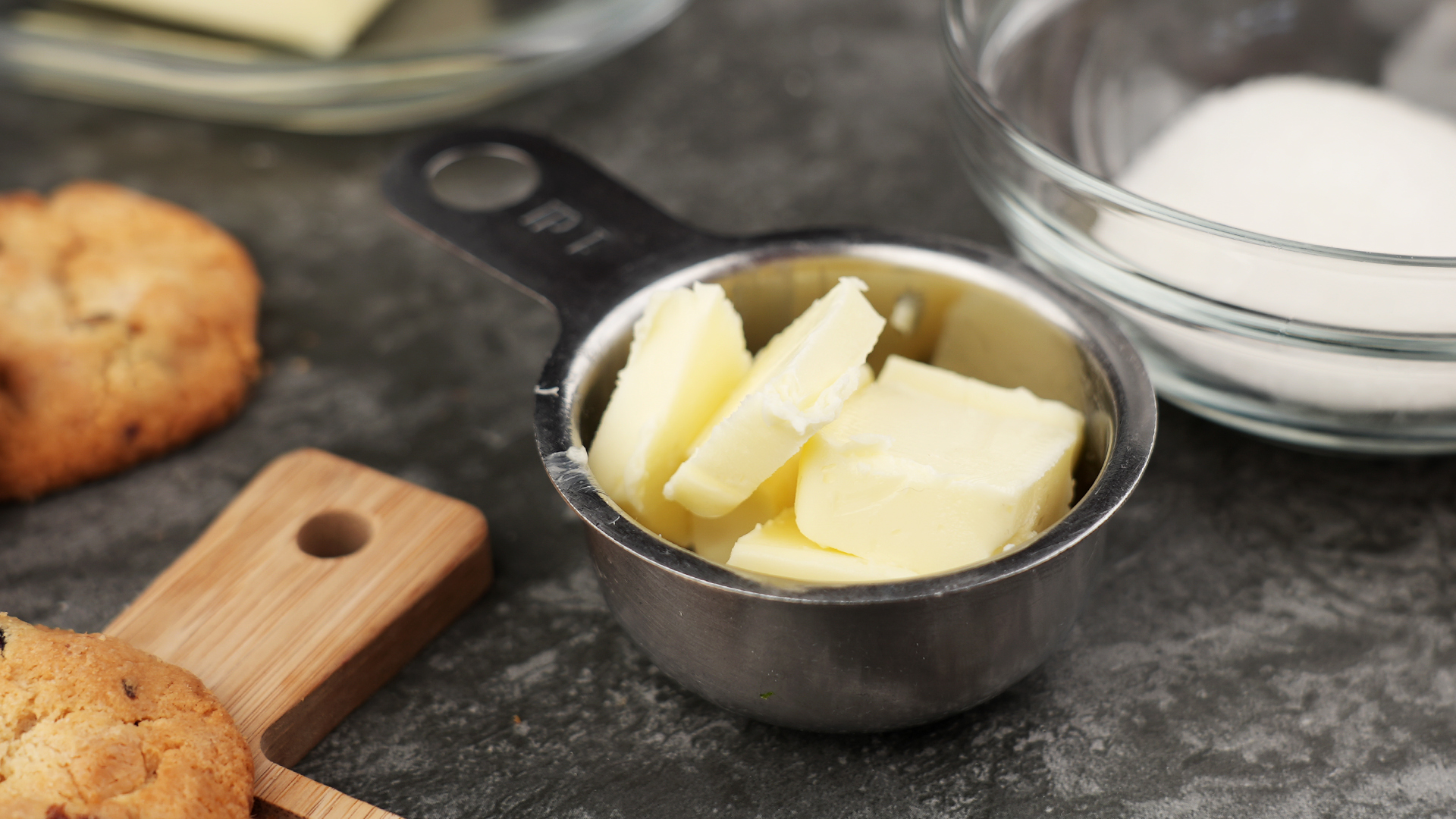
Butter is easier. In the United States, one standard stick of butter weighs 4 ounces and equals 1/2 cup. Two sticks equal 8 ounces or 1 cup. Many butter wrappers include tablespoon markings, so you can cut by the wrapper guide when measuring small amounts.
For the most accurate result, especially if your butter is oddly shaped or partially used, weigh it. Put a small plate on the scale, press tare, and add butter until you reach the correct ounce amount.
How to Measure Ounces on Nutrition Labels
Nutrition labels often list serving sizes using a familiar household measure followed by a metric amount in grams. You might see “about 1 cup” or “1 piece” followed by a gram weight. This helps connect real-world serving sizes with more precise measurement. If you are tracking nutrients, calories, protein, or sodium closely, weighing the portion is usually more accurate than guessing by appearance.
For example, a serving of nuts may be listed as 1 ounce. Because nuts vary in size and shape, counting pieces can be approximate. Weighing 1 ounce on a scale gives a more consistent portion.
Common Mistakes When Measuring Ounces
Using a Liquid Cup for Dry Ounces
A liquid measuring cup measures volume, not weight. If a recipe calls for 5 ounces of flour, pouring flour into a liquid measuring cup up to a random line will not work. You need a scale.
Reading Liquid Measurements From Above
When measuring fluid ounces, always read at eye level. Looking down from above can make the liquid appear to hit the line before it actually does.
Confusing Package Weight With Recipe Volume
A 16-ounce jar of peanut butter is 16 ounces by weight. That does not mean the jar contains exactly 2 cups by volume for every recipe purpose. Dense and sticky ingredients behave differently from thin liquids.
Forgetting to Tare the Scale
If you forget to zero out the bowl, your measurement includes the bowl’s weight. Unless the recipe asks for “3 ounces of almonds plus one ceramic bowl,” press tare.
Quick Ounce Conversion Cheat Sheet
- 1 ounce by weight = about 28.35 grams
- 1 fluid ounce = about 29.57 milliliters
- 1 cup = 8 fluid ounces
- 1 tablespoon = 0.5 fluid ounces
- 2 tablespoons = 1 fluid ounce
- 16 ounces by weight = 1 pound
- 4 ounces butter = 1 stick = 1/2 cup
Practical Experiences: What Measuring Ounces Teaches You in Real Life
The first experience many home cooks have with ounces is confusion. A recipe says “8 ounces,” and the natural reaction is to reach for a measuring cup. That works beautifully if the recipe says 8 fluid ounces of milk. It fails spectacularly if the recipe means 8 ounces of flour, pasta, shredded cheese, or chocolate. The lesson arrives quickly: same word, different measurement universe.
In baking, measuring ounces by weight can feel almost too precise at first. You put a bowl on the scale, press tare, add flour, and stop at 10 ounces. No scooping, tapping, guessing, or wondering whether your cup of flour is secretly overstuffed. After a few rounds, the scale becomes less like fancy equipment and more like a seat belt. You technically can bake without it, but why make life more exciting in the wrong direction?
One common real-world moment happens with flour. Someone scoops straight from the bag, packs the cup tightly, and makes cookies that taste fine but feel heavy. Then they try the same recipe with weighed flour, and suddenly the cookies spread better, the crumb is softer, and everyone acts like the recipe improved overnight. The recipe did not change. The measurement did.
Another useful experience comes from meal prep. If you are portioning cooked chicken, rice, cheese, or nuts, ounces are much easier with a scale. A “small handful” of almonds can quietly become two servings. A “little extra cheese” can become a dairy snowstorm. Weighing portions does not mean being obsessive; it simply gives you a clear picture. Once you know what 1 ounce of nuts or 4 ounces of chicken looks like, your eyes become better estimators.
Fluid ounces create their own lessons. Measuring liquid from above seems harmless until you bend down to eye level and realize you poured too much. This matters in baking, cocktails, coffee recipes, sauces, and homemade dressings. Four fluid ounces of broth can loosen a pan sauce perfectly. Six fluid ounces may turn it into soup wearing a sauce costume.
Sticky ingredients teach patience. Honey, corn syrup, molasses, peanut butter, and yogurt do not behave like water. When measuring them by fluid ounces or cups, they cling to tools and make cleanup dramatic. A helpful trick is to lightly coat the measuring cup or spoon with neutral oil before adding sticky ingredients. When measuring by weight, you can skip much of the mess by placing the mixing bowl on the scale, taring it, and adding the sticky ingredient directly.
Over time, measuring ounces becomes less about memorizing charts and more about choosing the right tool. Weight ounces need a scale. Fluid ounces need a liquid measuring cup. Small amounts need spoons. Dry cup measurements need leveling. Once that becomes automatic, recipes feel calmer. The kitchen gets cleaner. And your baked goods stop acting like they are participating in a science fair against your will.
Conclusion
Learning how to measure ounces accurately is one of the simplest ways to improve cooking, baking, nutrition tracking, and everyday kitchen confidence. The key is knowing whether the recipe means ounces by weight or fluid ounces by volume. Use a digital kitchen scale for dry and solid ingredients measured in ounces. Use a liquid measuring cup for fluid ounces. Use measuring spoons for small quantities. And when in doubt, remember this kitchen-saving truth: a cup is not always 8 ounces by weight.
Once you understand the difference, recipes become easier to follow and easier to repeat. Your bread rises better, your sauces balance properly, your portions become more consistent, and your measuring cups can finally stop pretending to be scales. That is a happier kitchen for everyone involved, including the cookies.