Spring landscaping is the gardening equivalent of opening the curtains after a long winter and realizing your yard still has personality. The right flowering trees and shrubs can wake up a sleepy landscape, soften hard edges, feed early pollinators, and make the whole property look like it finally got enough sleep. Better yet, they do more than throw one dramatic bloom party and disappear. The best choices also bring shape, fragrance, berries, bark, or fall color to the landscape long after spring has packed up its pollen and left town.
If you want a spring yard that looks polished instead of random, do not just buy whatever is blooming at the garden center that weekend. Successful spring landscaping starts with a few practical questions: How big will this plant get? Does it want full sun or afternoon shade? Can your soil drain well, or does it turn into pudding after rain? And most importantly, will it still look good after the flowers are gone? Once you match the plant to the site, the magic gets much easier.
The list below includes ten standout flowering trees and shrubs that earn their keep in spring landscapes. Some are native favorites, some are classic old-school charmers, and some are compact problem-solvers for smaller yards. Together, they give you a strong mix of color, fragrance, texture, and real garden performance.
How to Choose Flowering Trees and Shrubs for Spring
Before you buy anything with a gorgeous bloom and an innocent-looking nursery tag, think like a landscape designer for five minutes. Start with mature size. A small ornamental tree that grows twenty feet tall may be perfect near a patio but not under power lines. A wide shrub may be glorious in a border and terrible squeezed against the front walk like an overenthusiastic houseguest.
Next, think about light and soil. Lilacs and crabapples generally want lots of sun. Azaleas, rhododendrons, and some dogwoods often look happier with dappled light, cooler roots, and evenly moist soil. If your site is hot, dry, and reflective, a woodland shrub will not suddenly become a sun lover because you believe in it.
Also pay attention to sequence. The prettiest spring landscapes do not bloom all at once and then collapse into silence. They unfold. Redbud may start the show, followed by dogwood, serviceberry, crabapple, magnolia, azalea, rhododendron, and lilac. That staggered bloom creates a longer season of color and makes your yard feel designed instead of accidental.
10 Flowering Trees and Shrubs for Spring Landscaping
1. Eastern Redbud
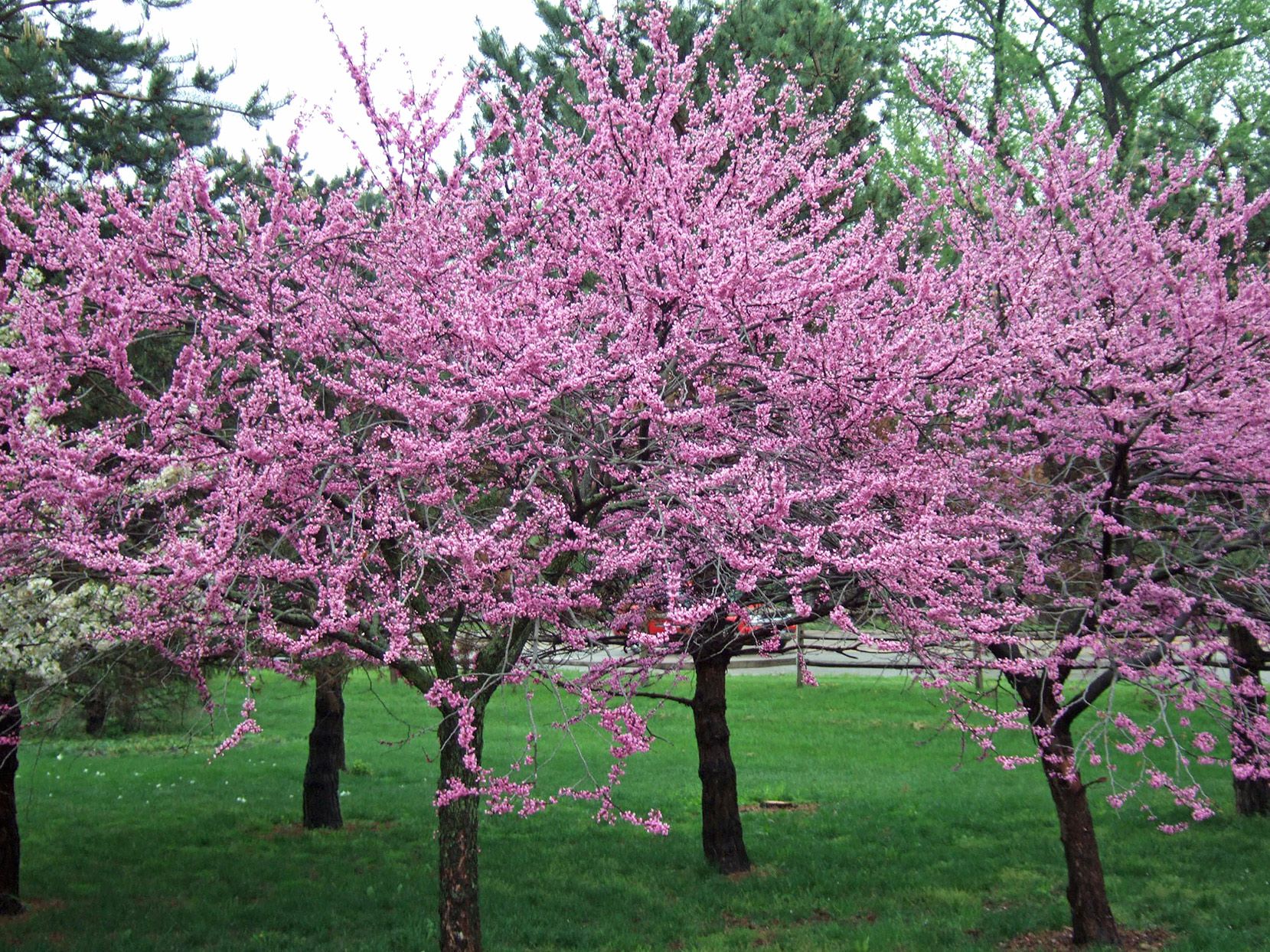
Eastern redbud is one of the best small trees for spring landscaping because it blooms with cheerful pink-purple flowers before the leaves fully emerge. The effect is bold, airy, and a little theatrical in the best possible way. Since it is a naturally small tree, it fits beautifully near entryways, patios, and smaller front yards where a giant shade tree would be too much.
Redbud works especially well in layered landscapes because it can handle full sun or part shade, though it appreciates good drainage and regular water while getting established. Its heart-shaped leaves later add softness through summer, and many cultivars bring extra flair with burgundy or golden foliage. If your goal is to make spring look deliberate without overwhelming the yard, this tree is a smart first pick. It is also a much better conversation starter than planting another Bradford pear and pretending not to notice the smell.
2. Flowering Dogwood
Flowering dogwood is the classic understory tree that makes spring landscapes feel elegant without trying too hard. The real flowers are tiny, but the large white or pink bracts create the showy display most people recognize from across the yard. It is a strong choice for woodland edges, foundation beds with filtered light, or any landscape that needs softness under taller canopy trees.
Dogwood prefers well-drained soil with organic matter and generally performs best where it gets some protection from harsh afternoon sun in hotter regions. The bonus is that it keeps giving after spring: red fruit for birds, strong red fall color, and attractive branching in winter. If you want a tree that feels timeless, polished, and very American-garden in the best way, dogwood belongs on your shortlist.
3. Serviceberry
Serviceberry is the overachiever of spring landscaping. In spring, it covers itself in white flowers. In early summer, it produces edible purple fruit. In fall, it often turns brilliant yellow, orange, or red. In winter, the smooth gray bark still looks refined. That is not a shrub or tree. That is an employee of the month with no signs of slowing down.
Depending on the species or cultivar, serviceberry can be grown as a multi-stemmed shrub or a small tree, which makes it flexible in borders, screens, and specimen plantings. It performs best in well-drained soil and usually fruits best in full sun, though it is adaptable enough for a range of landscape uses. If you want something that looks beautiful but also feels useful, serviceberry is one of the most rewarding plants on this list.
4. Flowering Crabapple
Flowering crabapple is one of the most reliable ways to get dramatic spring color in a sunny yard. These trees are grown primarily for their flowers, which range from white to pink, red, and rich reddish-purple depending on the cultivar. Many also produce colorful fruit that hangs into fall and winter, extending the show long after bloom season is over.
The trick with crabapple is simple: choose a disease-resistant cultivar. That matters because a beautiful spring tree can turn into a summer headache if it drops scabby leaves or struggles with fire blight. The good news is there are many excellent modern choices with strong ornamental value and better resistance. For homeowners who want one tree to deliver spring flowers, pollinator value, and colorful fruit, crabapple is a classic for a reason.
5. Magnolia
Magnolia is what you plant when you want spring to arrive with trumpets, velvet curtains, and absolutely no interest in subtlety. Whether you choose a classic saucer magnolia or a later-blooming compact type like ‘Jane,’ magnolias bring oversized flowers and immediate drama. They work best as specimen plants where their shape and bloom can be appreciated from the street or from inside the house.
In smaller landscapes, compact magnolias are often the better choice because they give you the wow factor without swallowing the whole front yard. Later-blooming varieties can also dodge some frost damage, which is helpful in regions where spring likes to play practical jokes. Magnolias are not background plants. They are center-stage plants, and they know it.
6. Lilac
Lilac has earned its place in spring landscapes with one simple superpower: fragrance. The blooms range from white to pink to deep purple, but the scent is what makes people stop on the sidewalk and suddenly develop opinions about shrubs. Lilac is especially effective near patios, walkways, or windows where the perfume can actually be enjoyed instead of admired from a respectful distance.
To bloom well, lilac needs full sun, ideally at least six hours a day, and well-drained soil. If it sits in too much shade, the flowers become sparse and the plant loses a lot of its charm. Old-fashioned lilacs can get large, but newer compact selections fit more easily into modern landscapes. This is a plant for gardeners who believe spring should smell as good as it looks, and honestly, they are right.
7. Azalea
Azaleas are the confetti cannons of spring landscaping. When they bloom well, the flowers can nearly cover the entire shrub in shades of white, pink, coral, red, orange, lavender, or yellow. They are especially effective in masses, along woodland borders, or tucked beneath tall trees where their spring display feels lush and effortless.
Azaleas generally prefer moist, well-drained, acidic soil and dappled shade, especially in hotter climates where afternoon sun can be a bit rude. Many gardeners use them as understory shrubs, and that is exactly where they often shine. If your landscape needs a burst of saturated color in spring, azaleas deliver in a way few shrubs can match. Just remember that after bloom, good foliage and proper siting matter, so choose strong performers rather than buying only by flower color.
8. Rhododendron
Rhododendrons bring a slightly bolder, more architectural look than azaleas. Their flowers appear in showy clusters, and many types keep handsome evergreen foliage for year-round structure. In spring landscapes, that combination is valuable. You get the bloom display you want in season, but you also keep a substantial shrub presence through summer, fall, and winter.
Like azaleas, rhododendrons do best in moist, well-drained, acidic soil with protection from hot afternoon sun. They are excellent in woodland gardens, naturalized borders, and layered foundation plantings with other acid-loving companions. If azalea is the colorful extrovert at the garden party, rhododendron is the well-dressed friend with excellent posture and a very strong opinion about mulch depth.
9. Flowering Quince
Flowering quince is one of the earliest shrubs to kick off spring, often blooming before the leaves unfold. That makes it incredibly useful if you want your landscape to wake up early. The flowers are bright and cheerful, usually in shades of scarlet, red, pink, orange, or white, and they look especially striking against bare branches.
This shrub tends to flower best in full sun, though it can tolerate some shade. Many selections are tough, adaptable, and useful as informal hedges or bold accent shrubs. Some older types are thorny, which is either a drawback or a security feature depending on your relationship with rabbits and trespassing shortcuts. The fruit is hard and tart, but it has a long tradition in preserves and jellies, which gives the shrub a practical side to match its early beauty.
10. Fothergilla
Fothergilla is the plant you recommend when someone says they want something “a little different” but still genuinely useful in a home landscape. Its white bottlebrush flowers appear in spring and often carry a sweet, honey-like fragrance. The bloom is charming rather than flashy, but the texture makes it stand out beautifully among broader, more familiar spring flowers.
Fothergilla is especially valuable because it is not just a spring plant. It brings excellent fall color too, often in fiery mixes of yellow, orange, and red. It prefers acidic, organically rich soil and usually flowers best in full sun to part shade. Compact cultivars make it perfect for foundations, low hedges, and layered shrub borders. In other words, it is the quiet genius of the spring landscape.
Design Tips for a Better Spring Landscape
The smartest spring landscapes mix tree height, shrub mass, and bloom timing. Use a small tree like redbud, serviceberry, dogwood, or magnolia as the anchor. Then add mid-level shrubs such as azalea, rhododendron, lilac, flowering quince, or fothergilla around it. That layering creates depth and keeps the scene interesting from the curb.
Color also matters. If you want a calm, elegant look, stick with whites, pinks, and soft purples. If you want the yard to shout “spring is here and I have no chill,” combine magenta redbud, orange azaleas, scarlet quince, and deep lilac tones. Both approaches can work. The difference is whether you want the landscape to whisper or start a parade.
Finally, remember the maintenance rule that saves many spring-flowering shrubs from accidental bloom sabotage: prune right after flowering if pruning is needed. Many of these plants bloom on old wood, so cutting them at the wrong time means you may also be cutting off next year’s flower buds. That is a painful way to learn patience.
Conclusion
The best flowering trees and shrubs for spring landscaping do more than look pretty for two weeks. They shape space, create rhythm, support pollinators, add fragrance, and build real seasonal interest into the yard. If you choose plants that match your site and stagger their bloom times, your landscape will feel fuller, smarter, and more intentional from the first warm days of spring onward.
If you only make one upgrade this season, let it be this: plant fewer random bloomers and more well-placed performers. A redbud by the walk, a serviceberry near the patio, a drift of azaleas under the trees, or a lilac where the scent can drift through an open window can completely change how your property feels. Spring landscaping is not about stuffing every bed with flowers. It is about picking the right stars and giving them room to shine.
Experience: What It’s Actually Like to Landscape with Spring Flowering Trees and Shrubs
One of the best things about using flowering trees and shrubs in spring landscaping is that the yard starts to feel alive in stages, not all at once. A good spring landscape does not explode like a confetti cannon and then leave you with six months of green anonymity. It unfolds. First you notice the redbud glowing on bare branches like someone turned on a pink light in the garden. Then the dogwood opens and suddenly the shady side yard looks intentional instead of forgotten. A week later, the azaleas join the show, and the whole place starts looking like you hired a landscape architect when really you just made a few smart plant choices and resisted impulse-buying three random annual flats.
There is also something deeply satisfying about how these plants change the way you move through your own space. A lilac near a walkway turns a quick trip to the mailbox into a pause-and-breathe moment. A magnolia by the front lawn makes you look up every time you pull into the driveway. Serviceberry feels especially rewarding because it does not stop at flowers. You get bloom, then fruit, then fall color, then smooth bark in winter. It is the kind of plant that makes you feel clever every season, which is honestly one of the underrated pleasures of gardening.
Another real-life benefit is that flowering shrubs and small trees make a yard feel established faster. Perennials can be beautiful, but they usually do not provide the same backbone. Trees and shrubs give structure. They frame windows, soften corners, hide utility boxes, and make the landscape feel grounded even before every bed is fully planted. That matters a lot in spring, when everything else is still waking up. A flowering quince or fothergilla can carry a border visually while smaller plants are still gathering themselves.
There is a practical side too. These plants can help you design for real life, not just for photos. Dogwood and azalea work beautifully where taller trees cast filtered shade. Lilac and crabapple thrive where the sun is strong and open. Rhododendrons give you evergreen mass so the yard does not look empty in winter. Once you start noticing how each plant solves a different landscape problem, the whole process gets easier. You stop shopping only by flower color and start choosing plants by job description: shade softener, front-yard focal point, privacy helper, pollinator magnet, fragrance machine.
And yes, there is a slight emotional component. Spring-flowering trees and shrubs have a way of making a home feel cared for. Even a modest yard looks more generous when something is blooming at eye level or above it. The landscape feels welcoming. It feels inhabited. It feels like someone thought about it. That may be the real reason these plants matter so much. They do not just decorate a property. They change the mood of it. And after a gray winter, that kind of transformation feels less like a luxury and more like a public service.