Note: This article is based on real, publicly available information about Babylonstoren, the Cape Winelands, and the conservatory tea-house experience associated with Karen Roos.
Some places serve tea. Some places serve a mood. And then there is Karen’s Tea House in South Africa’s Cape Winelands, which seems to serve a full-blown alternate reality – one where the greenhouse glows, the herbs smell better than your most expensive candle, and even a scone appears to have had professional lighting. If that sounds dramatic, good. This is not the kind of destination that asks politely for your attention. It earns it with glass, gardens, mountain light, and the sort of quiet confidence that makes other scenic spots look like they are trying too hard.
Set within the world of Babylonstoren, one of the Cape’s oldest farm estates, Karen’s Tea House is best understood as more than a stop for tea. It is a design experience, a garden experience, a Cape Dutch dream with dirt under its fingernails, and a reminder that hospitality can still feel intimate even when the scenery is almost absurdly beautiful. In a region famous for wine, long lunches, and landscapes that seem suspiciously filtered by nature itself, this tea-house concept offers something gentler and perhaps more memorable: a pause.
What Exactly Is Karen’s Tea House?
Karen’s Tea House became known through its setting inside a giant glass conservatory at Babylonstoren, the celebrated farm hotel and garden in the Franschhoek wine valley. That location matters because the tea house is not floating in isolation like some cute, random cottage. It belongs to a wider estate shaped by a strong garden-first philosophy, where produce, herbs, flowers, and design all talk to one another like very stylish neighbors.
The estate itself sits in the Cape Winelands, the mountain-ringed region associated with Franschhoek, Stellenbosch, and Paarl. Babylonstoren has built its reputation around edible gardens, farm-to-fork dining, wine, and beautifully restored Cape Dutch architecture. Within that larger setting, the tea house works like a softer chapter in the story. If Babel restaurant is the bold headline, Karen’s Tea House is the handwritten note in the margin that ends up being your favorite part.
Why the Place Feels Like Stepping Through a Portal
The conservatory is the star, and it knows it
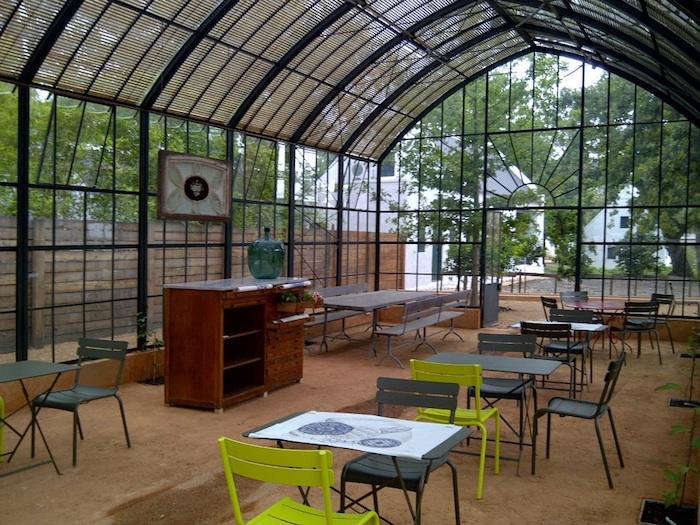
The most striking thing about Karen’s Tea House is the conservatory itself. It is not merely decorative glass. It is the whole emotional setup. The structure creates a feeling halfway between Victorian greenhouse romance and modern farm minimalism. Sunlight slides across the floor, leaves cast moving shadows, and the space feels both curated and alive. That is a hard balance to pull off. Many stylish places lean so far into aesthetics that they forget people have to sit, sip, and breathe there. This one does not. It feels designed for lingering.
There is also something wonderfully theatrical about entering a place where the architecture frames the landscape instead of competing with it. The result is the classic “through the looking glass” effect: you are still in the Winelands, but everything appears slightly more enchanted on the other side of the panes.
The garden is not background scenery
At Babylonstoren, the garden is the beating heart of the entire property, and the tea house benefits from that in every possible way. This is not a token herb bed planted to justify a menu description. It is a serious, historically inspired edible garden shaped by owner Karen Roos and French garden designer Patrice Taravella. The pathways, plantings, orchard logic, and sense of seasonal change give the tea-house experience real substance. You do not just look at beauty here. You taste it.
That is one reason the place feels more grounded than trendy. Even the whimsy has roots. You are not being asked to admire a concept. You are being invited into a living system where fruit, herbs, vegetables, flowers, tea, and table all connect.
Food, Tea, and the Quiet Flex of Garden-Led Hospitality
If the architecture gets your attention first, the tea and food are what make the memory stick. Earlier coverage of Karen’s Tea House highlighted playful offerings such as plum and verbena cordial, lemon thyme lemonade, rosewater cupcakes, and herb sorbet popsicles. That menu language captures the spirit of the place perfectly: botanical, fresh, a little dreamy, and not interested in boring anyone.
Today, the Greenhouse experience at Babylonstoren continues that same garden-led rhythm with freshly baked scones, seasonal preserves, honeybush tea, rooibos, herb infusions, iced tea with garden herbs and fruit, and light meals built around whatever the farm is growing and making well. There are grazing plates, salads, soups, breads, and simple desserts that feel elevated not because someone added gold flakes, but because the ingredients were treated like they mattered from the beginning. Revolutionary, apparently.
This is where Karen’s Tea House becomes more than pretty travel bait. It reflects a broader food philosophy. In the Cape Winelands, it is easy to focus on the wine and miss the agricultural depth behind the region’s best destinations. Here, tea is not the opposite of wine culture. It is part of the same sensory ecosystem: soil, season, fragrance, fruit, craft, and ritual. Just with a calmer heartbeat.
Why the Cape Winelands Make the Experience Better
You could place a beautiful greenhouse in many parts of the world and still get a nice result. But the Cape Winelands give this one uncommon texture. The region combines vineyards, mountain walls, old farm architecture, food culture, and changing light in a way that feels almost suspiciously well-composed. Franschhoek brings culinary prestige and a certain polished romance. Stellenbosch adds heritage and oak-lined elegance. Paarl contributes scale, warmth, and nearby wine-country depth. Together, they create a setting where a tea house can feel both intimate and grand.
That backdrop matters because Karen’s Tea House is not trying to outshine the Winelands. It works by translating the region into a smaller, more personal key. Instead of asking you to conquer the valley with a packed itinerary, it invites you to sit still long enough to notice the scent of mint, the shape of a glass panel, the texture of clotted cream, or the way late afternoon light turns a table into a still life.
Karen Roos and the Editorial Eye Behind the Magic
To understand why this place feels so distinct, you have to talk about Karen Roos. Her background in magazines and design helps explain the unusual precision of Babylonstoren’s visual language. Everything appears edited rather than merely decorated. That is an important difference. Decor can be loud. Editing is selective. Editing knows what to leave out.
You can feel that discipline in the tea-house mood. The conservatory is beautiful, yes, but not cluttered. The farm references are charming, but not cartoonish. The details are thoughtful without becoming fussy. One of the most memorable touches described in early coverage was the use of vegetables in place of flowers as decor. That tells you almost everything you need to know. It is practical, playful, and slightly subversive. It also says, very politely, “We are a farm, darling. Of course the beet is part of the aesthetic.”
This balance of rustic and refined is what keeps the space from slipping into lifestyle cliche. It does not pretend to be untouched countryside, and it does not flatten the farm into luxury wallpaper. It allows both realities to exist together.
What Makes the Experience Memorable for Travelers
Travelers often remember big destinations for their headline attractions: the view, the famous tasting, the marquee restaurant. But the places that remain vivid years later are often smaller moments nested inside the larger trip. Karen’s Tea House has that quality. It is the sort of place people recall in sensory fragments: glass warmed by the sun, a tray of delicate treats, the smell of rosemary, a hush under the oaks, a window framing vines and sky.
That memory-making power comes from pacing. In a travel culture obsessed with maximizing every hour, tea houses still offer a gentle counterargument. Sit down. Look around. Taste something slowly. Resist the urge to turn every lovely thing into content before you have actually experienced it. Karen’s Tea House feels built for that exact lesson.
Who Will Love It Most?
This experience is ideal for more than just tea lovers. Garden enthusiasts will appreciate the horticultural intelligence behind the setting. Design lovers will notice the restraint, materials, and composition. Food travelers will enjoy the ingredient-driven menu. Couples will call it romantic. Solo travelers will call it peaceful. Friends will call it “the place where we accidentally stayed for three hours.”
Even people who think they are not “tea-house people” may find themselves converted. Why? Because this is not about lace-tablecloth nostalgia or forced elegance. It is about atmosphere, freshness, and the pleasure of being in a place that knows exactly what it is.
How to Experience It Well
The smartest way to enjoy Karen’s Tea House is not to rush it between wine tastings as if it were a box to check. Treat it as its own destination. Arrive with enough time to walk through the garden first. Let the surrounding estate set the mood. By the time you reach the conservatory, your senses are already tuned to leaves, fruit, spice, and air.
Order something that reflects the garden. Choose the honeybush tea, rooibos, or a fresh herbal infusion. Pair it with scones, a seasonal sweet, or a light lunch. Then do something radical: stay seated. Look around. Notice how the place works. The best luxury here is not extravagance. It is permission to slow down without boredom creeping in through the side door.
The Deeper Meaning of the Tea House
At its best, Karen’s Tea House represents a broader shift in modern travel. People increasingly want places that feel immersive rather than merely expensive. They want food connected to land, design connected to history, and experiences that feel local without being staged into oblivion. This tea-house concept answers that desire beautifully. It offers a polished experience, but its polish grows from authenticity rather than from generic luxury formulas.
In that sense, Karen’s Tea House is not just a charming stop in the Cape Winelands. It is a case study in how hospitality can feel emotional, place-specific, and quietly unforgettable. It shows how a glass house on a historic farm can become an entire atmosphere – one part garden room, one part culinary pause, one part dream sequence.
Extended Experience: 500 More Words on What It Feels Like to Be There
Imagine arriving in the Cape Winelands after a winding drive past vineyards, whitewashed gables, and mountains that look like they were drawn by someone with excellent taste and zero interest in subtlety. You step onto the Babylonstoren property and immediately sense that this is not a place built around a single attraction. It is layered. The paths matter. The orchards matter. The old buildings matter. Even the quiet seems arranged with intention. Then you begin walking toward the tea house.
The journey is part of the pleasure. You move through gardens where edible plants are not tucked away as utility crops but presented with the kind of care usually reserved for ornamental borders. Fruit trees hold the air in a softer way. Herbs release scent when the day warms. There is the occasional moment when you catch yourself slowing down for no practical reason at all, and that is when you realize the place is already working on you.
Then the conservatory appears. Not all at once, not like a giant spectacle, but as a shimmer through planting and structure. Glass, steel, and greenery begin to overlap until the building feels less like an object and more like an atmosphere taking shape. When you step inside, the temperature shifts slightly, the acoustics soften, and the outside world becomes a series of framed scenes. It is one of those rare interiors that changes how you move. People lower their voices. They stop fiddling with their phones. They look up.
Tea arrives, and even that feels theatrical in the best possible way. The cup warms your hands. The first sip carries whatever the garden is feeling generous enough to offer that season – floral, earthy, citrusy, herbal, or all four if the farm is in a showing-off mood. A plate lands nearby with something warm and baked, something bright and jammy, something creamy, something crisp. Nothing is overworked. Nothing screams for attention. And because the setting is so calm, each detail gets noticed more than it would in a busier room.
Outside the glass, the Winelands continue doing what the Winelands do best: making everything look cinematic without seeming aware of it. Light moves across the paths. A breeze runs through leaves. Someone passes at a leisurely pace, probably pretending not to be impressed and failing badly. That is another charm of Karen’s Tea House. It disarms the cool traveler. Even the most seasoned visitor, the sort who claims to be “just here for a quick look,” tends to melt into the experience after ten minutes.
And when it is finally time to leave, the departure never feels abrupt. You do not exit so much as re-enter ordinary time. The glass doors open, the path waits, and the garden receives you again. You walk away carrying a very specific kind of travel memory: not adrenaline, not spectacle, but the luxurious feeling of having been fully present somewhere beautiful. In an age of rushed itineraries and overperformed travel, that may be the rarest souvenir of all.
Conclusion
Through the Looking Glass: Karen’s Tea House in Cape Winelands is compelling because it delivers more than pretty visuals. It transforms tea into a full sensory encounter shaped by architecture, edible gardens, local flavors, and the unmistakable atmosphere of the Cape Winelands. The conservatory setting gives it magic. The farm gives it substance. Karen Roos’s design eye gives it character. Together, they create a destination that feels intimate, grounded, and just whimsical enough to be unforgettable.
If you are drawn to places where beauty is not sprayed on at the end but grown from the soil upward, this is your kind of stop. It is not only a lovely tea house. It is a gentle lesson in how travel becomes memorable: one thoughtful detail, one fragrant cup, and one sunlit pause at a time.
SEO Tags
Note: Seasonal menus, entrance fees, and opening times can change, so confirm current details before publishing travel advice or planning a visit.