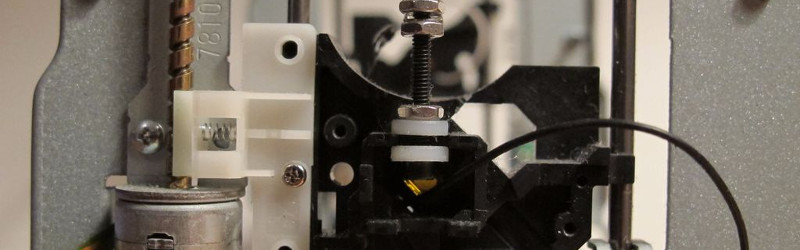
Some machines arrive in a cardboard box with glossy marketing photos and enough foam padding to protect a moon rock. This one arrives as a small act of rebellion. A hot-wire CNC foam cutter from e-waste turns discarded electronics into a useful motion machine that can slice foam with surprising precision. Old DVD drives become tiny linear stages. A forgotten photo printer donates rollers and rails. A humble control board interprets G-code like it suddenly got promoted from “junk drawer resident” to “shop foreman.” It is part CNC project, part sustainability statement, and part reminder that yesterday’s electronics still have a few tricks left in their silicon sleeves.
For makers, prop builders, model aircraft fans, product designers, and curious tinkerers, the appeal is obvious. Foam is cheap, lightweight, and forgiving. CNC motion makes repeatability possible. E-waste offers rails, steppers, screws, frames, connectors, and enclosures that would otherwise sit in a landfill auditioning for the role of “future environmental headache.” Put those pieces together, and you get a machine that is not just functional but wonderfully instructive. It teaches mechanics, motion control, software workflow, material behavior, and the art of making something useful out of parts that society already gave up on.
The beauty of this kind of build is not that it beats industrial equipment. It usually does not. The beauty is that it shows how much can be achieved with thoughtful reuse, clever design, and a realistic understanding of what salvaged components can and cannot do. In other words, this machine lives in the sweet spot between “weekend project” and “tiny engineering philosophy lecture.”
Why This Project Makes So Much Sense Right Now
A project like this lands at the intersection of two powerful trends: the rise of desktop fabrication and the growing pressure to handle electronic waste more responsibly. Old electronics contain metals, plastics, glass, motors, and components that required significant energy and raw materials to manufacture in the first place. Reusing parts before recycling them follows a smarter hierarchy. In plain English, the greenest part is often the one you do not have to buy again.
That matters because a CNC foam cutter is essentially a motion system plus a heated cutting element. It does not need the brute force of a milling machine or the complexity of a full industrial router. Many of the parts needed for controlled movement already exist inside consumer electronics: guide rods, lead screws, steppers, carriages, springs, tiny bearings, power switches, and sheet-metal brackets. Salvaging them is not just thriftiness with a screwdriver. It is design strategy.
There is also a practical reason the e-waste route is so attractive: small machines benefit from small mechanisms. Optical drives and printers were built for accurate, repeatable motion in compact spaces. That makes them a natural fit for a desktop hot-wire foam cutter, especially for lighter-duty work such as signage, prototypes, model parts, packaging inserts, craft shapes, and educational demonstrations.
What a Hot-Wire CNC Foam Cutter Actually Does
At its core, a hot-wire cutter uses a thin resistance wire, usually nichrome wire, that heats up when current passes through it. Instead of chopping foam like a knife, it melts a narrow path through the material. That produces smoother edges, less mechanical tearing, and less of the ragged drama that foam sometimes creates when attacked by ordinary blades.
Now add CNC motion. The machine moves the wire or the workpiece along programmed paths, allowing repeatable cuts from digital drawings. That transforms foam cutting from “eyeball it and hope” into a workflow that can follow curves, slots, letters, templates, and repeat production pieces. The software side is familiar to many makers: design a shape, generate toolpath-style instructions, send G-code to the controller, and let the machine move with the kind of calm confidence most humans only fake during job interviews.
This is why the project is so charming. It blends heat, motion, software, and material behavior into a build that feels approachable but still teaches real engineering lessons. You are not just making a cutter. You are making a system.
The Best Parts to Salvage From E-Waste
Optical drives and DVD writers
These are often the stars of the show. Many contain compact stepper-based motion assemblies, fine lead screws, sliding carriages, and rigid metal frames. They are ideal for short-travel axes where precision matters more than brute strength. In a small-format foam cutter, that is a great trade.
Printers and photo printers
Printers are the overachievers of the e-waste pile. They may provide rollers, rods, drive belts, pulleys, carriage rails, sensors, and stepper motors. A compact photo printer can be especially useful because its feed mechanisms are already optimized for straight, controlled movement in a relatively small footprint.
Hair dryers, toasters, and heating appliances
These can be sources of nichrome or other resistance wire. That said, salvage is only worth it when the wire is in good shape, easy to identify, and appropriate for the build. There is no medal for extracting a sketchy coil from a dying appliance just to save a few dollars and lose an afternoon.
Power supplies, switches, and fans
Some builders reuse DC supplies, panel switches, and cooling fans from retired electronics. The smarter approach is selective reuse: salvage the mechanical and low-risk hardware, but be cautious with unknown power components, damaged cables, and aging batteries. A dramatic shop story is fun only when it ends with laughter instead of a fire extinguisher.
What You Should Usually Buy New
A strong e-waste CNC project does not mean every single part must be rescued from oblivion. In fact, the best builds often combine salvaged mechanics with a few inexpensive modern components that improve reliability and safety.
It is generally wiser to buy a known-good controller board, reputable stepper drivers, fresh wiring, connectors, and a predictable low-voltage power source. Emergency stop hardware, limit switches, and proper cable management are also worth doing right. Think of it as using recycled bricks but not insisting the seatbelts in your car come from a yard sale. Reuse is noble. Randomness is not a design philosophy.
This hybrid approach keeps the spirit of upcycling while avoiding the most frustrating failure points. Salvaged rails and steppers can be excellent. Mystery power electronics, not always so much.
How the Motion System Comes Together
A small DIY foam cutter built from e-waste typically uses stepper-driven axes to move a carriage, a gantry, or the foam block itself. The controller receives G-code and translates it into step pulses. Drivers energize the motors. The machine moves in tiny increments, and those increments become the cut.
This is where open-source CNC tools shine. GRBL-style workflows have made small digital fabrication systems far more accessible. A modest controller can receive line-by-line instructions over USB from a computer, and common CAM or drawing workflows can generate movement paths without requiring the user to become a full-time CNC monk.
The salvage angle adds an interesting constraint: not all recovered mechanisms are equal. Optical-drive axes are precise but short-travel. Printer systems may offer more movement but can be bulkier and less tidy to mount. Some stepper motors are wonderfully smooth; others seem emotionally committed to vibrating instead of moving. Good design comes from matching each reclaimed component to the role it can realistically perform.
In practical terms, this means a successful machine is less about chasing perfect specs and more about smart architecture. Keep the frame square. Keep the movement light. Keep the wire path stable. Keep the control electronics predictable. And above all, keep expectations calibrated. A compact e-waste cutter can be impressively capable, but it is still a desktop reuse project, not a secret NASA lab hiding behind a cereal box.
Why Nichrome Wire Still Rules This Kind of Build
There is a reason nichrome shows up over and over in maker heating projects: it is designed for resistance heating, handles high temperatures, and resists oxidation better than many ordinary wires. For a foam cutter, that matters because the wire has to heat consistently without behaving like it is in the middle of a personal crisis.
The wire is only one piece of the puzzle, though. Tension matters. Mounting matters. Thermal expansion matters. As the wire heats, it can lengthen, and that means a build often needs a tensioning strategy to keep the cut stable. A loose hot wire is the mechanical equivalent of trying to draw a straight line with a cooked spaghetti noodle. It can be done in theory, but nobody leaves the room impressed.
For this reason, experienced builders pay close attention to how the wire is mounted, how movement stays square, and how the power system remains consistent. The goal is not raw heat. It is controlled heat paired with controlled motion.
Foam Choice Matters More Than People Expect
Not all foam behaves the same. Expanded polystyrene, extruded polystyrene, specialty craft foams, and packaging materials can differ in density, structure, cut quality, and how they react to heat. The smartest builders avoid treating “foam” as one magical category, because it absolutely is not. Some types cut cleanly and predictably. Others fight back, deform strangely, crumble, or produce more unpleasant fumes than your workshop deserves.
That is why material testing matters. A digital workflow can be precise, but foam still has opinions. A good machine operator learns quickly that the finished edge depends on material density, wire condition, machine speed, geometry, and how well the setup stays aligned. In other words, foam may look simple, but it has the personality of a picky houseguest.
Safety Is Not the Boring Part; It Is the Grown-Up Part
A project like this can be clever, affordable, and environmentally thoughtful, but it should not be romanticized as harmless. Heating foam can release irritating or hazardous decomposition products depending on the material. That means ventilation is not optional theater. It is part of the build philosophy. Unknown foam is not an adventure; it is a question mark with attitude.
Electrical safety matters too. Builders should avoid tossing random batteries, damaged power bricks, or mystery electronics into the system and hoping confidence will somehow become insulation. Recovered lithium batteries require proper handling and should never be thrown in household trash. Unknown high-voltage sections from discarded devices are not ideal places to practice optimism.
Machine safety also deserves respect. Even a small machine benefits from limit switches, clean cable routing, accessible shutoff controls, and a real emergency stop approach. A hot wire may look gentler than a spinning bit, but “less dramatic” is not the same as “safe by default.” A good build is one that treats ventilation, predictable power, and emergency controls as core features rather than decorative afterthoughts.
What This Kind of Machine Is Great For
A hot-wire CNC foam cutter from e-waste is especially appealing for lightweight fabrication jobs where repeatability matters. It can support packaging prototypes, scale models, theater props, cosplay forms, RC aircraft parts, educational projects, sign backing, insulation mockups, and artistic geometry studies. The machine thrives in use cases where foam is the right material and digital repeatability adds value.
It also shines as a learning platform. Someone building one of these machines is likely to touch CAD, CAM, G-code, motion control, salvage sorting, mechanical alignment, and thermal behavior in a single project. That is a lot of education for a device built partly from stuff the world had already given up on.
There is even a cultural value here. Projects like this help push maker culture away from pure consumption and toward repair, reuse, and thoughtful adaptation. Instead of asking, “What new tool can I buy?” the project asks, “What useful machine is already hiding inside these discarded parts?” That is a much more interesting question, and frankly, it has better manners.
The Real Engineering Challenge: Consistency
The biggest difference between a charming prototype and a genuinely useful cutter is consistency. Can it repeat the same shape? Can it hold alignment over time? Can the wire tension remain steady? Can the motion system avoid chatter, skew, and awkward little hesitations that ruin a clean edge?
That is where the project grows up. The builder begins by thinking about scrap parts and ends by thinking about tolerances, vibration, current control, repeatability, ventilation, and operator workflow. Suddenly the project is not just about saving money. It is about building a machine that behaves in a trustworthy way. Once that shift happens, the project becomes far more than a quirky hack. It becomes a disciplined exercise in practical engineering.
Experience From the Bench: What Builders Usually Learn the Hard Way
The most memorable part of a project like this is rarely the first successful cut. It is the string of small lessons that happen before success decides to show up. Builders usually begin with optimism and a pile of salvaged parts that all seem destined for greatness. Then reality arrives wearing work boots. One DVD drive glides beautifully while the other binds halfway through travel. A printer rail looks straight until it is mounted. A stepper motor hums with confidence and then contributes exactly zero movement. The machine is not being rude; it is simply teaching the first lesson of e-waste fabrication: salvage is a starting point, not a guarantee.
Another common experience is discovering that motion problems often masquerade as software problems. People blame G-code when the real villain is mechanical drag. They blame the controller when the frame is slightly twisted. They blame the motor when the carriage is sticky. This project has a funny way of turning the builder into a detective. Every bad cut leaves clues. A wavy edge may point to vibration. A tapered shape may hint at poor alignment. A rough finish may suggest wire instability, speed mismatch, or a foam type that simply hates being part of your creative journey.
There is also a humbling lesson in restraint. Many first-time builders want to salvage everything because it feels heroic. Then they spend three evenings trying to trust an old power supply that clearly wants retirement. Experienced makers usually become selective. They save the rails, the screws, the steppers, the brackets, and the clever little mechanisms. Then they happily buy fresh wiring, dependable drivers, and safer power hardware. This is not cheating. It is maturity with a multimeter.
Workspace habits tend to change too. Once someone has cut foam with heat a few times, ventilation stops sounding like optional advice from an overly cautious uncle and starts feeling like basic self-respect. The same goes for labeling parts, sorting screws, testing travel before final assembly, and documenting which salvaged component came from which donor device. A project that begins as playful improvisation often ends by teaching excellent shop discipline.
Perhaps the best experience, though, is the moment a builder realizes that discarded electronics are full of hidden architecture. A dead printer stops being trash and starts looking like a box of rails, sensors, belts, springs, and structured opportunity. An optical drive becomes a compact precision stage. A forgotten enclosure becomes a control box. The builder starts seeing systems inside objects instead of just objects themselves. That change in perspective is surprisingly powerful. It influences later projects, purchasing decisions, and even the way someone looks at everyday appliances.
And yes, there is joy in the first clean cut. It tends to arrive after enough troubleshooting to feel earned. The wire glides, the machine tracks smoothly, and the foam separates with that neat, almost suspiciously elegant edge that makes everyone in the room lean in a little closer. In that moment, the whole project makes sense. The e-waste, the debugging, the alignment checks, the controller setup, the design revisions, the cautious respect for material behaviorit all adds up to a tool that should not have existed, yet now does. That is the magic of this build. It does not just recycle parts. It upgrades the builder.
Conclusion
A hot-wire CNC foam cutter from e-waste is one of those rare builds that manages to be practical, educational, sustainable, and deeply satisfying all at once. It rescues useful mechanisms from discarded electronics, applies open-source motion-control ideas, and turns humble foam into a digitally shaped material. It also reminds us that good design is not always about buying the newest thing. Sometimes it is about recognizing the unfinished potential inside the old thing.
Done thoughtfully, this kind of build becomes more than a clever maker project. It becomes a case study in circular thinking, selective reuse, and small-scale engineering discipline. You learn to value precision over hype, safety over shortcuts, and adaptability over perfection. The result is a machine that may be built from leftovers, but feels anything but second-rate.