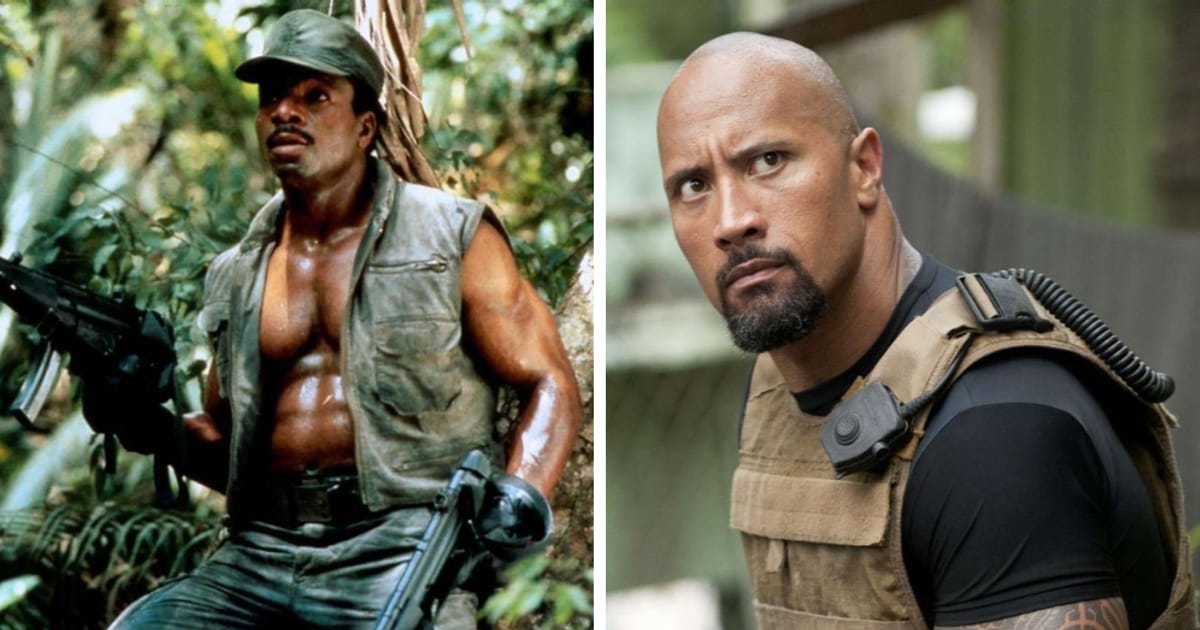
Hollywood loves a good transformation story, especially when the person doing the transforming already knows how to take a hit, sell a moment, and look believable while sprinting away from an explosion that definitely violated at least seven safety codes. That is why so many athletes have tried to become action stars. Some arrived with championship belts, some with football pads, some with martial arts trophies, and some with the terrifying calm of people who have been punched professionally and still chose “acting” as the relaxing second career.
Of course, not every athlete becomes a movie star. Being strong is useful, but it does not automatically make someone interesting on screen. Action cinema requires timing, charisma, discipline, physical storytelling, and the ability to say a ridiculous one-liner as if civilization depends on it. The athletes who truly nailed the move from sports to action movies did more than flex. They built screen identities that audiences wanted to follow through car chases, fistfights, jungle missions, sci-fi wars, and the occasional emotionally complicated franchise sequel.
Below are the athletes who tried to become action stars and actually pulled it off. Some became box office giants. Some became cult icons. Some quietly made the genre better by bringing authenticity, intensity, and a little “yes, I can actually do that” energy to the screen.
Why Athletes Often Make Great Action Stars
Athletes come into acting with several built-in advantages. They understand body control, training schedules, pressure, repetition, and performing under bright lights while strangers loudly judge them. That last one is basically Hollywood with better craft services.
Action movies also depend on physical credibility. When an actor throws a punch, runs across a roof, carries another character through danger, or stares down a villain, the audience has to believe the body can support the story. Former athletes often bring that belief with them before they even say a line.
Still, the best athlete-turned-action-stars do not rely only on muscle. They develop screen presence. They learn how to act with their eyes, adjust their rhythm for comedy or drama, and create characters who feel larger than life but not completely made of protein powder. That is where the real magic happens.
Dwayne Johnson: From The Rock to the Modern Action Franchise Machine
Dwayne Johnson may be the clearest modern example of an athlete who became a true action star. Before Hollywood, he played college football at the University of Miami, had a brief run in the Canadian Football League, and then became one of the most famous professional wrestlers in history as The Rock.
His early movie roles leaned heavily on his wrestling charisma. The Scorpion King gave him the kind of sword-swinging, eyebrow-raising introduction that felt designed in a laboratory labeled “future action hero.” But Johnson’s major breakthrough as a dependable action star came when he learned how to combine physical dominance with comedy, confidence, and family-friendly charm.
Movies like Fast Five, San Andreas, Jumanji: Welcome to the Jungle, Hobbs & Shaw, and Rampage proved that Johnson could carry large-scale entertainment without taking himself too seriously. His characters often feel like human rescue vehicles: dependable, loud, strangely motivational, and almost impossible to stop.
Why He Nailed It
Johnson understood branding better than almost anyone. He did not simply become an actor; he became a promise. When audiences see his name, they expect big action, humor, confidence, and at least one scene where physics files a formal complaint. That consistency turned him from athlete-actor into global action star.
Jason Statham: The Diver Who Became the King of Controlled Chaos
Jason Statham is sometimes remembered as a tough-guy actor first, but before movies he was a competitive diver and a member of Britain’s national diving squad. That background matters. Watch the way he moves in action scenes: compact, precise, balanced, and efficient. He does not look like a man trying to show off. He looks like a man trying to finish the job before his parking meter expires.
After appearing in Guy Ritchie films such as Lock, Stock and Two Smoking Barrels and Snatch, Statham found his action-star lane with The Transporter. As Frank Martin, he combined martial arts, driving skills, deadpan cool, and immaculate suit discipline. The result was one of the most memorable action personas of the early 2000s.
He later expanded that image through Crank, The Mechanic, The Expendables, Safe, Spy, Hobbs & Shaw, and the Fast & Furious franchise. Whether he is fighting in a garage, piloting something dangerous, or insulting someone with surgical dryness, Statham makes action look clean and brutal without becoming cartoonish.
Why He Nailed It
Statham’s secret weapon is economy. He does not waste movement, dialogue, or facial expressions. His athletic past gave him control; his screen persona gave him style. Together, they made him one of the most reliable action stars of his generation.
Arnold Schwarzenegger: Bodybuilding’s Biggest Hollywood Takeover
Arnold Schwarzenegger was not just athletic before becoming a movie star; he was one of the most famous bodybuilders on the planet. With multiple Mr. Olympia titles and a physique that looked like it had been engineered by a committee of comic-book artists, Schwarzenegger arrived in Hollywood as a walking special effect.
Early roles such as Conan the Barbarian took advantage of his physical presence, but The Terminator changed everything. As the unstoppable cyborg assassin, Schwarzenegger turned limited dialogue into myth. His accent, size, stillness, and mechanical delivery became features, not obstacles.
Then came Commando, Predator, The Running Man, Total Recall, Terminator 2: Judgment Day, and True Lies. By the late 1980s and early 1990s, Schwarzenegger was not merely an athlete who acted. He was one of the faces of action cinema itself.
Why He Nailed It
Schwarzenegger leaned into what made him unusual. Instead of trying to look like every other leading man, he turned his body, accent, humor, and intensity into an unforgettable package. He proved that action stardom is not about fitting a mold; sometimes it is about becoming the mold.
Carl Weathers: From Pro Football to Apollo Creed and Predator Glory
Carl Weathers played professional football before becoming one of the most charismatic action performers of the 1970s and 1980s. He appeared with the Oakland Raiders and later moved into acting, where his athletic confidence translated beautifully to the screen.
His defining role was Apollo Creed in the Rocky franchise. Apollo was not just a boxer; he was showmanship in trunks. Weathers made him flashy, funny, dangerous, proud, and eventually deeply human. The role required athletic believability, but it also required emotional range. Weathers delivered both.
Then came Predator, where he played Dillon, a man with a handshake so intense it deserves its own monument. Alongside Arnold Schwarzenegger, Jesse Ventura, and a jungle full of testosterone, Weathers still stood out. That is not easy. In fact, it may be an Olympic event in some alternate universe.
Why He Nailed It
Weathers brought confidence without stiffness. He could look powerful, but he could also play ambition, humor, regret, and loyalty. That combination made him more than an athlete in movies. It made him a performer audiences remembered.
Jim Brown: The Football Legend Who Helped Open the Door
Jim Brown was already a football icon before he became an actor. Widely regarded as one of the greatest running backs in NFL history, Brown retired from football while still at the top of his game and moved into movies during a period when few athletes made that leap successfully.
His role in The Dirty Dozen helped establish him as a serious screen presence. He followed with films such as Ice Station Zebra, 100 Rifles, Slaughter, and Three the Hard Way. Brown’s action persona was direct, commanding, and cool. He did not need to overplay toughness; he carried it naturally.
Brown also mattered because he helped create a path for later athletes, especially Black athletes, to be seen as bankable screen performers. His film career arrived during a complicated era in Hollywood, but his presence was undeniable. When he entered a scene, the room seemed to adjust around him.
Why He Nailed It
Brown had gravity. His athletic greatness gave him authority, but his calm screen presence gave him staying power. He showed that an athlete could move into action films without seeming like a novelty act.
Chuck Norris: The Karate Champion Who Became an Action Legend
Before the jokes, the memes, and the internet treating him like a human natural disaster, Chuck Norris was a legitimate martial arts champion. His background in karate and Tang Soo Do gave him a foundation that made his action scenes feel practical and grounded.
His famous fight with Bruce Lee in The Way of the Dragon introduced him to many moviegoers, but Norris built his own action career through films like Good Guys Wear Black, A Force of One, The Octagon, Lone Wolf McQuade, and Missing in Action. Later, Walker, Texas Ranger turned him into a television action institution.
Norris was not the flashiest actor, and that was part of his appeal. His persona was steady, honorable, and no-nonsense. He looked like the kind of hero who would rescue a town, fix the fence, and remind everyone to stretch before kicking crime in the chest.
Why He Nailed It
Norris built trust with the audience. His martial arts background made the action believable, while his simple moral clarity made his characters easy to root for. In a genre that often thrives on exaggeration, he became iconic by being direct.
Dave Bautista: The Wrestler Who Became a Surprisingly Great Actor
Dave Bautista, known in WWE as Batista, could have taken the easy route: show up, look huge, punch things, collect check, repeat. Instead, he worked hard to become a genuinely interesting actor. That is why his transition stands out.
After a major wrestling career, Bautista entered Hollywood with the physical tools expected from a pro wrestler, but his real breakthrough came as Drax in Guardians of the Galaxy. The role mixed action, comedy, innocence, and deadpan timing. Bautista could have made Drax a simple muscle character. Instead, he made him weirdly lovable.
He later showed range in Spectre, Blade Runner 2049, Army of the Dead, Dune, Dune: Part Two, and Knock at the Cabin. Not every role was pure action, but each one helped prove that Bautista was serious about craft. He became one of the rare athlete-actors who seems more interested in getting better than in simply looking powerful.
Why He Nailed It
Bautista chose growth over ego. His action credibility got him in the door, but his patience, vulnerability, and willingness to play strange or quiet characters helped him stay there.
Gina Carano: MMA Authenticity in Haywire and Beyond
Gina Carano brought real combat-sports credibility to Hollywood. As one of the early stars of women’s mixed martial arts, she entered action films with the kind of physical authenticity directors dream about and stunt coordinators probably appreciate after a strong cup of coffee.
Steven Soderbergh’s Haywire was built around her strengths. The film used grounded fight choreography, sharp movement, and a stripped-down style that made Carano feel dangerous without needing superhero effects. She later appeared in Fast & Furious 6, Deadpool, and other action-heavy projects.
Carano’s screen career has been discussed for reasons beyond performance, but strictly as an athlete-to-action-star transition, her early move into action cinema worked because she looked convincing in the physical moments. She did not have to pretend she knew how to fight. The audience could tell.
Why She Nailed It
Carano’s biggest strength was realism. In Haywire, every throw, strike, and chase felt connected to actual training. That gave the movie a texture many polished action films lack.
Terry Crews: From NFL Power to Action-Comedy Gold
Terry Crews played in the NFL before becoming an actor, but his action-star success came with a twist: he understood comedy as well as strength. That made him different from performers who only knew how to look intimidating.
Crews brought explosive physicality to The Expendables series as Hale Caesar, a character whose weaponry and energy matched the franchise’s proudly over-the-top style. He also appeared in action or action-adjacent projects such as Terminator Salvation, Get Smart, and Deadpool 2.
What makes Crews special is that he can be huge and hilarious at the same time. He turns physical presence into comedy without losing credibility. That is harder than it looks. Plenty of strong actors can stand still and look tough. Crews can do that, then steal the scene with a facial expression that says, “Yes, I lift weights, but I also understand timing.”
Why He Nailed It
Crews expanded what an athlete-action star could be. He proved that muscles and silliness are not enemies. In his best roles, they are teammates.
Dolph Lundgren: The Martial Artist Who Made Villainy Look Monumental
Dolph Lundgren had serious athletic credentials before becoming a familiar action face. Trained in martial arts, especially Kyokushin karate, he brought height, discipline, and controlled menace to the screen.
His breakthrough came as Ivan Drago in Rocky IV. With very few lines, Lundgren created one of the most memorable sports-movie villains ever. Drago was cold, enormous, and terrifyingly precise. He looked less like a boxer and more like a government-funded refrigerator with footwork.
After that, Lundgren became a fixture in action films, including Masters of the Universe, Universal Soldier, Showdown in Little Tokyo, Johnny Mnemonic, and The Expendables. While he often played villains or hard-edged warriors, his longevity shows how well his athletic presence fit the genre.
Why He Nailed It
Lundgren mastered physical intimidation. His action roles worked because he knew how to use stillness, posture, and size. He did not need to shout. He could simply stand there and make the room nervous.
Jean-Claude Van Damme: The Martial Artist Who Kicked His Way Into Pop Culture
Jean-Claude Van Damme became famous for martial arts, flexibility, and kicks so high they made ordinary hamstrings feel personally attacked. Before Hollywood fame, he trained in martial arts and built the physical foundation that made his screen fighting instantly recognizable.
Bloodsport turned him into a cult action star. The film’s underground tournament story gave Van Damme the perfect platform for his athletic style: spinning kicks, splits, dramatic intensity, and a face that always looked one betrayal away from a training montage.
He followed with Kickboxer, Double Impact, Universal Soldier, Hard Target, and Timecop. His movies often mixed melodrama with martial arts spectacle, but that was part of the charm. Van Damme understood that action stardom sometimes needs sincerity turned all the way up.
Why He Nailed It
Van Damme gave audiences a clear visual identity. You knew what you were getting: athletic kicks, emotional intensity, and at least one pose that looked impossible unless your skeleton had negotiated a special contract.
What These Athlete-Action Stars Have in Common
The athletes who successfully became action stars shared more than strength. They had discipline, adaptability, and a willingness to understand the camera. Sports taught them how to perform, but film taught them how to communicate differently.
In sports, effort is visible. In movies, effort often has to disappear. A punch must look real without being reckless. A chase must feel spontaneous even after twenty rehearsals. A hero must appear fearless while surrounded by lights, marks, wires, camera operators, and someone whispering about continuity.
The best athlete-actors learned this language. Johnson mastered charisma. Statham mastered efficiency. Schwarzenegger mastered myth. Weathers mastered charm. Bautista mastered vulnerability. Norris mastered moral certainty. Carano brought realism. Crews brought comedic power. Lundgren brought controlled intimidation. Van Damme brought martial arts spectacle.
Experiences and Lessons From Athletes Who Became Action Stars
The journey from athlete to action star offers lessons that reach far beyond Hollywood. One of the biggest lessons is that physical talent opens doors, but it does not finish the job. Many athletes arrive in entertainment with strong bodies and recognizable names, but audiences quickly notice whether they can hold attention after the first fight scene. The athletes who last are the ones who keep learning.
That experience mirrors real life. A person may enter a new field with one obvious advantage: confidence, discipline, strength, fame, education, or technical skill. But the new environment always asks for more. Dwayne Johnson had wrestling charisma, but he still had to learn how to lead movies. Dave Bautista had size and fame, but he had to prove he could act with subtlety. Jason Statham had athletic control, but he had to develop a screen style that felt cool rather than stiff. Their success came from using old strengths while respecting the new craft.
Another important lesson is that authenticity matters. Audiences can sense when an action performer understands movement. This does not mean every actor must be a fighter, football player, diver, or bodybuilder. It means that preparation shows. When Gina Carano fights in Haywire, her MMA background gives the scenes weight. When Chuck Norris performs martial arts, his experience creates trust. When Carl Weathers steps into the boxing ring as Apollo Creed, his athletic rhythm helps make the character believable even before the dialogue does the rest.
There is also a lesson about reinvention. Athletes often face short career windows, injuries, changing opportunities, or the challenge of being known for only one thing. Moving into action movies gave many of these figures a second public life. That transition was not always smooth. Some had awkward early roles. Some were underestimated. Some were dismissed as “just athletes.” But the ones who succeeded treated reinvention like training: repeated effort, smart choices, and enough humility to improve.
The best athlete-action stars also understood personality. Action is not only about explosions and fight scenes. It is about why viewers want to follow someone into danger. Schwarzenegger had an almost mythic quality. Johnson has warmth and humor. Statham has icy precision. Crews has joy. Bautista has surprising emotional depth. Weathers had swagger with soul. Those qualities made the physical action mean something.
For anyone chasing a new career, creative goal, or personal reinvention, their stories are oddly encouraging. You do not have to abandon what made you strong in the first place. You can bring it with you. But you also have to adapt it, refine it, and sometimes let people see a different side of you. In that sense, athletes who became action stars are not just fun pop-culture stories. They are walking proof that a second act can be bigger, stranger, and more entertaining than anyone expected.
Conclusion: When the Arena Becomes a Movie Set
Athletes who tried to become action stars did not all succeed, but the ones who did changed the genre. They brought real movement, competitive discipline, and unforgettable physical presence to movies that thrive on larger-than-life heroes. Some became global brands. Some became cult favorites. Some became legends through one perfect role. Together, they prove that action cinema has always loved performers who can make danger feel physical, personal, and just a little bit ridiculous in the best possible way.
From Dwayne Johnson’s blockbuster charm to Jason Statham’s precision, from Arnold Schwarzenegger’s mythic power to Carl Weathers’ charisma, these stars showed that athletic talent can become cinematic magic when paired with craft, timing, and personality. In the end, the best athlete-action stars do not merely look tough. They make us believe the story hits harder because they are in it.
Note: This article is written in original language for web publication and is based on real public career information about the athletes and films discussed.