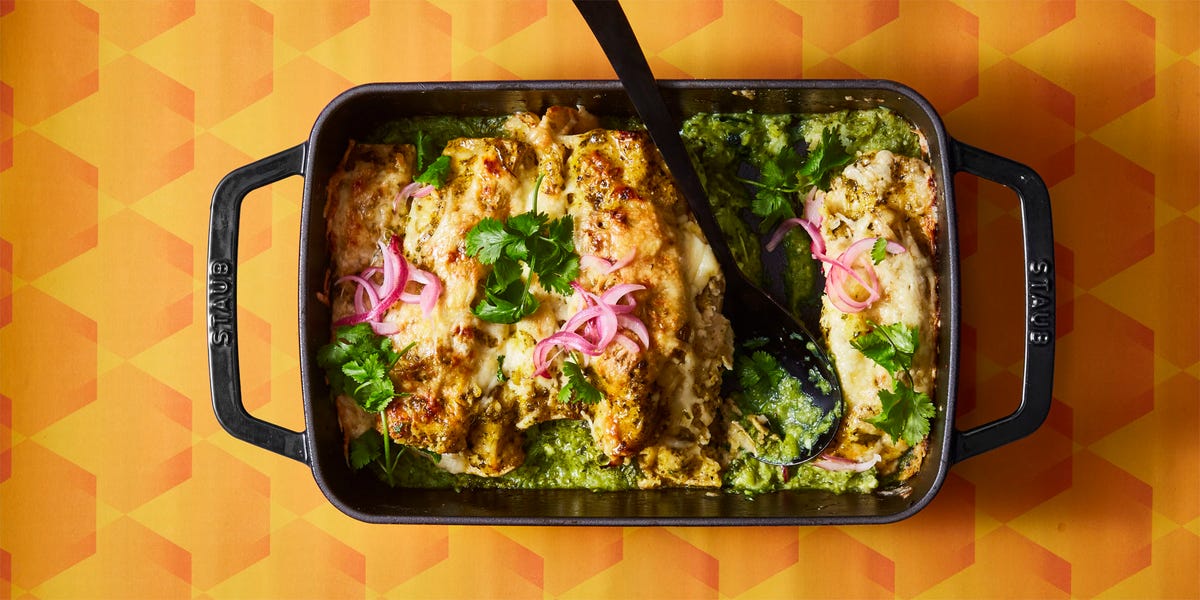
There are ordinary weeknight dinners, and then there are enchiladas verdes bubbling under a blanket of melted cheese, smelling so good that everyone suddenly appears in the kitchen asking, “Is it ready yet?” These green chicken enchiladas combine tender shredded chicken, soft corn tortillas, creamy cheese, and a bright tomatillo salsa that delivers tang, gentle heat, and plenty of fresh flavor.
The secret to the best enchiladas verdes recipe is balance. The sauce should taste lively rather than painfully spicy. The tortillas should remain soft without dissolving into green mush. The filling should be juicy but not watery, and the cheese should support the salsa instead of burying it under a dairy avalanche.
This recipe uses roasted tomatillos, jalapeño or serrano peppers, onion, garlic, cilantro, and lime to create a homemade salsa verde. Roasting concentrates the ingredients and adds a lightly smoky flavor, while a small amount of chicken broth gives the finished sauce a smooth, spoonable consistency. Similar techniques appear across respected Mexican-cooking authorities and major American recipe publications.
What Are Enchiladas Verdes?
Enchiladas verdes are corn tortillas filled with ingredients such as shredded chicken, cheese, beans, potatoes, or vegetables and covered with a green chile sauce. The word verdes means “green,” referring to the color of the salsa rather than a requirement that you eat them while sitting in a garden.
Unlike many red enchilada sauces, which rely on dried red chiles, salsa verde usually begins with tomatillos. These small green fruits come wrapped in papery husks and have a naturally tart, citrusy character. When cooked, they soften and become slightly sweeter while keeping the acidity that makes green enchiladas taste fresh rather than heavy.
There is no single universal presentation. Enchiladas may be rolled, folded, layered, baked as a casserole, or assembled individually and served immediately. Some versions are covered with melted Monterey Jack or Oaxaca cheese, while others are finished more simply with queso fresco, crema, onion, cilantro, and sliced radishes.
Why This Enchiladas Verdes Recipe Works
Roasting creates a deeper salsa verde
Boiled tomatillos make a clean, bright sauce, but roasting adds another layer of flavor. The tomatillos blister, the onion becomes sweeter, and the garlic loses its raw sharpness. A little browning also keeps the salsa from tasting like someone introduced a lime to a lawn mower.
The filling stays simple and juicy
Shredded chicken is mixed with a small amount of salsa and cheese. This keeps the meat moist without creating a filling that leaks from both ends of the tortilla. Rotisserie chicken works beautifully, although poached, roasted, or pressure-cooked chicken can also be used.
The tortillas are warmed before rolling
Cold corn tortillas are enthusiastic little crackers pretending to be flexible. Warm them first, and they become much easier to roll. Briefly brushing or frying them with oil also creates a light barrier that helps prevent excessive sogginess. Established enchilada recipes frequently soften tortillas in oil, warm them on a griddle, or dip them into sauce before filling.
The sauce is used generously, but not recklessly
Enchiladas need enough salsa to remain tender, but too much can turn the pan into tortilla soup. A thin layer goes beneath the enchiladas, with enough sauce spooned over the top to coat them thoroughly. Save extra salsa for serving at the table.
Ingredients for the Best Enchiladas Verdes
For the roasted salsa verde
- 1 1/2 pounds tomatillos, about 10 to 12 medium
- 1 medium white onion, cut into thick wedges
- 2 jalapeño peppers or 1 to 2 serrano peppers
- 3 garlic cloves, unpeeled
- 1 packed cup fresh cilantro leaves and tender stems
- 1 tablespoon fresh lime juice, plus more to taste
- 1 cup low-sodium chicken broth
- 1 tablespoon neutral cooking oil
- 3/4 teaspoon kosher salt, plus more as needed
For the enchiladas
- 3 cups cooked shredded chicken
- 12 corn tortillas, approximately 6 inches wide
- 1 1/2 cups shredded Monterey Jack, Oaxaca, or Chihuahua cheese
- 2 tablespoons neutral cooking oil
- 1/3 cup finely chopped white onion
- 1/3 cup crumbled queso fresco or Cotija cheese
- Mexican crema or sour cream, for serving
- Fresh cilantro, sliced radishes, avocado, or lime wedges, for serving
Ingredient Notes and Smart Substitutions
Tomatillos
Choose tomatillos that feel firm and fill most of their husks. Remove the husks and rinse away the naturally sticky coating under running water before cooking. The FDA recommends washing fresh produce thoroughly under running water before preparation, even when the outer layer will not be eaten.
Jalapeños versus serranos
Jalapeños generally offer milder, rounder heat, while serranos tend to be hotter and more direct. For a family-friendly sauce, begin with one seeded jalapeño. For noticeable heat, roast two jalapeños or one serrano with its seeds. Pepper heat varies, so taste before adding the second chile. Salsa verde should wake up your mouth, not make it file a complaint.
Chicken
Dark meat remains especially juicy, but chicken breast works well when it is not overcooked. Leftover roast chicken is excellent, and a store-bought rotisserie chicken makes this an easy weeknight enchiladas recipe. You may also substitute shredded turkey, pulled pork, sautéed mushrooms, black beans, pinto beans, or roasted vegetables.
Cheese
Oaxaca and Chihuahua cheeses melt smoothly and provide a traditional Mexican flavor. Monterey Jack is widely available in American supermarkets and produces excellent results. Queso fresco and Cotija do not melt in the same way, so they are best crumbled over the finished enchiladas.
Corn tortillas
Corn tortillas provide the classic flavor and structure associated with enchiladas. Flour tortillas can be used, but they create a softer, more casserole-like result. If your corn tortillas feel dry, warm them in a damp towel before brushing them with oil.
How to Make Enchiladas Verdes
Step 1: Prepare the tomatillos
Preheat the broiler and position an oven rack about 6 inches below the heating element. Remove the papery husks from the tomatillos, rinse them thoroughly, and dry them with a clean towel.
Step 2: Roast the salsa ingredients
Place the tomatillos, onion wedges, whole peppers, and unpeeled garlic cloves on a foil-lined baking sheet. Broil for 5 to 7 minutes, until the vegetables develop dark spots. Turn everything and broil for another 4 to 6 minutes.
The tomatillos should look softened and slightly collapsed. Some juice may escape onto the pan; keep it, because that flavorful liquid belongs in the blender rather than being sacrificed to the kitchen sink.
Step 3: Blend the salsa verde
Peel the roasted garlic. Transfer the tomatillos, onion, peppers, garlic, cilantro, lime juice, salt, and any juices from the baking sheet to a blender. Add 1/2 cup of chicken broth and blend until mostly smooth.
Add more broth as needed. The salsa should pour easily but remain thick enough to cling to a tortilla. Taste and adjust the salt, lime, or chile. Remember that the tortillas, chicken, and cheese will soften the sauce’s intensity, so the salsa should taste slightly more assertive on its own than you want the finished dish to taste.
Step 4: Simmer the sauce
Heat 1 tablespoon of oil in a medium saucepan over medium heat. Carefully pour in the blended salsa. It may splatter, because apparently even sauces enjoy drama.
Simmer for 8 to 10 minutes, stirring occasionally, until the color deepens slightly and the raw edge disappears. If it becomes too thick, add another splash of broth. Set aside about 1/2 cup of salsa for mixing with the chicken.
Step 5: Make the chicken filling
Combine the shredded chicken, reserved salsa, and 1/2 cup of shredded cheese in a bowl. Taste the filling and add a small pinch of salt if needed. Rotisserie chicken and cheese may already contain plenty of salt, so season carefully.
Step 6: Warm the tortillas
Preheat the oven to 375°F. Lightly brush both sides of each tortilla with oil. Arrange them in overlapping stacks on a baking sheet and warm for 3 to 5 minutes, or heat them one at a time in a skillet for about 10 seconds per side.
For a more traditional texture, heat a thin layer of oil in a skillet and fry each tortilla for only 5 to 10 seconds per side. The goal is flexibility, not a tostada. Drain briefly on paper towels.
Step 7: Assemble the enchiladas
Spread approximately 3/4 cup of salsa verde over the bottom of a 9-by-13-inch baking dish. Place about 1/4 cup of chicken filling slightly below the center of each tortilla. Roll the tortilla around the filling and place it seam-side down in the dish.
Repeat with the remaining tortillas, arranging them snugly beside one another. Do not pack them like overfilled burritos. Moderate filling makes the tortillas easier to roll and helps prevent tearing.
Step 8: Sauce and bake
Spoon about 1 1/2 cups of salsa verde evenly over the enchiladas. Sprinkle the remaining shredded cheese over the top. Bake uncovered for 15 to 20 minutes, until the sauce bubbles around the edges and the cheese melts.
For additional browning, broil the pan for 1 to 2 minutes at the end. Watch closely. Cheese can travel from “beautifully golden” to “smoke alarm solo” with impressive speed.
Step 9: Add fresh toppings
Let the enchiladas rest for 5 minutes. Top them with chopped white onion, queso fresco, crema, cilantro, sliced radishes, avocado, or a squeeze of lime. Serve additional warm salsa verde on the side.
How to Keep Enchiladas from Getting Soggy
Soggy enchiladas usually result from one of three problems: fragile tortillas, excessive sauce, or a watery filling.
First, soften the corn tortillas with a small amount of oil. This improves flexibility and slows the absorption of sauce. Second, avoid drowning the assembled enchiladas. They should be fully coated, but the baking dish should not contain a green swimming pool. Third, drain wet filling ingredients before assembly. Cooked spinach, canned beans, sautéed mushrooms, and shredded meat can all release extra liquid.
It also helps to bake the enchiladas soon after assembly. They can be prepared ahead, but tortillas naturally continue absorbing sauce as they sit.
Easy Shortcuts for Busy Nights
Homemade roasted tomatillo salsa produces the freshest flavor, but a good jarred salsa verde can turn this dish into a fast dinner. Choose a salsa with tomatillos listed near the beginning of the ingredient list and a consistency thicker than taco sauce.
Use approximately 3 cups of prepared salsa. Simmer it with sautéed onion, garlic, a splash of chicken broth, and a squeeze of lime for 5 minutes. This quick adjustment makes jarred salsa taste more rounded and homemade. Several modern weeknight enchilada recipes use prepared green sauce or jarred salsa verde as a practical substitute.
Additional shortcuts include using rotisserie chicken, shredding cheese in advance, or preparing the salsa verde up to three days before assembly.
Variations to Try
Creamy enchiladas verdes
Stir 1/2 cup of Mexican crema, sour cream, or heavy cream into the simmered salsa after removing it from the heat. Do not boil the sauce vigorously after adding dairy, or it may separate. This variation moves the dish toward enchiladas suizas, which are known for a richer green sauce and melted cheese topping.
Vegetarian enchiladas verdes
Replace the chicken with sautéed mushrooms, spinach, zucchini, roasted sweet potatoes, or a mixture of black beans and corn. Cook vegetables until their excess moisture evaporates before rolling them into the tortillas.
Cheese enchiladas
Fill the tortillas with shredded Oaxaca, Chihuahua, or Monterey Jack cheese. Add finely chopped onion for contrast. Because cheese releases fat as it melts, use a slightly lighter hand with the topping.
Stacked enchiladas
Instead of rolling the tortillas, layer softened tortillas with chicken, salsa, onion, and cheese. This approach is useful when the tortillas insist on breaking despite your diplomatic efforts. Stacked versions are also documented in regional and restaurant-inspired enchilada preparations.
What to Serve with Green Chicken Enchiladas
Enchiladas verdes are rich enough to anchor a complete meal, so the best side dishes provide freshness, texture, or mild flavors.
- Mexican rice or cilantro-lime rice
- Black beans, pinto beans, or refried beans
- Shredded cabbage salad with lime dressing
- Grilled corn or esquites
- Avocado and tomato salad
- Pickled red onions
- Fresh fruit with lime and chile seasoning
For a lighter meal, serve two enchiladas per person with a large crunchy salad. For extremely hungry guests, offer three enchiladas and quietly protect the last one for yourself.
Make-Ahead, Storage, and Reheating Tips
The salsa verde can be prepared up to three days in advance and stored in an airtight container in the refrigerator. The chicken filling can also be mixed one day ahead.
For the best texture, store the sauce, filling, and tortillas separately and assemble shortly before baking. If fully assembled in advance, refrigerate the dish for no more than one day. Add the top layer of sauce and cheese shortly before it goes into the oven.
Cooked chicken should reach a safe internal temperature of 165°F. Perishable food should generally be refrigerated within two hours, and USDA guidance recommends using refrigerated cooked chicken within three to four days. Reheat leftover enchiladas to 165°F.
Individual portions reheat well in a covered skillet over low heat or in a 350°F oven for approximately 15 minutes. The microwave is faster, but the tortillas will become softer. Add fresh crema, onion, cilantro, and radishes after reheating rather than before.
Frequently Asked Questions
Are green enchiladas very spicy?
They do not have to be. Tomatillos are tart but not especially hot. Most of the heat comes from jalapeño or serrano peppers. Remove the seeds and inner membranes and use only one jalapeño for a mild sauce.
Can I use canned green enchilada sauce?
Yes. Use approximately 3 cups and improve the flavor with fresh lime juice, cilantro, sautéed onion, garlic, or a spoonful of roasted green chiles.
Can enchiladas verdes be frozen?
Yes, although the tortillas will be softer after thawing. Freeze the assembled enchiladas before baking, preferably without the cheese topping. Wrap the dish tightly and freeze for up to two months for the best quality. Thaw overnight in the refrigerator, add cheese, and bake until hot throughout.
Why does my salsa verde taste bitter?
Bitterness may come from heavily burned garlic, scorched chiles, excessive cilantro stems, or old tomatillos. Dark blistered spots are desirable, but vegetables that have turned completely black should be trimmed before blending. Salt and lime can improve balance, but they cannot fully rescue badly burned garlic.
Why are my corn tortillas breaking?
The tortillas may be too cold, dry, or thick. Warm them until flexible, coat them lightly with oil, and avoid overfilling. Keep the warmed tortillas covered with a clean towel while assembling the batch.
Final Experience Notes: What I Learned from Making Enchiladas Verdes Repeatedly
My first attempt at enchiladas verdes looked promising until I tried to lift one from the pan. The tortilla stayed behind, the filling escaped, and what reached the plate resembled a green chicken landslide. It still tasted good, but nobody would have mistaken it for restaurant presentation.
The biggest lesson was that tortilla preparation is not an optional ceremonial step. I originally assumed that pouring hot sauce over cold tortillas would soften them. Technically, it did. Unfortunately, it softened them with the structural integrity of wet tissue paper. Warming the tortillas and giving them a whisper of oil made an enormous difference. They rolled smoothly, held the filling, and remained recognizable after baking.
I also learned not to judge salsa verde straight from the blender. Before simmering, the sauce can taste aggressively tart, slightly raw, and sharper than expected. After eight or ten minutes in a hot pan, the flavors settle down. The onion becomes sweeter, the garlic blends into the background, and the tomatillos develop a rounder flavor. Salt matters more than I expected, too. An under-salted salsa tastes sour; a properly seasoned salsa tastes bright.
Roasting the vegetables produced my favorite version. Boiling is quick and creates a beautifully fresh sauce, but roasting gives the tomatillos and chiles a deeper personality. I now let a few dark spots form instead of nervously pulling the pan from the broiler at the first hint of color. The exception is garlic. Garlic goes from toasted to bitter faster than the rest, so I remove smaller cloves early when necessary.
Another discovery involved the chicken. At first, I packed each tortilla with as much filling as physically possible, believing generosity could only improve dinner. The result was a collection of split tortillas leaking chicken from every direction. About 1/4 cup of filling per six-inch tortilla is plenty. Enchiladas should be comfortably full, not attempting to smuggle an entire rotisserie chicken across the border of the baking dish.
I have also tested different cheeses. Sharp cheddar dominates the sauce, mozzarella stretches beautifully but tastes neutral, and Monterey Jack offers the easiest balance of flavor and meltability. Oaxaca cheese is my favorite when available because it melts smoothly without making the dish feel excessively greasy. Queso fresco is best added after baking, where its salty, milky flavor contrasts with the warm sauce.
The final improvement was adding fresh toppings only after the enchiladas rested for a few minutes. White onion contributes crunch, radishes add peppery freshness, crema softens the chile heat, and lime brings the tomatillos back into focus. These toppings are not decoration added for social media glamour. They keep every bite from tasting uniformly soft and rich.
After several batches, the most reliable formula became clear: roast the salsa ingredients, simmer the sauce, lightly oil and warm the tortillas, avoid overfilling, and use enough salsa to coat rather than drown. Follow those principles, and enchiladas verdes become forgiving, flexible, and genuinely exciting to make. Even an imperfect pan will probably be deliciousand delicious food has a remarkable talent for making cosmetic problems disappear.
Conclusion
The best enchiladas verdes recipe does not depend on complicated equipment or hard-to-find ingredients. It depends on a flavorful tomatillo sauce, properly softened corn tortillas, moist chicken, balanced seasoning, and a sensible amount of cheese. Roast the vegetables for depth, control the chiles according to your preferred heat level, and finish the dish with crisp onion, cilantro, crema, and lime.
Once you understand the basic method, the recipe becomes endlessly adaptable. Use leftover turkey, roasted vegetables, beans, pork, or extra cheese. Make the salsa ahead, take a shortcut with rotisserie chicken, or assemble the enchiladas in layers when rolling feels like unnecessary paperwork. The result will still be bright, comforting, and worthy of a permanent place in your dinner rotation.
Note: Chile heat varies considerably. Begin with less pepper, taste the finished salsa, and add more heat only when needed.