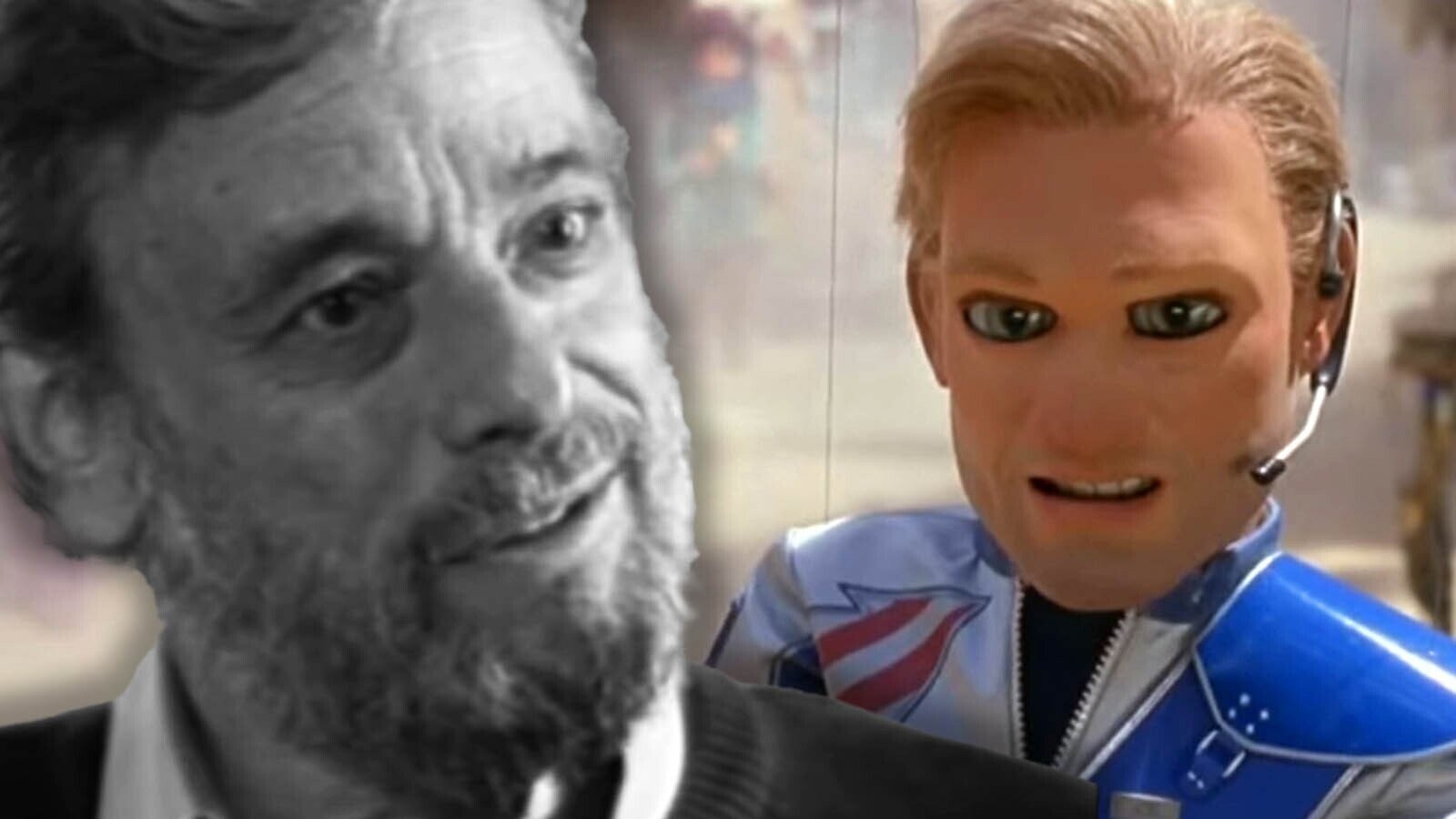
Some stories are so deliciously strange that they sound made up by a writers’ room running on cold pizza and dangerous confidence. This is one of them. Stephen Sondheim, the grand master of modern musical theater, the man associated with precision, elegance, and lyrics sharp enough to shave with, apparently wanted to work with Trey Parker and Matt Stone, the chaos merchants behind South Park, Team America: World Police, and a very profitable habit of making everyone uncomfortable in three acts or less.
At first glance, the pairing sounds like somebody shook Broadway and Comedy Central in the same snow globe. But look closer and it makes perfect sense. Sondheim was never just a guardian of tradition. He was a restless craftsman who respected bold ideas, structural intelligence, and artists who actually understood how musical storytelling works. Parker and Stone, beneath all the profanity, fake innocence, and gleeful bad behavior, were exactly that: musical storytellers with wicked instincts, fearless comic timing, and a surprisingly deep love for the form.
That is why the idea of Stephen Sondheim wanting to collaborate with Trey Parker and Matt Stone is not just a fun piece of theater gossip. It is a revealing little cultural lightning bolt. It tells us something important about Sondheim, something important about Parker and Stone, and something even more interesting about what great artists recognize in one another. Sometimes genius does not wear a tuxedo. Sometimes it arrives swearing, singing, and kicking the stage door open.
The Letter That Made Theater Fans Do a Double Take
The heart of this story is a letter. After seeing Team America: World Police, Sondheim wrote to Trey Parker with admiration rather than polite distance. That matters. This was not a vague “nice work, kids” note from a legend being diplomatic. It was more like an enthusiastic artistic salute. He praised the film, encouraged Parker after a rough critical reception, and floated the idea of writing a stage musical together.
That one gesture instantly changed the way many people looked at the relationship between so-called high art and low comedy. Sondheim did not behave like a gatekeeper protecting a velvet rope. He behaved like a true artist recognizing another artist. He saw past the puppet explosions, the scorched-earth satire, and the outrageous jokes. He spotted construction. He spotted rhythm. He spotted nerve. Most of all, he spotted musical intelligence.
And that is the key to the whole thing. Parker and Stone were never merely provocateurs who happened to use songs. They were creators who understood that songs can do narrative work. A musical number can deepen character, advance plot, undercut sentiment, and sharpen satire all at once. Sondheim spent a career proving exactly that. So when he responded to Parker and Stone, he was not slumming. He was recognizing relatives.
Why Sondheim’s Interest Was Not as Random as It Sounds
Sondheim loved craft, not respectability
People who flatten Sondheim into “the classy one” miss what made him so exciting in the first place. He changed musical theater by pushing it toward psychological complexity, formal experimentation, and emotional risk. He cared about detail. He cared about structure. He cared about whether a song belonged exactly where it sat and whether every word earned its spot. That kind of artist is often more interested in invention than in good manners.
Parker and Stone may not look like the children of Sondheim on paper, but in practice they share several of his instincts. They are obsessive builders. Their comedy is rowdy, but it is engineered. Their songs often land because the joke is not random; it is embedded in the dramatic situation. They know how to set up a premise, explode it, then somehow sneak in a note of sincerity before the audience realizes what happened. That is not laziness. That is design.
He could hear the musicality under the madness
Long before Broadway embraced them, Parker and Stone had already shown they knew their way around a tune. Cannibal! The Musical was an early signal flare. South Park: Bigger, Longer & Uncut made the point impossible to ignore. That film did not just contain songs; it functioned like a real musical. It spoofed Disney, Broadway, patriotic bombast, and classic ensemble writing while still delivering numbers that were catchy enough to stick in your head like gum on a theater seat.
Parker, especially, had the kind of melodic instinct that makes composers and lyricists sit up straighter. He loved musicals openly and seriously. That often surprises people who think irreverence and reverence cannot coexist. In Parker’s case, they absolutely can. He mocks what he understands. Sometimes he mocks it because he understands it so well.
Sondheim almost certainly recognized that. The joke only works when the machinery works. Satire with no musical backbone is just yelling in costume. Parker and Stone had backbone to spare.
From South Park to Broadway: The Path Was Already There
The idea that Trey Parker and Matt Stone came out of nowhere to conquer Broadway with The Book of Mormon is one of those myths that survives because it is tidier than the truth. In reality, the path had been under construction for years. South Park: Bigger, Longer & Uncut proved they could build a full-scale movie musical with real comic architecture. Their work with composer and lyricist Marc Shaiman helped show the world that Parker could generate songs that were outrageous, technically savvy, and narratively useful at the same time.
Then came Robert Lopez, who had his own musical-comedy superpowers and his own admiration for Parker and Stone. The creative overlap was not accidental. Lopez has discussed how the South Park movie helped point the way toward what he wanted musical comedy to do. Once those three forces connected, The Book of Mormon stopped seeming like a novelty and started looking like destiny wearing a missionary nametag.
When The Book of Mormon opened, it confirmed what Sondheim had apparently understood years earlier. Parker and Stone were not tourists in musical theater. They were practitioners. The show was filthy, yes. It was also expertly shaped, musically literate, and theatrically confident. It mocked religion, Broadway formulas, cultural earnestness, and the audience’s own expectations, yet it still delivered what many strong musicals deliver: momentum, emotional release, and songs that know exactly what they are doing.
That is probably why the Sondheim story keeps resurfacing. The letter now feels less like a quirky sidebar and more like a pre-review from the future. He saw the Broadway potential before Broadway handed out trophies.
What Sondheim Likely Saw in Parker and Stone
1. They understood form
One of the hardest things in musical theater is making songs feel inevitable instead of decorative. Parker and Stone, especially when working in collaboration with gifted musical partners, repeatedly showed they understood how and why songs should arrive. Their numbers often function as escalations of dramatic logic. A character cannot merely say the thing, so the character sings the thing, and because these creators are who they are, the thing being sung may also be deeply ridiculous. But the principle is still pure musical theater.
2. They were fearless about tone
Sondheim never made a career out of playing safe. Even his funniest work has acid in it. Even his darkest work has wit. Parker and Stone operate the same way, just with more explosions and fewer polite transitions. They are comfortable letting sweetness and vulgarity share a room. That tonal agility is a lot rarer than people think. Plenty of creators can be funny. Fewer can be funny and sincere in the same breath without collapsing into mush or smugness.
3. They knew satire is stronger when the songs are good
A weak parody song is a one-joke sketch with piano. A strong parody song can become a genuine example of the thing it is sending up. Parker and Stone understood that from the start. Their best musical comedy works because the songs would still function even if you removed half the scandalous material. The craft holds. Sondheim, patron saint of exactness, would have noticed that before the rest of the room finished laughing.
The Collaboration We Never Got
Of course, the heartbreaking part of this story is that the collaboration never happened. No completed stage musical by Sondheim, Parker, and Stone exists. Theater history is rude like that. It gives us enough information to become obsessed, then withholds the actual artifact.
Why did it never come together? There is no neat official ending to this mini-drama. Life and careers are usually messier than fan fantasy. Sondheim stayed busy with his own projects. Parker and Stone were consumed by South Park, film work, and later Broadway. A collaboration like that would have required more than mutual admiration. It would have needed timing, bandwidth, chemistry in a room, and the right idea. Great artists can admire one another sincerely and still never align on a calendar. Tragic, yes. Also painfully normal.
But the absence of the collaboration is part of the fascination. It leaves behind a perfect creative mirage. People can imagine a show that combined Sondheim’s formal elegance with Parker and Stone’s gleeful offensiveness. Would it have been a masterpiece? A beautiful disaster? The greatest night in theater history for people who enjoy both internal rhyme and public scandal? We cannot know. Which, honestly, only makes it more irresistible.
Why This Story Still Hits So Hard
There is something almost moving about the image of Stephen Sondheim, a giant of American musical theater, reaching across an apparent cultural divide to say, in effect, “I see what you are doing, and I respect it.” That kind of recognition matters because it cuts through lazy categories. It reminds us that serious art and funny art are not enemies. Vulgarity does not automatically cancel intelligence. Formal rigor does not require stiffness. Sometimes the smartest person in the room is the one making the dirtiest joke, provided the joke scans, rhymes, and lands on the beat.
The story also flatters theater fans in the best way. It asks us to watch more closely. Maybe the map is wrong. Maybe the line between Broadway sophistication and pop-culture anarchy is thinner than people assume. Maybe musical theater is not weakened when outsiders with real chops step in. Maybe it gets jolted awake.
And if there is one thing Sondheim respected, it was artists who were awake.
The Experience of Imagining the Musical That Never Was
There is a special kind of excitement that comes from learning about a collaboration that almost happened but never did. It is not the same as reading about a canceled movie or an abandoned album. With theater, the feeling is weirder and somehow more personal. Stage work lives in the imagination even when it is real, so when you hear that Sondheim wanted to work with Trey Parker and Matt Stone, your brain starts staging it instantly. You cast it in your head. You hear the opening number. You picture the Playbill cover. You even invent the intermission line for the bathroom without meaning to. Theater fans are not passive consumers; they are part-time hallucination engineers.
The emotional experience of this story also comes from how perfectly mismatched the names seem at first. Sondheim suggests clean manuscript paper, obsession, and artistic x-ray vision. Parker and Stone suggest chaos, profanity, and a willingness to set fire to sacred cows and then sing a reprise over the smoke. Put those energies together and the imagination starts tap dancing. Maybe the show would have been a surgical satire with devastating lyrics. Maybe it would have been hilariously indecent but structurally immaculate. Maybe audiences would have left the theater asking whether they had just seen a masterpiece or been mugged by brilliance. The honest answer is probably both.
That is why this story has stuck around. It gives people permission to think bigger about musical theater. It suggests that the form is elastic enough to hold refinement and recklessness at the same time. Fans who love classic Broadway hear this anecdote and feel Sondheim’s generosity. Fans who love South Park hear it and feel vindicated, as if a high priest of the art form leaned over and whispered, “No, seriously, these lunatics know what they’re doing.” For people who belong to both camps, it is catnip with orchestration.
There is also something deeply human in the idea that admiration can cross style, generation, and reputation. Sondheim did not have to protect his brand by pretending not to notice Parker and Stone. He noticed them precisely because he had standards. That may be the most encouraging part of the whole tale. Great artists are often far less snobbish than their fans. They know that innovation does not always arrive dressed appropriately. Sometimes it shows up in a ridiculous accent, carrying a filthy joke and a terrific bridge.
So the lasting experience of this story is not merely frustration over the unwritten show. It is gratitude for the glimpse it gives us into how art actually travels. Influence is messy. Respect can be surprising. Musical theater, at its best, is a huge noisy house with many doors. In one room, Sondheim is polishing a lyric until it glows. In another, Parker and Stone are trying to make the audience laugh so hard it forgets to breathe. The miracle is that Sondheim could hear that commotion, smile, and think, “Yes. Them. I want to work with them.”
Conclusion
Stephen Sondheim wanting to work with Trey Parker and Matt Stone is more than an entertaining bit of theater lore. It is a small but powerful reminder that true artistic recognition often ignores the labels everyone else clings to. Sondheim heard musical intelligence where others heard only provocation. Parker and Stone, for their part, eventually proved on Broadway that they were not just unruly satirists dabbling in songs. They were legitimate musical storytellers with technical chops, comic fearlessness, and a deep understanding of how the form can bend without breaking.
In the end, the collaboration never materialized, and that remains one of those maddening cultural near-misses that will haunt theater people forever. But the fact that Sondheim wanted it at all tells the story. He saw something real. He saw artists worth meeting on common ground. And if the king of modern musicals thought Parker and Stone were worthy co-conspirators, then maybe the rest of us can retire the old high-brow versus low-brow argument for good. Sometimes art is classy. Sometimes art is filthy. And sometimes, gloriously, it is both singing at full volume under the same spotlight.