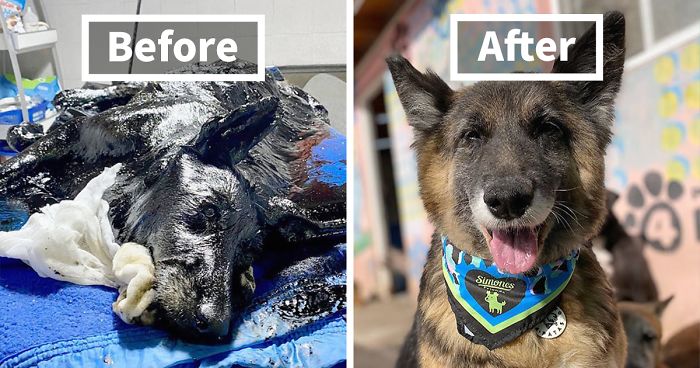
Some before-and-after photos whisper. These ones practically bark, wag, and knock over the emotional furniture. The transformations of abandoned dogs rescued by Proyecto 4 Patas show what happens when neglect meets the stubborn, beautiful force of human compassion. One photo may show a dog with ribs visible, eyes lowered, fur matted into sad little dreadlocks. The next shows the same dog standing tall, glossy, goofy, and very possibly judging your snack choices from the couch.
That is the magic of rescue dog transformations: they are not just “cute glow-ups.” They are proof of medical care, patience, foster homes, volunteers, adopters, donations, sterilization campaigns, and the kind of love that does not quit when things get messy. And rescue work does get messy. Sometimes literally. One famous case connected with Proyecto 4 Patas involved Aloe, a dog found covered in tar and unable to move. Volunteers spent hours cleaning her, using patience, oil, and steady hands to bring her back from a nightmare. That kind of rescue is not a quick photo op. It is an all-hands-on-deck emergency with fur.
Across the United States and around the world, shelters and animal welfare groups continue to face overcrowding, rising care costs, and a constant need for responsible adopters. But every successful rescue reminds us that “abandoned” is not an ending. Sometimes, it is the terrible first chapter before a very loud, tail-thumping comeback story.
Who Is Proyecto 4 Patas?
Proyecto 4 Patas, which translates roughly to “Four Paws Project,” is an animal protection organization based in Argentina. Its mission focuses on helping animals living on the street, especially those in critical condition. The organization rescues, treats, rehabilitates, and promotes responsible adoption for dogs and other animals who have been neglected, injured, or abandoned.
Its work is rooted in direct action. That means volunteers and rescuers do more than post sad photos and hope for the best. They respond to reports, coordinate veterinary care, arrange temporary homes, support adoption, and advocate for sterilization as a long-term solution to street animal suffering. In a world where online outrage can last about as long as a dog treat near a Labrador, Proyecto 4 Patas turns concern into actual work.
Their before-and-after photos are powerful because they reveal the full arc of rescue. The “before” image usually shows the visible damage: hunger, mange, infection, fear, injury, or exhaustion. The “after” image shows the invisible repair: trust, safety, appetite, sleep, curiosity, and the moment a dog realizes that hands can give comfort instead of pain.
Why Before-And-After Rescue Photos Matter
Before-and-after photos of abandoned dogs do more than make people reach for tissues. They educate. They show the public what neglect looks like before it becomes a statistic. They also show what recovery requires. A neglected dog does not become healthy because someone says, “Who’s a good boy?” in a squeaky voice, although that certainly helps morale.
Real transformation may involve emergency veterinary treatment, vaccinations, parasite control, wound care, surgery, grooming, nutrition plans, behavior support, foster placement, and slow trust-building. For dogs who have survived trauma, even ordinary household sounds can feel like thunder wearing sneakers. A dishwasher, a vacuum, or a cheerful uncle entering too quickly can be overwhelming.
That is why rescue organizations often rely on foster homes. A foster home gives a dog a softer landing than a crowded kennel. It lets rescuers learn whether the dog is shy, playful, reactive, gentle with children, nervous around other animals, or secretly a professional pillow thief. Foster care also helps dogs rest, decompress, and prepare for adoption in a real-life setting.
The 30 Transformations: What These Photos Really Show
The title says “30 before and after photos,” but the real story is not just thirty images. It is thirty reminders that a dog’s condition on rescue day is not the dog’s identity. The frightened animal in the corner may become the dog who greets every visitor like a long-lost celebrity. The dog with missing fur may become the neighborhood’s fluffiest mayor. The skinny puppy with no strength may become a beach-running, sofa-hogging, toy-destroying athlete.
1. The Starved Dog Who Learns Food Will Come Again
Many abandoned dogs arrive dangerously thin. In before photos, their bodies show the evidence of long hunger. Recovery is not simply giving a huge bowl of food and cheering. Malnourished animals need careful feeding plans because their bodies may not tolerate sudden overfeeding. The after photo often shows a dog with muscle, clear eyes, and the deeply serious expression of someone who now understands dinner time as a sacred national holiday.
2. The Matted Dog Underneath The Fur
Severe matting is not a hairstyle; it is a medical issue. Matted fur can pull painfully on the skin, hide wounds, trap moisture, and restrict movement. Some rescue dogs look like walking dust mops in their first photos. After grooming, bathing, and treatment, the dog underneath finally appears. Often, the biggest change is not the haircut. It is the posture. Once pain is removed, the dog stands differently, moves more freely, and sometimes discovers the joy of dramatic zoomies.
3. The Injured Dog Who Gets A Fighting Chance
Some dogs rescued by organizations like Proyecto 4 Patas come from severe injury, traffic accidents, cruelty, or disease. Before photos may show bandages, weakness, or wounds. After photos show recovery, but they also show teamwork: veterinarians, donors, transporters, shelter staff, and foster families. A single healed dog can represent dozens of human decisions made at exactly the right time.
4. The Terrified Dog Who Learns Trust Slowly
Not all wounds are visible. Some dogs arrive frozen with fear. Their before photos show tucked tails, lowered heads, and eyes that seem to ask whether the world is about to hurt them again. In the after photo, the same dog may be leaning into a human hand, sleeping belly-up, or wearing a tiny sweater with the confidence of a runway model. Trust is not instant. It is built through routine, kindness, and letting the dog move at their own pace.
5. The Senior Dog Who Finally Gets Comfort
Senior rescue dogs are some of the most moving transformations. They may not become bouncy puppies, and that is perfectly fine. Their second chance often looks like soft beds, regular meals, medication for pain, slow walks, and a home where nobody expects them to be anything but loved. The after photo of an old dog sleeping peacefully can be as powerful as any dramatic physical recovery.
What Makes A Second Chance Successful?
A second chance is not just rescue day. Rescue day is the door opening. The real work begins after. Successful rehabilitation depends on three big things: health care, emotional safety, and responsible placement.
First, medical care matters. Abandoned dogs may need vaccinations, spay or neuter surgery, dental treatment, parasite control, orthopedic care, skin treatment, or specialized nutrition. Rescue organizations must triage limited resources, especially when many animals need help at once. That is why donations, veterinary partnerships, and community support can decide how many dogs receive lifesaving care.
Second, emotional safety matters. A dog who has survived the street, abuse, or abandonment may not understand that a new home is safe. Many adoption experts recommend giving rescue dogs a decompression period. The popular “3-3-3” guideline describes the first three days, three weeks, and three months as broad stages of adjustment. It is not a strict scientific stopwatch, but it is a helpful reminder: do not expect perfection immediately. Your new dog is not a phone you unbox and use instantly. They are a living being trying to understand a whole new universe, including why humans own so many throw pillows.
Third, responsible placement matters. A great adoption is not about finding any home. It is about finding the right home. A high-energy young dog may need an active adopter. A shy dog may need a quiet household. A dog recovering from trauma may need someone patient enough to celebrate small wins, like the first tail wag, the first nap outside the crate, or the first time the dog steals a sock and looks proud of the crime.
Why Sterilization Is Part Of The Story
Rescue is urgent, but prevention is essential. Organizations like Proyecto 4 Patas often emphasize spaying and neutering because uncontrolled breeding creates more animals than communities can safely care for. Every litter born into neglect increases the burden on shelters, rescuers, veterinarians, and already-struggling neighborhoods.
Sterilization is not glamorous. It does not produce the same viral emotion as a before-and-after photo. Nobody cries over a calendar reminder that says “Tuesday: community spay clinic.” But this work prevents future suffering. It reduces the number of puppies born into hunger, disease, traffic danger, and abandonment. Rescue pulls dogs from the river. Sterilization helps stop them from falling in upstream.
How These Photos Change The Way We See Abandoned Dogs
The most important lesson from these 30 transformations is simple: condition is not character. A dirty dog is not a bad dog. A fearful dog is not broken. A sick dog is not hopeless. Abandonment tells us what happened to a dog, not what the dog can become.
That shift matters because many people choose pets based on first impressions. In a shelter, the calmest, cleanest, cutest dog may get attention first. Meanwhile, a nervous dog at the back of the kennel may be overlooked. But before-and-after rescue photos challenge that habit. They say, “Look again.” The dog hiding today may be the dog who sleeps with one paw on your foot forever. The dog with patchy fur today may be the dog whose coat becomes so shiny you start wondering whether they have a better beauty routine than you do.
These images also remind us that adoption is not charity in the gloomy sense. It is a relationship. The adopter gives safety, care, and structure. The dog gives companionship, comedy, loyalty, and the occasional mystery object found under the couch. Everyone wins, except maybe your black pants during shedding season.
What You Can Do If These Transformations Move You
If the photos of abandoned dogs getting a second chance make you want to help, adoption is only one option. Not everyone is ready to bring home a dog, and that honesty is a form of kindness. A dog is a commitment, not an emotional souvenir.
You can foster. You can donate food, bedding, cleaning supplies, or money. You can volunteer with transport, photography, social media, dog walking, event support, or administrative tasks. You can sponsor medical care for a special-needs dog. You can share adoptable animals responsibly, without guilt-tripping captions that make people scroll away faster than a greyhound chasing a tennis ball.
You can also support policies and community programs that reduce abandonment: affordable veterinary care, accessible spay and neuter services, pet-friendly housing, lost-pet reunification systems, and humane education. The best animal welfare work is not only about saving dogs after disaster. It is about building communities where fewer dogs end up abandoned in the first place.
Experience: What Rescue Dogs Teach Us After The “After” Photo
The after photo is beautiful, but it is not the finish line. Anyone who has adopted, fostered, volunteered, or even helped a rescue dog for a weekend knows that the real transformation continues quietly. It happens in ordinary moments. The first time a dog eats without guarding the bowl. The first time they fall asleep deeply enough to dream. The first time they choose to come near you instead of backing away. These moments do not always go viral, but they are the heartbeat of rescue.
Living with a rescued dog can teach patience in a way no motivational poster ever could. Some dogs arrive ready to love everyone immediately, including the mail carrier, the neighbor, and a suspiciously shaped lamp. Others need time. They may flinch when someone raises a hand too quickly. They may refuse stairs because stairs are apparently evil architecture. They may bark at hats, plastic bags, or their own reflection like they have discovered an intruder with excellent bone structure.
The best experience with a rescue dog begins with realistic expectations. The first few days should be calm. Let the dog explore slowly. Keep routines simple. Offer a safe space. Avoid throwing a welcome party with twelve relatives, three toddlers, and one enthusiastic golden retriever named Pickles. A newly adopted dog needs security more than excitement.
Over time, small rituals build trust. Feeding at the same hour, using gentle words, walking familiar routes, and rewarding good behavior help a dog understand that life is predictable now. Predictability is underrated. For a dog who has known hunger, danger, or abandonment, a boring Tuesday can be paradise. Same bowl. Same bed. Same person. Same silly voice asking, “Who’s my little potato?” Stability heals.
Many adopters say their rescue dog changed them as much as they changed the dog. That makes sense. Rescue dogs have a talent for rearranging human priorities. Suddenly, success is not a perfect living room; it is a dog sleeping peacefully in the middle of it. Happiness is not always dramatic; sometimes it is a formerly frightened dog trotting into the kitchen because they heard the cheese drawer open from three rooms away.
These experiences also teach humility. Love alone does not fix everything overnight. Some dogs need trainers, veterinarians, behavior support, medication, or long-term management. That does not make adoption a failure. It makes it real. A second chance is not a fairy tale where the credits roll after the dog gets a bath. It is a commitment to keep showing up after the cute photo, after the first accident on the rug, after the nervous barking, after the learning curve.
And yet, the reward is enormous. When a dog who once looked defeated begins to play, trust, nap, explore, and demand belly rubs like a tiny furry landlord, you understand why rescuers keep going. The before photo shows what neglect did. The after photo shows what compassion can do. The life after that photo shows what commitment means.
Conclusion
The 30 before-and-after photos of abandoned dogs rescued by Proyecto 4 Patas are more than heartwarming internet content. They are evidence. Evidence that abandoned dogs can heal. Evidence that volunteers and fosters are lifesavers. Evidence that adoption changes lives on both ends of the leash. Evidence that even the most hopeless-looking dog may simply be waiting for the right people to arrive.
These transformations ask us to look beyond dirt, fear, scars, and sadness. They ask us to see possibility. Behind every rescue photo is a question: what kind of world do we want to build for animals who depend on us? Proyecto 4 Patas answers that question through action: rescue, heal, sterilize, adopt responsibly, and keep believing that every dog deserves safety.
Note: This article is based on publicly available animal welfare information and rescue-related reporting, including material associated with Proyecto 4 Patas, U.S. shelter data organizations, veterinary shelter-care guidance, adoption resources, foster-care research, and responsible pet ownership recommendations. No source links are included in the body so the article remains clean for publication.