Some museums ask you to stand back, fold your hands, and admire history from a safe distance. The Centre for Computing History in Cambridge does something far more dangerous: it lets you touch things. Real things. Clicky keyboards. Chunky joysticks. Vintage computers that look as if they were designed by a committee of astronauts, accountants, and beige-plastic enthusiasts. For anyone who loves technology, retro gaming, digital culture, or the strange emotional power of an old loading screen, this Cambridge computer museum is a delightful trip through the machines that made modern life possible.
This review of the Centre for Computing History looks at what the museum does well, who should visit, what to expect, and why it feels different from a typical science or technology attraction. The short answer: it is hands-on, friendly, surprisingly emotional, and far more fun than any building full of old circuit boards has a right to be.
What Is the Centre for Computing History?
The Centre for Computing History is a computer and video game museum based in Cambridge, England. It focuses on the story of the Information Age, especially the rise of personal computers, gaming systems, software, electronics, programming, and the social changes that came with them. Its collection includes more than 40,000 items, ranging from vintage computers and consoles to manuals, magazines, prototypes, software, and computing ephemera.
That word “ephemera” sounds fancy, but in practice it means the museum understands that history is not only made of machines. It is also made of instruction booklets, cardboard boxes, school worksheets, cassette tapes, floppy disks, magazines, and the kind of printed warning labels that once made technology feel like a slightly haunted toaster.
The museum’s biggest strength is that it does not treat computing history as a glass-case parade of dead objects. Many exhibits are usable. Visitors can sit down, press keys, play games, experiment with hardware, and understand technology through the body as much as the brain. This is important because old computers are not merely objects; they are experiences. The texture of the keyboard, the delay before the screen responds, the sound of a disk drive, and the small triumph of making something happen are all part of the story.
First Impressions: Friendly, Nerdy, and Proud of It
The Centre for Computing History does not feel like a glossy corporate technology showroom. It feels more personal, more human, and frankly more lovable. The atmosphere is closer to a brilliant enthusiast’s dream warehouse than a polished national museum. That is not an insult. It is the charm.
From the moment you walk in, the museum gives the impression that it was built by people who genuinely care about what they are preserving. Staff and volunteers are often described as knowledgeable and approachable, and that matters in a place where visitors may range from software engineers to grandparents, schoolchildren, retro gamers, parents, and people who only came along because someone promised them there would be coffee.
The layout is practical rather than theatrical. You will not find giant cinematic installations around every corner, but you will find rows of machines that invite curiosity. A BBC Micro may sit near a ZX Spectrum. A Commodore machine may call across the room to an Apple II. Consoles from different eras show how games moved from simple paddles and pixels to larger worlds. It is less “look at this precious artifact” and more “go on, try it.” That makes the museum unusually welcoming.
The Hands-On Experience Is the Main Event
The Centre for Computing History is best understood as an interactive museum. This is not a minor feature; it is the entire heartbeat of the place. The museum’s displays include working computers and game consoles dating back decades, and visitors can often use the machines rather than simply read about them.
That changes everything. Reading about an early home computer tells you it had limited memory. Using one teaches you patience, precision, and humility. Modern devices hide complexity behind smooth glass. Older computers make the relationship between person and machine much more obvious. You type. The machine thinks. Sometimes it sulks. Sometimes it rewards you. Occasionally it makes you question your spelling, your eyesight, and your life choices.
For families, this hands-on style is gold. Children who have grown up with tablets and cloud saves can see that games and computers were once slower, stranger, and more physical. Adults can revisit machines they used at school or at home. The best moments often happen between generations: a parent explaining a cassette loading screen, a child asking why a computer took so long to start, and everyone laughing when an old game proves brutally difficult within seven seconds.
Retro Gaming: From Pong to Pixel Pride
One of the biggest reasons people search for a Centre for Computing History review is the retro gaming experience. The museum is a strong choice for anyone interested in classic video games, early consoles, arcade-style play, or the evolution of gaming culture.
Games are not treated as disposable entertainment here. They are part of computing history. That approach lines up with a broader cultural shift: museums and archives increasingly recognize video games as important artifacts of design, storytelling, engineering, business, and popular culture. At the Centre for Computing History, that idea becomes playable.
Expect to see familiar names and formats: early consoles, home computer games, handheld devices, joysticks, controllers, and machines from the 1980s and 1990s. Depending on what is available during a visit, the experience may include classics that show how graphics, sound, input, and game design changed over time. The point is not only nostalgia. It is comparison. A simple paddle game can teach you about input and feedback. A platform game can reveal how hardware limits shaped creativity. A clunky old controller can remind you that ergonomics was once more of a polite suggestion than a science.
Vintage Computers: A Timeline You Can Touch
The museum shines when it connects machines to everyday life. The story of computing is not only the story of giant mainframes and famous inventors. It is also the story of school computer rooms, office desks, bedroom coders, family living rooms, and hobbyists who learned programming because the manual was sitting right there and the internet was not.
The Centre for Computing History pays particular attention to British computing heritage, which makes sense in Cambridge. Machines such as the BBC Micro, ZX Spectrum, and Acorn-related systems carry special weight because they shaped education, gaming, and programming for a generation. For American readers, the experience is a fascinating counterpart to the Apple, IBM, Atari, and Commodore stories that often dominate U.S. computing nostalgia.
What makes this Cambridge computer museum especially valuable is how it emphasizes context. A computer is not just a motherboard in a case. It is a product of price, design, education policy, manufacturing choices, software ecosystems, and cultural imagination. The best exhibits encourage visitors to think about why certain machines mattered, not simply whether they were powerful.
The Megaprocessor: A Giant Lesson in Tiny Logic
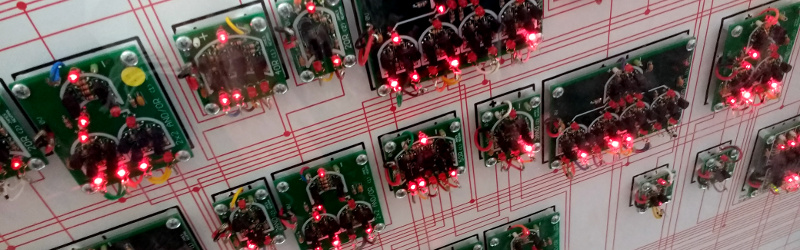
One of the museum’s standout attractions is the Megaprocessor, a huge working model of a microprocessor built by James Newman. It is roughly two meters high and nearly ten meters long, with thousands of transistors and LEDs that make computation visible. In plain English: it is what would happen if the inside of a chip decided to become architecture.
The Megaprocessor is brilliant because it solves a museum problem. Microprocessors are among the most important inventions in modern life, but they are nearly impossible to understand by looking at them. A chip is tiny, sealed, and visually boring to most visitors. The Megaprocessor flips that problem inside out. Instead of shrinking visitors down to chip scale, it enlarges the logic so people can see signals moving and operations happening.
For students, makers, engineers, and curious adults, it is a memorable exhibit. It turns abstract computing concepts into a physical performance. Lights move. Logic flows. Suddenly, the invisible work behind phones, laptops, cars, appliances, and game consoles feels less magical and more understandable. Still magical, perhaps, but with better wiring.
Education and Workshops
The Centre for Computing History is not only a visitor attraction. It also functions as an educational space. Its mission includes teaching the public about computing’s past and helping people understand how technology shapes the present and future. Workshops and events may cover coding, electronics, robotics, digital music, game development, and social history.
This educational role is one of the reasons the museum feels relevant rather than merely nostalgic. Nostalgia is fun, but it can become shallow if it only says, “Remember this?” The Centre for Computing History goes further by asking, “Why did this matter, and what can we learn from it?”
That question is useful for young visitors. A child who learns that early computers were limited may better appreciate problem-solving and efficiency. A teenager who sees old programming environments may understand that modern tools are built on decades of experimentation. An adult who once used these machines may realize that personal memories are part of a larger technological story.
Who Should Visit?
Families
This is one of the best family-friendly museums in Cambridge for children who like games, buttons, screens, puzzles, and practical learning. Because many displays are interactive, children are less likely to feel trapped in “quiet museum mode.” Parents should still supervise, of course, but the museum’s hands-on approach makes curiosity feel welcome rather than risky.
Retro Gamers
Retro gamers will find plenty to enjoy. The museum offers the pleasure of original hardware, period controllers, and games that remind you how design once squeezed big ideas into tiny memory. It is also a nice antidote to modern gaming overload. No giant updates. No battle passes. No login screen asking you to verify your identity through a code sent to an email you created in 2007. Just play.
Technology Professionals
Programmers, engineers, designers, IT workers, and product people can gain a refreshing sense of perspective. The museum shows that today’s elegant interfaces came from decades of awkward, clever, and sometimes hilarious experimentation. It is hard not to leave with renewed respect for constraints.
Non-Tech Visitors
Even if you do not consider yourself technical, the museum can still be enjoyable. The social history angle helps. Computers changed work, school, entertainment, communication, creativity, and business. You do not need to know assembly language to appreciate that. In fact, many of us have survived perfectly well by not knowing assembly language, and society has mostly forgiven us.
Practical Visitor Review
The museum is located in Cambridge, not directly in the postcard-heavy center of colleges and punting boats. For travelers planning a day out, that means it is worth checking transportation, opening hours, and ticket information before arriving. Regular opening hours are commonly listed as Wednesday through Sunday, 10:00 a.m. to 5:00 p.m., with broader opening during Cambridgeshire school holidays. As with any attraction, visitors should confirm current hours before making the trip.
Facilities generally support a family visit, with toilets, accessible toilets, baby changing, a gift shop, Wi-Fi, and on-site parking noted by visitor information sources. There is usually a snack or tuck-shop style option rather than a full restaurant, so visitors who expect a grand café should adjust expectations. This is a museum where the main course is computing history; the cake is a bonus.
A typical visit may take two to four hours depending on interest level. Casual visitors can enjoy the highlights in a shorter visit. Enthusiasts may need significantly longer, especially if they start bonding emotionally with a keyboard from 1983.
What the Museum Does Best
The Centre for Computing History excels in three areas: interactivity, warmth, and relevance. The interactivity makes the collection memorable. The warmth makes the space approachable. The relevance comes from connecting old technology to modern life.
Many museums struggle to make technology feel human. This one succeeds because it understands that computers are personal. They were used for homework, games, office tasks, experiments, music, art, and communication. They sat in bedrooms, schools, labs, shops, and workplaces. They frustrated people, empowered people, and occasionally ate people’s files with the cold indifference of a tiny plastic monster.
The museum also deserves credit for preserving objects that might otherwise be dismissed as obsolete junk. A dusty manual, a broken-looking peripheral, or a once-common home computer can become historically meaningful when placed in context. That is the museum’s quiet superpower: it rescues everyday digital history before it disappears.
Where It Could Improve
No honest review should pretend the museum is perfect. Visitors expecting the scale and polish of a major national institution may find the Centre for Computing History more modest. Some areas can feel dense, and the sheer number of machines may be overwhelming for people who prefer highly curated storytelling. Because working vintage hardware requires maintenance, not every machine or game will always behave like a cheerful museum ambassador.
That said, these limitations are also part of the character. A hands-on computing museum is harder to run than a room of static displays. Old electronics age, fail, and demand attention. Keeping them usable is a labor of love. When something works, it feels alive. When something does not, it is a reminder that preservation is active work, not just storage.
Why This Museum Matters
The Centre for Computing History matters because digital life moves quickly and forgets easily. Devices that once transformed homes and classrooms can become landfill within a generation. Software disappears. Formats become unreadable. Companies vanish. Cables go missing, because cables have always had a mysterious instinct for escape.
By collecting hardware, software, documents, and stories, the museum helps preserve the material culture of computing. That matters for researchers, students, families, designers, and anyone who wants to understand how we arrived in a world shaped by screens and networks.
It also reminds visitors that technology is not inevitable. Every machine represents choices. Someone decided what keys to include, what price to charge, what software to support, what audience to target, and what future to imagine. Seeing those choices across decades makes modern technology feel less like destiny and more like design.
Final Verdict: Is the Centre for Computing History Worth Visiting?
Yes. The Centre for Computing History is absolutely worth visiting, especially for families, retro gamers, technology enthusiasts, educators, and curious travelers looking for something different in Cambridge. It is hands-on, informative, playful, and full of machines that make computing history feel immediate rather than distant.
The museum’s greatest achievement is that it makes old technology feel alive. You do not just look at the past; you boot it up, press its keys, play its games, and occasionally wait for it to load. In a world where technology often feels invisible, sealed, and disposable, that tactile experience is refreshing.
If you are visiting Cambridge and want a break from ancient colleges, grand chapels, and extremely scenic bicycles, this museum offers a different kind of history: recent, noisy, pixelated, and deeply connected to everyday life. It may not be the largest museum you ever visit, but it may be one of the most unexpectedly joyful.
Extended Experience: What a Visit Feels Like in Real Life
The best way to understand the Centre for Computing History is to imagine walking into a room where your childhood, your office memories, your school computer lab, and the entire history of “please wait while loading” have decided to hold a reunion. The experience is not polished in a sterile way. It has texture. It has cables. It has machines with personalities. Some look futuristic, some look prehistoric, and some look like they could survive a small household explosion.
A visitor who grew up with older home computers may feel an immediate emotional tug. There is something oddly powerful about seeing a machine you once used every day sitting in a museum. It is a gentle reminder that your childhood is now historically significant, which is both flattering and personally rude. You may find yourself explaining to a younger visitor that games once came on tapes, screens had limited colors, and saving work was not always guaranteed. They may look at you as if you personally churned butter before school.
For younger visitors, the museum can feel like a playable time machine. They see that computers were not always thin, silent, and connected to everything. They discover that early games could be simple but brutally addictive. They learn that limitations often forced creativity. A modern game may offer vast worlds and cinematic soundtracks, but an older game with a few pixels and one merciless difficulty curve can still create drama in seconds.
One of the most enjoyable parts of the visit is the way it encourages conversation. A grandparent may recognize a machine from work. A parent may remember school lessons on a BBC Micro. A child may ask why anyone tolerated such slow loading times. The answer, of course, is that people did not know they had a choice. Also, patience was easier before everyone carried a supercomputer in their pocket and became personally offended by a three-second delay.
The museum also rewards slow looking. At first, you may notice the famous machines and playable games. Then smaller details begin to stand out: the typography on old manuals, the design of packaging, the changing shape of keyboards, the size of storage media, the evolution of controllers, and the language companies used to sell the future. Old technology advertising often promised transformation, productivity, creativity, and fun. In many ways, the promises were true. In other ways, they were charmingly optimistic. Nobody in an early home-computer brochure appears to be troubleshooting printer drivers at midnight, which feels like a missed opportunity for realism.
The Megaprocessor adds a different kind of wonder. It is not nostalgic in the same way as a home computer or console. Instead, it makes the invisible visible. People use processors constantly without seeing them work. The Megaprocessor turns hidden logic into a physical spectacle. Watching lights move through the system gives visitors a better sense of computation as a process. It is educational without feeling like homework, which is one of the highest compliments a museum exhibit can earn.
The Centre for Computing History is also a good reminder that preservation is not passive. Keeping old machines running requires knowledge, parts, patience, and a willingness to deal with hardware that may have retired emotionally decades ago. Every working exhibit represents effort. Every usable keyboard is a small victory against entropy. In that sense, the museum is not only preserving objects; it is preserving skills.
By the end of a visit, many people leave with a changed sense of time. The digital revolution can feel abstract because it happened so quickly. This museum stretches that timeline back out. It shows each step: business computing, educational machines, home computers, games, portable devices, and modern digital culture. The result is both fun and grounding. You leave understanding that today’s seamless technology grew from experiments, compromises, failures, breakthroughs, and a lot of plastic cases in shades of beige.
For travelers, the museum pairs well with Cambridge’s broader identity as a city of science, learning, and invention. It may not have the old stone grandeur of the university colleges, but it tells a story just as influential: how computers moved from specialized tools to everyday companions. And unlike many historic sites, this one lets you press the buttons.
Note: Visitor hours, ticket prices, workshops, and available exhibits can change, so readers should check the museum’s current information before planning a trip.
Conclusion
The Centre for Computing History is a thoughtful, funny, hands-on celebration of the machines that changed modern life. It works because it respects both the engineering and the emotion of computing history. Visitors can learn, play, remember, compare, and discover how quickly yesterday’s cutting-edge technology becomes today’s cultural artifact. For a family day out, a retro gaming pilgrimage, or a deeper look at the story behind personal computing, this Cambridge computer museum is easy to recommend.