A basement that smells like cigarette smoke can feel as though it has been permanently assigned the role of “world’s least inviting lounge.” Opening a window may help for an afternoon, but the odor often returns as soon as the room is closed, the weather turns humid, or the furnace starts circulating air.
That happens because cigarette smoke does not remain politely suspended in the air. Its particles and chemical residue settle onto ceilings, walls, floors, furniture, ductwork, insulation, and fabrics. This persistent contamination is commonly called thirdhand smoke. Removing the basement smoke smell therefore requires more than spraying something citrus-scented and hoping the lemons win.
The most reliable approach combines source control, ventilation, detailed cleaning, removal of badly contaminated porous materials, odor-sealing primer, and appropriate air filtration. Here is how to do it safely and systematically.
Why Cigarette Smoke Odor Lingers in Basements
Basements are especially good at holding odors. They often have limited ventilation, unfinished porous surfaces, cool temperatures, and elevated humidity. Cigarette smoke can penetrate carpet, drywall, ceiling tiles, exposed wood, concrete, stored cardboard, and upholstered furniture.
Smoke residue may contain nicotine and many other chemicals deposited as a thin film. On painted walls, the contamination can appear yellow or brown. In other places, it may be invisible but still produce a stale tobacco odor.
Humidity can make the problem more noticeable because damp basement air encourages odor compounds trapped in materials to become detectable again. This explains the frustrating “I thought we fixed it” moment that sometimes arrives after a rainy weekend.
Supplies You May Need
- Nitrile or rubber cleaning gloves
- Safety glasses
- An N95 respirator for dusty demolition or heavy contamination
- Microfiber cloths, sponges, buckets, and a mop
- A vacuum equipped with a sealed HEPA filtration system
- Unscented dish detergent or a compatible degreasing cleaner
- A cleaner specifically labeled for smoke or nicotine residue
- Laundry detergent and oxygen-based bleach when fabric labels permit
- Plastic bags or covered bins for contaminated materials
- A hygrometer and dehumidifier
- A portable air cleaner with HEPA and substantial activated-carbon filtration
- Stain- and odor-blocking primer
- Interior finish paint suitable for the basement surface
Read every product label before use. Never mix cleaning chemicals, particularly bleach with ammonia, acids, vinegar, or other cleaners. A basement renovation should not accidentally become a chemistry experiment.
How to Remove Cigarette Smoke Odors Step by Step
1. Stop the Source of the Smoke
Before cleaning, establish a strict no-smoking rule inside the basement and the rest of the home. If smoking continues indoors, new residue will replace what you remove. Smoking near an open basement door or window can also allow smoke to drift back inside.
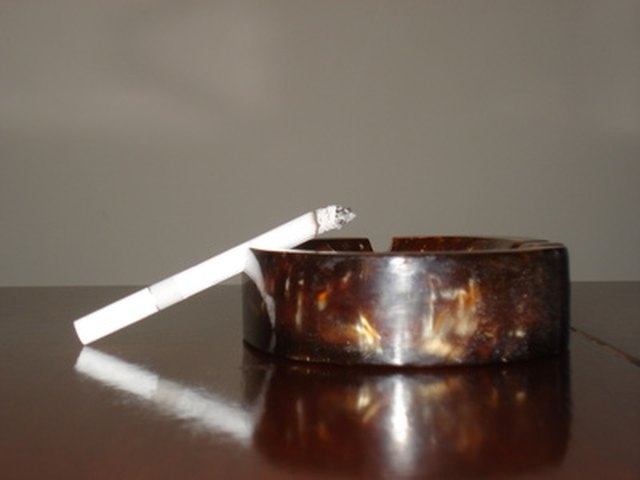
Empty and wash ashtrays, remove cigarette butts, and discard tobacco-related trash. Check beneath furniture, behind appliances, and inside utility-room cabinets. One forgotten ashtray can make an entire basement smell guilty.
2. Check for Moisture, Mold, and Other Odor Sources
Not every unpleasant basement smell comes from cigarettes. A room can contain tobacco residue and a moisture problem at the same time. Inspect foundation walls, carpeting, baseboards, pipes, and stored belongings for leaks, condensation, mildew, or visible mold.
Use a hygrometer to measure relative humidity. Aim for approximately 30% to 50% when practical and keep it below 60%. Repair leaks and drainage problems before beginning a major odor-removal project. Otherwise, cleaned materials may remain damp, grow mold, or develop an exciting new smell that nobody ordered.
3. Ventilate the Basement Safely
Open windows and exterior doors when outdoor air quality and weather conditions are suitable. Position a fan so it blows basement air outdoors rather than merely spinning it around the room. If the basement has only one window, open the door at the top of the stairs to create a path for replacement air, provided this will not carry contamination into occupied rooms.
Turn off the central HVAC system temporarily if it is spreading odor throughout the house. Ventilation can dilute airborne contaminants, but it cannot remove residue embedded in surfaces. Consider it the opening act, not the entire concert.
4. Remove Heavily Contaminated Porous Materials
Porous materials are usually the hardest items to restore because smoke penetrates below the surface. Inspect carpeting, carpet pad, acoustic ceiling tiles, upholstered furniture, mattresses, cardboard boxes, curtains, fiberglass insulation, and unfinished composite wood.
Items with light exposure may respond to professional cleaning. Materials that remain strongly odorous after cleaning may need replacement. Carpet pad is a frequent offender: the carpet can smell acceptable on top while the pad underneath continues broadcasting Eau de Ashtray.
Bag discarded materials before carrying them through the home. Photograph significant damage first if the cleanup is connected to a rental agreement, real-estate transaction, or insurance claim.
5. Wash Removable Fabrics and Stored Belongings
Wash curtains, slipcovers, washable rugs, blankets, and clothing according to their care labels. Use a quality detergent and the warmest water permitted by the fabric. An oxygen-based laundry additive may help when the label allows it. Some items require more than one wash cycle.
Do not place fabrics in the dryer until the odor has been substantially removed because heat may make lingering contamination harder to address. Air-dry the items, smell them after they are completely dry, and repeat treatment if necessary.
Replace smoke-saturated cardboard boxes with washable plastic containers. Clean the objects before transferring them; otherwise, the new bins simply become expensive homes for the old odor.
6. Vacuum From Top to Bottom
Use a sealed HEPA vacuum to collect dust and loose particles from ceiling edges, exposed joists, walls, shelves, baseboards, floors, and remaining furniture. Work from the highest point downward so falling debris does not contaminate an area twice.
Use a soft brush attachment on delicate surfaces. Avoid aggressive dry brushing because it can launch contaminated dust back into the air. Empty the vacuum outdoors according to the manufacturer’s instructions, and replace or clean its filters as directed.
7. Clean the Ceiling and Walls
Ceilings are frequently overlooked, even though smoke rises and deposits residue overhead. Protect the floor, test your cleaner on a hidden area, and work in small sections.
- Prepare an unscented detergent or smoke-residue cleaner according to its label.
- Apply it with a dampnot drippingsponge or microfiber cloth.
- Wipe from the bottom of a wall upward to reduce dirty streaks.
- Rinse with a second cloth dampened with clean water if the product requires rinsing.
- Dry the surface and replace the cleaning solution whenever it becomes dirty.
Do not soak drywall, ceiling tiles, paneling, or wood. Excess water can damage finishes and feed mold. If the walls release dark yellow residue through several cleaning passes, plan on using a suitable sealing primer after they dry.
8. Scrub Floors, Masonry, and Unfinished Wood
Wash sealed concrete, tile, vinyl, and other hard floors with a compatible cleaner. Pay attention to corners, floor drains, stair treads, baseboards, and the area where smokers commonly sat.
Bare concrete and masonry are porous, so one quick mopping may not be enough. Scrub manageable sections with a nylon brush, remove the dirty solution promptly, rinse only as the surface permits, and use fans plus a dehumidifier to dry the area thoroughly.
Vacuum unfinished wood before wiping it with a lightly dampened cloth and compatible cleaner. If odor remains after drying, sealing the wood may be more effective than repeatedly saturating it.
9. Clean Furniture, Fixtures, and Overlooked Surfaces
Smoke film collects on more than walls. Carefully clean doors, trim, shelving, blinds, windows, light fixtures, switch plates, pipes, cabinets, handrails, electronics exteriors, and furniture frames.
Disconnect electrical power when appropriate before cleaning fixtures or removing switch plates. Never spray liquid directly into outlets, controls, appliances, or electronic equipment. Use a cloth approved for the material instead.
Remember the bottoms and backs of furniture. Smoke residue has a talent for hiding in places normally visited only by lost socks.
10. Address the HVAC System
If the basement shares a central heating or cooling system with the rest of the house, replace the HVAC filter after the dirty phase of cleaning. Choose the highest-efficiency filter the equipment manufacturer allows; many systems can accommodate a MERV-13 filter, but compatibility should be confirmed.
Vacuum and wash accessible return grilles and supply registers. Inspect them for visible residue. Duct cleaning is not automatically required in every smoky home, but professional evaluation may be appropriate when contamination is substantial, debris is visible inside ducts, or odor appears whenever the blower starts.
Also inspect portable heaters, window air conditioners, dehumidifiers, and air-cleaner filters. A dirty appliance can quietly reintroduce the smell after the room has been cleaned.
11. Use an Air Cleaner as a Supporting Tool
A properly sized portable air cleaner can help after source removal and surface cleaning. HEPA filtration captures airborne particles, while activated carbon or another substantial sorbent can reduce some gases and odors. A thin carbon-coated sheet may become saturated quickly, so review the amount of carbon and the replacement schedule rather than trusting a heroic-looking product label.
Select a unit designed for the basement’s square footage and run it at a useful fan speed. Replace filters as directed. Remember that an air purifier cannot clean nicotine residue from drywall or rescue a smoke-saturated carpet pad. It treats circulating air, not the entire building.
12. Seal Clean, Dry Surfaces When Odor Remains
If cleaned walls, ceilings, joists, or paneling still smell, apply a primer specifically labeled to block nicotine stains, cigarette smoke, or persistent odors. Shellac-based, synthetic-shellac, and certain oil-based or specialized water-based primers are commonly sold for this purpose.
Cleaning comes first. Painting directly over a greasy smoke film can cause poor adhesion, discoloration, or odor breakthrough. Allow every surface to dry completely, follow the primer manufacturer’s ventilation and temperature requirements, and apply a compatible finish coat.
Some severe contamination requires two primer coats. Unfinished ceilings with numerous pipes and joists can be difficult to seal evenly, making professional remediation a sensible option.
Methods That Usually Disappointor Create New Problems
Air Fresheners and Scented Candles
Fragrance masks an odor rather than removing its source. It may also add volatile compounds to indoor air and irritate people with asthma, allergies, migraines, or chemical sensitivities. Combining tobacco odor with artificial vanilla rarely creates vanilla; it creates confused tobacco.
Bowls of Vinegar, Coffee, or Baking Soda
Passive odor absorbers may provide a modest finishing touch in a small, recently cleaned area. They cannot extract years of smoke residue from drywall, carpet, or insulation. Use them only after genuine source removal and cleaning.
Ozone Generators
Avoid ozone-producing air cleaners in occupied homes. Ozone is a lung irritant, and concentrations considered safe for people are generally not effective at eliminating many indoor contaminants. Ozone may also react with indoor chemicals and damage certain materials. Choose non-ozone-producing filtration and established remediation methods instead.
Painting Without Cleaning
Ordinary wall paint is not a magic lid for nicotine contamination. Residue can interfere with adhesion, and stains or odors may bleed through. Wash, dry, seal with the correct primer, and then paint.
When to Hire a Smoke-Remediation Professional
Professional help may be worthwhile when the basement was smoked in heavily for years, odor travels through the HVAC system, contamination extends behind walls, or large amounts of carpet, insulation, or ceiling material require removal. It is also wise when occupants include young children, pregnant people, older adults, or anyone with asthma, COPD, allergies, or other respiratory conditions.
Ask contractors to describe their process in writing. A credible plan should address contaminated materials, surface cleaning, moisture control, HVAC components, filtration, sealing, and verification. Be cautious if the entire proposal consists of running a mysterious machine overnight and declaring victory by breakfast.
How to Tell Whether the Basement Is Truly Clean
Allow the basement to remain closed for 24 to 48 hours after cleaned materials have dried. Then enter from fresh air and evaluate the room before adding fragrance or deodorizer. Check again during humid weather and when the HVAC system is operating.
Ask a nonsmoker who has not participated in the cleanup to perform a smell test. People working around an odor for several days can become temporarily less sensitive to it. If the smell returns, isolate the area where it is strongest and investigate remaining porous materials, hidden cavities, unfinished wood, drains, and mechanical equipment.
Cleanup Experiences: What Real Basement Projects Tend to Teach
One of the most common experiences in a smoke-odor cleanup is the early false victory. A homeowner removes the curtains, opens two windows, shampoos the carpet, and enjoys a dramatically fresher room. The basement smells fine for several daysuntil the windows close. The odor then returns because the carpet pad, ceiling, and painted walls were still holding residue. The lesson is simple: if the room was exposed for years, treat the whole room as a connected system rather than chasing whichever object smells strongest that afternoon.
Another familiar situation occurs in finished basements with drop ceilings. The visible walls and floor are cleaned thoroughly, yet a stale odor remains near the stairs. Removing a few ceiling panels may reveal yellowed tiles, dusty gridwork, or exposed joists above the finished room. Because ceiling tiles are highly porous and inexpensive compared with repeated cleaning, replacing contaminated panels often produces a larger improvement than another weekend spent scrubbing the floor.
Furniture can create similar confusion. Imagine an old fabric recliner positioned beside an ashtray for a decade. Cleaning the room while leaving that chair in place is like mopping around a muddy dog and wondering why the footprints keep returning. Upholstery, foam cushions, and the unfinished wood inside furniture can all retain smoke odor. Professional upholstery treatment may save a valuable piece, but replacing an inexpensive, heavily contaminated chair can be the more practical decision.
Unfinished utility basements present a different challenge. They may have no carpet or upholstered furniture, so owners assume the cleanup will be easy. However, exposed floor joists, raw shelving, concrete block, and stored cardboard offer an enormous amount of porous surface area. A successful project usually involves removing cardboard, HEPA vacuuming overhead structures, washing compatible surfaces, controlling humidity, and sealing stubborn wood or masonry after it dries. Skipping the ceiling is especially common; gravity may govern falling objects, but smoke has always been happy to travel upward.
Humidity control is another lesson people often learn late. A basement can smell acceptable through a dry winter and suddenly become smoky or musty in summer. Running a dehumidifier, correcting seepage, and keeping relative humidity within a healthy range can make the results more stable. Moisture control does not remove tobacco residue by itself, but it prevents dampness from amplifying odors and creating a second cleanup problem.
Finally, experienced renovators learn to separate deodorizing from restoration. An air purifier can polish the air after cleaning, but it cannot substitute for removing contaminated carpet pad. Primer can seal residual odor in a cleaned wall, but it should not be applied over sticky nicotine film. Ventilation can make work safer and more comfortable, but it cannot wash a ceiling. Each step has a specific job, and the strongest results come from using them in the correct order.
Conclusion
To remove cigarette smoke odors from a basement permanently, begin by stopping indoor smoking and correcting moisture problems. Remove badly contaminated porous materials, HEPA-vacuum the room, wash every compatible surface from ceiling to floor, service accessible HVAC components, and allow the basement to dry thoroughly. Use HEPA and activated-carbon filtration as support, then seal persistent odors with a primer made for nicotine and smoke contamination.
The process demands more effort than placing a bowl of baking soda beside the stairs, but it addresses the actual reservoirs of smoke residue. Work methodically, reassess the room after it has been closed, and call a qualified remediation professional when contamination is extensive or occupants are medically vulnerable.
Note: Cleaning products, coatings, basement materials, and HVAC systems vary. Follow manufacturer instructions, ventilate the work area, wear appropriate protective equipment, never mix chemicals, and obtain professional advice when mold, asbestos-containing material, extensive contamination, or respiratory risk may be present.