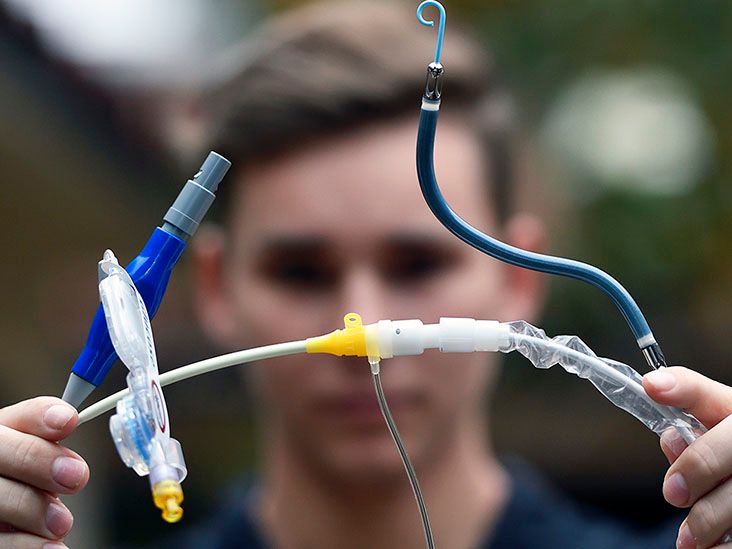
If you have ever heard a cardiologist say, “We need to support the heart right now,” they may be talking about an Impella heart pump. It sounds futuristic, a little intimidating, and very much like something you hope to only read about from a safe distance with a cup of coffee in hand. But for some people with severe heart problems, an Impella is not medical sci-fi. It is a temporary device that can help keep blood moving when the heart is struggling badly or when a high-risk heart procedure needs a safety net.
This guide explains what an Impella heart pump is, why doctors use it, how the insertion procedure works, what the real risks are, and what patients and families should know about cost. We will also cover recovery, candidacy, and the questions worth asking before anyone wheels you toward the cath lab.
What Is an Impella Heart Pump?
An Impella is a temporary mechanical circulatory support device. In plain English, it is a small pump mounted on a catheter that helps move blood forward when the heart cannot do the job well enough on its own. Unlike a durable LVAD, which is surgically implanted for longer-term support, an Impella is designed for short-term use. Think of it less like a permanent roommate and more like emergency backup with a badge and a deadline.
Most left-sided Impella devices work by drawing blood from the left ventricle and pushing it into the aorta, which helps unload the heart and maintain circulation. Different models provide different levels of support. Some are used during high-risk PCI procedures, while others are used in patients with cardiogenic shock or advanced heart failure as a bridge to recovery, decision-making, surgery, transplant evaluation, or another therapy.
Doctors may choose an Impella when the priority is to stabilize blood flow, protect organs, and give the heart a chance to rest. That sounds simple, but in critical care, “give the heart a chance to rest” can be the difference between a rough day and a catastrophic one.
Why Doctors Use an Impella
The two most common reasons for using an Impella are high-risk percutaneous coronary intervention and cardiogenic shock.
1. High-risk PCI
Some patients need coronary stenting or other catheter-based procedures even though their heart function is already weak. In those cases, an Impella may be used to help maintain blood pressure and circulation during the procedure. The goal is to make a risky intervention safer, not magically turn it into a spa treatment.
2. Cardiogenic shock
Cardiogenic shock happens when the heart cannot pump enough blood to meet the body’s needs. It can happen after a major heart attack, after heart surgery, or in severe cardiomyopathy or myocarditis. An Impella may be used to support circulation while the medical team treats the underlying problem.
3. Bridge to next-step care
In some advanced heart centers, larger Impella systems are used as a bridge to heart recovery, a bridge to transplant evaluation, or a bridge to a more durable support device. In other words, the pump can buy time, and in heart failure medicine, time is not just money. It is oxygen, kidney function, brain function, and options.
How Much Does an Impella Heart Pump Cost?
This is the part everyone wants answered in one tidy sentence, and unfortunately healthcare rarely cooperates. There is no universal out-the-door price for an Impella heart pump. The total cost depends on the device model, why it is being used, whether the patient is in the ICU, how long support is needed, the hospital, the region, physician fees, imaging, medications, lab monitoring, and whether complications occur.
In broad terms, Impella care is expensive. Older U.S. analyses found that the device itself could cost more than $20,000, while total hospitalization costs for percutaneous ventricular assist device care were often much higher. In one national inpatient analysis, the mean hospitalization cost was about $85,580 overall and about $113,695 for patients with cardiogenic shock. Another large U.S. claims analysis in nonemergent high-risk PCI found higher adjusted costs among surviving patients treated with Impella than with an intra-aortic balloon pump.
What patients actually pay out of pocket can be wildly different from those figures. Insurance coverage, deductibles, coinsurance, out-of-network status, and emergency-use billing all matter. If the device is medically necessary in an acute hospitalization, insurance may cover a substantial portion, but that does not mean the final family bill will feel cheerful.
What drives the final bill?
- Emergency transfer or ambulance costs
- Cath lab or operating room charges
- ICU stay and ventilator support
- Imaging and repeated echocardiograms
- Blood thinners, transfusions, and monitoring
- Management of complications such as bleeding or limb ischemia
- Additional procedures, including PCI, surgery, dialysis, or device removal
For families trying to plan, the smartest move is to ask the hospital billing office for procedure codes, request a case manager early, and ask whether the admission is being handled under emergency, inpatient, or bundled cardiovascular billing. Not glamorous, but potentially wallet-saving.
Impella Insertion Procedure: Step by Step
The insertion process depends on the specific model and the clinical situation, but the general idea is consistent: the device is placed through a blood vessel and advanced into the heart under imaging guidance.
Before the procedure
Before insertion, the team typically evaluates whether the patient is a good candidate. This often includes an echocardiogram, blood tests, vascular assessment, and review of conditions that could make placement unsafe, such as severe valve problems or clot in the ventricle. If the patient is stable enough, consent and risk discussion happen before the procedure. If the patient is in shock, decisions may be made rapidly.
During the procedure
For many cases, the catheter is inserted through the femoral artery in the leg. The area is numbed, and the doctor makes a small incision. The catheter is then advanced through the artery toward the heart and positioned across the aortic valve using X-ray guidance. Once connected to the external console, the pump is activated.
In some situations, especially with certain larger devices or longer support strategies, the pump may be placed through the axillary artery near the shoulder or with surgical access. That route can allow more mobility in selected patients.
If the Impella is being used during high-risk PCI, the coronary intervention continues after the pump is in place. The patient may be sedated but still awake. Medications often include anticoagulants to reduce clotting risk. The room is full of monitors, alarms, wires, and people who speak fluent acronym. That is normal. It is also why this is not a DIY project for the unusually confident.
After placement
After insertion, the team closely watches blood pressure, urine output, oxygen delivery, heart rhythm, access-site bleeding, hemolysis markers, kidney function, and limb perfusion. Positioning matters. Too high, too low, or slightly off-angle can turn a helpful device into a problem generator.
When the heart and circulation improve enough, the device is weaned and removed. In uncomplicated high-risk PCI cases, support may be brief. In shock or advanced heart failure, support can last longer depending on the model, the treatment goal, and the patient’s response.
Main Risks and Complications
Every serious heart support device comes with serious trade-offs, and Impella is no exception. The main risks include bleeding, vascular injury, limb ischemia, stroke, infection, arrhythmias, aortic valve injury, kidney problems, low platelet count, red blood cell damage or hemolysis, device malfunction, and in rare but severe cases, perforation or cardiac tamponade.
One of the biggest practical problems is that Impella requires large-bore vascular access. Bigger tubes can deliver bigger support, but they can also create bigger headaches at the access site. Bleeding and limb blood-flow issues are not side notes. They are core risks that experienced teams actively try to prevent.
Recent evidence also reinforces the need for a balanced view. In selected patients with STEMI-related cardiogenic shock, the DanGer Shock trial found lower 180-day mortality with Impella CP compared with standard care. That was an important result and one reason enthusiasm for carefully selected use remains strong. But the same trial also found a much higher composite safety event rate, including severe bleeding, limb ischemia, hemolysis, device failure, or worsening aortic regurgitation. So yes, it may save lives in some settings, but it does not come wrapped in bubble wrap.
FDA safety communications add another layer of realism. In 2024, the FDA classified a correction involving instructions for certain left-sided Impella pumps as a Class I recall due to perforation risks. That does not mean the device is “bad.” It means device selection, insertion technique, patient anatomy, monitoring, and team experience matter a lot.
Who Is Not a Good Candidate?
Impella is not suitable for everyone. Official materials list several contraindications and caution scenarios. A patient may not be a good candidate if they have a left ventricular thrombus, a mechanical aortic valve, severe aortic stenosis or heavy calcification, moderate to severe aortic insufficiency, severe peripheral arterial disease that prevents safe placement, significant right heart failure for a left-sided device, a septal defect, tamponade, or cardiac rupture.
This is why imaging and anatomy review are so important before insertion whenever time allows. A pump can only help if it can be placed safely and do the job it was built to do.
Recovery and What to Expect Afterward
Recovery depends heavily on why the Impella was used. Someone who had an elective but high-risk PCI with temporary support may have a very different course than someone who arrived in full cardiogenic shock after a large heart attack.
Immediately after placement, patients are usually monitored in the ICU or a specialized cardiac unit. If the device is placed through the groin, movement may be limited at first to protect the access site. There may be frequent blood tests, repeated imaging, and close attention to alarms from the external console.
When the device is removed, recovery still is not over. The team needs to make sure the heart remains stable without support, the access site closes properly, and the kidneys, brain, and other organs are recovering. Some patients are up and talking quickly. Others need ventilator support, dialysis, or additional mechanical support. The range is enormous.
In advanced-heart-failure programs using axillary approaches, some patients can ambulate and even participate in physical therapy while supported. That can be a major advantage in bridge-to-transplant or bridge-to-decision care.
Impella vs. Balloon Pump vs. LVAD
People often hear these terms together and assume they are interchangeable. They are not.
Impella
Temporary, catheter-based, and designed to actively unload the ventricle while supporting blood flow.
Intra-aortic balloon pump (IABP)
Also temporary, but generally provides less direct circulatory support than an Impella. It may be quicker to place and is often cheaper, but it does not unload the heart in the same way.
Durable LVAD
A surgically implanted, longer-term device for advanced heart failure. It is a much bigger commitment and comes with its own risks, maintenance, and lifestyle changes.
The best device is not the fanciest one. It is the one that matches the patient’s anatomy, diagnosis, shock severity, timeline, and treatment goal.
Questions to Ask the Care Team
- Why is Impella being recommended instead of another support device?
- Is the goal bridge to recovery, bridge to decision, or support during PCI?
- Which model is being used, and why?
- What complications are most likely in this specific patient?
- How long do you expect support to last?
- What signs would mean the device should be removed, escalated, or replaced?
- How will insurance and hospital billing handle the admission?
Bottom Line
The Impella heart pump can be a lifesaving tool in the right patient, in the right setting, with the right team. It is not a casual intervention, and it is definitely not cheap. But when the heart is failing and time is disappearing fast, it can create a bridge to recovery, procedure completion, transplant evaluation, or the next decision that keeps a patient moving forward.
The key takeaway is balance. The device offers meaningful support and, in some carefully selected shock patients, a survival benefit. At the same time, it carries real risks, especially bleeding and vascular complications. If you or a loved one is facing an Impella procedure, the smartest approach is to understand the goal, the timeline, the risks, and the exit plan. In heart care, the “what happens next?” question is never extra. It is the whole game.
Experiences Patients and Families Commonly Describe
Experiences with an Impella heart pump vary a lot, but families often describe the same emotional arc. First comes the shock of hearing that the heart needs mechanical support right now. Then comes the blur: specialists entering the room, rapid explanations, words like “circulation,” “cardiogenic shock,” and “temporary support,” and the sudden realization that the next few hours matter more than anyone wants them to. For many families, the scariest part is not the machine itself. It is how fast everything happens.
Patients who are awake enough to remember the process often say the environment feels intense but strangely organized. There are multiple clinicians, constant monitoring, and a lot of technology, yet the message from the team is usually simple: the pump is there to help the heart rest while doctors treat the underlying problem. That explanation can be reassuring. It gives the machine a purpose beyond its wires and alarms.
Families also talk about the waiting. Once the device is in, they start watching numbers on screens like they have suddenly earned honorary ICU degrees. Blood pressure, kidney function, oxygen levels, urine output, lab values, and words like “weaning” or “stabilizing” become part of everyday conversation. Progress can feel painfully slow. One day the team is encouraged. The next day there is concern about bleeding, infection risk, kidney injury, or whether the heart is recovering quickly enough.
Another common experience is that improvement is rarely dramatic in the movie-scene sense. More often, it is measured in smaller victories: a lower lactate, better blood pressure, a decrease in medication support, improved alertness, or the ability to reduce other devices. Families learn to celebrate unglamorous milestones, which is very ICU of them.
Patients who receive axillary support in advanced centers sometimes describe a surprisingly hopeful phase once they can sit up, work with physical therapy, or talk more normally with loved ones. That can be psychologically huge. Going from “critical and motionless” to “still sick, but participating” changes the emotional tone of the hospitalization.
Of course, not every experience is smooth. Some patients and families remember the access-site discomfort, the anxiety of alarms, the fear of possible complications, and the emotional whiplash of hearing both optimistic and cautious updates in the same day. That is common in advanced cardiac care. An Impella can buy time, but it does not erase uncertainty.
What many families say later is that clear communication mattered almost as much as the pump itself. They wanted to know why the device was used, what success looked like, what complications were being watched for, and what the next step would be if recovery did not go as planned. The more specific the answers, the less helpless the experience felt.
In the end, the Impella experience is usually remembered as intense, technical, and emotionally exhausting, but also deeply meaningful. For some, it becomes the bridge that got them through a dangerous procedure. For others, it becomes the device that carried them through shock long enough to reach transplant, surgery, or recovery. Either way, nobody comes away thinking it was “just a pump.” In real life, it often feels more like borrowed time used very carefully.