Note: The following article explores popular fan theories, cultural interpretations, and long-running myths surrounding The Wizard of Oz. These theories are discussed as entertainment and analysis, not as confirmed facts from the filmmakers or L. Frank Baum.
Few movies have invited as much delighted overthinking as The Wizard of Oz. On the surface, it is a bright 1939 musical about a Kansas girl, a tiny dog with excellent survival instincts, and a road trip through a country where everyone apparently communicates through songs, riddles, and threats involving broomsticks. Underneath? Fans have found politics, psychology, secret villains, cosmic synchronicity, and enough symbolism to keep the internet awake until the flying monkeys come home.
Based on L. Frank Baum’s 1900 children’s fantasy novel, the MGM film became one of the most beloved works in American movie history. Its yellow brick road, ruby slippers, Wicked Witch, Cowardly Lion, Tin Man, Scarecrow, and “no place like home” ending are now stitched into pop culture like sequins on Dorothy’s shoes. But because the story is so simple, strange, and dreamlike, viewers keep asking: What is really going on in Oz?
Below are eight wild fan theories about The Wizard of Ozsome surprisingly thoughtful, some wonderfully unhinged, and some best enjoyed with popcorn, skepticism, and maybe a small dog nearby for emotional support.
1. Oz Was Not Just a DreamIt Was Dorothy’s Subconscious Solving Her Real-Life Problems
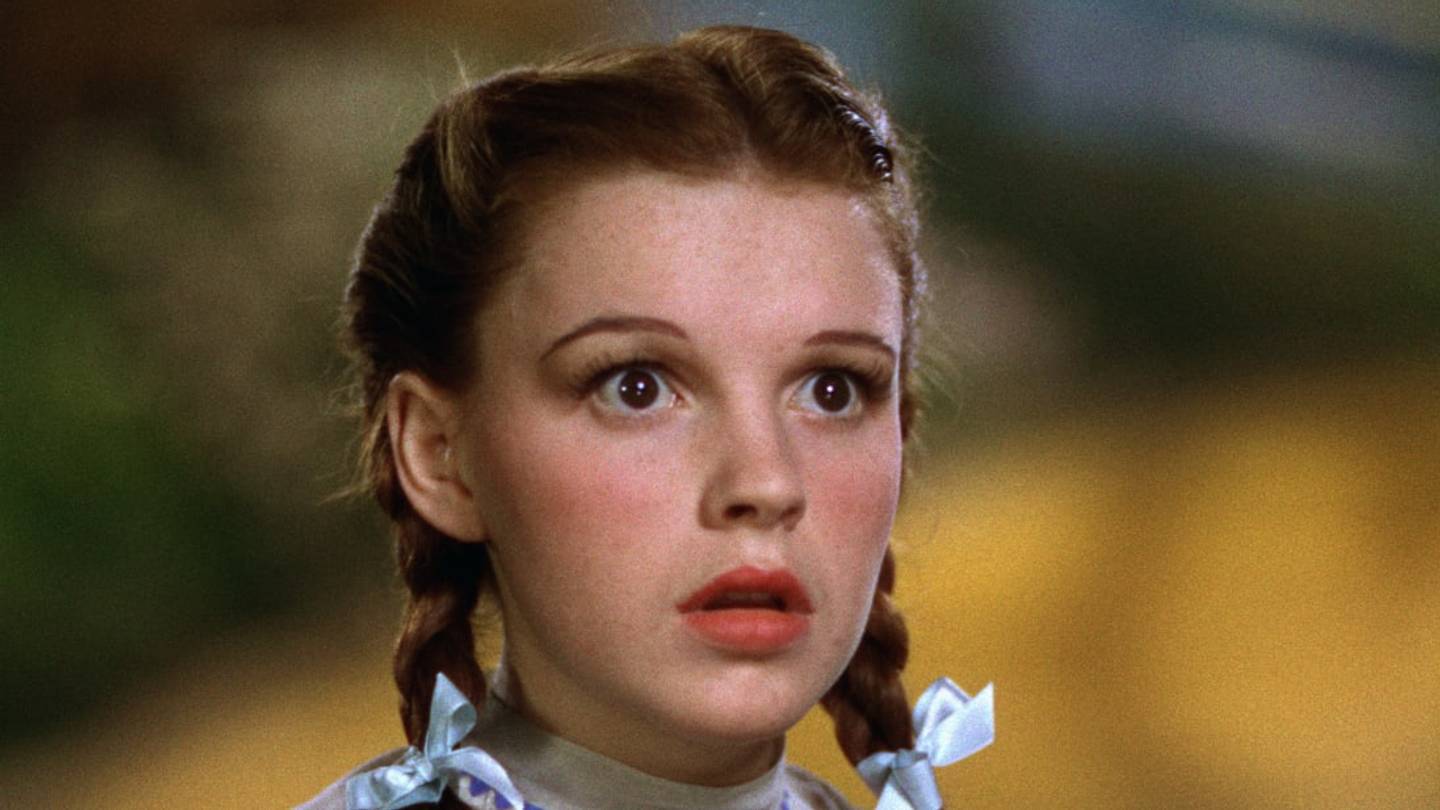
The 1939 movie strongly suggests that Dorothy’s adventure in Oz happens while she is unconscious after the tornado. When she wakes up in Kansas, the people around her resemble the friends and enemies she met in Oz. Hunk becomes the Scarecrow, Hickory becomes the Tin Man, Zeke becomes the Cowardly Lion, Professor Marvel becomes the Wizard, and Miss Gulch becomes the Wicked Witch. Subtle? Not exactly. The movie practically hands viewers a psychological decoder ring.
One fan theory argues that Oz is not “just a dream” in the lazy sense. Instead, it is Dorothy’s mind creating a symbolic trial to help her process fear, loneliness, guilt, and her desire to run away. The yellow brick road becomes a path toward maturity. The Witch becomes the threat of punishment. The Wizard becomes the false hope that some powerful adult will fix everything. Dorothy’s companions represent the parts of herself she does not yet trust: intelligence, compassion, and courage.
This theory works because Dorothy’s big revelation is not that Oz is fake. It is that the qualities she needed were already with her. The Scarecrow had brains, the Tin Man had heart, the Lion had courage, and Dorothy had the power to go home. In other words, her dream did what dreams often do: it took real anxieties, dressed them in Technicolor, and made them sing until they became easier to understand.
2. The Whole Story Is a Political Allegory About American Money and Power
This is one of the most famous interpretations of The Wonderful Wizard of Oz, and it did not begin as a random internet post written at 2:00 a.m. In 1964, historian Henry Littlefield argued that Baum’s book could be read as an allegory for the Populist movement and late 19th-century debates over money, farming, labor, and political power.
In this reading, the yellow brick road represents the gold standard. Dorothy’s shoes were silver in Baum’s book, not ruby, so the image of silver shoes walking on a gold road becomes a symbol of monetary debate. The Scarecrow can represent farmers, the Tin Woodman industrial labor, the Cowardly Lion political hesitation, and the Wizard the empty spectacle of government authority. The Emerald City may symbolize Washington, D.C., where people are impressed by green illusions and official-looking nonsense. Frankly, that part has aged with disturbing grace.
Is this theory proven? Not exactly. Scholars still debate whether Baum intentionally wrote a political code or whether later readers found patterns that fit the era. But the theory remains irresistible because Oz is full of systems that look powerful until someone pulls back the curtain. That is not just good fantasy. It is also a pretty sharp description of politics.
3. Glinda Is the Real Villain
Here is the fan theory that makes people stare suspiciously at every bubble from now on: Glinda the Good Witch may not be as good as advertised. The argument is simple. Glinda knows Dorothy can return home by using the slippers, yet she does not tell her right away. Instead, she sends a frightened child on a dangerous journey across Oz, where Dorothy is chased, drugged by poppies, kidnapped, and nearly killed.
Why would Glinda do that? According to the darker version of the theory, Glinda manipulates Dorothy into eliminating rival powers. The Wicked Witch of the East is crushed by Dorothy’s house. The Wicked Witch of the West is melted after Dorothy’s journey escalates into a broomstick mission. The Wizard is exposed as a fraud and leaves Oz. By the end, Glinda remains the most stable magical authority standing. Not bad for someone who mostly smiles and floats.
The theory also points out that Glinda’s timing is suspiciously perfect. She arrives after the house lands. She gives Dorothy the slippers, making her a target. She explains danger but withholds the most useful instruction. Then she returns at the end to reveal the answer like a teacher who watched you fail the whole exam before saying, “Oh, by the way, this was open-book.”
Of course, the kinder interpretation is that Dorothy had to learn the meaning of home through experience. But the villain theory is delicious because it turns Oz into a political chessboard, with Glinda moving Dorothy like a gingham pawn.
4. The Wicked Witch Was Not WickedShe Was Grieving and Robbed
Before Wicked made the “misunderstood witch” idea mainstream, fans were already asking whether the Wicked Witch of the West had a point. Think about her situation from her perspective. A stranger drops a house on her sister, takes the dead sister’s magical shoes, and then receives public celebration from the locals. That is a rough morning, even before the singing begins.
The Witch wants the slippers, which originally belonged to her sister. Dorothy, meanwhile, does not understand their power and did not earn them in any traditional sense. Glinda transfers them onto Dorothy’s feet before the Witch can claim them. From a certain angle, the Witch is not merely chasing Dorothy because she is evil. She is trying to recover family property after a magical disaster.
This theory does not excuse the Witch’s cruelty, threats, or general customer-service problem with flying monkeys. Still, it adds emotional complexity. The Witch may be a villain, but she is also a character responding to loss, humiliation, and a power structure that clearly favors sparkly public relations over due process.
5. The Ruby Slippers Are a Dangerous Power Source, Not Just Cute Footwear
In the original book, Dorothy’s shoes are silver. The 1939 film changed them to ruby slippers, largely because red looked spectacular in Technicolor. That creative decision gave cinema one of its most iconic props, but fans have spent decades wondering: What exactly can the slippers do?
The movie reveals that they can take Dorothy home, but it also implies they protect her. The Wicked Witch cannot simply remove them while Dorothy is alive. Sparks fly when she tries. Glinda treats them as extremely important. The Witch wants them desperately. That suggests the slippers are not just magical transportation. They may be a concentrated power source capable of controlling travel, protection, ownership, and possibly political legitimacy in Oz.
Under this theory, whoever controls the slippers controls the rules of Oz. Dorothy survives not because she is the strongest person in the story, but because she is wearing the fantasy equivalent of nuclear-grade Mary Janes. The slippers make her untouchable, symbolically chosen, and dangerous without her even knowing it. That makes Dorothy less like a random visitor and more like a walking constitutional crisis with pigtails.
6. “Dark Side of the Rainbow” Was Secretly Designed to Sync With the Movie
One of the weirdest and most enduring Oz theories has nothing to do with Baum, MGM, or witches. It claims that Pink Floyd’s 1973 album The Dark Side of the Moon syncs with The Wizard of Oz when played at the right moment. Fans call it “Dark Side of the Rainbow” or “Dark Side of Oz.”
Believers point to moments where lyrics, music shifts, and visual events seem to align. A heartbeat plays as Dorothy listens to the Tin Man. A song change appears to match a scene transition. “The Great Gig in the Sky” seems to swell during the tornado sequence. Coincidence? Probably. But it is the sort of coincidence that makes people cancel evening plans and start the movie again just to check.
Members of Pink Floyd and people connected to the album have denied that any intentional synchronization exists. The more reasonable explanation is apophenia, the human tendency to notice patterns and ignore mismatches. Still, the theory has survived because it turns watching The Wizard of Oz into a ritual. Even when the connection is accidental, the experience can feel strangely magical. Oz has always rewarded people for looking too closely.
7. The “Cursed Production” Theory Mixes Real Danger With Exaggerated Myth
Another wild theory claims that The Wizard of Oz was cursed. This idea grew from real production problems and later urban legends. Buddy Ebsen, originally cast as the Tin Man, left the film after a severe reaction to aluminum-based makeup. Margaret Hamilton, who played the Wicked Witch, suffered serious burns during a fiery exit scene. Her stunt double was also injured in a broomstick effect. Toto was reportedly injured during filming as well. Old Hollywood was not exactly famous for its workplace safety seminars.
But the curse theory also absorbed false or exaggerated stories, including the infamous “hanging Munchkin” rumor. That claim says a suicide was accidentally captured in the background of the film. The accepted explanation is much less supernatural and much more Hollywood: the strange shape was a large bird used on the set to create an exotic atmosphere.
The curse theory persists because the film looks so joyful while its production history included genuine hardship. Viewers sense a contrast between the candy-colored fantasy and the difficult realities behind it. The truth is darker than a children’s movie, but not as paranormal as the rumor mill suggests. Sometimes the real monster is not a curse. Sometimes it is studio-era labor conditions, toxic makeup, hot lights, and pyrotechnics managed with terrifying confidence.
8. Dorothy Accidentally Overthrows the Government of Oz
Here is a theory that makes the whole story sound like a revolution disguised as a musical: Dorothy does not simply go on an adventure. She destabilizes an entire political system.
Consider what happens after she arrives. The Wicked Witch of the East dies. The Munchkins are liberated. Dorothy receives powerful magical shoes. She travels to the Emerald City and exposes the Wizard as a fraud. She destroys the Wicked Witch of the West. The Wizard leaves in a balloon. By the end of the story, multiple power centers are gone, and the citizens of Oz must figure out what comes next.
Dorothy’s goal is personalshe wants to go homebut her accidental impact is massive. She topples rulers, reveals propaganda, and changes the balance of power without ever running for office. If Oz had newspapers, the headline would not be “Kansas Girl Finds Friendship.” It would be “Foreign Minor Arrives by House, Regime Collapses.”
This theory is funny, but it also explains why the story remains fascinating. Dorothy is innocent, yet the world around her is political. Everyone wants something from her: the Witch wants the slippers, the Wizard wants the broom, the Munchkins want freedom, and Glinda wants Dorothy to complete the journey. Dorothy may be the hero, but she is also the catalyst for a national reset.
Why ‘The Wizard of Oz’ Inspires So Many Fan Theories
The Wizard of Oz attracts fan theories because it is both simple and strange. The story has the clean structure of a fairy tale: a child leaves home, meets helpers, defeats evil, and returns wiser. But the details are wonderfully odd. A scarecrow wants brains but is already clever. A tin man wants a heart but is deeply emotional. A lion wants courage but repeatedly acts bravely. A wizard is powerful because people believe he is. A witch is vulnerable to water, which raises several practical questions about weather, bathing, and basic villain maintenance.
The film also sits at a crossroads of American culture. It is a Depression-era Hollywood spectacle, a children’s fantasy, a musical, a dream story, a coming-of-age tale, and an adaptation of a book with its own symbolic history. It has been watched by families, scholars, conspiracy hunters, theater fans, political analysts, and people who simply enjoy a good pair of shoes. That wide audience keeps generating new interpretations.
Modern adaptations like Wicked have also changed how people view the original. Once audiences saw the Wicked Witch as Elphaba, a misunderstood outsider with a tragic backstory, the 1939 film became less morally simple. Suddenly Glinda looked less innocent, the Wizard looked more manipulative, and Dorothy looked like a confused visitor dropped into a conflict she did not understand.
Personal Viewing Experiences: Why These Theories Make Oz More Fun
Watching The Wizard of Oz as a child and watching it as an adult can feel like watching two different movies. As a kid, you notice the obvious things: the tornado is scary, the Munchkins are adorable, the monkeys are nightmare fuel with wings, and the Wicked Witch has the energy of someone who would leave a one-star review for sunshine. The story feels like a magical adventure where good and evil are clearly labeled, usually with hats.
As an adult, the movie becomes stranger, richer, and funnier. You start asking questions that never bothered you before. Why does Glinda wait so long to explain the slippers? Why is the Wizard sending a teenager to collect evidence from the most dangerous person in Oz? Why is the Emerald City so obsessed with spectacle? Why does everyone accept “follow the yellow brick road” as a complete travel plan? There are no snacks, no map, no emergency contactsjust bricks and vibes.
This is where fan theories become part of the viewing experience. They do not ruin the movie. They refresh it. The Glinda theory makes every smile feel suspicious. The Populism theory turns a children’s fantasy into a colorful debate about money and power. The misunderstood Witch theory adds tragedy to a character many viewers once dismissed as pure evil. The dream theory helps explain why Oz feels like Kansas rearranged by emotion. Even the “Dark Side of the Rainbow” theory, whether coincidence or not, turns the film into an interactive experiment.
There is also a social joy in discussing these theories. Almost everyone knows The Wizard of Oz, so the conversation starts easily. Mention that Glinda might be the real villain at a dinner party, and suddenly people who were quietly eating salad are presenting legal arguments about magical shoes. Bring up the Witch’s property rights, and someone will defend Dorothy like they are her attorney. Mention Pink Floyd, and at least one person will claim they tried the sync in college and “it totally worked.” Whether they are right is less important than the fact that Oz still gets people talking.
The best part is that the film can survive all these interpretations. Some classics become smaller when analyzed too much. The Wizard of Oz becomes bigger. It can be a dream, a political allegory, a Hollywood survival story, a musical fantasy, a feminist journey, a strange accident of pop culture, and a movie about realizing home matters only after you have been chased by monkeys. That flexibility is why the story remains alive.
So the next time you watch Dorothy step onto the yellow brick road, try viewing the movie through one theory at a time. In one version, she is growing up. In another, she is exposing false authority. In another, she is a pawn in Glinda’s magical power game. In another, she is just a homesick kid wearing the most dangerous shoes in cinema. However you read it, Oz still works. That may be the wildest theory of all: after more than eight decades, the movie’s magic is not behind the curtain. It is right there on the road.
Conclusion
The wildest fan theories about The Wizard of Oz endure because the story leaves just enough room for imagination. Dorothy’s journey is clear enough for children and mysterious enough for adults. Its symbols are bright, but not locked. Its villains are scary, but possibly misunderstood. Its heroes are lovable, but not simple. From political allegory to Glinda’s suspicious timing, from ruby-slipper power to Pink Floyd synchronicity, Oz remains a place where every viewer can find a new path.
That is why the yellow brick road never really ends. It keeps branching into debates, rewatches, essays, memes, musicals, and late-night conversations that begin with, “Okay, hear me out.” And honestly, any movie that can make people argue passionately about witch ethics, monetary policy, and progressive rock deserves its place in the cultural Emerald City.