Teenage brains are busy places. Between school deadlines, friendships, family expf existence, there is a lot happening upstairs. The best books for teens do more than fill quiet hours. They introduce unfamiliar perspectives, strengthen critical thinking, expand vocabulary, and give young readers a safe place to examine difficult choices.
This collection combines influential classics, modern young adult novels, graphic memoirs, fantasy adventures, historical narratives, mysteries, and practical nonfiction. It draws on recommendations from librarians, educators, literacy organizations, reviewers, and major literary award programs. The Young Adult Library Services Association generally develops its teen lists for readers ages 12 to 18 while emphasizing that maturity levels vary, and the New York Public Library’s annual selections are chosen after expert librarians evaluate thousands of books. list can define the “best” books for every teenager. One reader may want dragons, another may want courtroom reform, and a third may only open a book if someone disappears before chapter two. Choice matters because motivated young readers tend to build stronger vocabulary and background knowledge. Diverse books can also function as mirrors that reflect a reader’s life and windows that reveal someone else’s. out Identity, Voice, and Belonging
1. The Outsiders by S.E. Hinton
Ponyboy Curtis’s conflict with a wealthier rival group becomes a moving examination of class, loyalty, violence, and brotherhood. Hinton wrote the novel while still a teenager, which may explain why its emotions never sound as though an adult is impersonating a sixteen-year-old.
2. The Hate U Give by Angie Thomas
After Starr Carter witnesses a police officer kill her childhood friend, she must decide when and how to speak publicly. The novel encourages thoughtful conversations about racism, activism, grief, code-switching, and the cost of finding one’s voice.
3. The House on Mango Street by Sandra Cisneros
Told through brief, lyrical vignettes, Esperanza Cordero’s story explores family, poverty, gender, cultural identity, and ambition. Its accessible structure makes it especially inviting for teens who feel intimidated by enormous novels with maps, appendices, and suspiciously tiny print.
4. American Born Chinese by Gene Luen Yang
This inventive graphic novel weaves together folklore, school life, stereotypes, and identity. Its combination of humor and emotional depth helps readers examine assimilation, self-acceptance, and the damage caused by trying to erase parts of oneself.
5. The Poet X by Elizabeth Acevedo
Xiomara Batista uses poetry to express thoughts she cannot comfortably share at home. Written in verse, the novel explores faith, body image, family expectations, first love, and the liberating experience of finally being heard.
6. Long Way Down by Jason Reynolds
Will enters an elevator carrying a gun and a plan for revenge. During the descent, unexpected visitors challenge everything he believes about violence, loyalty, and masculinity. The verse format makes every pause, repetition, and unanswered question matter.
7. Brown Girl Dreaming by Jacqueline Woodson
Woodson recounts her childhood through graceful autobiographical poems. Her memories of family, racial identity, education, religion, and discovering a love of words show teens that finding a personal voice is often a gradual process rather than a cinematic lightning strike.
8. Aristotle and Dante Discover the Secrets of the Universe by Benjamin Alire Sáenz
Two Mexican American boys form an unlikely friendship that gradually reshapes how they understand family, identity, vulnerability, and love. Its quiet conversations demonstrate that emotional courage can be just as difficult as any dramatic physical quest.
9. I Am Not Your Perfect Mexican Daughter by Erika L. Sánchez
Following her sister’s death, Julia struggles with grief and the impossible expectations placed upon her. Sharp humor balances serious discussions of depression, family secrets, immigration, cultural pressure, and the complicated reality behind the word “perfect.”
10. Firekeeper’s Daughter by Angeline Boulley
Daunis Fontaine becomes involved in an investigation affecting her Ojibwe community. The thriller combines suspense with questions about citizenship, cultural knowledge, family loyalty, exploitation, and who has the right to control a community’s stories.
Books About History, Courage, and Justice
Historical fiction, memoir, and narrative nonfiction allow teenagers to encounter major events through individual lives rather than memorized dates. The Library of Congress, the National Education Association, and national literary award programs consistently recommend books that connect history with culture, identity, and civic understanding. Diary of a Young Girl by Anne Frank
Anne Frank’s diary records daily life while her family hid during the Holocaust. Alongside fear and confinement, readers encounter humor, arguments, dreams, romantic curiosity, and the unmistakable personality of a teenager determined to understand her changing world.
12. The Book Thief by Markus Zusak
Narrated by Death, this World War II novel follows a German girl who steals books and shares words during a period of destruction. It examines propaganda, moral resistance, friendship, loss, and the power language has to harm or heal.
13. To Kill a Mockingbird by Harper Lee
Through Scout Finch’s childhood perspective, readers confront racial injustice, prejudice, courage, and moral responsibility in the American South. Teens should also discuss the book’s limitations, historical context, and whose perspectives remain centered or absent.
14. Just Mercy: Adapted for Young Adults by Bryan Stevenson
Civil rights attorney Bryan Stevenson examines wrongful convictions and inequality within the American criminal justice system. The cases encourage readers to question assumptions, understand systemic problems, and recognize why mercy and accountability are not opposites.
15. I Am Malala: Young Readers Edition by Malala Yousafzai
Malala Yousafzai describes growing up in Pakistan, defending girls’ education, surviving an assassination attempt, and continuing her advocacy. Her memoir makes courage feel less like fearlessness and more like taking action while fear is sitting beside you.
16. Born a Crime: Adapted for Young Readers by Trevor Noah
Trevor Noah recounts his childhood under and after South African apartheid. His stories combine humor, danger, family conflict, language, race, and resourcefulness, proving that a book can be educational without behaving like a textbook wearing a fake mustache.
17. Hidden Figures: Young Readers’ Edition by Margot Lee Shetterly
This nonfiction account introduces the Black women mathematicians whose calculations supported the American space program. Their achievements illuminate scientific creativity while revealing the racial and gender barriers they had to navigate at work and in society.
18. The Boy Who Harnessed the Wind: Young Readers Edition by William Kamkwamba and Bryan Mealer
After leaving school because his family could not afford tuition, William Kamkwamba used library books and discarded materials to build a windmill. His story celebrates curiosity, engineering, persistence, and learning that continues beyond a classroom.
19. Stamped: Racism, Antiracism, and You by Jason Reynolds and Ibram X. Kendi
Reynolds reshapes a complex history of racist ideas into an energetic work written for younger audiences. It invites teens to recognize how ideas spread, change, and influence institutions without presenting history as a tidy parade of inevitable progress.
20. Maus by Art Spiegelman
Spiegelman uses the graphic-novel form to portray his father’s Holocaust experiences and their difficult relationship. Its layered storytelling raises questions about trauma, memory, survival, guilt, and what happens when one generation inherits another generation’s pain.
Fantasy and Science Fiction That Expand the Imagination
Speculative fiction asks enormous questions while supplying enough excitement to keep those questions from feeling like an exam. Widely recommended teen collections include dystopian stories, epic fantasy, science fiction, and genre-crossing adventures because imaginative reading can explore power, technology, ethics, and identity from unexpected angles. Giver by Lois Lowry
Jonas lives in a community that has eliminated pain, conflict, and meaningful choice. When he receives memories of the past, he discovers the price of enforced sameness and must decide whether comfort is worth surrendering freedom.
22. The Hunger Games by Suzanne Collins
Katniss Everdeen enters a televised fight to the death controlled by an authoritarian government. Beneath its swift action, the novel examines propaganda, class inequality, celebrity culture, political resistance, and the exploitation of suffering as entertainment.
23. Fahrenheit 451 by Ray Bradbury
In Bradbury’s future, firefighters burn books instead of saving buildings. The novel remains a useful starting point for conversations about censorship, distraction, intellectual freedom, conformity, and whether endless entertainment can become its own form of control.
24. 1984 by George Orwell
Winston Smith attempts to resist a government that manipulates language, history, information, and private thought. The book gives teens a lasting vocabulary for examining surveillance, propaganda, authoritarianism, and the political importance of objective reality.
25. Scythe by Neal Shusterman
In a world where technology has eliminated natural death, specially appointed scythes control population growth. Two reluctant apprentices confront corruption and debate whether any person or institution can be trusted with absolute authority over life.
26. Parable of the Sower by Octavia E. Butler
Lauren Olamina navigates a collapsing society shaped by climate disaster, violence, and economic inequality. Her adaptability and emerging philosophy challenge readers to think about community building, leadership, belief, and survival during periods of radical change.
27. A Wrinkle in Time by Madeleine L’Engle
Meg Murry travels across space to rescue her father and confront a force that erases individuality. Science, spirituality, family, and self-worth collide in a story that treats intelligence as powerful without pretending smart people always feel confident.
28. A Wizard of Earthsea by Ursula K. Le Guin
A gifted young wizard releases a dangerous shadow through pride and impatience. His pursuit of it becomes a thoughtful exploration of responsibility, balance, fear, identity, and the uncomfortable truth that some monsters cannot simply be defeated with a larger spell.
29. Children of Blood and Bone by Tomi Adeyemi
Zélie fights to restore magic to a kingdom where her people have been persecuted. The novel delivers romance, political conflict, mythology-inspired world-building, and urgent questions about oppression, revenge, leadership, and the consequences of inherited hatred.
30. Six of Crows by Leigh Bardugo
A criminal prodigy assembles six talented outsiders for an impossible heist. Each character carries different wounds and motives, allowing the fantasy adventure to explore trust, trauma, prejudice, disability, teamwork, and the difference between confidence and competence.
Books About Emotions, Relationships, and Resilience
31. Speak by Laurie Halse Anderson
After experiencing sexual assault, Melinda becomes isolated and largely silent at school. The novel portrays trauma, shame, art, recovery, and the difficult process of reclaiming a voice when other people prefer not to hear the truth.
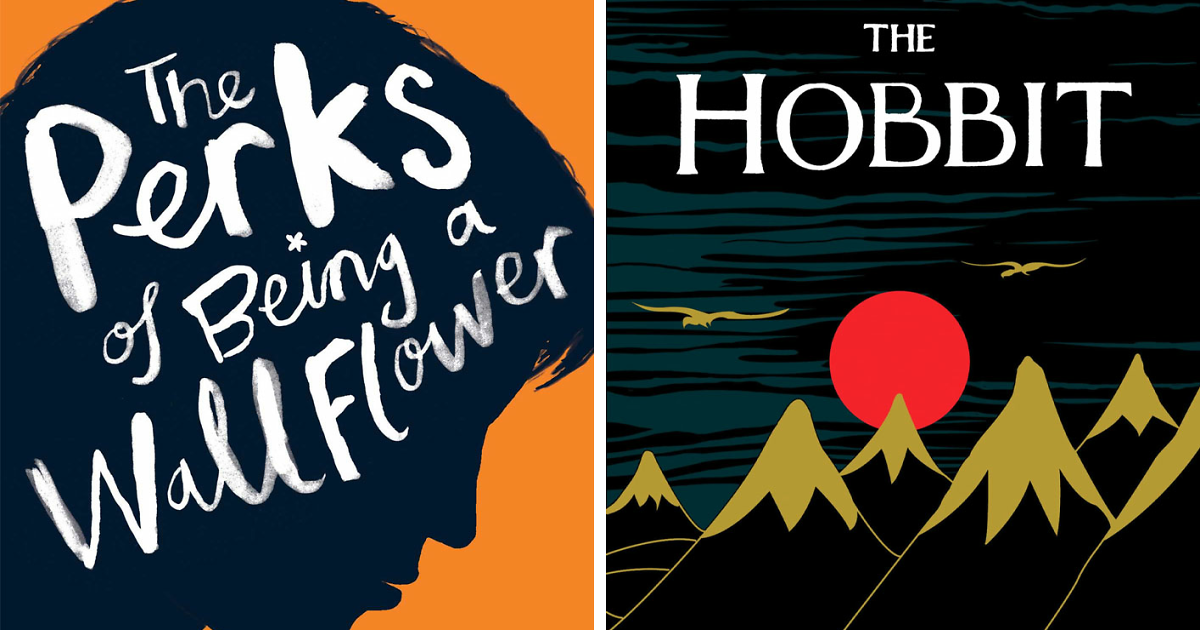
32. The Perks of Being a Wallflower by Stephen Chbosky
Through letters, Charlie describes friendship, first love, mental health, family, and memories he cannot fully process. The book can open valuable conversations, although its mature themes make thoughtful guidance especially important for some younger teens.
33. Turtles All the Way Down by John Green
Aza Holmes investigates a disappearance while living with intrusive thoughts and obsessive-compulsive disorder. The mystery matters, but the novel’s greater strength is showing how mental illness can affect identity, relationships, and the feeling of controlling one’s own mind.
34. The Fault in Our Stars by John Green
Hazel and Augustus meet through a cancer support group and develop an intense relationship. Their humor and honesty prevent the story from becoming a simple tragedy, while their choices raise questions about love, mortality, memory, and meaning.
35. All My Rage by Sabaa Tahir
Two friends from Pakistani American families face grief, addiction, abuse, financial pressure, and painful misunderstandings. The novel examines how people can harm those they love while still leaving space for forgiveness, responsibility, and hard-earned hope.
36. I’ll Give You the Sun by Jandy Nelson
Artistic twins Jude and Noah narrate different periods of a family crisis. Their conflicting accounts encourage readers to examine jealousy, grief, creativity, sexuality, miscommunication, and how dramatically a story changes depending on who is telling it.
37. Heartstopper, Volume One by Alice Oseman
Charlie and Nick’s friendship develops into a tender romance in this welcoming graphic novel. Expressive artwork and warm humor support conversations about identity, bullying, consent, friendship, and the relief of being accepted without performing a different personality.
38. The Sun Is Also a Star by Nicola Yoon
Natasha, whose family faces deportation, meets romantic dreamer Daniel during one eventful day in New York City. Their connection explores immigration, parental expectations, cultural identity, coincidence, science, and whether love can matter even when time is limited.
39. Darius the Great Is Not Okay by Adib Khorram
Darius travels to Iran and develops a meaningful friendship while navigating depression, family tension, and mixed cultural identity. The book offers a compassionate picture of male vulnerability and the importance of relationships that do not demand constant emotional armor.
40. They Both Die at the End by Adam Silvera
Two strangers receive notifications that they will die within twenty-four hours and decide to spend their final day together. The premise encourages reflection on loneliness, risk, intimacy, regret, and what makes a short life meaningful.
Mysteries, Adventures, and Books for Real-World Thinking
41. A Good Girl’s Guide to Murder by Holly Jackson
Pippa reexamines a supposedly solved murder for a school project and discovers that her community’s accepted story may be wrong. The fast-moving mystery rewards close reading, evidence evaluation, skepticism, and careful attention to unreliable information.
42. One of Us Is Lying by Karen M. McManus
Five students enter detention, but only four leave alive. Each survivor has a secret and a possible motive, turning familiar high-school stereotypes into complicated people while inviting readers to test theories and question first impressions.
43. The Inheritance Games by Jennifer Lynn Barnes
Avery Grambs unexpectedly inherits a billionaire’s fortune and moves into a mansion filled with puzzles, hidden passages, and suspicious relatives. It is an addictive choice for readers who enjoy codes, strategy, family secrets, and extremely inconvenient wealth.
44. The Hobbit by J.R.R. Tolkien
Bilbo Baggins leaves his comfortable home to join a dangerous quest involving dwarves, trolls, riddles, and a dragon. His transformation shows that courage often begins with discomfort, mistakes, and the decision to keep moving anyway.
45. Life of Pi by Yann Martel
After a shipwreck, Pi Patel shares a lifeboat with a Bengal tiger. The unusual survival story examines faith, storytelling, endurance, perception, and why people may choose one explanation of reality over another.
46. The Martian: Classroom Edition by Andy Weir
Stranded on Mars, astronaut Mark Watney survives by combining scientific knowledge, improvised engineering, patience, and humor. It is an excellent demonstration of problem-solving: identify the crisis, calculate the options, test a solution, and try not to explode.
47. How to Be a Person by Catherine Newman
This practical guide covers everyday skills such as cooking basics, laundry, communication, cleaning, and helping others. It belongs on a developing-mind list because independence requires more than excellent symbolism analysis and the ability to locate mitochondria on a diagram.
48. The 7 Habits of Highly Effective Teens by Sean Covey
Covey translates principles of goal-setting, prioritization, communication, and personal responsibility into teen-friendly language. Readers do not need to follow every exercise, but the frameworks can help them make deliberate choices instead of permanently improvising.
49. The Omnivore’s Dilemma: Young Readers Edition by Michael Pollan
Pollan investigates where food comes from and how industrial systems shape everyday meals. The book encourages teens to examine agriculture, marketing, health, environmental effects, and the hidden decisions represented by something as ordinary as lunch.
50. The Immortal Life of Henrietta Lacks: Young Readers Edition by Rebecca Skloot
The story of Henrietta Lacks and the cells taken from her without informed consent connects scientific discovery with medical ethics, race, privacy, and ownership. It shows why progress must be evaluated not only by what became possible, but by who paid the price.
How to Choose the Right Book for a Teen
A must-read list should be treated as a menu, not a prison sentence. Some teens love complex literary fiction, while others become enthusiastic readers through manga, romance, horror, audiobooks, sports memoirs, or fast-paced mysteries. Common Sense Media and YALSA both emphasize the broad range of genres and maturity levels within teen literature, while educators frequently recommend offering books that represent many cultures and experiences. h the teenager’s existing interests. Someone fascinated by puzzles might enjoy The Inheritance Games. A science-minded reader may prefer The Martian or Hidden Figures. A teen interested in poetry can begin with The Poet X or Long Way Down. Reading level, emotional readiness, and content sensitivity also matter, so parents, teachers, and librarians should discuss potentially difficult themes without automatically assuming that discomfort makes a book unsuitable.
Most importantly, allow abandoned books. Finishing every book may sound virtuous, but forcing a teenager through 400 pages of misery can teach the wrong lesson: that reading itself is miserable. Sometimes the smartest reading decision is placing one book aside and trying another.
The Reading Experience: What Teens May Discover Along the Way
Reading through a varied list like this rarely feels like completing fifty identical assignments. It feels more like entering fifty different rooms. Some are instantly comfortable. Others are confusing, noisy, emotionally intense, or decorated with approximately fourteen generations of fantasy politics. Every room, however, offers something new to notice.
A teen might begin with A Good Girl’s Guide to Murder because the investigation promises quick suspense. While tracking suspects and evidence, that reader practices noticing contradictions and questioning confident claims. Those skills do not remain trapped inside the mystery. They become useful when evaluating online rumors, advertisements, social-media posts, or a classmate who says the group project is “basically finished.”
The next book might be The House on Mango Street. Its short chapters provide a completely different experience. Instead of racing toward a solution, the reader learns to observe images, voices, neighborhoods, and small moments. The book may inspire a personal journal, a poem, or a new appreciation for how a few carefully selected details can reveal an entire life.
Historical books often create the most surprising emotional shifts. A student may know several facts about the Holocaust before opening Anne Frank’s diary or Maus. Yet facts feel different when connected to arguments between parents and children, worries about friendship, or the need for privacy. History stops being a distant sequence of events and becomes a record of real people making choices under impossible conditions.
Fantasy can produce equally serious reflection. A reader may arrive for dragons, magical battles, or elaborate heists and stay for questions about power, prejudice, loyalty, and responsibility. A Wizard of Earthsea may prompt thoughts about pride. The Hunger Games may change how a teen interprets entertainment and political messaging. Scythe may start a debate about whether a supposedly perfect system could ever remain fair.
Some reading experiences are more personal. A teen dealing with anxiety may recognize part of that struggle in Turtles All the Way Down. Someone caught between cultures may connect with Darius, Julia, Starr, or Jin. Recognition does not solve every problem, but it can replace the lonely thought “No one understands this” with the more hopeful thought “Someone found words for this.”
Sharing books also changes the experience. In a classroom discussion, family conversation, or informal book club, five readers can interpret the same character in five different ways. One person sees courage; another sees recklessness. One forgives a mistake; another insists on accountability. Learning to explain an interpretation with evidencewithout treating disagreement as a personal attackis valuable practice for adult conversations.
A realistic reading challenge should remain flexible. A teen could choose one book each month, alternate fiction with nonfiction, listen to audiobooks while commuting, or read graphic novels between longer works. Keeping a simple notebook of favorite lines, unanswered questions, and memorable characters can make progress visible without turning reading into administrative paperwork.
By the end, the greatest benefit may not be the number fifty. It may be discovering which stories create curiosity. Once teens understand what they genuinely enjoy, they no longer need adults to push every book toward them. They begin searching independently, following authors, exploring new genres, visiting libraries, and recommending titles to friends. That is when a reading list has truly succeeded: not when every box is checked, but when the reader keeps going after the list ends.
Conclusion
The best books for teens challenge developing minds without forgetting to entertain them. They offer mirrors, windows, warnings, mysteries, arguments, experiments, and unforgettable characters. Some build empathy. Others sharpen skepticism or reveal overlooked history. A few simply make it impossible to turn off the bedroom light until the next chapter is finished.
Teenagers do not need to read all fifty books immediatelyor even love all fifty. The goal is to create a broad path into literature and let each reader discover the stories that make reading feel necessary rather than assigned.
Note: Several books on this list address violence, racism, abuse, sexual assault, suicide, serious illness, war, death, or other mature subjects. Age recommendations cannot account for every reader’s experience, so families and educators should consider individual maturity and consult a librarian or detailed content guide when needed.