Some comics require a detailed understanding of politics, philosophy, or whatever complicated thing happened in episode seven of a prestige television drama. Captain Scratchy comics ask considerably less of us. Usually, all we need is a willingness to accept that a bear can deliver a pun, a shark can hold a grudge, and a cat may be planning something that violates several local ordinances.
Created by cartoonist Chuck Ingwersen, Captain Scratchy offers a cheerful escape into a world of talking animals, uncomfortable conversations, clever wordplay, and wonderfully unnecessary chaos. This collection of 40 uplifting and straightforward comics demonstrates how a clear setup, an expressive character, and one sharp punchline can turn an ordinary moment into a small celebration of silliness.
The jokes are quick enough for a coffee break but memorable enough to revisit later. They do not demand homework, emotional preparation, or a corkboard covered in red string. They simply invite readers to pause, smile, and wonder why cartoon bears seem to have better comedic timing than most people at office parties.
Research support: Captain Scratchy’s official site, artist interviews, and comic collection history.
Who Is Captainscratchy?
Captainscratchy is the online name associated with Chuck Ingwersen, a Chicago-area freelance cartoonist and comic artist. Before focusing more heavily on illustration, Ingwersen worked in newspapers as a reporter, columnist, editor, and page designer. That background makes sense when you look closely at his cartoons. Newspaper experience teaches creators to communicate quickly, remove unnecessary clutter, and make every word earn its place.
Ingwersen has said that he wanted to become a cartoonist from childhood. He drew frequently when he was young and created handmade humorous greeting cards for friends and family. Captain Scratchy officially began in 2009 as a webcomic about Rick, a cat, and Rufus, a dog. Their domestic lives gradually expanded to include an irritable horse, a sleepy beaver, a moody bear, and other creatures who behave like the strangest members of a very complicated neighborhood association.
Over time, the project evolved beyond its original cat-and-dog setup. Bears, sharks, manatees, penguins, horses, chickens, dogs, and cats became recurring players in an increasingly flexible comic universe. Some strips use established personalities, while others introduce an animal solely because its name, shape, or natural behavior can support a ridiculous pun.
Ingwersen creates much of his work digitally with a stylus, drawing tablet, and Photoshop. He has described repetition and trial and error as central to improving his artwork. That practical approach is visible in the finished comics: the drawings remain accessible and playful, but the character poses, facial expressions, and visual timing are carefully controlled.
Research support: Artist background, digital drawing process, career development, and early Captain Scratchy history.
Why These 40 Comics Are So Easy to Enjoy
The word “straightforward” can sound like faint praise, but in comedy it is often a major strength. A successful short comic must establish a situation, guide the reader’s attention, and deliver a surprise before the audience becomes distracted by a notification about discounted socks.
The Setups Are Immediately Understandable
Captain Scratchy rarely wastes time building an elaborate fictional mythology. A bear is in the woods. A shark is near something edible. A cat is judging a human. We understand the basic situation almost instantly, which gives the joke room to arrive without fighting through unnecessary exposition.
This clarity reflects a long tradition of newspaper gag cartoons and single-panel comics. American comic art grew through newspaper pages where images and brief text had to communicate efficiently to broad audiences. Modern webcomics continue that tradition, although the funny pages now live beside cooking videos, vacation photos, and someone passionately reviewing a new vacuum cleaner.
Research support: Library of Congress resources on comic strips, visual storytelling, and the evolution of American comic art.
The Punchlines Arrive Quickly
Many of the best Captainscratchy comics use a compact rhythm: familiar scene, odd detail, sudden reversal. The audience is given just enough information to form an expectation. The final line then sends that expectation into a ditch, where a sarcastic horse is probably waiting.
Quick delivery also makes these funny animal comics ideal for digital reading. A single panel or short sequence can be understood on a phone without constant zooming. Readers can enjoy one comic, share it, and continue scrolling without losing track of a complicated narrative.
The Humor Is Broad Without Feeling Empty
These comics use familiar subjects such as pets, food, dating, family life, holidays, fear, work, and social awkwardness. The situations are recognizable even when the characters are not remotely realistic. Most readers have never attended a restaurant with a manatee, but nearly everyone understands the discomfort of dining with someone whose behavior alarms the server.
The Animal Stars of the Captain Scratchy Universe
Talking animals are hardly new in comics, but Captainscratchy gives each species a distinct comedic job. Their natural characteristics create expectations, while their human habits create the joke.
Bears Bring Cute, Furry Danger
Bears occupy a particularly important place in Ingwersen’s work. Kevin, one of the recurring bears, can look friendly while discussing behavior that would make a park ranger reach for the emergency radio. The contrast between his rounded appearance and questionable intentions creates a playful version of dark humor.
Ingwersen has explained that cute animal characters help prevent darker jokes from becoming too grim. A discussion about mauling is less threatening when the potential mauler looks as though he should be advertising breakfast cereal. The danger remains part of the joke, but the presentation signals that readers are safely inside a cartoon world.
Sharks Turn Appetite Into Personality
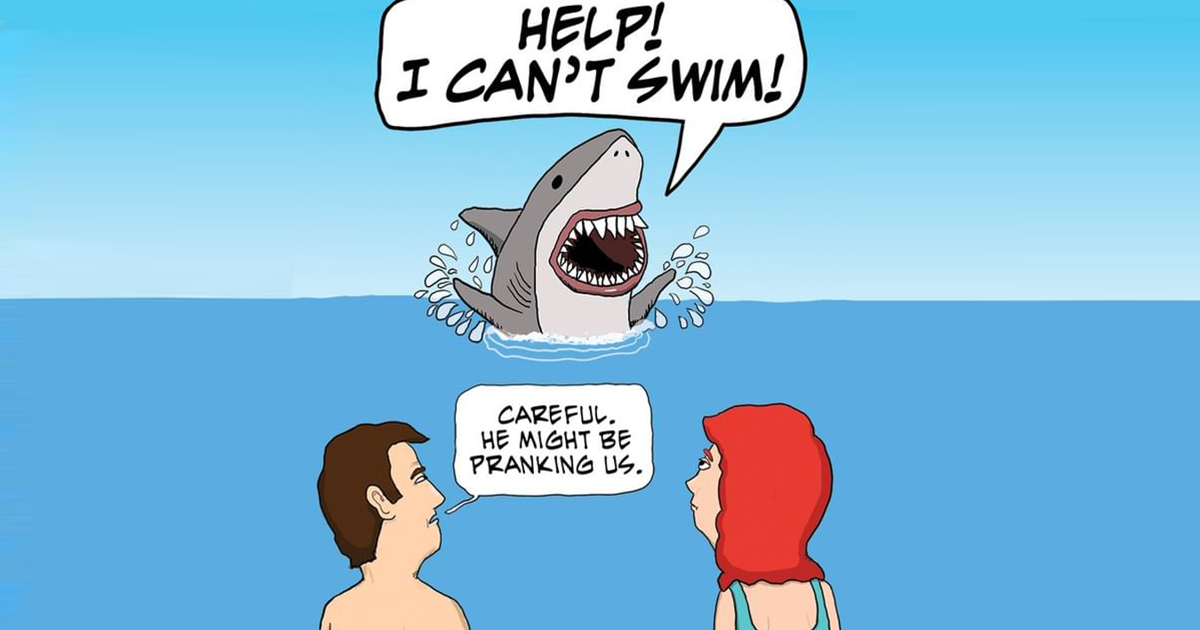
Captain Scratchy sharks are often driven by hunger, confidence, and a suspiciously flexible interpretation of morality. Their predatory reputation supplies the setup before they even speak. A shark can enter a scene, and readers already know that someone’s afternoon may be about to become significantly less relaxing.
Ingwersen’s affection for drawing sharks is partly connected to his enthusiasm for the movie Jaws. His shark cartoons play with the cultural image of the unstoppable ocean predator, transforming it into a conversational character capable of dating, dining, making excuses, and creating highly specific problems for nearby swimmers.
Research support: The artist’s discussion of animal characters, dark humor, Kevin the bear, and Jaws-inspired shark cartoons.
Cats and Dogs Handle Domestic Absurdity
Cats and dogs are ideal comic actors because readers already assign personalities to them. Dogs are often portrayed as enthusiastic, loyal, and easily distracted. Cats tend to appear independent, calculating, or magnificently unimpressed. Captainscratchy can use those assumptions as comedic shorthand and then exaggerate them until a normal household feels like a tiny sitcom.
A dog may misunderstand a basic instruction with complete confidence. A cat may manipulate a situation while maintaining the expression of someone who has never made a mistake. Their behavior is exaggerated, but pet owners will recognize enough truth to feel personally observed.
Manatees, Horses, and Penguins Keep the World Unpredictable
Less conventional animals prevent the series from becoming repetitive. Manatees can be gentle, sensitive, or unexpectedly opinionated. Horses contribute visual awkwardness and countless opportunities for wordplay. Penguins bring their built-in formalwear to situations where dignity is unlikely to survive.
Anthropomorphismthe practice of giving nonhuman subjects human emotions, motives, or behaviorhelps audiences connect with animal characters quickly. In these comics, it also creates comic distance. A frustrated manatee can represent an ordinary human feeling without resembling any specific person. Nobody has to admit that the manatee is them. Everybody knows the manatee is them.
Research support: Anthropomorphism and the way human characteristics make nonhuman figures relatable.
How Captainscratchy Balances Puns and Absurdity
Puns are among the simplest forms of humor to recognize and among the hardest to deliver without producing a room full of theatrical groans. Captain Scratchy embraces that groan. The comic does not pretend that wordplay is sophisticated espionage. It presents the pun confidently, lets it do its work, and moves on before anyone can file a complaint.
Animal names and behaviors provide a generous supply of opportunities. Bears can make comments that are difficult to bear. Horses can create unstable situations. Sharks can discuss biting criticism. Chickens can refuse to cross roads for reasons their ancestors never considered.
The strongest jokes often combine wordplay with an absurd visual premise. The caption might suggest one meaning while the artwork reveals another. This interaction between image and language is central to comic storytelling. Remove the picture and the joke may become ordinary. Remove the words and the characters may simply appear to be waiting for wildlife management.
Absurdity also gives the series freedom. The characters do not need to obey strict continuity or realistic biology. A shark can visit a restaurant. A bear can understand online dating. A cat can threaten legal action. Once readers accept the basic rules of the Captain Scratchy universe, almost any situation becomes possible.
Why Uplifting Comics Matter Online
Digital platforms can deliver useful information and meaningful connections, but they can also produce an exhausting mixture of arguments, alarming headlines, comparison, and drama. Research on social media use has documented both supportive experiences and feelings of pressure or emotional overload. Against that background, a harmless animal comic can function like a small rest stop during a very noisy trip.
Captain Scratchy comics do not promise to solve serious problems. Their value is smaller and more realistic: they interrupt the mood. A quick laugh can break a tense pattern of scrolling and replace it with a moment of surprise. That change may last only a minute, but a minute is still considerably longer than most internet peace treaties.
Studies of laughter and humor suggest that laughter can support social bonding and may be associated with short-term reductions in stress responses. Those findings do not turn a cartoon into medical treatment, and no responsible shark would claim otherwise. They do help explain why a brief humorous image can feel refreshing, especially when it is shared between friends.
Research support: Social media experiences, laughter as social bonding, and research concerning laughter and cortisol.
The Craft Behind a “Simple” Comic
Simple-looking comics are not necessarily simple to create. The artist must choose the exact moment to illustrate, decide where each character should stand, keep the dialogue concise, and make the punchline understandable without explaining it to death.
Character Expressions Do Part of the Writing
A raised eyebrow, blank stare, or overly cheerful smile can change the meaning of a line. Captainscratchy characters often react with restraint even when the situation is ridiculous. That calm response makes the absurdity funnier. If a bear announces something alarming and the other character merely looks tired, the panel suggests that this is not even the strangest part of their day.
Every Word Has a Job
Short comics punish unnecessary language. A long explanation can flatten a joke before it reaches the punchline. Ingwersen’s journalism and greeting-card experience likely supports his ability to condense an idea into a compact exchange. Greeting cards, like single-panel cartoons, have limited room and must communicate to readers who may encounter them for only a few seconds.
Recurring Characters Create Familiarity
Familiar animals allow jokes to begin faster. Regular readers already understand Kevin’s dangerous enthusiasm or Shark’s appetite. The characters become a comedic vocabulary. Their appearance alone supplies information that a new comic does not have to repeat.
Ingwersen also revisits older ideas, redraws previous comics, changes dialogue, and creates sequels or callbacks. This approach treats a comic concept as something that can evolve rather than a disposable post that disappears after one appearance.
Research support: Ingwersen on revising old comics, avoiding confusing inside jokes, and developing recurring animal characters.
What Aspiring Comic Artists Can Learn From the Collection
The 40 Captainscratchy comics offer several practical lessons for anyone interested in writing or drawing short-form humor.
- Start with a recognizable situation. Familiar scenes help readers understand the setup quickly.
- Give each character a clear attitude. A strong personality can create jokes before the dialogue begins.
- Remove unnecessary words. The fastest version of a joke is often the funniest.
- Use visual contrast. Cute artwork can make darker or stranger humor feel playful.
- Practice consistently. Repetition improves drawing technique, timing, and confidence.
- Revisit promising ideas. An older comic may support a sequel, a stronger caption, or a better visual solution.
Most importantly, artists can learn the value of having a clear creative goal. Ingwersen has said that he aims for the laugh first. Deeper meaning is welcome, but it is not forced into every panel. That focus keeps the comics honest. They know what they are here to do, and they do it before the bear gets hungry.
The 500-Word Reading Experience: Scrolling Through All 40 Comics
Reading a collection of 40 Captainscratchy comics feels less like following one continuous story and more like opening a variety pack of extremely strange snacks. You do not know exactly what the next item will contain, but there is a strong possibility that a bear, shark, horse, or suspicious cat has already interfered with it.
The first few comics establish the rhythm. You examine the scene, read the dialogue, and receive the punchline. The process may take only seconds, but the best panels encourage a second look. On that second pass, you notice the background character who seems deeply concerned, the carefully blank expression on an animal’s face, or the visual detail that quietly completed the joke before you understood it.
After several comics, the recurring personalities begin to feel familiar. A bear no longer enters as an anonymous woodland animal; he arrives with a reputation. A shark’s polite conversation becomes suspicious before the sentence is finished. A cat’s silence feels less like innocence and more like advice to contact an attorney.
This familiarity creates one of the most enjoyable parts of the collection. Readers begin predicting what each character might do, and the artist can either satisfy that expectation or reverse it. Both outcomes can work. When the shark behaves exactly like a shark, the exaggerated inevitability is funny. When the shark shows unexpected sensitivity, the broken expectation becomes the punchline.
The variety prevents the experience from becoming mechanical. One comic may depend on a pun. The next may feature a visual misunderstanding. Another may take a familiar phrase literally or place an animal inside a completely inappropriate human situation. The humor changes shape while remaining recognizable as Captain Scratchy.
There is also pleasure in the absence of pressure. You do not need to remember a detailed plot from comic number four when you reach comic number thirty-seven. Missing one reference will not destroy the ending. The collection allows readers to move at their own pace, pause on a favorite, or send a specific panel to the one friend who has somehow made manatees part of their personality.
Sharing becomes part of the reading experience. Different comics suit different people. A pet owner may prefer the household chaos of cats and dogs. A devoted pun enthusiast may choose the panel that causes everyone else to groan. A fan of slightly dark humor may appreciate a lovable predator discussing an alarming plan with perfect manners.
By the final entries, the effect is cumulative. No single joke has been asked to carry the weight of the entire collection. Instead, each comic contributes a quick burst of amusement. Some produce a laugh, some earn a smile, and some trigger the special reaction reserved for terrible puns: a slow head shake followed by immediate sharing.
That is the central experience of these 40 uplifting comics. They make humor feel easy without being careless. The artwork remains approachable, the dialogue stays concise, and the characters deliver just enough absurdity to separate the reader from the ordinary day. For a few minutes, emails, errands, and unfinished chores are replaced by a world where animals talk and humans are rarely the smartest creatures in the panel.
Conclusion: A Little Cartoon Joy Goes a Long Way
40 New Uplifting And Straightforward Comics By Captainscratchy celebrates a style of humor that is accessible without being bland and playful without becoming meaningless. Chuck Ingwersen turns familiar animals into memorable comic personalities, then places them in situations built around puns, misunderstandings, social awkwardness, and absurd reversals.
The clean setups and quick punchlines make the comics easy to read, but their recurring characters and carefully controlled expressions give them staying power. Bears can be adorable and dangerous. Sharks can be hungry and conversational. Cats can remain cats, which is apparently threatening enough.
Ingwersen has described his goal as bringing a little joy to a world that needs it. These comics achieve that goal without grand speeches or complicated lessons. They offer something simpler: 40 opportunities to stop scrolling, look at a ridiculous animal, and feel the day become slightly lighter.
Research support: The artist’s stated creative goals, audience feedback, and the mood-lifting role he associates with making art.
Note: This editorial article discusses the themes, style, characters, and reading experience associated with Captain Scratchy. The original comics and artwork remain the intellectual property of Chuck Ingwersen and their respective publishers.