Important safety note: In this article, “disable an attacker” means stopping an attack long enough to escape, get help, and protect yourself. It does not mean seeking revenge, escalating a fight, or trying to “win” like an action-movie character who apparently has unlimited insurance and no paperwork.
Personal safety is not about being the toughest person in the room. It is about being the person who gets out of the room safely. Whether you are walking to your car, leaving a tense social situation, dealing with an aggressive stranger, or planning for safety in a difficult relationship, the goal is the same: reduce danger, create distance, call for help, and survive the moment.
The phrase “disable an attacker” often makes people think of dramatic combat moves. Real safety guidance is usually much less cinematic and much more practical. Experts in emergency preparedness, victim advocacy, public safety, and workplace violence prevention consistently emphasize awareness, de-escalation, escape routes, barriers, support systems, and calling emergency services when safe. In other words, the smartest self-defense tool is not a secret move. It is your brain, your voice, your feet, your phone, and your plan.
Below are four safer, realistic ways to stop an attack from continuing. These methods focus on protecting your life, limiting harm, and getting awaynot on teaching dangerous techniques.
1. Disable the Situation Before It Becomes Physical
The best attack to survive is the one that never fully happens. That may sound obvious, but obvious things become very useful when adrenaline turns your thoughts into spaghetti. Many dangerous encounters begin with warning signs: someone closing distance too quickly, refusing to respect your boundaries, blocking your path, following you, yelling, threatening, or trying to isolate you from other people.
Disabling the situation early means interrupting the pattern before it becomes harder to escape. This starts with awareness. Notice exits when you enter a room. Pay attention to people who seem unusually focused on you. Avoid isolated shortcuts when possible. Keep your phone accessible, but do not bury your attention in it when walking through a parking lot, hallway, transit stop, or unfamiliar area.
Use distance as your first defense
Distance gives you time. Time gives you choices. Choices are good because panic is a terrible project manager. If someone makes you uncomfortable, move toward light, people, employees, security, open businesses, or any place where you are less isolated. Cross the street. Change direction. Enter a store. Stand near a family, a cashier, a front desk, or a group of people. You do not need to prove you are “not scared.” Safety is not a debate club.
In many situations, a clear verbal boundary can also slow the moment down. Use a firm voice and simple words: “Stop.” “Back up.” “Do not come closer.” “I need help.” Long speeches are not necessary. You are not trying to win an argument; you are trying to create space and attract attention.
Do not let politeness trap you
Many people ignore their instincts because they do not want to seem rude. Unfortunately, someone with bad intentions may use politeness as a trap. You are allowed to leave a conversation. You are allowed to refuse a ride. You are allowed to move away from someone who is making you uncomfortable. You are allowed to ask for help even if you are not 100 percent sure what is happening.
If someone is pressuring you to go somewhere private, separate from friends, hand over your phone, or keep a situation secret, treat that as a serious warning sign. Disabling the situation may mean ending the interaction immediately and moving toward support.
2. Disable the Attacker’s Access to You
If danger increases, your next goal is to make it harder for the person to reach you. This does not require dramatic fighting. It means using space, barriers, doors, crowds, noise, and movement to reduce the attacker’s access.
Think of safety like a series of layers. The first layer is awareness. The second is distance. The third is a barrier. A locked door, a counter, a parked car, a gate, a group of people, a front desk, or a well-lit business can all create separation. Even a few extra seconds can matter because those seconds may let you call for help, reach an exit, or get other people’s attention.
Move toward exits, not corners
When someone is behaving aggressively, avoid letting yourself get trapped in a corner, small room, elevator, empty stairwell, or dead-end hallway if you can safely avoid it. In public places, mentally note exits and safer areas. In workplaces, schools, stores, and event spaces, the safest route may not be the entrance you used. Side doors, front desks, employee areas, or populated lobbies may offer better options.
If you are inside a building and cannot safely leave, a locked room, solid barrier, or place out of view may help buy time. Silence your phone if hiding is necessary, stay quiet, and call emergency services when it is safe to do so. The priority is not confrontation. The priority is survival.
Make the situation visible
Attackers often prefer isolation. Visibility can work in your favor. Move toward cameras, businesses, traffic, neighbors, reception desks, or groups. Use direct language with bystanders: “You in the blue shirt, call 911.” “Please stay with me.” “I am being followed.” Specific requests are often more effective than general cries for help because they give people a clear job.
Noise can also disrupt the situation. A loud, clear call for help may attract attention and make the attacker reconsider. You do not need to sound elegant. This is not a podcast interview. Clear, loud, and direct is enough.
3. Disable the Attack by Escaping, Not Engaging
When an attack is happening or about to happen, escape is usually safer than engagement. This is where many people get misled by movies, viral videos, or overly confident internet advice from people who have apparently never met a parking lot at midnight. Real violence is chaotic, fast, and unpredictable. The longer you remain in the situation, the more chances there are for things to get worse.
Escaping is not cowardice. Escaping is the win. If you can run to safety, do it. Leave belongings behind if necessary. A bag, phone, jacket, or wallet can be replaced. You cannot order a replacement nervous system with two-day shipping.
Use the “get away and get help” mindset
If someone demands property, your safest option may be to give up the item and move away when possible. Property crimes can become violent when a victim resists over replaceable things. Your goal is not to protect your backpack like it contains the last cookie on Earth. Your goal is to protect your body and reach safety.
If you are being followed, do not go home if that would reveal where you live. Go to a police station, fire station, hospital, busy store, restaurant, hotel lobby, school office, or any public place where staff can help. Call emergency services when safe. If you cannot call, ask someone nearby to call for you.
When physical resistance is the last resort
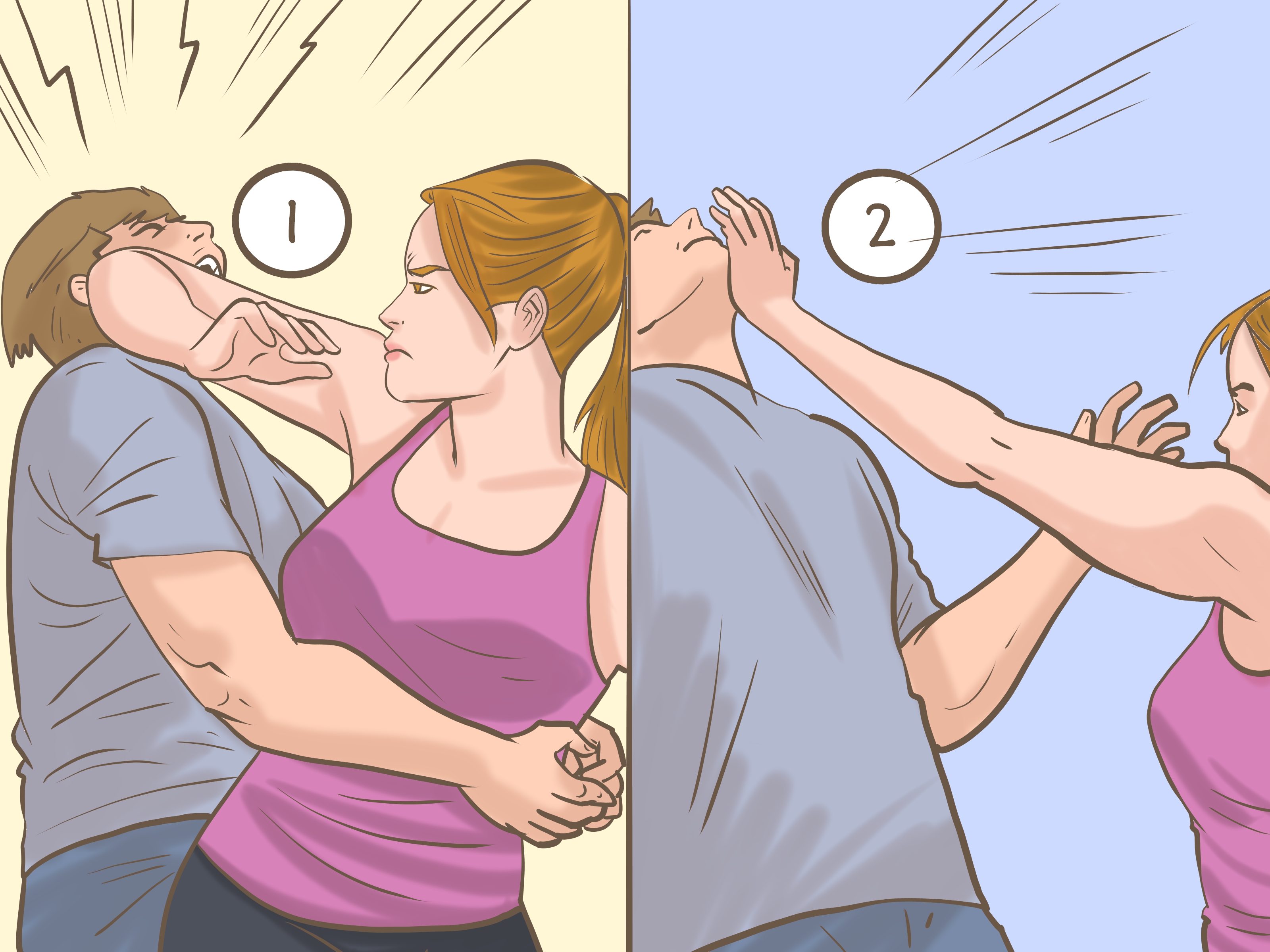
Sometimes a person may not be able to escape immediately. In that case, the goal is still not to stay and fight. The goal is to create a chance to break away and get help. Any physical resistance should be limited to what is necessary to escape immediate danger. Local laws vary, and using force can increase risk, so the safest guidance is simple: avoid, escape, call for help, and seek trained instruction from qualified self-defense professionals if you want hands-on practice.
This matters because reading about self-defense is not the same as training. Stress changes how people think, move, breathe, and react. A simple safety plan practiced calmly is more useful than a complicated move remembered vaguely while your heart is beating like a drum solo.
4. Disable Future Risk With a Safety Plan
Some threats do not come from a random stranger. They may come from someone you know: a partner, ex-partner, relative, classmate, coworker, roommate, neighbor, or acquaintance. In these situations, safety is often less about one dramatic moment and more about planning carefully over time.
A safety plan is a personalized plan for what to do before, during, and after a dangerous situation. It can include safe exits, trusted contacts, emergency numbers, transportation options, important documents, code words, safe places to go, and steps for protecting digital privacy. Safety planning is especially important when leaving an abusive relationship, dealing with stalking, or managing repeated threats.
Build a support network before a crisis
Choose a few trusted people who can help if something goes wrong. This might be a friend, parent, teacher, counselor, coach, neighbor, manager, advocate, or relative. Share only what is safe to share. Create a code word that means “I need help now.” Decide where you can go in an emergency. Keep important numbers written down in case your phone is lost, dead, or taken.
If you are in immediate danger in the United States, call 911. If the danger involves abuse, stalking, sexual assault, or threats from someone you know, victim-support organizations can help with safety planning and referrals. You do not have to wait until the situation becomes physically violent to ask for help.
Think about digital safety
Modern safety planning often includes phones, social media, shared accounts, location tracking, passwords, and devices. If someone monitors your phone or accounts, use a safer device when seeking help, such as a trusted friend’s phone, a school or library computer, or a device the person cannot access. Change passwords only when it is safe to do so. Turn off location sharing if needed, but be careful if that change might alert the person and increase danger.
Digital safety is not paranoia. It is practical. A shared streaming password is annoying. A shared location setting in a dangerous relationship can be serious. Technology should work for your safety, not against it.
What Not to Do When Facing an Attacker
Good safety advice is not only about what to do. It is also about what to avoid. In a dangerous situation, some instincts can make things worse.
Do not escalate to protect your pride
Pride is expensive. Safety is priceless. Avoid insults, dares, threats, or “come at me” energy. The goal is to leave, not to produce a dramatic scene for imaginary background music.
Do not rely on one magic trick
No single move, tool, phrase, or app guarantees safety. Personal safety works best as a layered system: awareness, distance, exits, support, communication, and emergency response.
Do not keep danger secret
If someone threatens you, follows you, harms you, or makes you afraid, tell a trusted person. Document what happened when safe. Save messages, dates, times, locations, and witness names. This information may help advocates, school staff, employers, or law enforcement understand the pattern.
Real-Life Examples of Safer Responses
Example 1: The parking lot problem. You notice someone walking behind you and matching your pace. Instead of going straight to your car, you turn toward the store entrance, stand near the cashier, and say, “I think someone is following me. Can you call security?” That disables the person’s access by adding witnesses, light, and help.
Example 2: The aggressive argument. Someone at a party becomes angry, steps too close, and blocks your path. You keep your words short: “Back up. I am leaving.” You move toward friends and the exit. You do not argue about who is right. You disable the confrontation by refusing to feed it.
Example 3: The unsafe relationship. A partner often checks your phone, controls where you go, and threatens you when you try to leave. Instead of announcing a breakup during a heated argument, you quietly talk to a trusted person, create a safety plan, arrange transportation, and contact an advocate from a safe device. You disable future risk by planning instead of reacting under pressure.
Example 4: The public emergency. You hear shouting and see people running in a crowded place. Instead of freezing, filming, or moving toward the noise, you move away from the threat, look for exits, help others if safe, and call emergency services once you are secure. You disable your exposure to danger by prioritizing distance.
Extra Experiences and Practical Lessons About Disabling an Attacker
One of the most useful experiences people share after frightening encounters is this: their instincts often noticed danger before their brain wanted to admit it. A person standing too close, a car slowing down too many times, a stranger asking strangely personal questions, a partner suddenly blocking the door, or a classmate refusing to take “no” seriouslythese moments may feel small at first. But small warning signs matter. Trusting your gut does not mean assuming everyone is dangerous. It means respecting your own discomfort enough to move toward safety.
Another common lesson is that simple actions work better than complicated plans. In calm moments, people imagine they will remember every detail of a self-defense article. In real fear, the brain often chooses the simplest available option. That is why “move toward people,” “call for help,” “create distance,” and “find an exit” are powerful. They are easy to remember when your body is flooded with adrenaline. A safety plan should be boring enough to work. Boring is underrated. Boring gets you home.
People who work late shifts, commute alone, attend evening classes, or walk through parking lots often develop small habits that reduce risk without turning life into a spy movie. They park near lights. They keep keys ready before leaving the building. They walk with coworkers when possible. They avoid wearing both earbuds in isolated areas. They tell someone when they are heading home. They choose busier routes even if those routes take a little longer. None of these habits guarantees safety, but together they create layers of protection.
There is also a valuable emotional lesson: you do not need to be embarrassed about asking for help. Many people hesitate because they fear overreacting. But asking a cashier, security guard, teacher, manager, or passerby for help is reasonable when you feel unsafe. A decent person will not be offended by your need to stay safe. And if someone is offended because you created distance, that does not mean you did something wrong. It may mean your boundary worked.
For people dealing with repeated threats, the experience is different. It may not be a single scary moment. It may be weeks or months of being watched, pressured, insulted, controlled, or followed. In those cases, “disable an attacker” means interrupting the pattern with support. Keep records when safe. Tell someone trustworthy. Avoid meeting alone to “talk things out” if the person has been threatening. Use advocates, school resources, workplace safety channels, or victim services. A pattern of control is not solved by one brave conversation. It is handled with planning, documentation, and backup.
Finally, after any threatening event, recovery matters. Once you are safe, your body may shake, cry, go numb, replay the event, or feel strangely calm. These reactions can be normal after fear. Drink water, contact someone you trust, write down what happened while details are fresh, and seek medical care, counseling, advocacy, or law enforcement help when needed. Safety does not end the second you escape. The next steps help protect your future self.
Conclusion
Disabling an attacker is not about becoming a movie hero. It is about stopping danger long enough to escape, get help, and stay alive. The safest strategies are practical: notice warning signs, create distance, move toward people and exits, use barriers, call emergency services, and build a safety plan when danger is ongoing.
The most powerful self-defense mindset is not “How do I win a fight?” It is “How do I leave safely?” That question keeps your priorities clear. Property can be replaced. Arguments can be abandoned. Pride can take a seat. Your safety comes first.
If you remember only one thing, remember this: your goal is not to defeat the attacker. Your goal is to disable the opportunity for harm. Get away. Get help. Stay safe. That is the real victory.