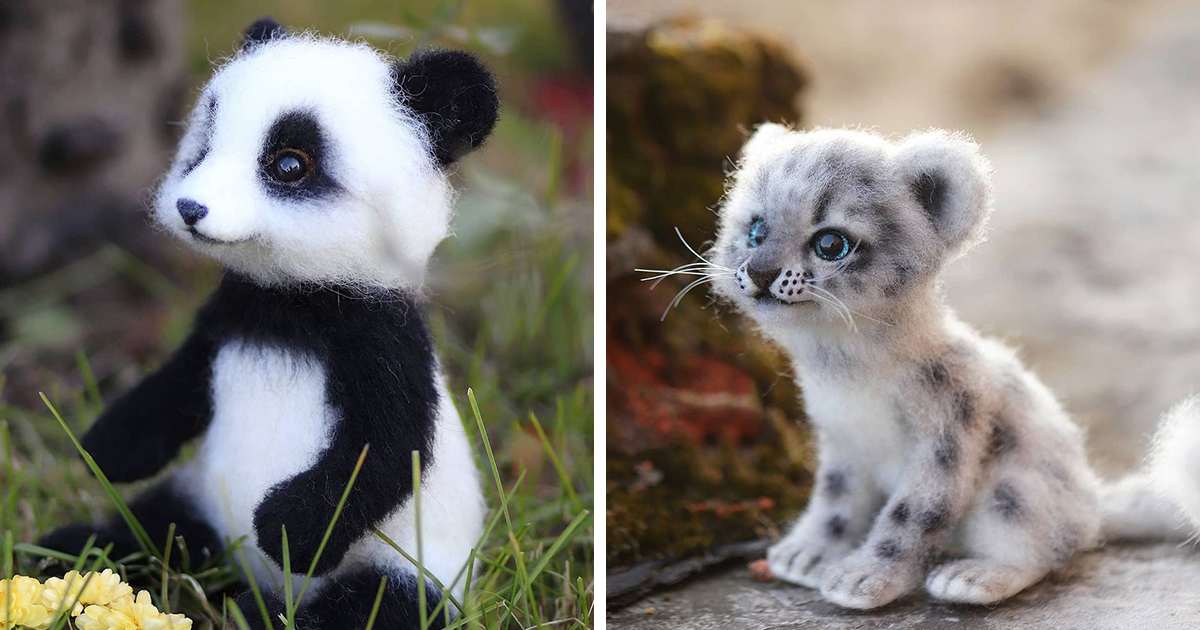
Some artists paint with oil. Some sculpt with marble. Yulia Derevschikova, however, appears to have looked at a ball of wool and thought, “Yes, this could become a fox with emotional depth.” And somehow, she was absolutely right.
Her needle-felted wool animals are tiny, fluffy, wildly expressive sculptures that look as if they wandered out of a storybook, paused for a snack, and then politely agreed to pose for the internet. These handmade creaturesrabbits, foxes, bears, deer, squirrels, pandas, owls, raccoons, puppies, and even fantasy-inspired animalsshow how a simple material like wool can become something full of personality, warmth, and charm.
The title “30 Adorable Needle-Felted Wool Animals By Yulia Derevschikova” does not exaggerate. These works are adorable in the dangerous sense: the kind that makes responsible adults whisper, “I need one,” while forgetting they came online to pay bills. But beyond the cuteness, Yulia’s art deserves a closer look because each animal reveals serious craftsmanship, patient detail work, and a deep understanding of what makes a miniature creature feel alive.
Who Is Yulia Derevschikova?
Yulia Derevschikova is a Russian fiber artist known for creating lifelike and whimsical needle-felted animals from wool. Her work has been widely shared by art, design, craft, and lifestyle publications because it sits at a very lovable intersection: realistic enough to impress collectors, cute enough to melt the internet, and small enough to make people wonder whether they have just discovered the world’s softest woodland daycare.
She is often associated with Khabarovsk, Russia, and has been reported as working in needle felting since around 2015. Over the years, her portfolio has grown into a large collection of handmade wool animals, many of them featuring oversized sparkling eyes, delicate paws, soft fur textures, and charming facial expressions. The result is a recognizable style: part natural history, part fairy tale, part “please protect this tiny raccoon at all costs.”
What separates her sculptures from ordinary felt toys is the balance between realism and emotional exaggeration. A baby fox may have believable coloring and body proportions, yet its eyes carry the gentle drama of a character in an animated forest. A rabbit may be small enough to fit in a palm, but its posture, ears, and soft face suggest a complete personality. These are not just animals made of wool. They are tiny characters with backstories.
What Is Needle Felting?
Needle felting is a dry fiber-art technique that uses a special barbed needle to tangle wool fibers together. Instead of sewing pieces in the usual way, the artist repeatedly pokes wool with the needle until the loose fibers lock, compress, and form a solid shape. It is a little like sculpting with clouds, except the clouds fight back and occasionally poke your finger.
The process can be used for flat decorative designs, but it is especially powerful for three-dimensional wool sculptures. Artists begin with a basic shape, gradually add layers, adjust the density, blend colors, and refine tiny details. A nose, ear, paw, cheek, or tail may require repeated shaping before it looks natural. For realistic animal sculptures, the artist must understand both anatomy and texture: where the face narrows, how the fur changes color, how the body sits, and how the eyes affect the entire mood.
That is why Yulia Derevschikova’s felted wool animals feel so impressive. A viewer may first react to the cuteness, but the craft behind that cuteness is serious. Creating one miniature animal can take many hours of patient needling, layering, trimming, and adjusting. Every tiny creature is the result of hundredsoften thousandsof careful needle movements.
Why These 30 Needle-Felted Animals Are So Irresistible
1. The Eyes Do Half the Storytelling
In Yulia’s work, the eyes are not just accessories. They are emotional engines. Many of her animals have bright, glossy eyes that make them look alert, curious, shy, or slightly surprised by the responsibilities of being this cute. A squirrel may look like it just discovered a secret. A baby deer may look tender and cautious. A fox may seem clever but innocent, as if it has not yet learned how taxes work.
This eye-focused style is one reason the sculptures are so shareable online. People connect quickly with faces, especially faces that suggest vulnerability, curiosity, or playfulness. Yulia uses this visual language beautifully. Her animals do not stare blankly; they invite the viewer into a small emotional moment.
2. The Fur Looks Soft, Layered, and Alive
Wool is already a warm material, but in skilled hands it can imitate animal fur with surprising realism. Yulia’s pieces often show subtle color transitions, fluffy cheeks, soft bellies, darker ears, lighter muzzles, and carefully blended markings. The surface does not look flat or plastic. It looks touchable.
This matters because texture is the soul of needle-felted animal art. A felted bear needs density and roundness. A fox needs layered color and a slightly wild softness. A rabbit needs ears that feel delicate, not bulky. A raccoon needs contrast around the face without becoming cartoonishly harsh. In each case, wool allows the artist to build a surface that feels gentle and organic.
3. The Proportions Are Cute Without Becoming Silly
Many cute handmade animals rely on exaggerated features: giant heads, enormous eyes, tiny bodies, and expressions that say, “I am baby. Feed me compliments.” Yulia uses exaggeration, but she controls it. Her creatures remain recognizable as animals, not random balls with ears attached.
This balance is important. The animals feel magical because they still respect nature. A deer still has the softness and elegance of a deer. A fox still carries a fox’s alert face and pointed ears. A bear cub still has rounded weight and cozy presence. The cuteness enhances the realism instead of replacing it.
A Closer Look at the Animal Types
Woodland Animals: Foxes, Deer, Squirrels, and Rabbits
Woodland animals are a natural match for needle felting. Their soft shapes, expressive faces, and familiar storybook associations make them perfect subjects. Yulia’s foxes often stand out because foxes already carry a mix of elegance and mischief. In wool, that personality becomes even stronger. A felted fox can look like it is about to star in a children’s book and steal a biscuit in chapter two.
Rabbits and deer bring a softer mood. Their gentle faces, long ears, delicate legs, and quiet expressions create a feeling of innocence. Squirrels and chipmunks add energy. They are small, bright, busy-looking animals, and in felted form they can appear almost frozen mid-adventure. These woodland pieces show how Yulia turns familiar creatures into miniature emotional portraits.
Playful Pets: Puppies, Kittens, and Tiny Companions
Pet-inspired needle-felted animals are especially popular because people already attach strong feelings to cats, dogs, and other companions. A small wool puppy with shining eyes can carry the emotional force of an entire greeting-card aisle. The appeal is not only realism; it is recognition. Viewers see a posture, a head tilt, or a soft muzzle and think of a pet they once loved.
Needle felting is well suited to pet art because wool can be shaped into breed-like features, fluffy coats, folded ears, paws, and expressive faces. Yulia’s style leans into that tenderness. Her animals often feel less like display objects and more like little companions waiting patiently on a shelf.
Wild and Whimsical Creatures: Bears, Pandas, Owls, Raccoons, and Unicorns
One of the joys of Yulia Derevschikova’s work is variety. Her felted wool animals are not limited to one category. Bears bring cuddly weight. Pandas bring graphic black-and-white charm. Owls bring round-eyed wisdom, although let’s be honest: a felted owl mostly looks like it knows where you hid the snacks. Raccoons offer mask-like markings and mischievous appeal, while fantasy-inspired pieces such as unicorns add a dreamy, magical layer to the collection.
This variety helps explain why the “30 adorable animals” format works so well. Each piece offers a slightly different personality. The viewer is not simply scrolling through similar toys; they are meeting a cast of tiny wool characters.
The Art Behind the Cuteness
Layering Wool Like a Sculptor Layers Clay
Although needle felting looks soft and simple from the outside, it is structurally demanding. The artist must create a stable base, build volume gradually, and control density. Too loose, and the figure loses shape. Too firm, and the sculpture may look stiff instead of fluffy. The best felted animals have both form and softness.
Yulia’s animals show that balance clearly. The bodies hold their shape, but the surface remains warm and fuzzy. Faces are refined, but not overworked into lifeless perfection. This is where experience matters. A beginner may create a round wool blob and call it a hedgehog. A master makes the hedgehog look as if it has opinions.
Color Blending Creates Natural Fur
Real animals rarely have flat, single-color coats. Their fur includes shadows, highlights, seasonal tones, and subtle markings. Needle felting allows artists to blend wool colors by layering small amounts of fiber over the surface. This can create a soft gradient on a fox’s face, gentle shading around a deer’s eyes, or a warm belly color on a bear.
Yulia’s work often uses these tiny transitions to make the animals feel more lifelike. The colors are not loud or artificial. They are carefully chosen to support the personality of each piece. That restraint gives the sculptures their premium handmade feel.
Small Details Make the Biggest Difference
In miniature art, details carry huge responsibility. A paw that is slightly too large can change the whole animal. An ear placed too high can make a rabbit look surprised for the wrong reason. A muzzle that lacks definition can flatten the face. Yulia’s sculptures succeed because the small details are carefully managed.
Look closely at the paws, ears, noses, cheeks, tails, and posture. These are the parts that turn a wool form into a character. Even the angle of the head matters. A slight tilt can suggest curiosity. A tucked body can suggest shyness. A lifted face can suggest trust. This is the quiet storytelling power of needle-felted animal sculpture.
Why Yulia Derevschikova’s Work Became So Popular Online
Yulia’s needle-felted wool animals are made for the internet in the best possible way. They are visually immediate, emotionally clear, and easy to love at first glance. But they also reward slow looking. The longer you study them, the more you notice the technique behind the charm.
Online audiences love handmade art that feels personal. In a digital world full of mass-produced products, a tiny wool animal made by hand has a different kind of value. It carries time. It carries touch. It carries the artist’s choices. Every fuzzy cheek and little paw reminds viewers that someone shaped this creature slowly, patiently, and intentionally.
There is also a strong nostalgia factor. These animals look like the characters many people imagined as children while reading fairy tales or watching animated forest scenes. They feel safe, gentle, and familiar. In a fast-moving online feed, that softness is powerful. A tiny felted fox can become a five-second vacation from reality. Honestly, not a bad achievement for sheep wool.
What Collectors and Craft Lovers Can Learn From Her Style
Yulia Derevschikova’s work offers several lessons for anyone interested in handmade art, needle felting, or collectible wool animals. First, strong character matters more than size. A tiny sculpture can feel memorable if the expression is clear. Second, materials do not need to be expensive to feel luxurious. Wool, when handled with skill, can become deeply expressive. Third, patience is visible. Viewers can sense when a piece has been rushed, and they can also sense when an artist has taken time to refine every feature.
For beginners, her work is inspiring but also humbling. Needle felting may be accessible, but mastery takes practice. The first attempt may look less like a baby fox and more like a potato experiencing uncertainty. That is normal. The craft rewards repetition. Every poke of the needle teaches control, density, angle, and shape.
For collectors, the appeal is emotional and decorative. These animals can brighten a studio shelf, nursery, craft room, display cabinet, or reading corner. They also make people smile, which is not a small thing. Any object that can sit quietly on a shelf and improve the mood of a room has earned its keep.
How Needle-Felted Animals Fit Into Modern Handmade Decor
Handmade decor has become increasingly popular because people want objects with warmth, story, and texture. Needle-felted animals fit beautifully into that trend. They are small enough for modern living spaces, soft enough to feel cozy, and artistic enough to serve as conversation pieces.
A felted rabbit can soften a minimalist bookshelf. A wool fox can add woodland charm to a desk. A tiny bear can bring personality to a nursery without feeling generic. A felted owl can make a reading nook feel slightly wiser, or at least more judgmental in an adorable way. These pieces work because they blend craft and character.
They also connect with the slow-made movement. In a world of fast shipping and identical products, handmade wool animals remind us that art can take time. That time becomes part of the beauty. Each sculpture is not just an object; it is a record of careful attention.
Experience Notes: Spending Time With the World of Yulia Derevschikova’s Felted Animals
Exploring Yulia Derevschikova’s needle-felted wool animals feels a little like walking into a miniature forest where every resident has excellent skincare and suspiciously good lighting. At first, the reaction is simple: they are cute. Very cute. Alarmingly cute. But after looking longer, the experience becomes more layered. You begin to notice how each animal has its own mood, not just its own species.
One of the most enjoyable things about viewing these 30 adorable needle-felted animals is realizing how much expression can be packed into small choices. A rabbit’s ears can make it seem shy or alert. A fox’s narrow face can feel clever or gentle depending on the eyes. A bear cub can look sleepy, playful, or slightly offended that breakfast is late. These subtle differences make the collection feel alive rather than repetitive.
There is also something surprisingly calming about this kind of art. Needle felting is based on repetition, and even when you are only viewing the finished piece, you can sense the rhythm behind it. The wool has been shaped slowly. The colors have been built in layers. The face has been adjusted until it feels just right. That patience comes through. It gives the viewer permission to slow down, too.
For people who enjoy crafts, Yulia’s animals may create a dangerous thought: “Maybe I could try needle felting.” This is a wonderful idea, as long as expectations remain friendly. A beginner’s first animal may not look like Yulia’s polished woodland creatures. It may look like a marshmallow with ears. That is not failure; that is the traditional first step of the fiber-arts hero’s journey. Needle felting teaches patience, hand control, and the strange bravery required to keep poking wool until a face appears.
For animal lovers, the emotional appeal is even stronger. These sculptures capture the softness we associate with young animals: round cheeks, careful paws, bright eyes, and tiny bodies. They remind us why humans are so easily defeated by baby animals. We are not weak; we are simply responding to advanced cuteness engineering.
From a design perspective, the collection also shows how important restraint can be. Yulia’s animals are charming, but they are not overloaded. The colors are soft, the poses are natural, and the expressions are sweet without becoming sugary. That restraint makes the work feel elegant. It is cute, yes, but it is also carefully composed.
The biggest takeaway is that handmade art does not need to shout. These needle-felted wool animals are quiet objects, but they hold attention because they feel sincere. They represent hours of focus, an eye for detail, and a clear love for animal character. Whether you are a collector, a craft lover, an artist, or simply someone who needed a tiny fox to improve the day, Yulia Derevschikova’s wool animals offer exactly the kind of gentle wonder the internet could use more often.
Conclusion
Yulia Derevschikova’s needle-felted wool animals prove that small art can have a big emotional impact. Through wool, barbed needles, color blending, and patient sculpting, she creates miniature creatures that feel warm, expressive, and full of personality. The 30 adorable animals associated with her work are not just cute images to scroll past; they are examples of how traditional fiber art can become modern collectible sculpture.
Her pieces appeal because they combine technical skill with storybook charm. The animals look soft enough to cuddle, detailed enough to admire, and expressive enough to remember. In a world that often moves too quickly, these tiny wool creatures ask us to pause, smile, and appreciate the magic of slow handmade work. That is a pretty impressive achievement for a handful of sheep wool and a very determined needle.