If you’ve got a yard full of trees, a side garden that sees about three polite minutes of sunlight, or a backyard corner where the sun simply refuses to clock in, don’t panic. Shade is not a gardening curse. It’s a design opportunity. In fact, some of the most elegant, lush, and low-stress plants in the landscape actually prefer life away from blazing afternoon sun.
The secret to creating a great shade garden is choosing easy-to-grow perennials for shade that match your site. Some thrive in moist woodland conditions. Others handle dry shade better than you’d expect. And a few are such reliable overachievers they make even beginner gardeners look suspiciously competent.
Below, you’ll find 24 beautiful perennials for shade that bring color, texture, and long-lasting charm to darker parts of the yard. Some are grown for flowers, some for foliage, and some for both. Together, they can turn a gloomy patch into the most peaceful part of your landscape.
Before You Plant: Know What Kind of Shade You Have
Not all shade is created equal. “Shade” can mean dappled light under trees, bright morning sun with afternoon protection, or deep shade where the sun barely makes a cameo. It can also mean dry shade, which is the trickiest version because tree roots are competing for moisture like they’re in a game show.
Before you buy anything, ask these questions:
- Is it part shade or full shade? Many flowering perennials like a little morning sun.
- Is the soil dry or consistently moist? Shade plants often fail because the moisture level is wrong, not because the light level is.
- Are tree roots present? If yes, choose tougher plants and add compost and mulch carefully.
- Do deer or slugs visit your yard? Some shade favorites are basically a dinner invitation.
A successful shade garden usually relies on layers: tall accents, mounding perennials, groundcovers, and plenty of foliage contrast. Think broad leaves next to fine fronds, silvery foliage beside dark green, and spring bloomers mixed with plants that look good all season.
24 Beautiful Perennials for Shade That Are Easy to Grow
1. Hosta
If shade gardening had a mascot, it would be the hosta. These classic shade perennials come in every size from tiny border plants to giant statement-makers, with leaves in blue-green, chartreuse, deep green, and dramatic variegation. They’re reliable, long-lived, and excellent for filling space. Just know that slugs and deer also consider hostas “beautiful,” though for very different reasons.
2. Astilbe
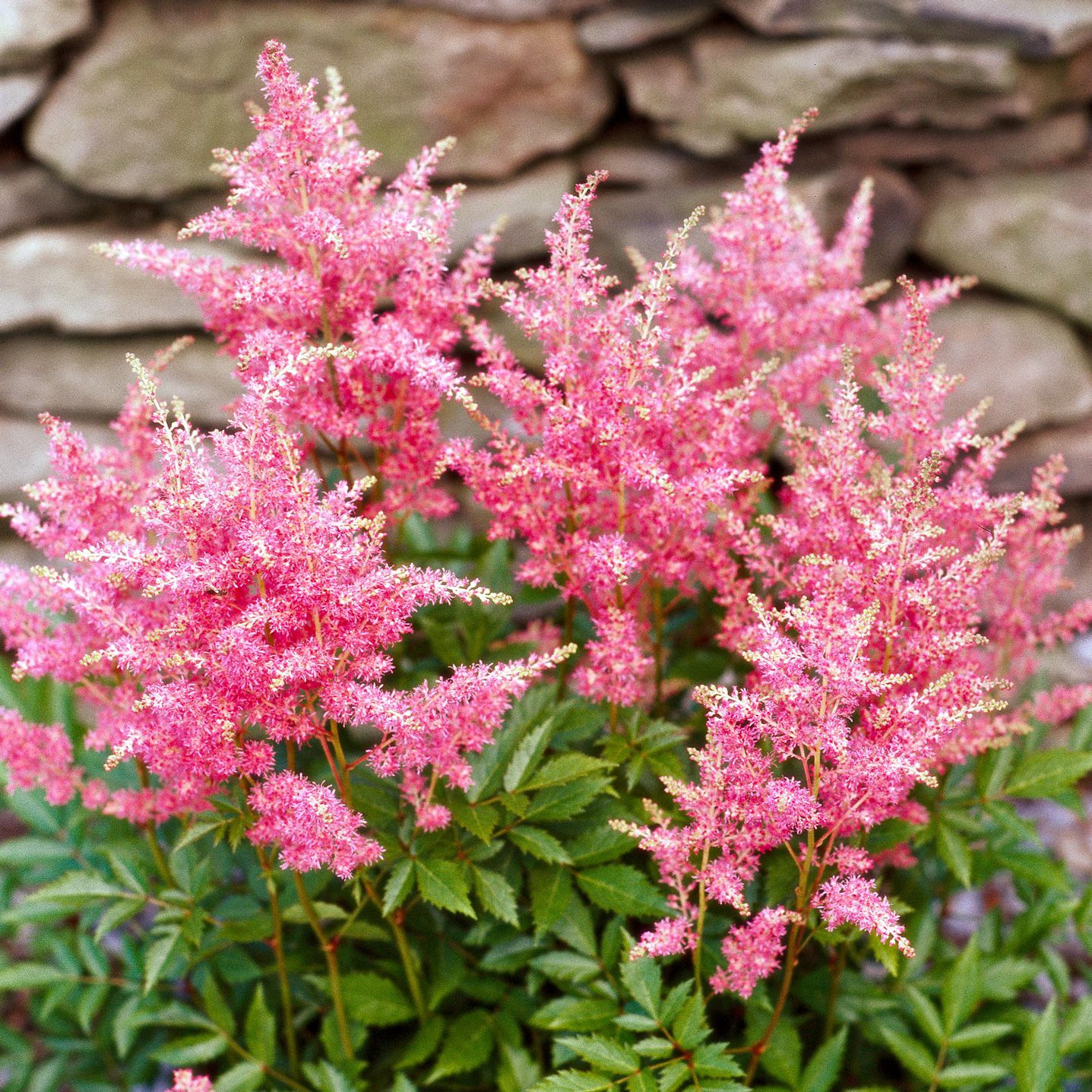
Astilbe brings feathery plumes of pink, red, purple, or white above fern-like foliage, making it one of the prettiest choices for a softer, romantic look. It does best in moist shade and is especially useful near paths, water features, or woodland borders. If your shady area feels like a cool forest floor, astilbe will settle in happily.
3. Hellebore
Hellebores, often called Lenten roses, are the overachievers of the shade world. They bloom in late winter or early spring when the garden still looks half asleep and the rest of us are still emotionally attached to soup season. Their nodding flowers come in cream, pink, plum, green, and near-black tones, while the foliage stays handsome for months.
4. Coral Bells (Heuchera)
Coral bells earn their keep with colorful foliage in shades of lime, caramel, silver, burgundy, and nearly black. The flower spikes are charming, but the leaves are the real stars. Use them to brighten dark corners or echo colors from nearby containers. Many varieties handle part shade beautifully, and once established, they’re surprisingly easy to maintain.
5. Brunnera
Brunnera is one of those plants that makes people stop and ask, “What is that?” Its heart-shaped leaves, often splashed with silver, light up shady beds like someone turned on the good lamp. In spring, it sends up tiny blue flowers that resemble forget-me-nots. It’s lovely in woodland gardens and especially effective when paired with ferns and hostas.
6. Bleeding Heart
Bleeding heart looks almost too whimsical to be real, with dangling heart-shaped blooms that appear in spring. It brings a cottage-garden softness to part shade and bright shade, especially in cooler climates. The traditional varieties often go dormant in summer, so plant them near later-emerging companions that can fill the space after the floral show ends.
7. Lungwort (Pulmonaria)
Ignore the name. Lungwort sounds like a Victorian insult, but it’s actually a charming plant with spotted or silver-washed leaves and clusters of pink, blue, or violet flowers in early spring. It’s a great performer in cool, shady beds and gives you color even when the garden still feels stuck between winter and spring.
8. Foamflower (Tiarella)
Foamflower is a native-friendly favorite that forms neat mounds of attractive foliage and airy spikes of frothy white or blush blooms. It’s one of the best easy-care perennials for shade if you want a woodland look without constant fussing. Over time, it can spread gently, making it useful as a soft groundcover in part to full shade.
9. Epimedium
Epimedium, also called barrenwort or bishop’s hat, deserves far more attention than it gets. This tough little perennial handles dry shade better than many others and offers delicate spring flowers that hover above wiry stems like tiny butterflies. The foliage is elegant, often semi-evergreen, and ideal for edging paths or planting under mature trees.
10. Solomon’s Seal
Solomon’s seal brings graceful, arching stems and dangling bell-like flowers that feel right at home in a woodland border. Even when it isn’t blooming, the form is elegant. Variegated types are especially useful for brightening darker spaces. This is a plant that doesn’t shout for attention, but quietly makes the entire bed look more sophisticated.
11. Jacob’s Ladder
Named for its ladder-like leaf arrangement, Jacob’s ladder offers fine texture and spring flowers in soft blue, purple, or white. It’s a wonderful bridge plant between bolder foliage types and more delicate woodland bloomers. Give it some moisture and protection from harsh afternoon sun, and it usually behaves like the easiest houseguest you’ve ever had.
12. Toad Lily
Toad lily wins the award for worst common name and one of the best late-season performances. Its orchid-like, speckled blooms arrive in late summer to fall, just when many shade gardens are running low on fireworks. Plant it near a path or patio, where those intricate flowers can be appreciated up close instead of politely ignored from across the yard.
13. Japanese Painted Fern
This fern is pure poetry in foliage form. The fronds are washed in silver, green, and burgundy, giving shady areas a cool, luminous look. Japanese painted fern blends beautifully with hostas, brunnera, and coral bells, and it brings movement and texture without needing flashy flowers to make its point.
14. Lady Fern
Lady fern is a dependable, easy-going native-style choice that works in many woodland gardens. Its soft, airy fronds create a relaxed, naturalistic feel, and it pairs beautifully with spring bloomers. If you want a shade bed to feel established, calm, and slightly storybook without becoming fussy, lady fern helps set that tone.
15. Ostrich Fern
If you have space and moisture, ostrich fern is a dramatic winner. Its tall, vase-shaped fronds give shady beds a bold, architectural presence while still feeling graceful. This is the plant for gardeners who want their landscape to whisper “woodland retreat” instead of “I gave up and planted lawn under a maple tree.”
16. Christmas Fern
Christmas fern is prized for its evergreen habit, which means your shade garden keeps some structure even when everything else has called it a season. It’s sturdy, adaptable, and especially useful on slopes or in more naturalized areas. If you value low maintenance and year-round presence, this one earns its spot.
17. Ligularia
Ligularia is for gardeners who love bold leaves and aren’t afraid of a little drama. The foliage is often huge and striking, while the flowers can resemble golden daisies or spires, depending on the type. It needs steady moisture and dislikes hot, dry conditions, but in the right shady spot, it looks downright luxurious.
18. Columbine
Columbine adds a lighter, more whimsical look than many foliage-heavy shade plants. Its nodding flowers come in jewel tones and softer pastels, and it often self-sows just enough to feel charming rather than chaotic. Native types are especially good for woodland edges and part shade gardens where you want a more natural, relaxed planting style.
19. Bugleweed (Ajuga)
Ajuga is a fast-spreading groundcover with glossy foliage in green, bronze, or purple tones and short spikes of blue flowers in spring. It’s especially useful for edging, suppressing weeds, and filling spaces between larger perennials. Give it room, though. It is enthusiastic. “Low maintenance” sometimes arrives wearing running shoes.
20. Deadnettle (Lamium)
Lamium is one of the easiest plants for bright shade and part shade, especially if you need a low-growing spreader. The silver-marked leaves brighten dark spots, and the pink, purple, or white flowers are a nice bonus. It works well at the front of beds, around shrubs, or in those annoying places where grass never had a chance.
21. Bergenia
Bergenia has thick, glossy leaves and clusters of spring flowers in pink, rose, or white. The foliage often develops reddish winter tones, which gives it multi-season appeal. It’s a sturdy, dependable perennial that handles shade gracefully and adds a different leaf texture than the usual fern-and-hosta routine.
22. Goat’s Beard (Aruncus)
Goat’s beard is like astilbe’s bigger, more dramatic cousin. It produces large plumes of creamy white flowers and grows into an impressive clump, making it perfect for the back of a shady bed. If you have room and decent soil moisture, this is a fantastic way to add height and a soft, airy presence.
23. Virginia Bluebells
Virginia bluebells are spring magic. Their nodding flowers open pink and mature to blue, creating a dreamy woodland display for a few glorious weeks. They go dormant after blooming, so pair them with later-emerging perennials such as hostas or ferns. That way, your garden keeps looking full after the bluebells take their seasonal exit.
24. Wild Ginger
Wild ginger is grown more for its lush, heart-shaped leaves than its hidden flowers, but that’s perfectly fine because the foliage is gorgeous. It makes an excellent native-style groundcover for shady areas and brings a quiet richness to the front of beds. Think of it as the plant equivalent of good background music: subtle, steady, and absolutely improving the mood.
How to Make Shade Perennials Easy to Grow
Even the easiest perennials for shade appreciate a smart start. Work compost into the soil before planting, especially if tree roots haven’t already claimed every available inch. Add mulch to help preserve moisture and reduce weeds, but keep it off plant crowns. Water new plants regularly during their first season, because “shade” does not automatically mean “damp.”
It also helps to group plants by what they actually want. Astilbe, ligularia, and ostrich fern prefer more consistent moisture. Epimedium, lamium, and some heucheras are better candidates for drier shade. And if deer or slugs are frequent visitors, lean more heavily on hellebores, ferns, epimedium, and brunnera, while treating hostas like the high-risk celebrities they are.
Most of all, embrace foliage. In sun gardens, flowers often do the heavy lifting. In shade gardens, leaves are the main event. When you combine different sizes, shapes, and tones, the result can be richer, calmer, and more sophisticated than many full-sun borders.
Experience-Based Tips: What Growing Shade Perennials Is Really Like
One of the most common experiences gardeners share about shade planting is that they start out feeling a little defeated. A shady yard can seem limiting at first, especially if you’ve spent years seeing bright, sunny borders on magazine covers and assuming your garden missed the assignment. Then something funny happens: once you begin planting shade perennials, you realize the shady part of the yard is often the most comfortable, most relaxing, and most atmospheric place you have.
A typical journey starts with one or two dependable plants, usually hostas or ferns. They survive. Then they grow. Suddenly, the dark corner by the fence doesn’t look neglected anymore; it looks intentional. After that, most gardeners get bolder. They add a hellebore for late-winter flowers, some astilbe for summer plumes, and maybe a brunnera because that silver foliage is impossible to resist. Before long, the space starts to feel layered and lush instead of empty and difficult.
Another very real experience with shade gardening is learning that the soil matters as much as the light. Many people assume a plant failed because it “needed more sun,” when the actual problem was dry soil under mature trees or a soggy low spot that never drains. Once gardeners begin matching plants to the moisture level of the site, success rates improve fast. A dry-shade bed under roots becomes the right place for epimedium, lamium, and wild ginger. A cooler, moisture-rich area suddenly becomes perfect for astilbe, ligularia, and ostrich fern. It feels less like guesswork and more like finally understanding the rules of the game.
There’s also a visual experience unique to shade gardens that’s hard to appreciate until you see it in person. Shade softens everything. Silver leaves seem brighter. Chartreuse foliage glows. White flowers look crisp and almost luminous in early evening. Even the movement of ferns in a slight breeze feels more noticeable because the overall mood is calmer. Gardeners often discover that a shade bed doesn’t need nonstop bloom to feel beautiful. Texture and contrast carry the design in a quieter, more elegant way.
And yes, there are lessons. Hostas may attract slugs. Deer may regard your efforts as a tasting menu. Some spring beauties, like Virginia bluebells and bleeding hearts, may disappear for part of the season and briefly make you think you accidentally killed them. You probably didn’t. Shade gardening teaches patience, observation, and a willingness to layer plants so one performer steps in when another bows out.
In the end, growing beautiful perennials for shade often becomes less about “making do” with a difficult area and more about creating a space that feels cooler, softer, and more personal than the sunny parts of the yard. Many gardeners eventually decide their shade garden is the one place that looks the most settled, the most inviting, and the least needy. Which, frankly, is an excellent personality type for a plant bed.
Conclusion
If you choose the right plants, a shady garden can be every bit as colorful, textured, and inviting as a sunny one. The best approach is to mix reliable foliage stars with a few seasonal bloomers, pay attention to moisture, and let the space evolve naturally. With hostas, hellebores, ferns, foamflowers, and other easy favorites in the mix, your shade garden can go from dim and awkward to lush and unforgettable.