Note: Product prices and availability can change, especially during seasonal sales. The picks below focus on affordable organizing products that are commonly found under $30 at major U.S. retailers and are chosen for practical, everyday home use.
If your home has ever developed its own mysterious ecosystem of mail piles, runaway socks, half-used shampoo bottles, and “I’ll deal with it later” drawers, congratulations: you are living in a normal house. The good news is that getting organized does not require a custom closet, a professional crew, or a budget that makes your credit card quietly sob. Sometimes, the right $7 bin or $19 rolling cart can do more for your sanity than a weekend of dramatic decluttering speeches.
This guide rounds up the 17 best organizing products under $30 for every room, from the kitchen and bathroom to the bedroom, laundry area, entryway, office, and even that weird cabinet where batteries, tape, and mystery cords go to start a new civilization. These are not luxury “look but don’t touch” organizers. They are practical, space-saving, easy-to-use home storage solutions that help real people handle real clutter.
The focus here is simple: affordable organizers that solve common household problems. Think clear bins for pantry snacks, drawer dividers for utensils and socks, over-the-door organizers for shoes or toiletries, under-sink drawers for cleaning supplies, and rolling carts that can politely follow chaos from room to room. Let’s organize the house without accidentally organizing your paycheck into someone else’s bank account.
Why Under-$30 Organizers Are Often the Smartest Buy
It is tempting to believe that a perfectly organized home comes from expensive built-ins, matching custom containers, and a label maker with the confidence of a corporate lawyer. But most clutter problems are smaller and more repetitive than that. A pantry needs categories. A bathroom needs vertical storage. A closet needs separation. A desk needs fewer loose items doing interpretive dance across the surface.
That is why the best budget organizing products work so well. They create boundaries. They make items visible. They reduce friction. When you can see the granola bars, grab the hair dryer, find the measuring spoons, and toss clean socks into an actual divider instead of a textile volcano, your home becomes easier to maintain.
Before buying anything, measure your space. Seriously. Measure the drawer, shelf, under-sink cabinet, closet floor, or door width. A product can be brilliant and still useless if it is half an inch too tall. Organization is many things, but it is not magic carpentry.
17 Best Organizing Products Under $30 for Every Room
1. Clear All-Purpose Storage Bins
Best for: Pantry, fridge, bathroom, linen closet, office shelves
Typical price: $7–$15 each
Clear bins are the little black dress of home organization: simple, versatile, and somehow appropriate everywhere. Use them in the pantry for snacks, in the fridge for yogurts and produce, in the bathroom for extra toothpaste, or in the office for cords and supplies. The clear design matters because visibility prevents accidental overbuying. Nobody needs to discover six unopened bags of chia seeds unless they are planning to open a very specific café.
Look for bins with built-in handles, stackable edges, and easy-clean plastic. A medium-size bin is often more useful than an enormous one because smaller categories are easier to maintain.
2. Bamboo Drawer Organizer
Best for: Kitchen drawers, vanity drawers, desk supplies
Typical price: $10–$25
A bamboo drawer organizer instantly makes a drawer feel more intentional. In the kitchen, it separates forks, spoons, knives, measuring tools, and small gadgets. In the bathroom, it can hold makeup brushes, razors, floss, and cotton swabs. In a desk drawer, it keeps pens and sticky notes from entering combat.
Bamboo adds warmth and looks more elevated than plain plastic, but the real benefit is structure. Instead of digging through a drawer like you are panning for office supplies, everything gets a home.
3. Expandable Drawer Dividers
Best for: Dresser drawers, kitchen tools, nursery storage, craft supplies
Typical price: $15–$30 per set
Expandable drawer dividers are ideal when you need flexibility. They stretch to fit the drawer and create custom sections for socks, underwear, T-shirts, spatulas, dish towels, or art supplies. They are especially helpful in dresser drawers because folded clothes tend to migrate when left unsupervised.
Choose spring-loaded dividers with padded ends so they stay in place without scratching the drawer. For clothing, use them to create rows. For kitchen tools, separate by function: prep tools, baking tools, serving tools, and the mysterious gadget you swear you use once a year.
4. Lazy Susan Turntable
Best for: Pantry corners, cabinets, bathroom counters, medicine shelves
Typical price: $10–$25
A lazy Susan is not lazy. It is efficient, emotionally available, and excellent at making awkward cabinet corners useful. Use one for oils and vinegars, spices, vitamins, skincare, condiments, or cleaning sprays. Instead of knocking over three bottles to reach the soy sauce, you spin the tray and feel briefly like the CEO of your pantry.
For kitchens and bathrooms, choose a turntable with a raised rim and non-slip base. The rim keeps bottles from jumping ship, while the base keeps the organizer steady when you spin it with morning-coffee energy.
5. Tiered Spice Rack or Shelf Riser
Best for: Spices, canned goods, skincare, mugs, medicine cabinets
Typical price: $8–$20
A tiered shelf riser solves one of the most annoying storage problems: items hiding behind other items. In a pantry, it lets you see spices and cans. In the bathroom, it creates levels for skincare or medicine bottles. In a cabinet, it doubles usable vertical space for mugs, bowls, or small plates.
Expandable versions are especially useful because you can adjust the width. Just avoid overcrowding the tiers. A spice rack should not look like rush-hour traffic in glass jars.
6. Under-Sink Two-Tier Organizer
Best for: Kitchen sink, bathroom vanity, laundry cabinet
Typical price: $18–$30
The under-sink cabinet is where cleaning supplies often go to become legends. A two-tier organizer brings order to the awkward space around pipes and makes bottles easier to grab. Use the bottom tier for taller sprays or refills and the top tier for sponges, gloves, dishwasher tabs, soap, or small toiletries.
Look for models with sliding drawers or open baskets. Before buying, measure around plumbing and garbage disposal parts. Under-sink storage is a puzzle, and the pipes always think they are the main character.
7. Over-the-Door Shoe Organizer
Best for: Closet, bedroom, laundry room, kids’ room, pantry door
Typical price: $12–$26
An over-the-door shoe organizer is secretly one of the most flexible organizing products under $30. Yes, it holds shoes. But it also holds hats, scarves, toys, cleaning cloths, snacks, water bottles, hair tools, craft supplies, pet gear, and bathroom extras.
Clear or mesh pockets are best because they let you see what is inside. Use one on a pantry door for packaged snacks, on a laundry room door for stain removers and dryer sheets, or on a bedroom door for accessories. It saves floor space and turns unused vertical space into a tiny storage superhero.
8. Fabric Under-Bed Storage Bag
Best for: Seasonal clothes, extra bedding, shoes, guest linens
Typical price: $6–$25
Under-bed storage is perfect for things you do not need every day but do not want to exile to a garage or attic. Fabric bins or zippered bags work well for sweaters, blankets, off-season clothes, and extra sheets. Some styles include dividers for shoes, which is helpful if your closet floor has become a footwear obstacle course.
Choose breathable fabric for textiles and clear lids if you want quick visibility. Avoid storing items you use constantly under the bed, unless you enjoy kneeling on the floor every morning like you are searching for buried treasure.
9. Slim Rolling Storage Cart
Best for: Bathroom, laundry room, kitchen, office, craft corner
Typical price: $15–$30
A slim rolling cart adds storage without demanding permanent commitment. It can slide between a washer and dryer, sit beside a bathroom vanity, hold snacks in a kitchen, or become a mobile homework station. The wheels matter because the cart can move where the mess moves.
Use small bins inside each tier to prevent smaller items from tipping over. In bathrooms, store hair products and towels. In offices, use it for notebooks, chargers, and supplies. In craft areas, it keeps markers, glue, paper, and scissors together without taking over the dining table.
10. Stackable Shoe Rack
Best for: Entryway, closet floor, dorm room, mudroom
Typical price: $15–$30
A basic stackable shoe rack can rescue an entryway from looking like a shoe store had a small emergency. Open racks are better for daily footwear because they are easy to access. Closed shoe cabinets look tidy, but they often cost more and require more space.
For small homes, choose a narrow two- or three-tier rack. For closets, place frequently worn shoes on top and less-used pairs below. A shoe rack also works for small storage baskets, folded jeans, or kids’ sports gear.
11. Adhesive Wall Hooks
Best for: Entryway, bathroom, closet, dorm room, rental spaces
Typical price: $5–$15 per pack
Adhesive hooks are the quiet heroes of organization. They hold keys, masks, towels, robes, bags, necklaces, measuring spoons, and lightweight cleaning tools. They are especially useful for renters because many styles can be removed without drilling.
Use them inside cabinet doors, near the entryway, behind bathroom doors, or on closet walls. Always check the weight limit and apply them to clean, dry surfaces. Hooks are not shelves, and your winter coat collection may disagree, but the wall will win.
12. Lidded Storage Boxes
Best for: Linen closet, kids’ room, garage shelves, office supplies
Typical price: $8–$20
Lidded boxes are excellent for items that need dust protection or visual calm. Use them for batteries, light bulbs, extra toiletries, keepsakes, small toys, first-aid supplies, or seasonal decorations. Stackable boxes help make vertical space useful, especially in closets and cabinets.
The key is labeling. A closed box without a label is just a mystery container with better manners. Use broad labels such as “First Aid,” “Cables,” “Guest Toiletries,” or “Winter Accessories” so the system remains easy to maintain.
13. Woven Basket
Best for: Living room, bedroom, bathroom, shelves, entryway
Typical price: $10–$30
A woven basket is organization wearing a cute outfit. It hides visual clutter while adding texture to a room. Use one in the living room for throw blankets, one by the door for slippers, one on a shelf for remote controls and chargers, or one in the bathroom for rolled hand towels.
Baskets are best for categories, not chaos. Instead of tossing everything inside, give each basket a job. One for dog toys. One for magazines. One for hats. A basket without a purpose becomes a decorative junk drawer, and nobody needs wicker with secrets.
14. Cable Management Box or Cord Clips
Best for: Home office, TV console, nightstand, gaming setup
Typical price: $6–$25
Cords have a talent for making even a clean room look mildly haunted. Cord clips, cable sleeves, reusable ties, and small cable boxes can tame chargers, power strips, lamp cords, and device cables. Start with the worst area: desk, nightstand, or TV console.
Label cords when possible, especially if several black cables are plugged into the same power strip. The label “monitor” is much more helpful than unplugging something and hoping the Wi-Fi does not emotionally collapse.
15. Hanging Closet Shelves
Best for: Bedroom closet, kids’ closet, dorm closet, guest closet
Typical price: $10–$25
Hanging closet shelves add soft vertical compartments without tools. They are useful for folded sweaters, jeans, bags, hats, workout clothes, baby items, or accessories. If your closet has too much hanging space and not enough shelf space, this is a smart low-cost fix.
Choose a sturdy version with reinforced shelves. Avoid overloading it with heavy items like books or bulky boots. Hanging shelves are organizers, not bodybuilders.
16. Refrigerator Produce Bin with Lid
Best for: Fridge organization, meal prep, snacks, produce
Typical price: $10–$20
A lidded fridge bin helps separate produce, snacks, cheese sticks, meal-prep ingredients, or lunch items. Clear bins make it easier to see what needs to be eaten before it becomes a science project. Some models include inserts or dividers, which are useful for berries, small vegetables, or grab-and-go snacks.
Do not overbuy fridge containers. Start with one or two. The goal is to reduce food waste and simplify meal prep, not turn your refrigerator into a plastic apartment complex.
17. Small Desktop Organizer
Best for: Home office, homework station, craft desk, kitchen command center
Typical price: $8–$25
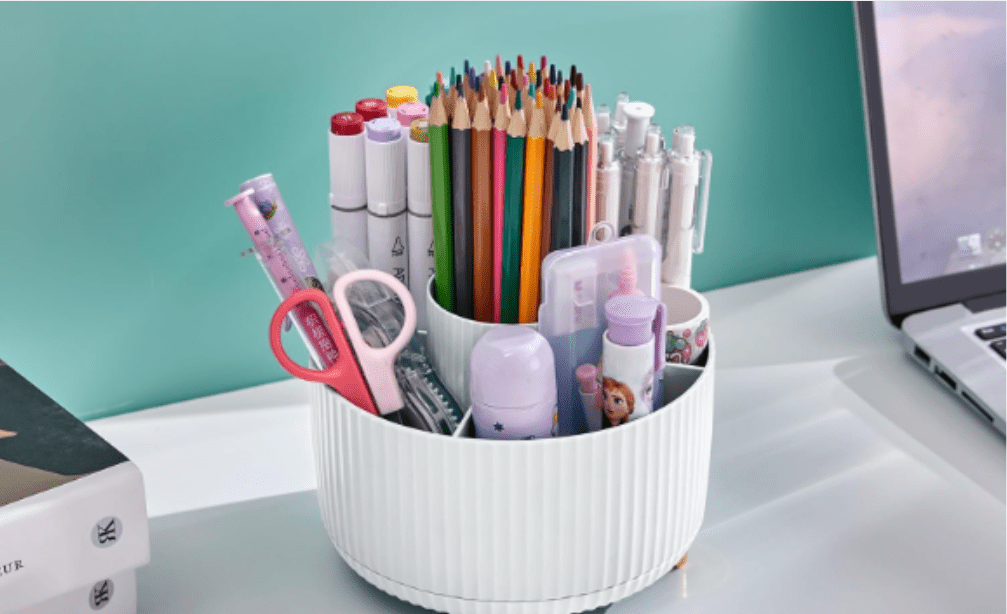
A desktop organizer keeps pens, scissors, sticky notes, envelopes, paper clips, and chargers from spreading across your workspace. Look for a compact caddy with compartments, a small drawer, or vertical slots for mail and notebooks.
For families, a desktop organizer can become a “command center” for permission slips, stamps, keys, and school supplies. For remote workers, it keeps the desk clean enough for video calls, or at least clean enough that no one asks whether you are broadcasting from inside a stationery drawer.
Room-by-Room Strategy: How to Use These Organizers Without Creating More Clutter
Kitchen and Pantry
Use clear bins, lazy Susans, tiered risers, and drawer organizers. Group items by meal type or use: breakfast, snacks, baking, canned goods, oils, spices, and lunch supplies. Put the most-used items at eye level and occasional items higher or lower. A pantry should behave like a helpful assistant, not a food-themed escape room.
Bathroom
Bathrooms need vertical storage and moisture-friendly materials. Use under-sink drawers, clear bins, adhesive hooks, and small baskets. Keep daily-use items accessible and store backups separately. If you own three half-empty bottles of the same lotion, combine or finish one before buying another. Your cabinet is storage, not a lotion retirement community.
Bedroom and Closet
Use drawer dividers, under-bed bags, hanging shelves, and shoe racks. The most important rule is to store items where you actually use them. If pajamas always end up on a chair, add a drawer divider or basket nearby. Organization should fit your habits, not the fantasy version of you who folds laundry immediately while sipping herbal tea.
Entryway and Mudroom
The entryway needs fast drop zones. Try hooks for keys and bags, a shoe rack for daily footwear, and a basket for hats, umbrellas, or pet leashes. This is not the place for complicated systems. If people are rushing in and out, the organizer must be obvious, easy, and forgiving.
Home Office and Craft Area
Use desktop organizers, cord clips, rolling carts, and labeled boxes. Sort by activity: writing supplies, shipping supplies, tech accessories, craft tools, and paperwork. Keep the desktop mostly clear so it can function as a workspace instead of a museum exhibit titled “Things I Meant to File.”
Buying Tips for Affordable Organizing Products
First, do not buy containers before decluttering. That is how people end up with organized clutter, which is still clutter but now wearing a uniform. Sort first, then decide what needs a home.
Second, measure everything. Cabinet height, drawer width, shelf depth, under-bed clearance, and door thickness all matter. A great organizer that does not fit is just a return errand in disguise.
Third, choose clear storage when visibility matters and decorative storage when visual calm matters. Clear bins are great in pantries, fridges, and closets. Woven baskets are better in living rooms and open shelves where you want the room to look peaceful.
Fourth, label categories, not every tiny item. “Snacks” is better than “granola bars, crackers, fruit leather, and emergency chocolate.” Broad labels give your system flexibility.
Finally, leave breathing room. A drawer, basket, or shelf packed to 100 percent capacity is already full. The best organizing systems have a little empty space so daily life can happen without breaking the system by Tuesday.
Real-Life Experience: What Actually Works When Organizing Every Room
After testing and using budget-friendly organizing products in real homes, one lesson becomes clear very quickly: the best organizer is not always the prettiest one. It is the one people keep using after the first week. A perfectly styled pantry might look wonderful on day one, but if the cereal container is annoying to open or the snack bins are too high for kids to reach, the system will fall apart faster than a cardboard box in a rainstorm.
In the kitchen, clear bins and turntables tend to create the biggest improvement for the least money. The reason is visibility. When snacks, sauces, and produce are grouped and visible, people stop buying duplicates. A clear fridge bin for yogurt or lunch snacks can make mornings easier because everything is already gathered in one place. A lazy Susan in a deep cabinet can rescue bottles that usually disappear in the back. The experience feels small at first, but after a few days, you notice that cooking and packing lunch involve less rummaging and fewer dramatic cabinet sighs.
Bathrooms benefit most from under-sink organizers and small bins. The typical bathroom cabinet has pipes, awkward corners, and a surprising number of products that are apparently “almost empty” for six months. A two-tier organizer makes daily items easier to reach and separates backups from current products. Small bins also help families divide personal care items by person. That way, one person’s hair gel does not enter a territorial dispute with someone else’s face wash.
Closets are where drawer dividers, hanging shelves, and under-bed storage really shine. The main experience lesson is to store clothes based on behavior, not ideals. If someone does not fold T-shirts perfectly, give them a simple divider or bin. If shoes pile near the door, put a shoe rack there instead of insisting they travel politely to the far end of the closet. Organization works best when it reduces effort, not when it demands a new personality.
For entryways, hooks and baskets are underrated. A hook near the door can prevent backpacks, jackets, and bags from landing on chairs. A basket for hats, pet leashes, or mail gives loose items a landing spot. The key is to avoid making the entryway system too precious. This area handles real life: muddy shoes, rushed mornings, grocery bags, sports gear, and keys that somehow vanish while still being in your hand.
In home offices, cable clips and desktop organizers provide immediate relief. A clean desk feels more inviting, and cord control reduces the visual noise that makes a workspace feel messy even after cleaning. A small rolling cart is especially useful for people who work, study, craft, or pay bills in different areas of the home. You can move supplies where needed and roll them away when done, which is basically organization with wheels and manners.
The biggest experience-based tip is to start with one room, one problem, and one product. Do not attempt to organize the entire house in one Saturday unless you enjoy chaos wearing comfortable shoes. Choose the drawer that annoys you every morning, the pantry shelf that causes duplicate purchases, or the bathroom cabinet that drops bottles like it has a personal grudge. Solve that one problem first. The momentum feels good, and good systems tend to spread naturally.
Another practical lesson: affordable organizers work best when paired with regular editing. A $12 bin cannot save a closet from 47 items nobody uses. Every few months, remove expired products, donate unused items, recycle packaging, and reset categories. Organization is not a one-time makeover. It is a maintenance habit, like brushing your teeth, except with fewer mint flavors and more baskets.
Ultimately, the best organizing products under $30 are the ones that make your home easier to live in. They do not need to be fancy. They need to be useful, accessible, durable enough for daily handling, and simple enough that everyone in the household understands where things go. When that happens, your rooms feel calmer, your routines feel smoother, and your future self gets to spend less time asking, “Where did I put that?”
Conclusion
You do not need a giant budget to create a more organized home. With smart, affordable products like clear bins, drawer dividers, over-the-door organizers, rolling carts, hooks, baskets, and under-sink shelves, every room can become easier to use and less stressful to maintain. The secret is not buying every organizer in sight. The secret is matching the product to the problem.
Start small. Measure first. Group similar items. Label where it helps. Leave space for real life. Whether you are organizing a tiny bathroom, a busy kitchen, a crowded closet, or a home office that has seen things, these under-$30 organizing products can make a noticeable difference without turning your wallet into a cautionary tale.