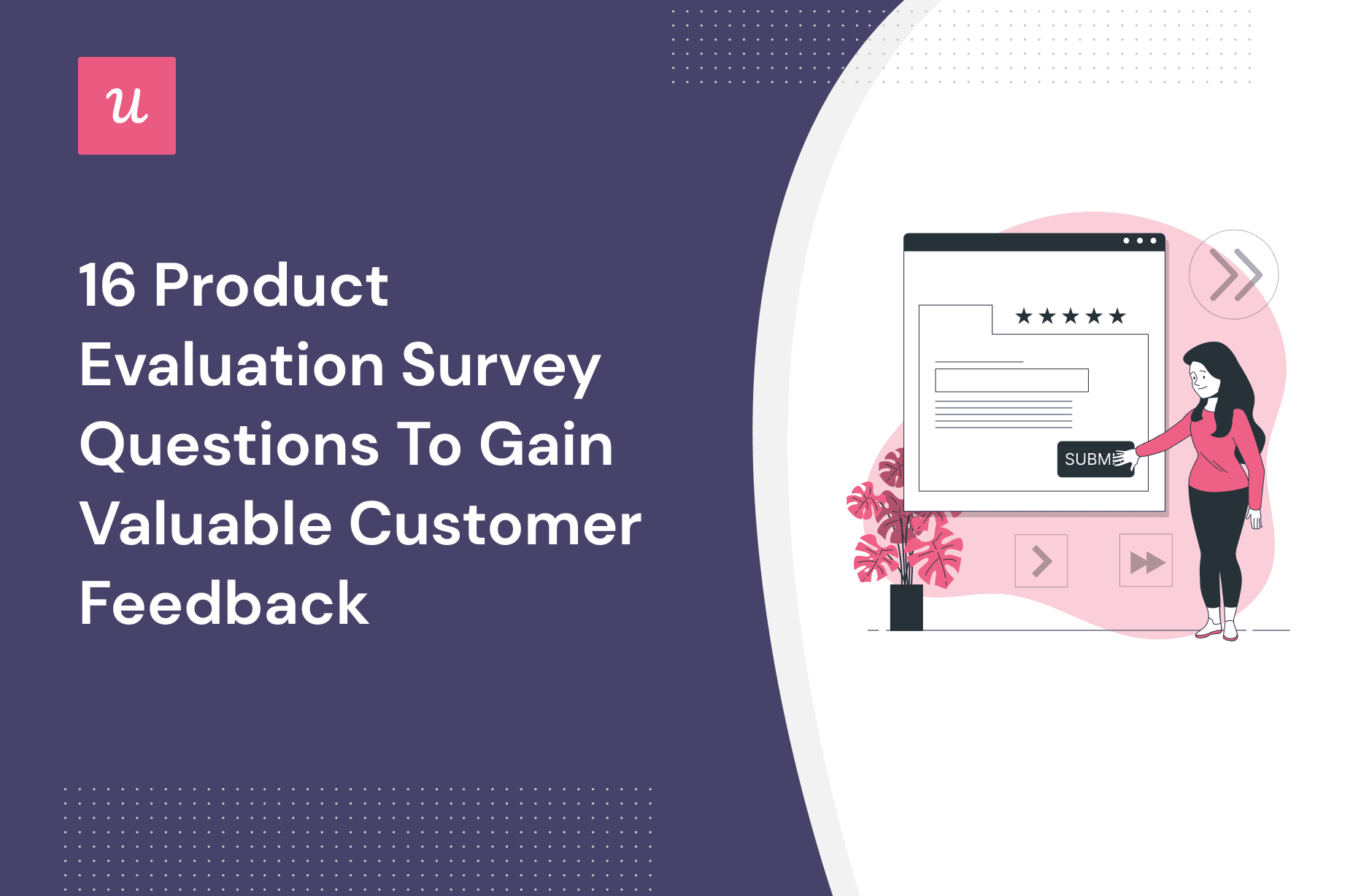
Building a product without customer feedback is a little like baking a cake without tasting the batter: brave, chaotic, and likely to end with someone politely saying, “Interesting texture.” Product evaluation survey questions help you avoid that fate. They turn real customer experiences into practical insight, showing what people love, what confuses them, what makes them abandon ship, and what would make them come back with friends.
A strong product evaluation survey does more than collect opinions. It helps product managers, marketers, founders, UX researchers, and customer success teams understand whether a product solves the right problem, feels easy to use, delivers fair value, and deserves a permanent spot in the customer’s life. The best surveys combine rating-scale questions, open-ended prompts, multiple-choice questions, and customer satisfaction metrics such as CSAT, NPS, and effort-based feedback.
Below are 16 product evaluation survey questions designed to generate valuable customer feedback without making respondents feel like they accidentally enrolled in a college exam. Use them after a purchase, during beta testing, after onboarding, following a product update, or before planning your next feature roadmap.
What Is a Product Evaluation Survey?
A product evaluation survey is a structured set of questions used to measure how customers experience a product. It can evaluate product quality, usability, features, pricing, design, onboarding, support, satisfaction, loyalty, and future purchase intent.
Unlike a generic customer feedback form, a product evaluation survey focuses on the product itself: how well it works, how useful it feels, whether it solves the customer’s problem, and where it falls short. For software, this may include ease of navigation, setup, performance, integrations, and feature usefulness. For physical products, it may include durability, packaging, instructions, appearance, comfort, and perceived value.
Why Product Evaluation Survey Questions Matter
Customers rarely describe your product the same way your marketing team does. Your homepage may say “seamless, intuitive, next-generation solution.” A customer may say, “It works, but I needed three coffees and a YouTube tutorial to set it up.” Both statements are useful, but only one tells you what to fix.
Product evaluation surveys help businesses identify friction before it becomes churn. They reveal which features customers actually use, what benefits matter most, which improvements are urgent, and whether customers would recommend the product. They also give teams a reality check. Sometimes the feature everyone internally worships like a golden statue is barely noticed by customers. Meanwhile, a tiny convenience feature may be quietly carrying the entire product experience on its back.
How to Write Better Product Evaluation Survey Questions
Before jumping into the 16 questions, remember three rules. First, keep questions clear and neutral. Avoid leading language such as “How amazing was our new dashboard?” unless your goal is to collect compliments rather than truth. Second, keep the survey short enough that a busy customer can complete it without aging noticeably. Third, mix quantitative and qualitative questions. Scores show patterns; written answers explain the story behind those patterns.
A well-designed survey should feel like a helpful conversation, not an interrogation under fluorescent lights. Begin with easy rating questions, move into more specific product feedback, and end with open-ended questions that let customers share anything you missed.
16 Product Evaluation Survey Questions for Valuable Customer Feedback
1. How satisfied are you with the product overall?
Recommended format: Rating scale, such as 1 to 5 or 1 to 10.
This is the classic customer satisfaction question, and for good reason. It gives you a quick pulse on how customers feel about the product as a whole. Use this question near the beginning of the survey because it is easy to answer and helps establish a baseline.
Example: “On a scale of 1 to 10, how satisfied are you with your overall experience using our product?”
Follow the score with an optional comment box: “What is the main reason for your rating?” That tiny follow-up can transform a number into an insight your team can actually use.
2. How well does the product meet your needs?
Recommended format: Likert scale from “Does not meet my needs” to “Completely meets my needs.”
A customer can like a product and still feel it does not fully solve their problem. This question measures product-market fit from the customer’s perspective. It is especially useful for SaaS tools, subscription products, mobile apps, and any product designed around a specific job to be done.
Example: “How well does this product help you accomplish the task you purchased it for?”
If many customers say the product only partially meets their needs, look closely at your positioning, feature set, onboarding, and customer expectations. The issue may not be the product alone; it may be the promise customers believed before buying.
3. What problem were you trying to solve when you chose this product?
Recommended format: Open-ended text.
This question is marketing gold. It tells you the customer’s real motivation, in their own words. You may discover that people buy your product for reasons your team never emphasized. That is not just feedback; that is copywriting treasure wearing a name tag.
Example: “What challenge, goal, or problem led you to try our product?”
Use responses to refine website messaging, ad campaigns, onboarding flows, and product roadmap priorities. Customers often describe pain points more clearly than internal teams because they are living inside the problem.
4. Which feature or part of the product do you find most valuable?
Recommended format: Multiple choice with an “Other” option, followed by optional open text.
This question helps identify your product’s strongest value drivers. It separates features customers merely notice from features they truly depend on. That distinction matters because not every feature deserves equal investment.
Example: “Which feature is most valuable to you, and why?”
If one feature repeatedly appears in responses, highlight it in marketing, improve it further, and protect it from unnecessary redesigns. Never casually rearrange the customer’s favorite button. That button has fans.
5. Which feature or part of the product do you use least?
Recommended format: Multiple choice or checkbox.
Low feature usage can signal several things: customers do not need the feature, cannot find it, do not understand it, or do not believe it is worth the effort. This question helps you identify clutter, confusion, and possible training gaps.
Example: “Which features do you rarely or never use?”
Pair this with analytics data when possible. Survey responses tell you what customers believe they use; product analytics show what they actually use. Together, they make a much better detective duo than either one alone.
6. How easy is the product to use?
Recommended format: Rating scale.
Ease of use is one of the biggest factors in customer satisfaction. A powerful product that feels difficult can frustrate customers quickly. This is especially true in competitive markets where users can switch to another tool faster than your support team can say, “Have you tried clearing your cache?”
Example: “On a scale of 1 to 10, how easy is it to use this product?”
If ease-of-use scores are low, review onboarding, navigation, instructions, labels, error messages, and support content. Sometimes the product does not need more features; it needs fewer headaches.
7. What was confusing or difficult when using the product?
Recommended format: Open-ended text.
This question invites customers to point directly at friction. It works well after an ease-of-use rating because customers have already reflected on usability. Ask it neutrally. Do not say, “What did you hate?” unless you enjoy emotional thunderstorms.
Example: “Was there anything confusing, difficult, or slower than expected while using the product?”
Look for repeated themes. If several customers mention the same setup step, unclear label, or missing instruction, that is not a random complaint. That is a roadmap item politely waving from the feedback pile.
8. How would you rate the product’s quality?
Recommended format: Rating scale.
Quality can mean different things depending on the product. For physical goods, it may involve materials, durability, finish, packaging, or reliability. For digital products, it may involve speed, stability, accuracy, design polish, and bug frequency.
Example: “How would you rate the overall quality of the product?”
To make this question more useful, you can break quality into specific areas: performance, design, reliability, durability, or security. Specific feedback is easier to act on than a vague “quality is fine,” which is the survey equivalent of a shrug.
9. How satisfied are you with the product’s design or appearance?
Recommended format: Rating scale plus optional comment.
Design affects trust, usability, and perceived value. A product can technically work while still feeling outdated, cluttered, or visually confusing. Customers may not use design terminology, but they know when something feels smooth or when it looks like it was assembled during a thunderstorm.
Example: “How satisfied are you with the product’s design, layout, or appearance?”
This question is useful for consumer products, apps, websites, dashboards, packaging, and ecommerce experiences. If design scores are low, review visual hierarchy, readability, accessibility, packaging clarity, and first impressions.
10. How would you rate the product’s value for the price?
Recommended format: Rating scale.
Customers judge price through the lens of outcomes. A product does not need to be cheap to feel valuable; it needs to feel worth it. This question helps you understand whether customers believe the benefits justify the cost.
Example: “How would you rate the value you receive for the price you paid?”
If customers love the product but rate value poorly, you may need clearer communication around benefits, better packaging of features, improved plans, stronger onboarding, or a pricing adjustment. If customers dislike the product and dislike the price, well, at least the feedback is organized.
11. How likely are you to recommend this product to a friend or colleague?
Recommended format: Net Promoter Score-style 0 to 10 scale.
This question measures customer advocacy. People recommend products when they trust them enough to attach their reputation to the suggestion. That makes recommendation intent a powerful signal for loyalty and word-of-mouth growth.
Example: “On a scale of 0 to 10, how likely are you to recommend this product to a friend or colleague?”
Do not stop at the score. Add: “What is the main reason for your rating?” The follow-up reveals why promoters are enthusiastic, why passives are undecided, and why detractors are sharpening their tiny complaint pencils.
12. How likely are you to continue using or buying this product?
Recommended format: Rating scale.
Repeat usage and repurchase intent are essential for retention. A customer may be satisfied today but uncertain about continuing tomorrow. This question helps predict churn risk, renewal likelihood, and long-term product stickiness.
Example: “How likely are you to keep using this product over the next three months?”
Adjust the timeframe based on your business model. For a subscription app, ask about the next month or quarter. For a physical product, ask about future purchase intent. For a B2B tool, ask about renewal or team expansion.
13. What would make you more likely to continue using this product?
Recommended format: Open-ended text.
This question turns retention concerns into practical ideas. Customers may ask for better support, missing features, clearer tutorials, lower pricing, integrations, faster performance, or improved reliability.
Example: “What change would make you more likely to keep using this product?”
Prioritize answers by frequency, customer value, strategic fit, and implementation effort. Not every request should become a feature. If three customers ask for a built-in espresso machine, admire their ambition and move on.
14. What is one thing you would improve about the product?
Recommended format: Open-ended text.
This is one of the most useful product evaluation survey questions because it forces focus. Instead of asking customers to write a full product manifesto, you ask for one improvement. That makes answers easier to compare and prioritize.
Example: “If you could improve one thing about this product, what would it be?”
This question often reveals the highest-friction issue. Watch for recurring patterns. If customers keep naming the same problem, you have found a strong candidate for your next sprint, update, or product fix.
15. How does this product compare with alternatives you have used?
Recommended format: Multiple choice plus optional explanation.
Customers rarely evaluate your product in isolation. They compare it with competitors, previous tools, manual workarounds, and the dangerous but common option of doing nothing. This question helps you understand your competitive position.
Example: “Compared with similar products you have tried, how would you rate this product?”
Answer options might include “Much better,” “Somewhat better,” “About the same,” “Somewhat worse,” “Much worse,” and “I have not used alternatives.” The explanation field can reveal why customers choose you, hesitate, or switch.
16. Is there anything else you would like us to know?
Recommended format: Open-ended text.
This final question gives customers room to mention anything your survey missed. It may uncover bugs, praise, edge cases, support issues, packaging problems, use cases, or emotional reactions. Sometimes the most valuable feedback appears in the question you almost did not ask.
Example: “Is there anything else you would like to share about your experience with the product?”
Place this at the end of the survey. Customers who have more to say will appreciate the space, while customers who are finished can skip it without guilt. Everybody wins. Even the survey.
Best Practices for Using Product Evaluation Survey Questions
Keep the Survey Focused
Even though this article gives you 16 product evaluation survey questions, you do not need to use all 16 every time. Choose questions based on your goal. If you are testing onboarding, focus on ease of setup, confusion, and first impressions. If you are evaluating a new feature, ask about usefulness, frequency of use, satisfaction, and improvement ideas.
Avoid Leading Questions
Leading questions create unreliable feedback. “How much do you love our new feature?” pressures customers to be positive. A better version is: “How satisfied are you with the new feature?” Neutral wording makes it easier for customers to tell the truth without feeling like they are insulting your team’s favorite project.
Use a Mix of Question Types
Rating scales are easy to analyze, but open-ended questions explain the “why.” Multiple-choice questions help categorize responses, while ranking questions can reveal priorities. The strongest product evaluation surveys use a balanced mix, giving teams both measurable trends and customer language.
Ask at the Right Moment
Timing matters. Ask too early, and the customer may not have enough experience. Ask too late, and their memory may be fuzzy. Good moments include after onboarding, after a purchase, after several uses, after a support interaction, after a feature launch, or before renewal.
Close the Feedback Loop
Collecting feedback is only step one. The real value comes from reviewing responses, identifying themes, prioritizing improvements, and telling customers what changed. When customers see that their feedback leads to action, they are more likely to participate again. No one wants to pour their thoughts into a digital suggestion box that may or may not be eaten by a raccoon.
Examples of Product Evaluation Survey Flows
For a New Software Product
Start with overall satisfaction, ease of use, setup experience, most valuable feature, confusing moments, value for price, likelihood to continue using, and one improvement request. This flow helps you understand onboarding friction and early product-market fit.
For an Ecommerce Product
Ask about quality, design, packaging, value for price, whether the product matched expectations, likelihood to repurchase, likelihood to recommend, and one thing the customer would improve. This works well for consumer goods, beauty products, home items, apparel, and accessories.
For a Product Update or New Feature
Focus on awareness, usage, usefulness, ease of use, satisfaction, comparison with the previous version, and improvement ideas. This helps teams decide whether to keep investing, refine the feature, or quietly pretend that version never happened.
How to Analyze Product Evaluation Survey Results
After collecting responses, organize your data into themes. Look for repeated mentions of the same problem, feature, benefit, or request. Segment responses by customer type, plan level, purchase date, usage frequency, or satisfaction score. A complaint from a power user may mean something different from the same complaint from a first-time user.
Quantitative scores can show whether satisfaction is rising or falling over time. Open-ended responses can reveal the reasons behind the trend. For example, if ease-of-use scores drop after a redesign, written feedback may reveal that customers cannot find a previously obvious feature. That is not just a design issue; it is a customer trust issue.
Finally, turn insights into decisions. Create a simple action list: fix urgent bugs, improve unclear instructions, update onboarding, refine pricing communication, promote popular features, or research repeated feature requests. Feedback is only valuable when it escapes the spreadsheet and enters the real world.
Common Mistakes to Avoid
One common mistake is asking too many open-ended questions. Written feedback is valuable, but customers may abandon a survey if every question asks for an essay. Another mistake is using vague wording such as “What do you think?” That question is so broad it may cause customers to mentally leave the building.
Also avoid double-barreled questions, such as “How satisfied are you with the price and quality?” A customer may love the quality and dislike the price, which makes the answer hard to interpret. Split the question into two. Your data will thank you by becoming less mysterious.
Finally, do not collect feedback just because it feels productive. A survey should have a purpose. Before sending it, ask: “What decision will this help us make?” If there is no answer, revise the survey until there is.
Experience-Based Insights: What Product Teams Learn the Hard Way
In real product work, the most useful feedback is not always the loudest feedback. A single furious customer can write a paragraph that sounds like it should be accompanied by dramatic thunder, while twenty quiet customers may simply rate the product a 6 and leave. Smart teams pay attention to both. The emotional comment may reveal urgency, but the repeated moderate scores may reveal a bigger pattern.
One practical lesson is that customers often struggle to describe solutions, but they are excellent at describing pain. If a customer says, “Add a calendar-based automation dashboard with color-coded workflow states,” that may or may not be the right solution. But if ten customers say, “I keep forgetting which tasks are due,” the problem is clear. Product teams should listen deeply to the pain before building the exact feature request. Customers are experts in their experience; your team is responsible for designing the solution.
Another lesson is that survey timing can completely change the quality of responses. Ask a customer about onboarding two months later, and you may get a vague answer. Ask within 24 hours, and they can tell you exactly which step confused them. For product evaluation surveys, the best timing is usually close to the experience being measured. Fresh memory produces sharper feedback.
It is also important to separate “nice to have” feedback from “must fix” feedback. Customers may suggest dozens of improvements, but not all of them affect retention, conversion, or satisfaction. A useful approach is to tag feedback by impact: blocking issue, repeated frustration, feature request, usability improvement, pricing concern, or general preference. This keeps the team from chasing every shiny suggestion like a golden retriever in a tennis ball factory.
Product teams should also compare survey feedback with behavioral data. If customers say a feature is important but usage data shows almost no one opens it, investigate the gap. Maybe the feature is hard to find. Maybe customers value the idea but not the current execution. Maybe they are being polite because humans are complicated and surveys are not mind-reading machines.
Finally, the best product evaluation process includes follow-up. When a customer gives detailed feedback, especially negative feedback, a thoughtful response can turn frustration into loyalty. Even a simple message like “Thank you, we are reviewing this issue” shows that feedback did not vanish into a corporate cave. Over time, customers learn whether a company truly listens. A survey asks for feedback; action earns trust.
Conclusion
The right product evaluation survey questions help you understand what customers experience after the marketing promise ends and the actual product begins. They reveal satisfaction, usability, quality, value, loyalty, confusion, and improvement opportunities. More importantly, they help teams make better decisions based on customer reality instead of internal guesswork.
Use these 16 questions as a flexible toolkit, not a rigid script. Choose the questions that match your product stage, customer journey, and research goal. Keep the wording neutral, the survey focused, and the analysis action-oriented. When customers take time to share feedback, treat it like a gift. Not every gift will be wrapped beautifully, but many will contain exactly what your product needs next.
Note: This article was created as original web-ready content based on established customer feedback, product research, UX survey, and customer experience best practices.