Teaching your child good manners is not about raising a tiny robot who says “please” on command and never puts spaghetti in their hair. It is about helping your child understand respect, kindness, patience, gratitude, and the invisible social rules that make life smoother for everyone. Good manners help children make friends, communicate clearly, handle disappointment, and feel more confident in public spacesfrom the dinner table to the school hallway to Grandma’s living room, where the couch is apparently “not for jumping.”
The good news? Children do not need a formal etiquette academy, white gloves, or a lecture titled “The History of Fork Placement.” They learn best through daily modeling, simple expectations, playful practice, and consistent encouragement. Parents and caregivers are the first manners teachers, and the classroom is ordinary family life: snack time, playdates, grocery lines, birthday parties, car rides, and those magical moments when your child announces private family business in a very public place.
Below are 11 practical, realistic, and parent-tested ways to teach your child good manners without turning your home into a rule factory. The goal is not perfection. The goal is progress, awareness, and kindness that eventually becomes second nature.
Why Good Manners Matter for Children
Good manners are more than polite words. They are social skills in action. When children say “thank you,” wait their turn, greet others, apologize sincerely, or avoid interrupting, they are practicing empathy, self-control, communication, and respect. These skills support emotional development and help children understand that other people have feelings, needs, boundaries, and preferences too.
Manners also give children a confidence boost. A child who knows how to greet a teacher, ask for help politely, behave at the table, or respond when someone gives them a gift is less likely to feel lost in social situations. Manners are like a map for human interaction. They do not guarantee a smooth trip every time, but they help children avoid driving directly into the emotional bushes.
11 Ways to Teach Your Child Good Manners
1. Model the Manners You Want to See
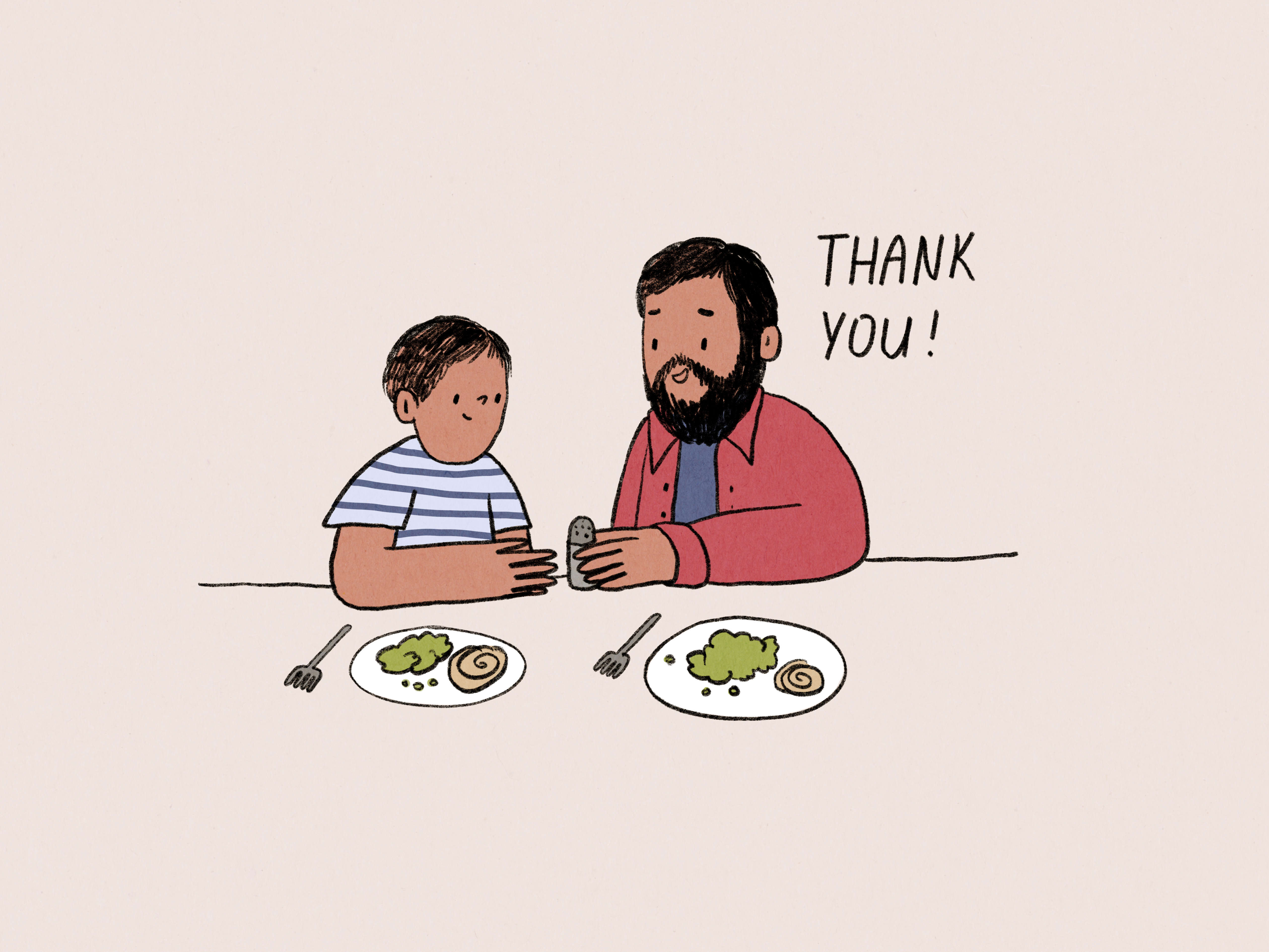
Children are expert observers. They notice what adults do, even when adults are hoping nobody noticed. If you want your child to say “please,” “thank you,” “excuse me,” and “I’m sorry,” use those words yourself in everyday life. Say thank you to the cashier. Apologize when you interrupt. Ask politely instead of ordering. Let your child see manners as a normal part of communication, not a performance reserved for guests.
Modeling works because children learn through imitation. A parent who speaks respectfully during stress teaches more than a hundred lectures about respect. This does not mean you must be perfect. In fact, when you make a mistake and repair it, you teach an even stronger lesson: good manners include accountability.
2. Start With Simple “Magic Words”
For young children, begin with the basics: “please,” “thank you,” “excuse me,” “sorry,” and “you’re welcome.” These phrases are easy to practice and useful in many situations. Instead of demanding them harshly, use gentle prompts. For example, if your child grabs a snack, you might say, “Let’s try that again: ‘May I have a banana, please?’”
Keep the tone light. Children are more likely to repeat polite language when it feels helpful rather than humiliating. Over time, explain what the words mean. “Thank you” is not just a password for getting dessert. It shows that we noticed someone’s effort. “Excuse me” tells others we respect their space or conversation. Meaning gives manners roots.
3. Teach Manners Through Play
Play is one of the best tools for teaching children good manners because it lowers pressure and makes practice fun. Set up a pretend restaurant, tea party, grocery store, doctor’s office, or birthday party. Take turns being the guest, the host, the server, or the friend receiving a gift. Practice greetings, asking politely, waiting, sharing, and saying thank you.
Role-playing helps children rehearse social situations before they happen in real life. A child who has practiced saying, “Thank you for inviting me,” during pretend play is more prepared to say it at an actual party. Bonus: stuffed animals are very forgiving dinner guests, even when the soup is imaginary and served in a shoe.
4. Praise Specific Good Behavior
General praise like “good job” is fine, but specific praise is more powerful. Tell your child exactly what they did well: “I noticed you waited until Grandma finished talking before you asked your question. That was respectful.” Or, “You thanked your friend for sharing the toy. That was kind.”
Specific praise helps children connect the behavior with the value behind it. They learn that manners are not random adult rules; they are ways to show care. Positive reinforcement also makes children more likely to repeat the behavior because they feel seen and encouraged, not merely corrected.
5. Set Clear Expectations Before Social Situations
Children do better when they know what to expect. Before entering a restaurant, visiting someone’s home, attending a school event, or going to a family gathering, briefly review the manners needed for that setting. Keep it simple: “At the restaurant, we use indoor voices, stay seated, say please and thank you, and keep food on the plate.”
Avoid long speeches. Children’s attention spans have a strict “terms and conditions apply” policy. A short reminder before the situation works better than a frustrated lecture afterward. You can also ask your child to repeat the plan back to you: “What are two things we’ll remember at dinner?” This turns expectations into teamwork.
6. Make Table Manners Practical, Not Fancy
Table manners are not about judging children for being messy. Children are naturally messy, especially when noodles are involved. Practical table manners teach respect for food, people, and shared spaces. Start with basics: wash hands before eating, chew with mouth closed, use utensils when appropriate, say “please pass,” avoid rude comments about food, and help clear the table.
Family meals are a great practice zone. You do not need a perfect dinner routine. Even a quick breakfast can teach waiting, listening, thanking, and helping. If your child dislikes a food, teach a polite response: “No, thank you,” or “It’s not my favorite.” This is much better than “This looks like alien slime,” even if the casserole is having a difficult evening.
7. Teach Respect for Personal Space and Boundaries
Good manners include understanding boundaries. Teach your child to knock before entering a room, ask before borrowing items, avoid grabbing, and respect when someone says no. Children also need to know that their own boundaries matter. They can greet relatives with a wave or high-five if they do not want a hug.
This lesson supports both politeness and self-respect. A child who learns to ask, “Can I use that?” also learns that people are not objects and belongings are not community property just because they are shiny. Respecting boundaries builds empathy and reduces conflict at home, school, and playdates.
8. Practice Greetings and Conversation Skills
Some children naturally chat with everyone, including the mail carrier, the dentist, and a confused houseplant. Others feel shy or unsure. Teach greetings in a low-pressure way: make eye contact if comfortable, say hello, use the person’s name, and answer simple questions politely. For example: “Hi, Ms. Lee,” or “I’m good, thank you. How are you?”
Conversation manners also include listening, not interrupting, asking questions, and taking turns speaking. You can practice at home during dinner or car rides. Try a “talking turn” game where each person shares one thing about their day while others listen. This teaches children that communication is not a race to see who can talk the loudest.
9. Teach Apologies and Repair
A forced “sorry” mumbled into the floor is not the same as a meaningful apology. Help your child understand the repair process: recognize what happened, name the impact, apologize, and make it better if possible. For example: “I grabbed the toy. That made you sad. I’m sorry. Do you want it back?”
Young children may need coaching because empathy develops over time. Instead of shaming, guide them calmly. You might say, “Look at your friend’s face. How do you think she feels?” This helps children connect actions with emotions. Good manners are not about never making mistakes. They are about learning how to fix them.
10. Be Consistent Without Being Harsh
Consistency helps manners become habits. If you expect polite requests at home but ignore rude demands in public because you are tired, your child may get confused. Try to respond consistently with calm reminders: “I can help when you ask respectfully,” or “Let’s use a kinder voice.”
At the same time, avoid harsh discipline, public embarrassment, or long lectures. Children learn better when they feel safe and supported. Firm and kind can exist together. A calm correction teaches more than a dramatic reaction. Also, dramatic reactions tend to give children excellent material for future family stories.
11. Connect Manners to Empathy, Not Just Rules
The strongest manners come from understanding why kindness matters. Instead of saying, “Because I said so,” explain the human reason behind the behavior. “We say thank you because someone took time to help us.” “We wait our turn because everyone deserves a chance.” “We don’t make rude comments about someone’s appearance because words can hurt.”
This approach turns manners into values. Children begin to see politeness as a way to care for others, not just a checklist. Over time, they become more thoughtful in situations you did not specifically train for, which is the real victory. It is one thing for a child to say “thank you” because a parent is watching. It is even better when they say it because they understand gratitude.
Common Manners Children Can Learn by Age
Toddlers and Preschoolers
Very young children can begin learning simple polite words, gentle hands, taking turns with help, greeting familiar people, cleaning up toys, and saying “sorry” with adult guidance. Keep expectations realistic. A toddler may understand “please” long before they can control every impulse. That is normal. Repetition is the curriculum.
School-Age Children
School-age children can practice stronger conversation skills, table manners, respecting privacy, writing thank-you notes, including others, apologizing more thoughtfully, and managing frustration without insults. They are also ready to understand how manners affect friendships and classroom life.
Tweens and Teens
Older children can learn digital manners, respectful disagreement, punctuality, gratitude, public behavior, and how to communicate with adults in emails, messages, interviews, and school settings. They may roll their eyes, but they are still learning. Consider the eye roll a loading screen.
How to Handle Rude Behavior Without Making It Worse
Every child will be rude sometimes. Hunger, tiredness, overstimulation, frustration, and plain old immaturity can temporarily erase manners from a child’s brain like a software update gone wrong. When it happens, stay calm and focus on teaching.
First, pause before reacting. Then name the problem clearly: “That sounded disrespectful.” Offer a replacement: “Try saying, ‘Can you help me, please?’” If needed, set a boundary: “I will listen when your voice is calm.” Afterward, reconnect. Children need to know that a behavior can be unacceptable while they are still loved.
of Real-Life Parenting Experiences About Teaching Good Manners
One of the most useful lessons parents discover is that manners are taught in tiny moments, not grand speeches. A child may ignore a carefully prepared lesson about gratitude, then suddenly learn it when a neighbor brings cookies and the parent says, “That was thoughtful. Let’s make a thank-you card.” Real life gives children a reason to care. The card may have crooked letters, too much glitter, and a drawing that may or may not be a cat, but the message is powerful: someone was kind, and we noticed.
Another common experience is realizing that children copy tone more than words. A parent may remind a child to speak politely, then catch themselves snapping, “Give me that right now!” during a rushed morning. These moments are not failures. They are opportunities. Saying, “I used a sharp voice. I’m sorry. Let me try again,” teaches humility and repair. Children learn that good manners are not about pretending to be perfect. They are about respecting people enough to correct yourself.
Many families also find that practicing before an event prevents chaos during the event. Before a birthday party, parents can rehearse what to say when receiving a gift: “Thank you for the present.” They can also prepare children for disappointment: “If someone else gets a toy you like, you can say, ‘That’s cool,’ and wait your turn.” This kind of preparation gives children a script when excitement takes over. Without a script, some children improvise, and improvisation may include shouting, grabbing, or announcing that the cake is smaller than expected.
Mealtimes are another manners laboratory. Parents often start with simple goals: sit safely, use a napkin, say “please pass the rice,” and avoid insulting the food. Over time, children begin to understand that table manners make meals more pleasant for everyone. One helpful trick is to praise the behavior you want repeated: “You asked for more water so politely.” Another is to create a family rule that everyone helps clean up, even if the help is small. A preschooler can carry napkins. A school-age child can clear plates. These routines teach responsibility along with politeness.
Playdates can be humbling but valuable. Children may struggle with sharing favorite toys, taking turns, or handling a friend who wants a different game. Instead of expecting instant generosity, parents can coach simple phrases: “Can I have a turn when you’re done?” “Let’s trade.” “You can use this one.” Over many repetitions, children learn that manners help play continue. They also learn that being kind does not mean giving up everything they love. It means balancing their needs with someone else’s.
Public places offer another layer of practice. Grocery stores, libraries, restaurants, and waiting rooms all require different manners. A child who uses an indoor voice in the library learns awareness. A child who thanks the bus driver learns respect for community helpers. A child who waits in line learns patience, which may be the Everest of childhood skills. Parents can make these lessons concrete by noticing them afterward: “You waited even though it was hard. That was patient.”
Perhaps the biggest experience parents share is that manners take time. Children forget. They test limits. They behave beautifully at school and then come home and speak to a sibling like a tiny courtroom attorney. This does not mean the lessons are failing. It means children are still developing. With modeling, reminders, praise, and calm correction, manners slowly move from something children are told to do into something they choose to do. That is when parents get the beautiful surprise: an unprompted thank you, a sincere apology, a held door, a shared snack, or a kind word when nobody asked for one.
Final Thoughts
Teaching your child good manners is a long game, not a one-week challenge. It grows through example, repetition, warmth, structure, and everyday practice. Start small. Choose a few manners that matter most in your home. Model them often. Praise progress. Correct with kindness. Explain the reason behind the rule. Most importantly, remember that the goal is not to raise a child who performs politeness under pressure, but one who understands respect, gratitude, empathy, and responsibility.
Good manners help children move through the world with confidence and care. They make family life smoother, friendships stronger, classrooms kinder, and public spaces a little less wild. And yes, your child may still forget to say thank you while wearing a superhero cape and eating cereal with a serving spoon. That is okay. Keep teaching. Keep modeling. Keep laughing. Manners grow best in homes where respect is practiced, mistakes are repaired, and kindness is treated as a daily habit.
SEO Tags
Note: This article is for general parenting education and is designed for web publication. Families should adapt the examples to their child’s age, temperament, culture, and developmental needs.