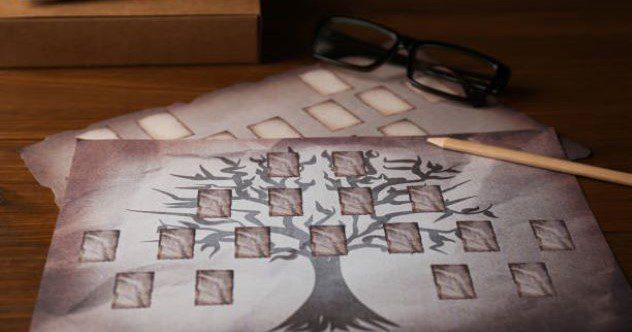
History books have a habit of turning real people into marble statues. The heroes become impossibly heroic, the geniuses never misplace their keys, and the controversial figures are polished until they fit neatly on a museum plaque. Then their descendants walk into the room and remind us that history is also a family storycomplete with inherited expectations, uncomfortable questions, treasured objects, old arguments, and occasionally a surname that makes hotel reservations unusually interesting.
The living descendants of famous historical figures do not simply carry recognizable family trees. Some preserve archives, perform ancestral works, promote social causes, retrace legendary journeys, or challenge flattering versions of the past. Others deliberately build careers far away from the family business. Together, their experiences reveal how historical legacies change when they pass from textbooks into the hands of real people.
Here are 10 remarkable tales about historical figures and their living descendantsand what happens when the past keeps showing up at family gatherings.
Famous Family Trees That Continue to Shape the Present
1. Thomas Jefferson: A Family Story That Changed the National Story
For generations, discussions of Thomas Jefferson’s family focused primarily on the children he had with his wife, Martha Wayles Skelton Jefferson. The descendants of Sally Hemings, an enslaved woman at Monticello, preserved a different history: that Jefferson had fathered her children. Evidence from family testimony, documentary records, historical research, and DNA testing eventually transformed public understanding of the Jefferson household.
Monticello now identifies Beverly, Harriet, Madison, and Eston Hemings as the surviving children of Jefferson and Sally Hemings. Descendants from the Hemings and Randolph branches have participated in modern conversations about slavery, race, memory, and belonging. Their family history demonstrates that genealogy can be more than a collection of names. It can correct a national narrative that once left entire branches outside the frame. The family tree did not merely grow; Americans finally learned to look at all of it.
2. Frederick Douglass: A Descendant Fighting Modern Slavery
Frederick Douglass escaped slavery and became one of the nineteenth century’s most influential abolitionists, writers, speakers, and advocates for equality. His third-great-grandson, Kenneth B. Morris Jr., inherited more than a famous surname. He also inherited a public question: What should a descendant do with a legacy built around freedom?
Morris became a cofounder and president of Frederick Douglass Family Initiatives, an organization that educates young people about human trafficking and modern forms of exploitation. His activism links Douglass’s nineteenth-century campaign against slavery with present-day struggles for human dignity.
The family connection becomes even more extraordinary because Morris is also the great-great-grandson of educator Booker T. Washington. That is enough historical responsibility to make most people hide behind the curtains. Instead, Morris uses the connection as a platform for education, arguing that honoring famous ancestors requires more than admiring their portraits. It requires continuing unfinished work.
3. Elizabeth Cady Stanton: Suffrage History in the Trunk of a Car
Elizabeth Cady Stanton helped organize the 1848 Seneca Falls Convention and spent decades demanding political and legal equality for women. Her great-great-granddaughter, Coline Jenkins, has turned that inheritance into a long-running public history project.
Jenkins is an author, former municipal legislator, and president of the Elizabeth Cady Stanton Trust. The organization preserves thousands of objects connected to the women’s rights and suffrage movements, lending materials to museums, documentary producers, libraries, and educational programs. Jenkins has even transported exhibits to public events herself, proving that preserving democracy sometimes involves careful driving and a vehicle full of irreplaceable memorabilia.
Another descendant, Elizabeth Jenkins-Sahlin, began speaking about Stanton’s legacy while still young. Her experience also revealed the pressure that can accompany a celebrated family name: being expected to represent an ancestor before fully developing an identity of one’s own. Their story shows that a historical legacy can be both a gift and an assignment that never quite reaches the bottom of the inbox.
4. Maggie Lena Walker: A Young Voice for a Business Pioneer
Maggie Lena Walker broke racial and gender barriers in the early twentieth century, becoming the first Black woman in the United States to charter a bank and serve as its president. She used banking, insurance, publishing, and community organizations to promote economic independence in Richmond, Virginia.
Her great-great-granddaughter, Liza Mickens, began publicly sharing Walker’s story as a child. Mickens later participated in the unveiling of Richmond’s Maggie Walker statue and joined National Park Service programs about the living descendants of major civil rights and suffrage figures.
This is not simply a case of a descendant repeating a polished biography. Mickens emphasizes Walker’s practical strategy: creating institutions that gave Black families opportunities denied by discriminatory systems. By explaining that mission to modern audiences, she connects a historic bank president with current discussions about financial inclusion, entrepreneurship, and community investment. Apparently, one can inherit both a family story and a very demanding public-speaking schedule.
5. Charles Darwin: Evolution Becomes a Family Tradition
Charles Darwin’s theory of evolution by natural selection changed humanity’s understanding of life on Earth. More than a century later, some of his descendants remain deeply involved in botany, biodiversity, and conservation.
Sarah Darwin, his great-great-granddaughter, is a botanist who has studied plants in the Galápagos Islands. In 2024, she joined the DARWIN200 project, a global voyage inspired by the route of HMS Beagle. During the Galápagos portion of the expedition, she met researchers and helped engage students in lessons about science and conservation.
Her brother Chris Darwin has also worked as an environmental advocate. Their careers create a fitting sequel to their ancestor’s voyage: Darwin studied how species adapt and survive, while his descendants confront the modern problem of helping threatened species survive human activity. It is a remarkably on-brand family legacy, although the pressure at school science fairs must have been considerable.
6. Sigmund Freud: The Family Still Has Plenty to Analyze
Sigmund Freud remains one of history’s most recognizableand debatedthinkers. His ideas about dreams, repression, childhood, and the unconscious influenced psychology, literature, film, and popular culture. They also ensured that nobody could describe a strange dream without someone raising an eyebrow and saying, “Interesting.”
Freud’s living descendants have entered fields ranging from fashion and journalism to broadcasting and public relations. His great-granddaughters Emma Freud and Bella Freud have maintained connections to the Freud Museum in London. In May 2026, Emma participated in a celebration of Freud’s 170th birthday, while Bella appeared in a museum event exploring his cultural legacy.
Their careers do not reproduce Sigmund Freud’s profession, but they illustrate the wide cultural reach of the family. The descendants of a man fascinated by identity have developed highly individual public identities of their own. That may be the healthiest possible outcomeand certainly cheaper than putting the entire family on a couch.
7. Charles Dickens: A Great-Great-Grandson Performs the Classics
Charles Dickens created some of literature’s most unforgettable characters, from Ebenezer Scrooge and Oliver Twist to Miss Havisham and David Copperfield. His great-great-grandson Gerald Charles Dickens has taken an unusually direct approach to the family legacy: he performs the stories.
Gerald adapted A Christmas Carol into a one-man theatrical production in which he portrays more than two dozen characters. His performances have toured extensively in the United States, allowing audiences to experience Dickens’s work through a descendant who understands both the literature and the family history.
Another descendant, Lucinda Hawksley, is an author, lecturer, art historian, and patron of the Charles Dickens Museum. She has written about Dickens, Victorian society, art, and members of her extended family. Together, they demonstrate two ways to keep a literary legacy alive: step onto the stage and become the characters, or dig through the archives and explain the world that created them. Both options require excellent stamina and a high tolerance for questions about Christmas.
8. Ernest Hemingway: Turning a Painful Inheritance into Advocacy
Ernest Hemingway cultivated a public image built around adventure, courage, war reporting, fishing, hunting, travel, and aggressively economical sentences. Behind that legend was a family history marked by depression, addiction, and suicide.
His granddaughter Mariel Hemingway became a successful actress, earning major award nominations before turning increasing attention toward wellness and mental health advocacy. She has spoken publicly about the psychological struggles within the Hemingway family and participated in projects examining how trauma can move through generations.
Rather than protecting an idealized version of her grandfather, Mariel has discussed both his literary brilliance and the family’s pain. That honesty changes the meaning of inheritance. A descendant does not have to defend every part of an ancestor’s story; sometimes the most respectful response is to identify its destructive patterns and help future generations avoid repeating them. In a family famous for tough-guy mythology, candor may be the braver tradition.
9. Theodore Roosevelt: Retracing the River of Doubt
Theodore Roosevelt packed several lifetimes into one biography. He was a politician, soldier, rancher, naturalist, author, conservationist, and explorer. After leaving the presidency, he joined a dangerous expedition through the Amazon to map a tributary known as the River of Doubt.
In 1992, Roosevelt’s great-grandson Tweed Roosevelt helped lead an expedition that retraced the historic route. The journey connected family history with physical geography: instead of merely reading about his great-grandfather’s ordeal, Tweed entered the same demanding landscape.
He has also worked with the Theodore Roosevelt Association to promote historical study and preservation. His experience captures one of the most adventurous ways a descendant can engage with an ancestorby testing the story against the actual terrain. Most families settle for revisiting an old hometown. The Roosevelts apparently prefer remote rivers, tropical heat, and logistical decisions that would make a travel agent quietly resign.
10. Mahatma Gandhi: Preserving a Legacy Without Freezing It
Mahatma Gandhi’s campaigns of nonviolent resistance influenced independence movements, civil rights leaders, and political activists around the world. His descendants have faced the difficult task of explaining a man who became a global symbol while remaining a complicated husband, father, strategist, and political thinker.
His grandson Rajmohan Gandhi became a historian, biographer, professor, and writer who has examined both Gandhi’s achievements and his limitations. Great-grandson Tushar Gandhi is an author and activist who founded the Mahatma Gandhi Foundation and has worked to promote nonviolence, historical understanding, and civic responsibility.
Their work resists turning Gandhi into a slogan printed beneath a peaceful photograph. By studying his decisions, conflicts, mistakes, and evolving ideas, they keep the legacy useful rather than decorative. That distinction matters. A historical figure preserved without criticism becomes a mascot; one examined honestly can remain part of a living moral debate.
What Is It Like to Inherit a Famous Historical Legacy?
The experiences of living descendants share several themes, even when their ancestors occupied completely different worlds. A descendant of a novelist may not face the same questions as the descendant of an abolitionist, scientist, president, or political leader, but all must negotiate the distance between public mythology and private family knowledge.
Living with a Name People Already Recognize
A famous surname can open doors, but it may also enter the room several minutes before its owner. Strangers arrive with assumptions. Journalists ask about resemblance. Audiences search for familiar gestures, beliefs, talents, or facial features. A descendant may be treated as a living museum exhibit even while trying to develop an unrelated career.
Some embrace the connection early. Liza Mickens began discussing Maggie Walker’s life while still a child. Other descendants need distance before deciding how much of the legacy they want to carry. Neither response is wrong. An inherited name is not an employment contract, even when the public occasionally behaves as though it came with mandatory office hours.
Separating Family Memory from Documented History
Family stories can preserve truths ignored by official institutions, as the history of Jefferson and the Hemings family demonstrates. Yet oral traditions, treasured anecdotes, old letters, and public records do not always align perfectly. Descendants who enter historical work must learn to value family memory while testing it against evidence.
This process can be emotional. Historical research may confirm a cherished story, complicate it, or reveal details that previous generations concealed. Descendants are often asked to react publicly to discoveries that affect them privately. For a historian, a newly identified letter may be a valuable primary source. For a descendant, it may be the first glimpse of an ancestor’s fear, betrayal, tenderness, or prejudice.
Choosing Between Protection and Honesty
Famous families are frequently expected to protect the brand. The temptation is understandable. Public criticism of an ancestor can feel personal, especially when that ancestor’s achievements helped shape the family’s identity.
Yet the most compelling descendants often choose complexity over defense. Mariel Hemingway speaks openly about mental illness and suicide in her family. Descendants of Jefferson and Hemings have helped bring slavery and paternity into interpretations of Monticello. Gandhi’s descendants have written about his political brilliance without pretending he was flawless in every relationship.
Honesty does not automatically diminish a legacy. It can rescue a historical figure from lifeless hero worship. People become more understandable when their contradictions are visibleand history becomes more useful when readers are permitted to learn from failures as well as achievements.
Turning Inheritance into Action
Many descendants find meaning by translating an ancestor’s values into modern work. Kenneth Morris connects Frederick Douglass’s abolitionism with education about human trafficking. Sarah Darwin supports conservation and scientific learning. Coline Jenkins preserves suffrage artifacts and promotes women’s history. Gerald Dickens reintroduces nineteenth-century fiction through live performance.
These descendants do not simply imitate their ancestors. They adapt inherited ideas to new audiences and new problems. That may be the clearest lesson from their experiences: a legacy survives not because it is repeated word for word, but because each generation decides what still matters, what requires correction, and what should happen next.
Conclusion: History Never Stays Entirely in the Past
Living descendants make historical figures feel less remote, but their importance goes beyond biological connection. They preserve overlooked testimony, challenge myths, maintain collections, perform literature, support education, and bring old principles into modern debates.
Their stories also offer a warning against treating ancestry as destiny. Sarah Darwin did not have to become a botanist. Gerald Dickens was not required to perform A Christmas Carol. Mariel Hemingway could have avoided discussing her family’s pain. Kenneth Morris could have regarded Frederick Douglass as a distant portrait rather than a call to action.
Each chose how to respond to the past. That choicenot merely the famous bloodlineis what makes these tales worth telling. History provides the inheritance, but living people decide what to do with it.