Famous architectural wonders are supposed to make us feel small, inspired, and perhaps slightly jealous of whoever had enough patience to stack stone blocks, carve mountain faces, or design a tower that refuses to stand politely upright. But where there are famous landmarks, there are also famous rumors. Some are romantic. Some are dramatic. Some sound like they were invented by a tour guide who had too much coffee and a microphone.
The world’s most celebrated monuments have collected myths the way old buildings collect pigeons. People have claimed the Great Wall of China is visible from the Moon, the Pyramids were built by aliens or enslaved workers, and the Leaning Tower of Pisa was designed to lean because apparently medieval architects were just that theatrical. Spoiler: history is usually stranger, smarter, and more interesting than the myth.
This guide takes a fun but fact-based look at 10 silly myths about famous architectural wonders, separating tourist-trap legends from real architecture, engineering, archaeology, and historical context. Pack your curiosity, your comfortable walking shoes, and your emergency snack. We are going landmark-hopping.
1. Myth: The Great Wall of China Is Clearly Visible From the Moon
The truth: It is impressive, but it is not a lunar billboard.
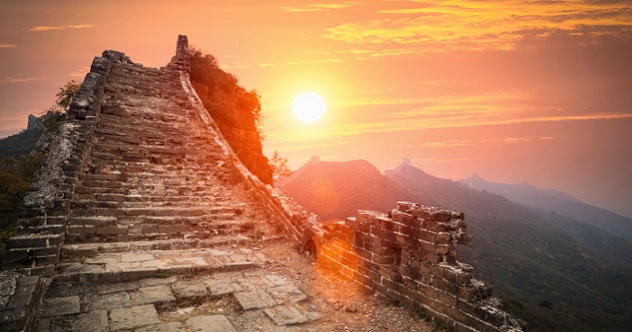
This may be the champion of architectural myths. The Great Wall of China is enormous, winding for thousands of miles across rugged landscapes. Naturally, people decided it must be visible from the Moon. It sounds majestic. It also sounds like something printed on a cereal box in 1962.
In reality, the Great Wall is long but relatively narrow, and its color often blends with the surrounding terrain. Astronauts have explained that it is extremely difficult to see from low Earth orbit without optical help, and from the Moon it is not visible to the naked eye. Cities, roads, airports, and large areas of contrast are usually easier to spot than a stone wall hugging the landscape like a very ambitious garden border.
The real wonder is not that astronauts can see it from space. The real wonder is that humans built it across mountains, deserts, and plains over many centuries. That is plenty impressive without giving it superpowers.
2. Myth: The Egyptian Pyramids Were Built by Aliens or an Army of Enslaved People
The truth: Human skill did the job, and that is the amazing part.
The Great Pyramids of Giza have inspired so much speculation that aliens probably need a public relations department just to deny involvement. The stones are huge, the alignment is precise, and the scale is almost rude. So, some people jump to “extraterrestrials” or “forced slave labor” because apparently ancient people are not allowed to be brilliant.
Modern archaeological evidence paints a much more grounded picture. Excavations around Giza have revealed worker settlements, bakeries, food remains, and tombs associated with laborers. Many scholars now understand the pyramid builders as skilled workers, rotating labor crews, craftsmen, and organized teams supported by a complex administrative system.
Were the pyramids easy to build? Absolutely not. Were they built by little green contractors with laser levels? Also no. The pyramids are a monument to human planning, logistics, mathematics, labor organization, and stubbornness. Honestly, “humans did this” is far more powerful than “aliens helped.”
3. Myth: The Leaning Tower of Pisa Was Designed to Lean
The truth: The lean was an engineering oops that became a global celebrity.
If the Leaning Tower of Pisa had a dating profile, it would say, “Not perfect, but unforgettable.” Many visitors assume the famous lean was intentional, as if the builders sat around in the 12th century saying, “Straight towers are boring. Let’s make one that looks like it heard bad news.”
The real cause is less dramatic but much more useful for architecture students: unstable soil and an insufficient foundation. The tower began leaning during construction after the first few stories were completed. The ground beneath it was too soft on one side, causing uneven settlement.
Over the centuries, engineers worked to keep the tower from collapsing while preserving its famous tilt. That is the funny part: the defect became the feature. If the tower were perfectly straight, it might still be beautiful, but would millions of people travel to take photos pretending to hold it up? Probably not.
4. Myth: Shah Jahan Planned a Black Taj Mahal Across the River
The truth: Romantic, dramatic, and probably not true.
The Taj Mahal is already one of the most romantic architectural wonders in the world, but apparently romance needed a sequel. One enduring legend says Emperor Shah Jahan planned to build a second Taj Mahal in black marble across the Yamuna River as his own tomb, creating a perfect shadow twin of the white marble mausoleum built for Mumtaz Mahal.
It is a delicious story. It has symmetry, heartbreak, power, and real estate. But historians generally treat the “Black Taj Mahal” as folklore rather than established fact. The dark stones found across the river are more likely connected to the layout of the garden complex, not the foundations of a planned black marble twin.
The actual Taj Mahal does not need a fictional sibling to be fascinating. Its white marble surfaces shift in appearance with sunrise, afternoon light, moonlight, mist, and pollution levels. No magic mood ring required. Just architecture, atmosphere, and one very photogenic building.
5. Myth: The Statue of Liberty Was Always Green
The truth: Lady Liberty started out copper-colored.
Today, the Statue of Liberty is famous for her sea-green color, which looks dignified, timeless, and slightly minty. But when she was dedicated in 1886, she was not green. She was copper brown, closer to the color of a shiny penny than a coastal goddess.
Over time, exposure to air and moisture caused the copper exterior to oxidize, forming a green patina. That patina is not just cosmetic. It helps protect the copper beneath from further weathering. In other words, the Statue of Liberty did not “turn old and weird.” She developed her own protective outerwear.
At one point, there were discussions about painting the statue, but the natural patina became part of her identity. Today, that green color is inseparable from the image of New York Harbor, immigration history, freedom, and every souvenir snow globe within a ten-mile radius.
6. Myth: The Eiffel Tower Was Built to Be Paris’s Permanent Icon
The truth: It was supposed to be temporary, and Paris did not instantly adore it.
It is hard to imagine Paris without the Eiffel Tower. Without it, postcards would panic. But when Gustave Eiffel’s iron tower rose for the 1889 Exposition Universelle, it was not universally loved. Some artists and writers thought it was ugly, industrial, and about as graceful as a metal chimney wearing stilts.
The tower was originally intended to stand for about 20 years. Its survival was helped by its usefulness for scientific experiments and radio transmission. Instead of being dismantled, it became practical, then iconic, then unavoidable. Paris went from “What is that iron monster?” to “Please buy this miniature version on a keychain.”
The myth that everyone immediately recognized it as a timeless masterpiece is comforting, but false. Many great works of architecture were controversial at first. Sometimes history needs a few decades to stop yelling and start appreciating the view.
7. Myth: Napoleon’s Troops Shot Off the Great Sphinx’s Nose
The truth: The Sphinx was already missing its nose before Napoleon arrived.
This myth is popular because it has everything: a famous general, a famous monument, and one unfortunate face. The story says Napoleon Bonaparte’s troops used the Great Sphinx of Giza for target practice and blasted off its nose. It is dramatic, memorable, and historically shaky.
Drawings made before Napoleon’s Egyptian campaign already show the Sphinx without its nose. Some historical accounts suggest the damage may have happened centuries earlier, possibly through deliberate defacement. Scholars still debate the exact details, but Napoleon is not the strongest suspect.
The Sphinx remains mysterious enough without blaming every missing piece on a French cannon. Weathering, ancient damage, human interference, and time have all left marks on the monument. When something has been sitting in the desert for thousands of years, it is allowed to have a few rough edges.
8. Myth: Easter Island’s Moai Are Just Giant Heads
The truth: Many of them have bodies buried underground.
The moai statues of Rapa Nui, commonly called Easter Island, are often photographed as massive heads rising from the ground. Naturally, many people assumed they were only heads. To be fair, when a 30-foot stone face is staring across the landscape, you may not immediately ask, “Excuse me, where is the rest of you?”
Archaeologists have long known that many moai are full-bodied figures. Some are buried up to their shoulders because of centuries of soil movement, erosion, and quarry conditions. Excavations have revealed torsos, carved backs, hands, and other details hidden below the surface.
The “just heads” myth is a perfect reminder that photography can shape public imagination. If millions of people see cropped images, the crop becomes the story. The real statues are even more impressive: complete ancestral figures created by Rapa Nui carvers with extraordinary skill and cultural meaning.
9. Myth: Machu Picchu Was Completely Lost Until Hiram Bingham Found It
The truth: It was never lost to local people.
Machu Picchu is often called the “Lost City of the Incas,” a phrase that sounds fantastic on travel posters and slightly dramatic in documentaries. Hiram Bingham brought international attention to the site in 1911, and his work helped make Machu Picchu famous around the world.
But “lost” depends on who is telling the story. Local Indigenous people knew about the site. Some families lived or farmed in the area. Bingham did not discover an unknown city in the absolute sense; he introduced it to a global academic and tourist audience.
The real story is more respectful and more interesting. Machu Picchu was likely connected to Inca royal, religious, agricultural, and administrative life. Its terraces, stonework, drainage systems, and mountain setting show a deep understanding of engineering and landscape. Calling it “lost” can accidentally erase the people who never forgot it.
10. Myth: The Parthenon Is Made of Perfectly Straight Lines
The truth: Its beauty comes partly from subtle curves and refinements.
The Parthenon in Athens looks balanced, calm, and precise. From a distance, it seems like a master class in straight lines and right angles. But the building is more sophisticated than a giant marble geometry worksheet.
Scholars have long noted subtle curves and refinements in the structure. The platform is not perfectly flat, and the columns are not rigidly straight in the simplest sense. These adjustments may have helped create a more harmonious visual impression, though experts continue to debate exactly why certain refinements were used.
The myth of perfect straightness misses the genius of the design. Ancient Greek architects were not merely stacking marble blocks. They were shaping human perception. The Parthenon feels orderly partly because it is carefully, almost invisibly, irregular. That is architectural confidence: bending the rules so gracefully that people spend 2,500 years calling it perfect.
Why Do Architectural Myths Stick Around?
Architectural myths survive because they are simple, catchy, and emotionally satisfying. “The Great Wall is visible from the Moon” is easier to remember than “visibility depends on orbital altitude, weather, contrast, lens strength, and human visual limits.” The myth fits in a trivia game. The truth requires a paragraph and possibly a diagram.
These stories also make landmarks feel more magical. A black marble Taj Mahal sounds like a gothic romance. An alien-built pyramid sounds like a movie trailer. A tower designed to lean sounds like creative genius instead of foundation trouble. Myths compress history into snackable drama.
But the truth usually gives us something better: context. Real history shows us labor systems, materials, politics, climate, engineering mistakes, cultural memory, restoration work, and changing public taste. The facts do not ruin the magic. They upgrade it.
How to Enjoy Famous Landmarks Without Falling for Every Myth
When you visit a famous architectural wonder, enjoy the legends, but keep your fact-checking hat nearby. Tour guides, souvenir books, and viral posts sometimes repeat old myths because they are entertaining. That does not make them true. A good rule: if a story sounds too perfect, too funny, or too suspiciously cinematic, look closer.
Ask practical questions. Who built it? What materials were used? Why was it placed there? What problem did the design solve? What has restoration changed? Architecture becomes more exciting when you understand the decisions behind it. A building is not just a frozen object; it is a record of people solving problems with the tools, beliefs, budgets, and headaches of their time.
Also remember that famous landmarks are not just backdrops for vacation photos. They often carry sacred, political, social, or cultural meaning. The more accurately we talk about them, the more respectfully we can enjoy them.
Conclusion: The Real Stories Are Better Than the Silly Myths
The funniest thing about architectural myths is that they often underestimate human creativity. Aliens did not need to build the pyramids. The Great Wall does not need to be visible from the Moon. The Leaning Tower of Pisa does not need to be a deliberate joke. The truth is already astonishing.
Famous architectural wonders are famous because they combine imagination, engineering, culture, labor, beauty, and survival. They have stood through wars, weather, political change, restoration debates, tourism waves, and generations of people saying, “Wait, is that story actually true?”
So the next time someone tells you the Statue of Liberty was always green or that Napoleon personally rearranged the Sphinx’s face, smile kindly. Then share the real story. It will probably be funnier, smarter, and much more respectful to the people who actually made these wonders possible.
Extra Travel-Style Experiences: What These Myths Teach Us When We Visit Famous Wonders
One of the best experiences related to famous architectural wonders is the moment when your expectation collides with reality. You arrive with a postcard image in your head, and suddenly the monument becomes physical. It has texture, scale, noise, crowds, weather, security lines, chipped corners, restoration signs, and someone nearby taking 47 versions of the same photo. That is when myths begin to lose their grip.
Standing near a landmark teaches you things that a myth never can. A myth makes the Great Wall sound like one continuous stone ribbon visible from the Moon. A real visit reminds you that it climbs steep hills, breaks across terrain, and belongs to a landscape that is much bigger than any single photograph. A myth makes the Leaning Tower of Pisa sound like a planned architectural prank. Seeing it in person makes you appreciate how fragile and clever preservation can be. It is not just leaning; it is being carefully kept from leaning too much.
The same is true with ancient sites. At places like Machu Picchu, the experience is not only about dramatic stone ruins in the clouds. It is also about terraces, water channels, mountain weather, walking routes, and the awareness that local knowledge matters. When people say a place was “discovered,” it is worth asking: discovered by whom? Travel becomes more meaningful when you notice whose voices have been centered and whose have been pushed into the footnotes.
Myths also teach us to slow down. At the Statue of Liberty, the green patina might seem like a simple color choice until you learn it is the result of copper reacting with the environment. Suddenly the statue is not just a symbol; it is a living chemistry lesson in a robe. At the Parthenon, the beauty seems obvious until you learn about subtle curves and refinements. Then the building becomes less like a static ruin and more like an ancient optical conversation between stone and the human eye.
Another useful experience is learning to enjoy a good story without swallowing it whole. Legends are part of travel culture. They add flavor, humor, and mystery. The problem comes when legends replace evidence. A silly myth can be a doorway into real history if we use it as a question instead of a conclusion. “Did Napoleon shoot the Sphinx’s nose?” becomes “What evidence do we have, and how do stories change over time?” That is a much better souvenir than a magnet, though the magnet is easier to fit in your luggage.
In the end, architectural wonders reward curiosity. The more you learn, the more impressive they become. Their real stories include accidents, arguments, repairs, experiments, cultural memory, and human ambition. That makes them feel less like untouchable icons and more like extraordinary achievements created by real people. And honestly, real people building impossible things is the best travel story of all.