Note: The stories below are reported claims, legends, personal accounts, and pieces of historical folklore. They are presented as cultural curiosities, not as scientific proof of ghosts, aliens, curses, or supernatural forces.
Fame has a strange side effect: it turns ordinary rumors into legends with excellent lighting. When a regular person says they saw a ghost, people nod politely and check the exits. When a president, poet, rock star, or Hollywood comedian is connected to a paranormal tale, suddenly the story grows fangs, buys a velvet cape, and refuses to leave the internet.
That is why bizarre paranormal stories involving famous people remain so irresistible. They mix celebrity gossip, haunted history, UFO sightings, occult rumors, spiritual awakenings, and the human need to believe that reality occasionally forgets to follow its own rules. Some stories are probably exaggerations. Some may be misunderstood memories. A few are simply too weird to ignore.
Here are ten famous paranormal encounters and supernatural legends that continue to haunt pop culture, history books, and late-night conversations.
1. Jackie Gleason, Richard Nixon, and the Alleged Alien Bodies
The bizarre claim
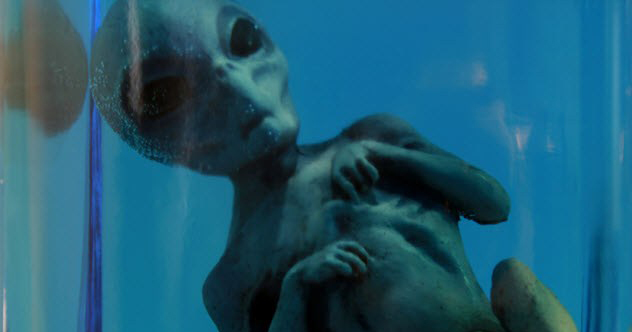
Jackie Gleason, the legendary comedian best known for The Honeymooners, was not just a master of punchlines. He was also deeply interested in UFOs and the paranormal. According to a story later told by his former wife Beverly McKittrick, Gleason once claimed that President Richard Nixon personally took him to a military facility and showed him alien bodies.
Yes, that sentence sounds like it escaped from a conspiracy podcast wearing tap shoes. The alleged visit has often been tied to Homestead Air Force Base in Florida. In the story, Nixon supposedly trusted Gleason enough to reveal one of the biggest secrets in modern history: recovered extraterrestrial remains.
Why people still talk about it
There is no official proof that the event happened, and the tale depends heavily on secondhand testimony. Still, it has endured because the casting is unbeatable: a UFO-loving comedian, a secretive president, and a military base. If Hollywood rejected this plot, it would only be because the script needed “more realism.”
The Gleason-Nixon alien story remains one of the strangest celebrity UFO claims because it sits at the intersection of Cold War secrecy, political paranoia, and the American love affair with flying saucers.
2. Sylvia Plath, Ted Hughes, and the Handmade Ouija Board
The bizarre claim
Poets Sylvia Plath and Ted Hughes are already surrounded by literary intensity, tragic biography, and the kind of emotional weather that makes normal umbrellas useless. Add a handmade Ouija board, astrology, and occult fascination, and the story becomes even darker.
Accounts from people close to the couple describe Plath and Hughes experimenting with a Ouija board and communicating with a spirit guide they called “Pan.” Their interest in the occult reportedly influenced some of their creative work, including poems that directly referenced Ouija sessions.
Why people still talk about it
It is important not to reduce Plath’s life, art, or death to spooky shorthand. Her mental health struggles and personal circumstances were complex and very real. But the occult details remain fascinating because they reveal how seriously some major literary figures engaged with unseen worlds, symbols, omens, and ritual.
For readers, the Plath-Hughes Ouija story feels chilling because it connects the supernatural with creativity. Were they contacting spirits? Exploring the subconscious? Playing with language in candlelight? Whatever the answer, the image of two brilliant poets leaning over a homemade spirit board is unforgettable.
3. Winston Churchill’s “Providential Impulse” During the Blitz
The bizarre claim
During World War II, Winston Churchill faced bombs, invasions, political pressure, and probably more bad coffee than any one person deserved. One of the strangest stories from his wartime years involves what he later described as a sudden, almost mysterious impulse.
On October 14, 1940, during the Blitz, Churchill was at 10 Downing Street when he reportedly felt compelled to leave the dining room and check on the kitchen staff. He told them to move to the shelter. Only minutes later, a bomb struck and severely damaged the kitchen area.
Why people still talk about it
Was it divine protection, intuition, luck, or a leader’s sharpened wartime instincts? Churchill himself used language that suggested something beyond ordinary decision-making. Skeptics can reasonably point to experience: London was under attack, and moving people to safety was practical. Believers see the timing and feel a shiver.
This is one of the most compelling famous paranormal stories because it does not involve a ghost floating through a wall. It involves a split-second decision that may have saved lives. Sometimes the supernatural, if it appears at all, enters quietly and says, “Maybe check the kitchen.”
4. Keith Moon and the Demons Named Mr. and Mrs. Singh
The bizarre claim
Keith Moon, drummer for The Who, lived at a volume most people reserve for emergency sirens. His reputation for chaos, excess, hotel-room destruction, and explosive humor was already legendary during his lifetime. But one of the strangest stories connected to Moon suggests he once believed he was being tormented or possessed by demons.
In accounts connected to alternative healer Meg Patterson and her husband, Moon reportedly spoke of demons with the oddly specific names “Mr. and Mrs. Singh.” The story is bizarre, unsettling, and somehow very Keith Moon: terrifying in concept, yet strangely theatrical in detail.
Why people still talk about it
The safer interpretation is psychological rather than supernatural. Moon struggled with addiction, pressure, and self-destructive behavior. But the demonic framing shows how people often use paranormal language to describe inner torment when ordinary words fail.
For rock history fans, the tale adds a haunted edge to the myth of Keith Moon. He was not just a wild man behind a drum kit; he was also a vulnerable figure surrounded by fears, rituals, and the dangerous glamour of 1970s rock stardom.
5. Johnny Cash’s Spiritual Awakening in Nickajack Cave
The bizarre claim
Johnny Cash’s life story already reads like a country ballad written by thunder. In 1967, during a period of addiction and despair, Cash reportedly entered Nickajack Cave in Tennessee intending not to come back out. Deep inside the darkness, he experienced what he later described as a spiritual turning point.
Cash said he felt a presence, a sense that he was not alone, and a conviction that his life was not over. He eventually crawled back toward the cave entrance and returned to the world changed, or at least determined to change.
Why people still talk about it
This story is not a standard ghost tale. There is no floating figure, rattling chain, or Victorian child whispering in a hallway. Instead, it is a paranormal-adjacent story of spiritual intervention, darkness, survival, and rebirth.
Whether understood as divine grace, psychological breakthrough, or a near-death moment of clarity, the Nickajack Cave story remains one of the most powerful supernatural experiences linked to a famous musician. It helped shape the public image of Johnny Cash as a man who walked through darkness and returned with a deeper voice than before.
6. The Haunted Royal Homes of Britain
The bizarre claim
When your family owns castles, palaces, towers, and centuries of dramatic history, ghosts are practically part of the furniture. British royal residences have inspired countless paranormal stories, from Windsor Castle to Balmoral, Hampton Court, Kensington Palace, and the Tower of London.
Royal ghost legends include apparitions of historical queens, mysterious footsteps, haunted rooms, and reports of strange presences. Anne Boleyn is one of the most famous figures in these stories, while other tales involve Henry VIII, Queen Elizabeth I, and spectral visitors said to wander old corridors after closing time.
Why people still talk about it
Royal ghost stories are effective because they combine power, tragedy, architecture, and time. A creaking floorboard in a suburban ranch house is annoying. A creaking floorboard in a castle where queens were imprisoned and kings plotted against each other feels like a documentary with goosebumps.
These haunted history stories also show how places become emotional containers. Palaces are not just buildings; they are stages for betrayal, grief, ceremony, ambition, and scandal. If any walls were going to remember things, royal walls would have a lot to say.
7. Charles Dickens and His Mesmerism Experiments
The bizarre claim
Charles Dickens wrote some of the most famous ghostly scenes in English literature, but his interest in the mysterious was not limited to fiction. Dickens became fascinated by mesmerism, a 19th-century practice related to what we would now associate with hypnosis.
During his time in Europe, Dickens reportedly used mesmeric techniques on Augusta de la Rue, a woman suffering from painful nervous symptoms. He believed he could influence her condition through focused attention and mesmeric treatment.
Why people still talk about it
To modern readers, Dickens acting as a paranormal therapist sounds like a deleted scene from A Christmas Carol. But mesmerism was taken seriously by many people in the Victorian era, when science, medicine, spiritualism, and showmanship often wandered through the same foggy doorway.
The Dickens story is fascinating because it shows how even brilliant minds can be drawn to unexplained experiences. It also reminds us that yesterday’s paranormal experiment may become tomorrow’s psychology lecture, or at least a very intense book-club discussion.
8. Dan Aykroyd, UFOs, and the Men in Black
The bizarre claim
Dan Aykroyd did not simply write and star in Ghostbusters; he came from a family with deep interest in spiritualism and the paranormal. Over the years, Aykroyd has spoken openly about UFOs, unexplained sightings, and his belief that strange things move through the skies with more purpose than weather balloons.
One of the most repeated stories connected to Aykroyd involves a documentary project about UFOs and an alleged encounter with mysterious “Men in Black” figures. In the tale, after seeing strange men outside, the project was suddenly disrupted or pulled back. It sounds exactly like something from a movie, which is suspiciously convenient until you remember the speaker helped create one of the most beloved paranormal comedies ever made.
Why people still talk about it
Aykroyd’s UFO stories are compelling because he tells them with unusual sincerity. He is not merely cashing in on spooky branding. His interest in the supernatural appears to be long-standing, personal, and enthusiastic.
That gives his stories a special charm. Even if you remain skeptical, it is hard not to enjoy the idea that the man who helped America laugh at ghosts might also be scanning the skies and thinking, “No, seriously, something is up there.”
9. George Washington’s Ghost at Mount Vernon
The bizarre claim
George Washington died at Mount Vernon in 1799, and stories about his ghost began circulating not long afterward. One famous account involves Josiah Quincy III, a respected public figure who reportedly stayed at Mount Vernon and hoped to see Washington’s spirit.
According to later family retellings, Quincy believed he had encountered Washington’s ghost near the room where the first president died. Other Mount Vernon ghost stories include staff members and visitors describing strange touches, unexplained presences, or figures associated with the historic estate.
Why people still talk about it
Presidential ghost stories hold a special place in American folklore. The idea that George Washington might still be wandering Mount Vernon is not just spooky; it is symbolic. He becomes not only the father of the country but also its most historically overqualified houseguest.
Mount Vernon’s atmosphere helps the legend survive. Historic homes preserve objects, rooms, beds, documents, and silence. Visitors often arrive already aware that important people lived and died there. In that mood, a cold spot or creaking stair can feel like a handshake from the past.
10. Napoleon and the Little Red Man of Destiny
The bizarre claim
Napoleon Bonaparte inspired enough legends to fill a library and several very dramatic hats. One of the strangest is the tale of the “Little Red Man,” a phantom figure said to appear to French rulers before major turning points.
According to versions of the legend, this red-clad supernatural figure warned or advised powerful French leaders, including Napoleon. The phantom was supposedly tied to fate, political disaster, and the rise and fall of empires. Some accounts place one of its final appearances near Napoleon’s decline and abdication.
Why people still talk about it
The Little Red Man is almost certainly more legend than documented history. But as a piece of political folklore, it is excellent. It transforms the chaos of war and empire into a supernatural drama where destiny wears red and apparently keeps appointments.
Napoleon’s life was so extreme that ordinary explanation can feel too small. The Little Red Man legend gives his rise and fall a mythic shape. It suggests that behind battle maps, ambition, and bad decisions, some eerie messenger may have been waiting in the hallway.
Experience Section: Why These Famous Paranormal Stories Feel So Addictive
The experience of reading bizarre paranormal stories involving famous people is different from reading ordinary ghost stories. A haunted hotel is fun. A haunted hotel connected to a president, poet, rock star, or comedy legend suddenly feels more important, even if the evidence is exactly the same amount of fog and questionable timing.
That is because famous names act like emotional shortcuts. We already know the public version of these people. Churchill is courage. Johnny Cash is redemption. Sylvia Plath is tragic genius. Dan Aykroyd is paranormal comedy with a Canadian accent. When an unexplained story attaches itself to a familiar figure, it feels as though a secret door has opened behind the official biography.
There is also a strange comfort in these stories. Famous people often appear larger than life, polished by publicity and history until they seem almost unreal. Paranormal stories make them human again. They become people who were frightened, curious, superstitious, desperate, hopeful, or simply willing to ask, “What if?” That question is the engine of every ghost story and every UFO debate.
From a reader’s point of view, the best way to enjoy celebrity paranormal stories is with two lights on: one for wonder and one for skepticism. Wonder lets you feel the thrill. Skepticism keeps you from believing every rumor that wanders in wearing a sheet. The most satisfying approach is not to ask only, “Did this happen exactly as told?” but also, “Why did people keep telling this story?”
Many of these tales survive because they express something emotionally true, even when the supernatural details remain unproven. Churchill’s impulse during the Blitz captures the feeling that history sometimes turns on instinct. Johnny Cash’s cave experience captures the terror and grace of a life at the edge. The royal ghost stories capture the weight of old places. Dickens and mesmerism capture the Victorian hunger to explain the mind before modern psychology had the right vocabulary.
These experiences also show how paranormal legends travel. A private memory becomes a family story. A family story becomes a biography footnote. A biography footnote becomes a television segment, a podcast episode, and finally a search result at 1:00 a.m. when someone should absolutely be asleep. By the time the story reaches modern readers, it has gathered atmosphere like a wool coat gathers lint.
For writers, bloggers, and curious readers, the lesson is simple: paranormal content works best when it respects both mystery and reality. Do not flatten the stories into fake certainty. Do not drain them of fun with joyless debunking, either. The sweet spot is the candlelit middle, where history, psychology, folklore, and imagination can sit at the same table without throwing plates.
In the end, the appeal of these stories is not that they prove the supernatural beyond doubt. It is that they remind us how much human life happens in uncertainty. Even the rich, famous, powerful, brilliant, and legendary have stared into darkness and wondered what was staring back.
Conclusion
The world of famous paranormal encounters is crowded with ghosts, aliens, omens, visions, haunted rooms, and spiritual turning points. Some stories are charmingly absurd. Some are genuinely moving. Others feel like folklore wearing a celebrity disguise. Together, they reveal how deeply people want mystery to survive in a world that keeps trying to explain everything with paperwork.
Whether you believe Jackie Gleason saw alien bodies, Churchill was guided by providence, or Napoleon received visits from a red-clad messenger of fate, these tales remain culturally powerful because they connect the supernatural to people we recognize. They turn history into a haunted house and fame into a flashlight beam. And honestly, that is much more entertaining than another celebrity skincare routine.