A mailbox is usually the first object visitors notice and the last object homeowners remember to upgrade. That is an odd arrangement. We obsess over front-door paint, porch lighting, planters, and house numbers, then let a dented metal tube represent the property at the curb. A design-worthy mailbox fixes that small but very public injustice.
The best modern mailboxes do more than receive envelopes. They clarify an address, echo the architecture, protect deliveries from weather, and add a deliberate finishing touch. The goal is to choose a mailbox that looks intentional without becoming the outdoor equivalent of a peacock wearing a name tag.
What Makes a Mailbox Design-Worthy?
Good mailbox design begins with proportion, capacity, and material. A tiny wall box can disappear on a broad stone façade, while an oversized curbside model may overwhelm a compact yard. Powder-coated galvanized steel offers a crisp finish and solid weather resistance; aluminum and stainless steel resist corrosion; brass, bronze, and wood details add warmth. Locks, anti-pry construction, covered slots, drainage, and weather seals matter when the box sits far from the front door or faces hard rain.
The delivery location determines the format. Curbside service calls for a post-mounted receptacle that meets postal requirements. Door delivery may allow a wall-mounted box near the main entrance. Before changing formats, check with the local postmaster. A beautiful mailbox the carrier cannot safely use is merely an expensive lawn sculpture.
10 Easy Pieces for a Better-Looking Mail Stop
1. Adoorn Post Mount: Color Without Clutter
The Adoorn Post Mount shows how a familiar curbside shape can feel contemporary through cleaner geometry and confident color. Black works almost anywhere, forest green settles naturally into landscaping, and a brighter shade can lift a restrained exterior. Its steel body suits updated ranch houses, modern farmhouses, and contemporary coastal homes. Coordinate the finish with the front door, lighting, or address numbers rather than matching every exterior detail exactly. The goal is a visual conversation, not a uniform.
2. Post & Porch Customizable OG: Numbers as Graphic Design
A wall-mounted mailbox with integrated address numbers solves two curb-appeal problems at once. The Post & Porch Customizable OG uses bold, clean numerals to turn practical identification into part of the façade. It is especially useful on porches where a separate address plaque would create too many competing objects. Choose strong contrast: a dark box on pale siding or a light finish on charcoal walls. Think of the entry as a magazine coverthe numbers should be legible, balanced, and not hiding behind a fern.
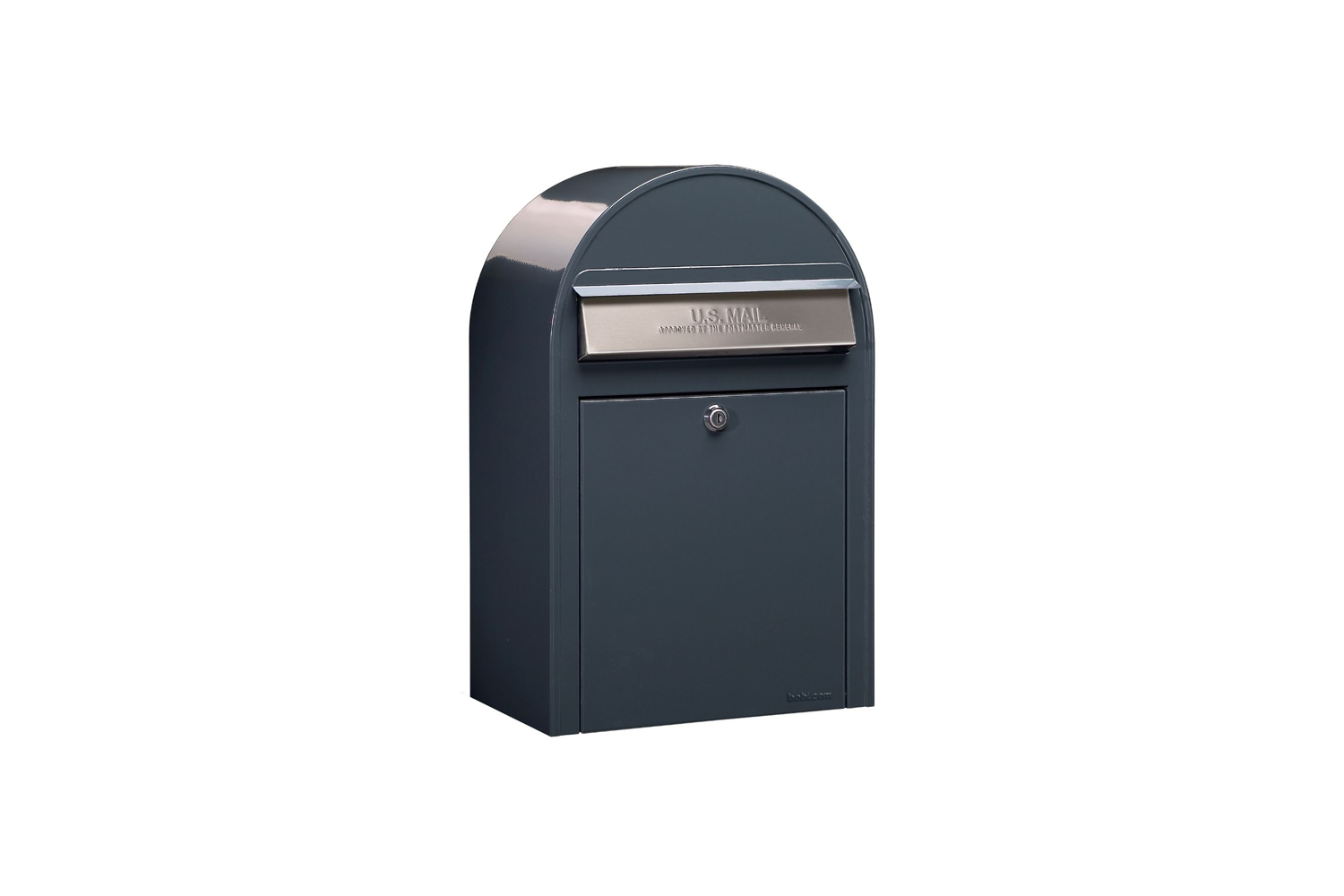
3. Bobi Classic: Scandinavian Order With a Lock
The tall, front-access Bobi Classic brings Scandinavian order to a narrow entry wall. Its vertical form saves width, while a generous slot handles large envelopes and magazines more gracefully than many compact boxes. Stainless-steel construction and a locking door add practical substance. It looks particularly sharp beside flat-panel doors, vertical siding, smooth stucco, or minimalist brick. Align it with a sconce, doorbell, or number plaque and the wall begins to look designed rather than merely populated.
4. Soho Mailbox: Compact and Unfussy
The Soho Mailbox represents the quiet powder-coated wall box that does not require decorative scrolls, embossed eagles, or a tiny roof pretending to be a house. A simple rectangular body, protected slot, and lock make it useful for homeowners who want function with a low visual profile. Before ordering any compact model, measure the largest mail you receive and confirm that the lid can open fully. A handsome box mounted too close to trim can turn daily mail retrieval into an awkward wrist exercise.
5. Gibraltar Elite Large Capacity: A Familiar Shape, Improved
Not every design-worthy mailbox needs to look imported from a Scandinavian architecture studio. The Gibraltar Elite Large Capacity model keeps the classic rural profile while offering more useful interior space and a sturdier presence. Its traditional form suits cottages, farmhouses, Cape Cod homes, and suburban Colonials. Extra volume becomes surprisingly glamorous after a long weekend, when catalogs and padded envelopes would otherwise stage a paper rebellion inside a smaller box.
6. Adkinson Wall-Mounted Mailbox: Warm Metal, Instant Character
The Adkinson Wall-Mounted Mailbox demonstrates the power of finish. Aged brass and oil-rubbed bronze add warmth to painted brick, dark siding, limestone, and wood doors, while stainless steel creates a cooler modern effect. Repeat the chosen finish once or twicein a porch light, door knocker, or number plaquebut stop there. Matching every hinge, screw, planter, and bell can make the entry feel less curated and more like a hardware catalog gained consciousness.
7. Schoolhouse Planter Mailbox: A Tiny Garden at Eye Level
A mailbox-planter hybrid introduces greenery directly into the arrival sequence. The Schoolhouse Planter Mailbox combines a clean postal compartment with room for trailing plants, compact herbs, or seasonal flowers. The idea works best where watering is convenient and runoff will not stain the wall. Select plants for the actual exposure and keep foliage away from the opening. Your carrier should not have to negotiate with basil, however charming the basil may be.
8. Mail Boss Mail Manager: Security Without the Bunker Look
For curbside locations where mail theft is a concern, the Mail Boss Mail Manager emphasizes security without resembling a miniature bank vault. Galvanized-steel construction, a locking retrieval door, anti-pry features, and a protected incoming-mail design make it practical for mail left unattended during the day. Pair it with a correctly installed post and clear address numbers. Security hardware should feel integrated, not like an emergency retrofit added after the neighborhood group chat became alarming.
9. Ecco Wall Mailbox: Stainless Steel Precision
The Ecco Wall Mailbox uses brushed or polished stainless steel as a clean architectural accent. Brushed metal is generally forgiving outdoors because it disguises small marks better than a mirror-like surface; polished steel makes a sharper statement but may reveal fingerprints and water spots. Stainless steel pairs well with smooth stucco, concrete, dark wood, and simple metal lighting. Mount it near another architectural element so it reads as intentional, not as a misplaced kitchen appliance.
10. Whitehall Modern Wall Mailbox: Personalization With Weight
Whitehall’s modern wall-mounted designs show how cast aluminum and personalized plaques can give a mailbox architectural presence. This approach suits transitional and traditional homes where the address should be unmistakable. Choose high contrast between lettering and background, make the street number the star, and keep the family name optional. Delivery drivers, guests, and emergency responders are all more interested in the address than your enthusiasm for cursive.
Matching the Mailbox to the House
Modern and midcentury homes usually benefit from simple geometry, matte finishes, integrated numbers, and restrained color. Horizontal forms echo low rooflines; vertical boxes complement narrow siding and strong entry columns. Farmhouses, cottages, and traditional houses are comfortable with classic post-mounted shapes, bronze, brass, and painted steel. Against busy brick or stone, choose a clear silhouette and strong contrast so the mailbox does not vanish into the masonry.
A mailbox should relate to the house without impersonating it. A black box can repeat window frames, a warm metal can echo the porch light, and a colored post box can connect to the front door. One or two deliberate relationships are enough.
Size, Security, Installation, and Maintenance
Track one normal week of mail before buying. Note the largest catalog, rigid envelope, and small parcel that arrives. Choose enough capacity for a typical dayor several days if travel is common. A locking design needs an incoming opening large enough for delivery but shaped to resist fishing, plus a retrieval door you can access without stepping into traffic.
For curbside installation, look for a model approved by the Postmaster General and confirm local placement before digging. USPS guidance generally places the bottom of the box or point of mail entry 41 to 45 inches above the road surface and the door 6 to 8 inches back from the curb. Supports should be stable yet designed to yield if struck; concrete-filled monuments may be impressive, but they can create a roadside hazard.
Wall-mounted boxes should sit near the main entrance where the carrier can see and reach them. Use fasteners suited to the wall material, leave room for the lid, and seal penetrations where needed. If changing from curbside to wall delivery, obtain local postal approval first.
Once a year, tighten hardware, clear drainage points, touch up damaged coating, clean the surface with a mild product, and replace faded numbers. Trim plants, remove snow or obstacles, and confirm that the flag and lock move freely. A design-worthy mailbox should still look composed after real weather, real mail, and real Tuesdays.
Experience Notes: What You Learn After Living With a Better Mailbox
The first lesson is that scale is difficult to judge from a product photo. A wall-mounted mailbox that looks generous on a white studio background can seem surprisingly small beside a broad front door. The most reliable method is to tape a paper outline of the stated dimensions to the wall. Stand at the sidewalk, walk toward the house, and view it from the angle guests actually use. This ten-minute mock-up has saved more than one porch from receiving a mailbox that looks like a postage stamp.
The second lesson concerns lid direction and rain. A covered porch forgives almost any design, but an exposed wall does not. During one installation, a sleek top-loading box looked perfect until the first wind-driven storm pushed water toward the opening every time the lid lifted. A deeper overhang and a small change in mounting position solved the issue. The experience made one rule obvious: study how water moves across the façade, not just how the mailbox looks when the weather is behaving for the listing photos.
Capacity is another common surprise. People tend to shop for the mail they wish they receivedtwo tasteful letters and perhaps a postcard from Lisbonrather than the mail that actually arrives. Real households get catalogs, government envelopes, padded prescription mailers, school notices, and the occasional rigid package. A box that is slightly larger than necessary usually looks fine; a box that is too small advertises its failure with a door that cannot close.
Integrated house numbers often deliver the biggest practical improvement. After replacing a small decorative plaque with larger contrasting numerals on the mailbox, visitors stopped circling the driveway and delivery photos began showing the correct porch. The visual upgrade was immediate, but the daily convenience was even better. Good exterior design frequently works that way: the feature looks attractive because it communicates clearly.
Security also changes habits. A locking curbside mailbox reduces the pressure to retrieve mail the instant it arrives, especially when the box is far from the house. However, locks create their own tiny domestic comedy. Spare keys need a permanent location, the mechanism needs occasional care, and every household member must understand the outgoing-mail arrangement. The best security design is not merely tough; it is understandable at 7:00 a.m. while someone is holding coffee.
Finally, a mailbox upgrade tends to expose neighboring details. Once the box is straight, freshly finished, and correctly scaled, faded address numbers, a leaning post, or an exhausted porch light suddenly become impossible to ignore. This is not a flaw. It is the productive domino effect of curb appeal. One carefully chosen object encourages the rest of the entry to become more coherent, and the house begins greeting people before the door opens.
Conclusion
A design-worthy mailbox is a small exterior investment with an unusually public payoff. The right choice supports the architecture, handles the household’s actual mail volume, survives local weather, and makes the address easy to find. Whether the answer is a colorful steel post box, a Scandinavian locking model, a brass wall mount, or a mailbox with a planter, function should lead and style should make that function pleasant to live with.
Measure before buying, confirm the delivery format, respect postal placement rules, and choose materials for the exposure. Then enjoy the rare home improvement that can make bills, catalogs, and junk mail look as though they arrived at a much more organized household.
Note: Product finishes, specifications, and availability can change. Confirm current manufacturer details and check USPS and local postmaster requirements before purchasing, replacing, or relocating a mailbox.