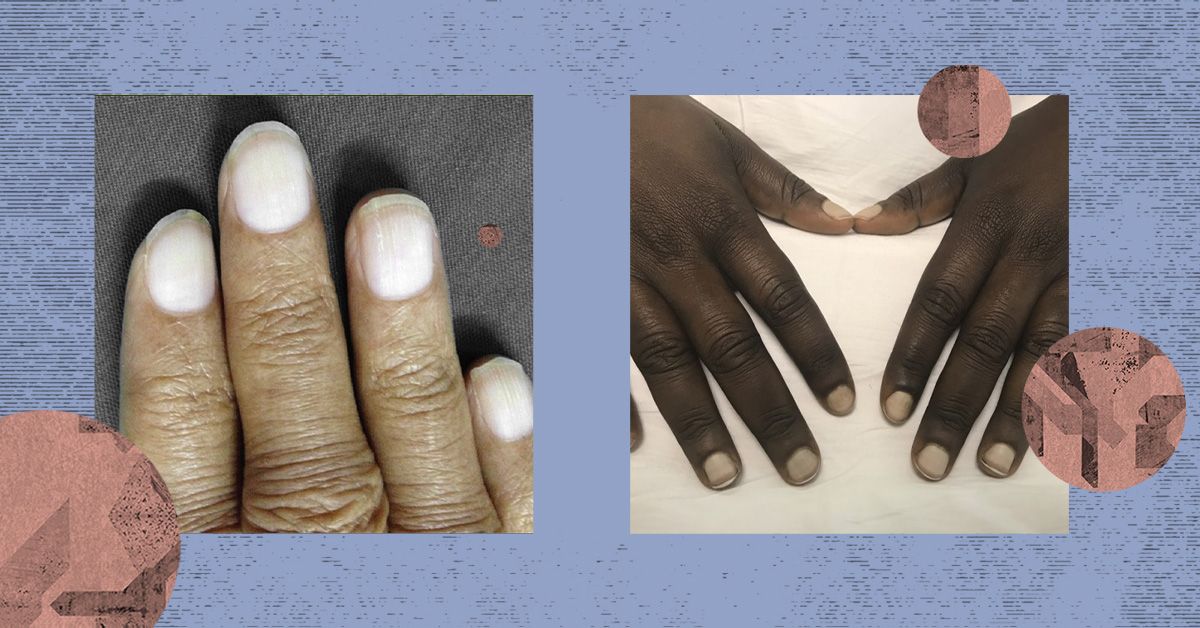
Your fingernails are not tiny crystal balls, but they occasionally offer useful clues about what is happening elsewhere in your body. Terry’s nails are one such clue: most of the nail appears pale, milky white, or frosted, while a narrow pink, red, or brown band remains near the tip.
This distinctive pattern may develop as part of normal aging. However, it can also be associated with cirrhosis, heart failure, diabetes, kidney failure, and other chronic health problems. That does not mean white-looking nails automatically equal serious disease. It means a persistent, unexplained change deserves more attention than a fresh coat of nail polish and a hopeful shrug.
Clinical basis:
What Are Terry’s Nails?
Terry’s nails are a form of apparent leukonychia, a term used for nails that look white because of changes beneath the nail plate. In this condition, the nail plate itself is not necessarily damaged. Instead, altered color and blood flow in the nail bed create the washed-out appearance.
The condition was named after physician Richard Terry, who described the pattern in people with advanced liver disease during the 1950s. Since then, clinicians have recognized that the same nail change can appear in several systemic conditions and in otherwise healthy older adults.
What Do Terry’s Nails Look Like?
The classic appearance includes:
- A pale white, milky, or ground-glass appearance across most of the nail bed
- Loss or poor visibility of the lunula, the pale half-moon near the cuticle
- A narrow pink, reddish, or brown band at the distal edge near the fingertip
- A smooth nail surface without the crumbling or thickening commonly seen with fungal infections
- Changes affecting several fingernails, although one nail or the toenails may occasionally be involved
The distal colored band is usually only a few millimeters wide. In practice, the nails can look as though someone painted them with frosted glass polish and forgot to finish the tips.
Pressing on the nail bed may temporarily reduce the discoloration. This response suggests that the appearance comes partly from nail-bed circulation rather than permanent white pigment within the nail plate. Pressure is not a treatment, of course. It is merely a temporary visual change.
Appearance and mechanism:
What Causes Terry’s Nails?
Terry’s nails are a physical sign rather than a disease by themselves. Researchers believe the pale appearance may involve changes in nail-bed vascularity, increased connective tissue, or both. The exact biological mechanism is not completely settled, and different underlying conditions may contribute in different ways.
Normal Aging
Some people develop Terry’s nails simply as they get older. Blood vessels, skin thickness, connective tissue, and circulation all change over time. When the nail pattern appears gradually in an older adult without symptoms or abnormal test results, it may represent a harmless age-related change.
Age should not automatically be blamed, however. A clinician may still recommend an evaluation, especially if the change appeared suddenly, is becoming more obvious, or accompanies fatigue, swelling, shortness of breath, jaundice, or unexplained weight changes.
Liver Disease and Cirrhosis
Terry’s nails were first strongly associated with cirrhosis, a condition in which long-term injury causes extensive scarring of the liver. Possible causes of cirrhosis include chronic viral hepatitis, alcohol-associated liver disease, metabolic dysfunction-associated steatotic liver disease, autoimmune disorders, and certain inherited conditions.
Terry’s nails cannot diagnose cirrhosis on their own. Many people with liver disease never develop them, and people without liver disease sometimes do. When the nail change appears alongside yellow skin or eyes, abdominal swelling, easy bruising, itching, dark urine, confusion, or loss of appetite, medical evaluation becomes especially important.
Congestive Heart Failure
Heart failure occurs when the heart cannot pump blood effectively enough to meet the body’s needs. Changes in circulation, tissue oxygen delivery, and fluid balance may contribute to nail-bed abnormalities, including Terry’s nails.
Other possible signs of heart failure include shortness of breath, reduced exercise tolerance, swelling in the feet or legs, rapid weight gain from fluid retention, coughing when lying down, and unusual fatigue. White-looking nails alone do not establish the diagnosis, but they may be one piece of a much larger clinical puzzle.
Diabetes
Terry’s nails have also been observed in people with diabetes, particularly adults with long-standing disease. Diabetes can affect small blood vessels, circulation, nerves, wound healing, and the health of the skin and nails.
Someone with Terry’s nails and symptoms such as increased thirst, frequent urination, blurred vision, slow-healing sores, recurrent infections, or unexplained weight loss may be tested for high blood sugar. Even without obvious symptoms, a clinician may check fasting glucose or hemoglobin A1C when diabetes is a reasonable possibility.
Kidney Disease or Kidney Failure
Chronic kidney disease can produce several nail changes. Terry’s nails may occur, but kidney disease is more famously associated with Lindsay’s nails, also called half-and-half nails. These two patterns are related in appearance but are not identical.
Possible accompanying signs of kidney dysfunction include swelling, foamy urine, changes in urination, itching, nausea, muscle cramps, high blood pressure, and persistent fatigue. Early kidney disease may cause no noticeable symptoms, which is why blood and urine tests can be valuable.
Other Reported Associations
Medical literature has reported Terry’s nails in association with viral hepatitis, peripheral vascular disease, pulmonary tuberculosis, reactive arthritis, and several less common systemic disorders. An association does not prove that the nail change was caused directly by the condition, especially when evidence comes from small studies or individual case reports.
The practical lesson is not to search the internet for every disease ever mentioned beside the words “white nails.” The useful next step is a focused medical assessment based on age, symptoms, health history, medications, and examination findings.
Associated conditions:
Terry’s Nails vs. Similar Nail Changes
Not every pale nail is a Terry’s nail. Nail polish, trauma, infection, skin disease, nutritional problems, and natural variation can all alter nail color. Correct identification matters because the possible causes and treatments are different.
Terry’s Nails vs. Lindsay’s Nails
Terry’s nails are predominantly white, with only a thin colored strip near the tip. Lindsay’s nails generally have a much larger distal section that is pink, red, or brown, creating a more obvious half-white and half-colored pattern. Lindsay’s nails are particularly associated with chronic kidney disease.
Terry’s Nails vs. Fungal Nail Infection
Nail fungus frequently causes yellow-white discoloration, but it usually brings additional changes such as thickening, brittleness, crumbling, debris under the nail, lifting from the nail bed, or an irregular shape. Terry’s nails are typically smooth and display a relatively uniform color pattern across multiple nails.
Terry’s Nails vs. True Leukonychia
True leukonychia originates within the nail plate. It may appear as white dots, streaks, or broader areas that move toward the fingertip as the nail grows. Minor trauma to the nail matrix is a common cause of small white spots.
With apparent leukonychia, including Terry’s nails, the whiteness comes primarily from the nail bed. It does not simply grow out in the same way as a spot embedded in the nail plate.
Terry’s Nails vs. Pale Nails From Anemia
Anemia may make the entire nail bed look unusually pale, but it does not usually produce the sharply defined distal pink or brown band characteristic of Terry’s nails. Iron deficiency may also cause thin, brittle, or spoon-shaped nails in some people.
Terry’s Nails vs. Onycholysis
Onycholysis is separation of the nail plate from the underlying bed. The detached area looks white because air occupies the space beneath it. The boundary is usually irregular and begins near the nail tip, while Terry’s nails reflect a broader, more uniform change in the attached nail bed.
Differential diagnosis:
How Are Terry’s Nails Diagnosed?
There is no single laboratory test for Terry’s nails. Diagnosis begins with visual examination and a review of the person’s medical history. A primary care clinician or dermatologist may inspect the color pattern, determine whether the nail plate is attached, and look for thickening, pitting, ridges, inflammation, clubbing, or fungal debris.
Questions a Clinician May Ask
- When did the nail discoloration begin?
- Did it appear suddenly or gradually?
- Are multiple fingernails or toenails affected?
- Is there pain, swelling, crumbling, itching, or separation?
- Do you have diabetes, liver disease, kidney disease, or heart problems?
- Have you experienced fatigue, jaundice, swelling, breathing difficulty, or changes in urination?
- Have you recently used artificial nails, harsh chemicals, or new medications?
Possible Medical Tests
Testing is selected according to the person’s symptoms and risk factors. A clinician may consider:
- A complete blood count to look for anemia or other blood abnormalities
- A metabolic panel and liver tests
- Creatinine, estimated glomerular filtration rate, and urine testing for kidney function
- Fasting glucose or hemoglobin A1C for diabetes
- Hepatitis testing when risk factors or liver abnormalities are present
- An electrocardiogram, chest imaging, or echocardiogram when heart failure is suspected
- Nail clippings or scrapings when fungal infection remains possible
Not everyone needs the full laboratory buffet. Testing should be guided by the overall clinical picture rather than ordered solely because one nail looked suspicious under bathroom lighting.
Evaluation guidance:
How Are Terry’s Nails Treated?
Terry’s nails generally do not require direct treatment. There is no established cream, supplement, manicure technique, or home remedy that reliably restores the normal color pattern. Treatment focuses on any underlying health problem discovered during evaluation.
Treating the Underlying Cause
Management may involve controlling blood sugar in diabetes, treating hepatitis, reducing further liver injury, managing fluid retention and cardiac function in heart failure, or slowing the progression of kidney disease. The exact plan depends on the diagnosis and may include medications, dietary changes, physical activity, procedures, monitoring, or specialist care.
The nail color may improve when the underlying condition is successfully treated, but this is not guaranteed. Nails grow slowly, and visible improvement may take months. In some people, particularly those with age-related changes or long-standing disease, the appearance may persist.
Can Vitamins Cure Terry’s Nails?
No vitamin has been shown to specifically cure Terry’s nails. Taking iron, biotin, or other supplements without a documented deficiency may be ineffective and, in some cases, harmful. High-dose biotin can also interfere with certain laboratory tests. Supplements should be discussed with a qualified healthcare professional rather than selected through a late-night online treasure hunt.
Supporting General Nail Health
Basic nail care will not treat an internal disease, but it can prevent additional damage:
- Keep nails clean and trimmed without cutting them excessively short.
- Moisturize the nails and cuticles after washing.
- Wear protective gloves when using cleaning products or solvents.
- Avoid biting, picking, scraping, or aggressively pushing back cuticles.
- Use personal or properly sterilized manicure tools.
- Wear shoes that provide enough room for the toes.
- Do not conceal a new nail change with polish before photographing or showing it to a clinician.
Treatment and nail care:
When Should You See a Healthcare Provider?
Arrange a routine medical appointment when several nails become persistently white without an obvious explanation, particularly if the change is new. An examination is also appropriate when the discoloration occurs with swelling, fatigue, shortness of breath, yellowing of the skin or eyes, changes in urination, unexplained weight loss, increased thirst, or other systemic symptoms.
Seek urgent care for severe breathing difficulty, chest pain, fainting, new confusion, vomiting blood, black stools, rapidly increasing abdominal swelling, or signs of a serious infection. These symptoms are more important than the nail appearance and require prompt assessment.
A new dark stripe, pigment spreading onto the surrounding skin, significant nail destruction, or a painful growth beneath one nail also deserves timely dermatologic evaluation. Those findings are not typical Terry’s nails and may have entirely different causes.
When to seek care:
Frequently Asked Questions
Are Terry’s Nails Always a Sign of Liver Disease?
No. Cirrhosis is a well-known association, but Terry’s nails can occur with heart failure, diabetes, kidney failure, other systemic conditions, and normal aging. The pattern is a clue, not a diagnosis.
Can Terry’s Nails Affect Toenails?
Yes. Fingernails are more commonly discussed, but toenails can also develop the characteristic pale appearance and distal colored band.
Are Terry’s Nails Painful?
Terry’s nails usually do not cause pain, itching, or tenderness. Pain may suggest another problem, such as trauma, inflammation, an ingrown nail, infection, or a growth under the nail.
Can Nail Polish Cause Terry’s Nails?
Nail polish can stain or temporarily disguise the nail, but it does not cause the underlying vascular pattern of true Terry’s nails. Remove polish and observe the bare nails in natural light before drawing conclusions.
Can Stress Cause Terry’s Nails?
Stress is not considered a typical cause. Severe illness or prolonged stress may affect nail growth in other ways, including ridges or temporary growth interruptions, but the classic Terry’s nail pattern has different associations.
Will Terry’s Nails Grow Out?
Because the color change generally comes from the nail bed rather than a defect trapped inside the nail plate, it may not simply move outward as the nail grows. It may improve if the underlying cause is treated, remain stable, or persist as an age-related feature.
Practical Experiences and Real-World Lessons
People often notice Terry’s nails in surprisingly ordinary situations. One person may see the change while removing dark nail polish. Another may spot it in a photograph taken outdoors, where natural light makes the pale nail beds more obvious. A family member may be the first to comment, usually with the subtlety of a detective who has just solved a major case.
The first practical lesson is to confirm that the change is real. Polish residue, reflected light, dry skin, artificial nails, and camera filters can create misleading colors. Remove cosmetic products, wash and dry the hands, and examine several nails in indirect daylight. Taking clear photographs from the same angle can help document whether the appearance is stable or changing.
A second common experience is anxiety fueled by image searches. Someone sees pale nails, compares them with dozens of dramatic medical photographs, and becomes convinced that liver failure has arrived before breakfast. This is understandable but rarely useful. Terry’s nails cannot be reliably diagnosed from color alone, especially when lighting, skin tone, circulation, and camera settings alter the image.
Consider an illustrative example involving an older adult whose nails gradually became milky white over several years. The person felt well, had no swelling, breathing problems, jaundice, or urinary changes, and routine laboratory results were normal. After evaluation, the clinician considered the pattern likely related to aging. The value of the appointment was not a miracle nail treatment; it was the reassurance that obvious systemic disease had not been found.
In another composite scenario, a middle-aged adult notices white nail beds along with ankle swelling and increasing shortness of breath when climbing stairs. The nails do not diagnose heart failure, but the combination of findings prompts a medical visit. Examination and cardiac testing identify a condition requiring treatment. Here, the nails functioned less like an alarm siren and more like a quiet notification that became meaningful when paired with other symptoms.
A third pattern involves someone with diabetes who has focused mainly on glucose readings and has not considered routine foot or nail care. Pale nails may or may not be related to diabetes, but the observation creates an opportunity to check circulation, sensation, skin integrity, medication adherence, kidney function, and overall disease control. Sometimes the most valuable result of noticing a nail change is not explaining the nailit is reviewing health issues that deserve attention anyway.
People also learn that cosmetic improvement and medical improvement are not the same thing. Buffing, whitening pencils, supplements, and salon treatments may change how the nails look temporarily, but they cannot correct cirrhosis, heart failure, kidney disease, or diabetes. Aggressive buffing may even thin and damage otherwise intact nails.
The most useful approach is measured rather than dramatic: document the change, check for accompanying symptoms, schedule an appropriate evaluation, and avoid self-diagnosis. Nails can provide clues, but they are supporting actors, not the entire medical cast.
Conclusion
Terry’s nails appear mostly white or frosted, with a narrow pink, red, or brown band near the tip and little or no visible lunula. The pattern may occur with normal aging, but it is also associated with cirrhosis, heart failure, diabetes, kidney failure, and several other systemic conditions.
There is no specific cosmetic treatment for Terry’s nails. Medical care focuses on identifying and managing any underlying cause. Because many harmless and treatable problems can also make nails appear pale or white, a persistent change should be evaluated rather than interpreted in isolation.
Note: This article is intended for general education and does not replace examination, diagnosis, or treatment by a licensed healthcare professional.