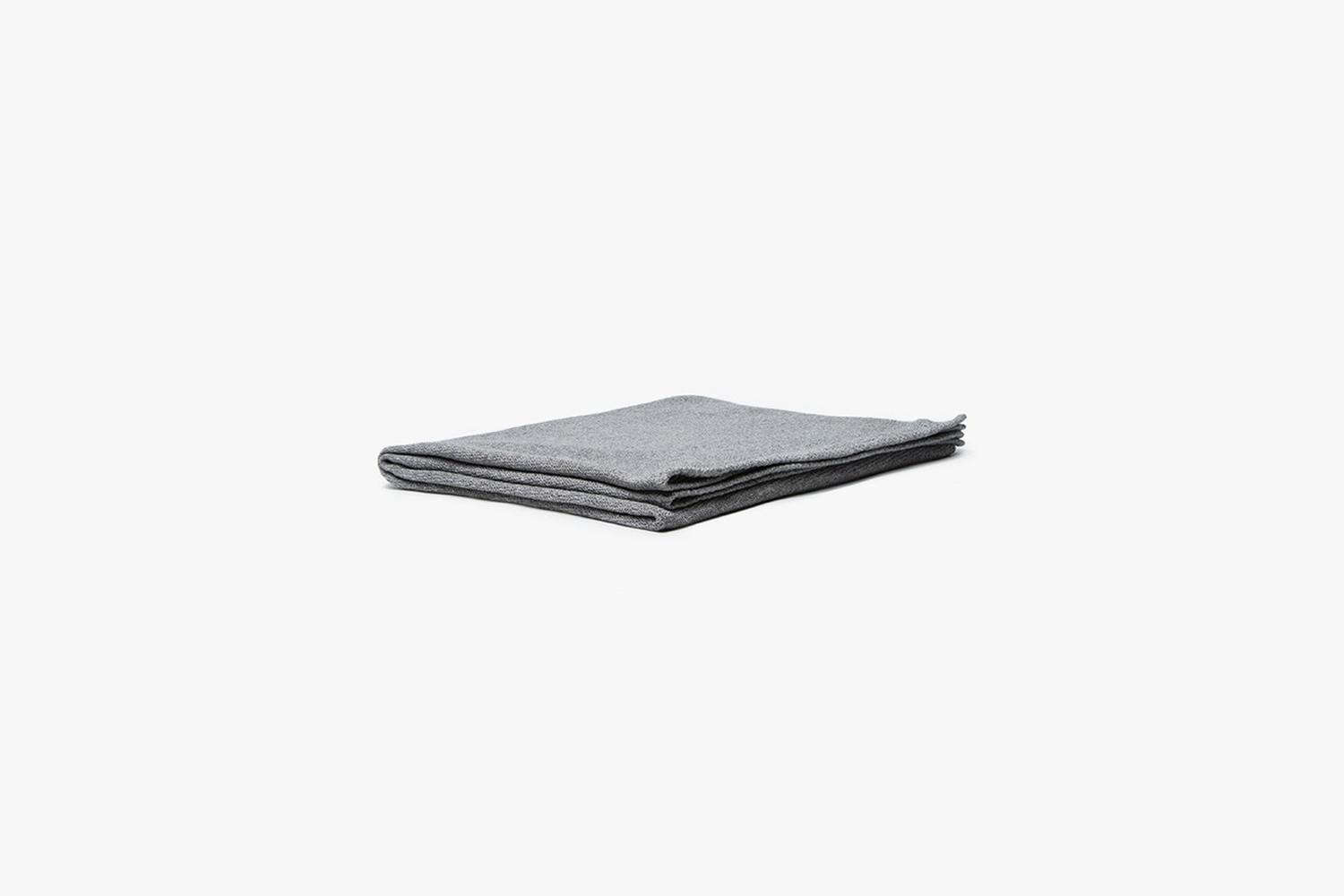
The Morihata Lana Bath Towel makes an unusually persuasive argument that an everyday textile can feel special without becoming impractical. Made in Imabari, Japan, by the textile manufacturer Kontex, this 100% cotton towel combines a soft, cashmere-like texture with high absorbency, manageable weight, and faster drying than many thick hotel-style towels.
Its secret is not a mysterious spa potion or a cotton field serenaded by violinists. The Lana collection is woven slowly from fine yarn on traditional looms, producing a relaxed, airy structure that feels more like a luxurious garment than conventional dense terrycloth. The result is a Japanese bath towel designed for people who want softness without storing a damp sofa on the towel bar.
This guide examines the Lana towel’s materials, construction, sizes, performance, care requirements, and overall value. It also explains what living with the towel may feel like in real-world situations, from humid bathrooms to small laundry loads.
What Is the Morihata Lana Bath Towel?
Morihata is the North American distributor associated with an extensive collection of Japanese household goods. The Lana towel itself is produced by Kontex, a textile company founded in 1934 and based in Imabari, a coastal city in Ehime Prefecture with a long history of towel manufacturing.
According to Morihata’s Lana collection information, the towel is made entirely from cotton and woven on slow Japanese looms. Its loose, delicate weave creates a remarkably soft surface with muted colors that resemble wool. Despite that visual similarity, there is no wool in the towel, so it remains suitable for normal bath use and cotton-focused laundering.
The design balances three qualities that rarely coexist happily: softness, absorbency, and compactness. Many plush towels feel wonderful but become heavy when wet and take ages to dry. Thin towels dry quickly but can make a post-shower routine feel like being polished with a dishcloth. Lana aims for the middle ground.
Key Specifications
| Feature | Details |
|---|---|
| Material | 100% cotton |
| Manufacturing location | Imabari, Japan |
| Construction | Soft, loose weave produced on a traditional low-speed loom |
| Compact bath towel | Approximately 22.7 by 43.2 inches |
| Full bath towel | Approximately 33.5 by 57 inches |
| Care | Cold machine wash, mild detergent, no bleach or fabric softener |
| Drying | Hang dry or tumble dry on low |
Some older retail listings use slightly different measurements or refer to the compact version simply as the “bath towel.” Buyers should therefore check the selected size rather than relying only on the product title. The difference between the compact and full-size versions is substantial when you are standing in the bathroom wearing nothing but optimism.
Why Imabari Towels Have a Strong Reputation
Imabari is not merely a location printed on an attractive label. The region has developed a specialized towel industry supported by skilled weaving, yarn preparation, dyeing, washing, and finishing techniques.
The official Imabari Towel brand uses multiple quality tests, including its well-known five-second absorbency standard. During this test, a towel sample must begin sinking in water within five seconds. The purpose is to confirm that the fabric absorbs moisture promptly instead of pushing water around the skin like a tiny, disappointing windshield wiper.
Not every towel made in Imabari necessarily carries the official certification logo, so shoppers should distinguish between the place of manufacture and formal certification. Nevertheless, the Lana towel’s production in this textile region provides meaningful context for its construction and emphasis on immediate absorbency.
Traditional Slow Weaving Makes a Difference
Modern high-speed equipment can produce large quantities of consistent fabric efficiently. However, slower weaving places less tension on delicate yarn. In Lana’s case, this allows the cotton fibers to retain an airy, relaxed character.
The finished textile feels soft and flexible rather than rigid or over-engineered. It folds into a relatively compact bundle, drapes naturally, and lacks the bulky stiffness sometimes found in very high-density towels.
Kontex textiles are also described by Morihata as being washed with water originating from Mt. Ishizuchi’s snowmelt. Fresh-water finishing helps remove residues and impurities from the yarn. The practical result is a clean-feeling textile with a gentle surface rather than merely an impressive sentence for the packaging.
How the Lana Towel Feels
The phrase “cashmere-like” appears frequently in descriptions of the Morihata Lana Bath Towel. It should be understood as a comparison of softness, not a literal claim about fiber content. Lana feels smoother, lighter, and more garment-like than a conventional loop-heavy hotel towel.
Its surface has a subtle knit-like character and a pleasantly relaxed hand. Instead of creating an aggressively fluffy pile, the fine yarn and loose construction deliver softness through flexibility. This distinction matters because a towel can be thick without being especially gentle.
For sensitive or easily irritated skin, Lana’s soft surface encourages patting rather than vigorous rubbing. No bath towel can diagnose or treat a skin condition, of course, but reducing unnecessary friction may make drying more comfortable after shaving, exfoliating, or showering with warm water.
Absorbency and Drying Performance
Cotton is naturally well suited to bath towels because its cellulose structure attracts and holds water. As explained by the textile specialists at Good Housekeeping, fiber content, weave, surface area, and fabric thickness all influence absorbency.
Heavier towels can hold large amounts of water, but extra material usually extends drying time. The Lana towel takes a different approach. Its airy weave and fine yarn allow it to absorb water efficiently without depending on extreme thickness.
For one person taking a normal shower, the full bath towel offers ample coverage and drying capacity. The compact bath towel can also dry the body effectively, although it requires more repositioning. Its smaller footprint makes it especially useful for short hair, gym bags, guest bathrooms, recreational vehicles, and homes with limited storage.
Better for Humid or Small Bathrooms
A towel cannot dry well when it is folded into a damp lump on a hook. Lana’s lighter construction helps, but airflow remains essential. Spread it across a wide bar immediately after use so that as much surface area as possible is exposed.
This routine is particularly valuable in humid climates, apartments with weak ventilation, or bathrooms shared by several people. A faster-drying towel is less likely to remain clammy until the next showeran experience nobody has ever described as a delightful surprise.
Choosing the Right Lana Towel Size
Compact Bath Towel
At approximately 22.7 by 43.2 inches, the compact Lana towel is considerably narrower than a typical American bath towel. It works best for shoppers who prioritize quick drying, small laundry loads, and efficient storage.
It may suit children, shorter users, minimalist households, travelers, and anyone who prefers wrapping hair separately. However, it is not intended to provide the coverage of a bath sheet. People who enjoy walking around wrapped in a towel while deciding whether breakfast counts as a personality trait should choose the larger size.
Full Bath Towel
The approximately 33.5-by-57-inch version is closer to familiar American bath-towel dimensions. It provides better body coverage while preserving Lana’s lightweight character. This is generally the safest choice for first-time buyers who want the collection’s distinctive texture without adjusting to a compact Japanese format.
Washcloth and Hand Towel
The collection also includes a square washcloth measuring roughly 14.2 inches per side and a long hand towel measuring about 14.2 by 33.2 inches. Using coordinated sizes can create a calm, cohesive bathroom without requiring bright white resort décor or a strategically positioned eucalyptus branch.
Design and Bathroom Styling
Lana’s subdued palette is one of its strongest visual qualities. Gray is the most consistently listed option in current U.S. product pages, while brown, sand, and navy versions have appeared through various retailers and past collections. Availability may vary by size and season.
The colors have depth rather than a flat, synthetic appearance. This makes the towel a natural match for Japanese, Scandinavian, organic-modern, industrial, and minimalist interiors.
Gray Lana towels look especially polished with pale oak, walnut, matte black fixtures, natural stone, concrete, or warm white tile. Brown and sand shades complement terracotta and woven baskets, while navy can add contrast without turning the bathroom into a nautical theme park.
How to Wash the Morihata Lana Bath Towel
Luxury textiles do not necessarily require complicated care, but they do reward restraint. Morihata recommends washing Lana in cold water with mild detergent. Bleach and fabric softener should be avoided, and the towel should be hung to dry or tumble-dried on low.
- Wash the towel before its first use.
- Separate it from garments with hooks, zippers, or rough fasteners.
- Select cold water and a gentle machine cycle.
- Use a modest amount of mild detergent.
- Skip chlorine bleach, liquid softener, and dryer sheets.
- Reshape gently rather than stretching the wet towel.
- Air-dry it fully or tumble-dry on low heat.
A mesh laundry bag can provide additional protection against pulled yarn, especially in a washer containing mixed items. Washing towels separately also reduces friction and lint transfer.
Why Fabric Softener Is a Bad Match
Fabric softener can deposit a smooth coating on cotton fibers. That coating may create a silky sensation at first, but it also interferes with the towel’s ability to take in water. Using softener on an absorbent towel is rather like putting racing tires on a bathtub: technically possible, conceptually confused.
Detergent residue can cause similar trouble. More soap does not automatically produce a cleaner towel. Excess detergent may remain in the weave, leaving it stiff, less absorbent, and more likely to develop odors.
Occasional vinegar rinses are commonly suggested for removing residue, but washer manufacturers differ in their guidance because repeated acid exposure may affect certain hoses or seals. Check the appliance manual before adopting vinegar as a routine laundry ingredient.
How Often Should It Be Washed?
Drying conditions and personal use matter. Dermatology guidance from the Cleveland Clinic recommends washing or replacing a bath towel at least weekly, while washcloths should be changed more frequently.
Wash Lana sooner if it is shared, used after intense exercise, stored in a humid room, or unable to dry completely between showers. Owning two towels per person creates a practical rotation and gives each towel time to dry fully.
Advantages and Potential Drawbacks
What Lana Does Well
- Delivers an exceptionally soft, flexible cotton texture.
- Absorbs moisture without excessive bulk.
- Dries faster than many thick hotel-style towels.
- Folds compactly for small closets and shelves.
- Offers understated colors suitable for modern interiors.
- Comes in several coordinated sizes.
- Reflects specialized textile production in Imabari, Japan.
What Buyers Should Consider
- Premium Japanese manufacturing usually costs more than mass-market alternatives.
- The compact version may feel too narrow for shoppers accustomed to oversized towels.
- The loose weave should be kept away from sharp jewelry, zippers, and rough hooks.
- Its softness is refined and garment-like, not the dense fluffiness of a heavy resort towel.
- Colors and sizes may have limited or inconsistent retailer availability.
Is the Morihata Lana Bath Towel Worth It?
Lana is most compelling for someone who values tactile quality, thoughtful manufacturing, and daily practicality. It is not simply a decorative towel meant to sit untouched in a guest bathroom. Its light weight, absorbency, and manageable drying time make it suitable for regular use.
The higher price is harder to justify if maximum size is the only priority. Many conventional bath sheets provide more coverage for less money. Likewise, shoppers who want deep, cloudlike terry pile may prefer a heavier long-staple cotton towel.
However, people frustrated by bulky towels, crowded closets, or slow drying may find Lana’s construction unusually sensible. Its luxury comes from the yarn, weave, and touch rather than sheer mass. That is a quieter form of indulgenceand one that does not threaten to pull the towel bar out of the wall.
Practical Experiences With the Morihata Lana Bath Towel
The following experience-based observations describe realistic ownership scenarios derived from the towel’s verified construction, dimensions, and care guidance; they are not presented as laboratory testing.
The First Shower
The first noticeable difference is likely to be weight. Lifting Lana from the bar does not feel like wrestling a dense bundle of terrycloth. The fabric bends and drapes easily, while its textured cotton surface feels soft without being slippery.
Instead of rubbing repeatedly, a user can press or pat the towel against wet skin. Moisture transfers into the fabric quickly, and the towel remains comfortable as it becomes damp. The full-size version offers familiar coverage, although it still feels less bulky than a traditional luxury towel.
The compact version creates a different experience. It will not wrap generously around every adult body, but it is easy to maneuver and surprisingly capable of completing the job. Someone accustomed to enormous bath sheets may initially wonder whether part of the towel was left in Japan. After a few uses, however, its efficient dimensions can begin to feel intentional rather than stingy.
Living With It in a Small Apartment
In a compact bathroom, Lana’s advantages become more obvious after the shower. Spread across a towel bar, the lighter weave exposes plenty of surface area to the air. It does not remain saturated with the same stubborn enthusiasm as an ultra-thick towel.
The difference is also noticeable on laundry day. A few Lana towels take up less drum space than a comparable stack of heavy resort towels. They emerge from the washer without becoming massive cotton boulders and generally require less physical wrangling when transferred to a drying rack.
Once dry, they fold into slim, orderly rectangles. A narrow shelf can hold a coordinated set without looking as though it is preparing for an avalanche. For renters, recreational-vehicle owners, or anyone sharing limited storage, that compactness may be as valuable as the softness.
Using It After Exercise or Travel
The compact Lana bath towel makes sense for yoga classes, swimming, weekend trips, or gym showers when bag space matters but a thin synthetic travel towel feels unappealing. Cotton is not as tiny or rapid-drying as microfiber, yet Lana provides a much more familiar and luxurious experience against the skin.
After use, it can be hung over a rail rather than left crumpled in a bag. If it must be packed while damp, it should be removed and dried as soon as possible. No premium weaving technique can defeat the ancient enemy known as “forgotten wet towel in a zippered compartment.”
After Several Washes
With mild detergent, cold water, and low heat, the towel should retain its relaxed softness while becoming more familiar in hand. Cotton textiles often settle after laundering, losing some showroom crispness but gaining a comfortable, lived-in drape.
The most important part of the experience is avoiding buildup. Fabric softener may make the towel seem slicker temporarily, yet repeated use can undermine the absorbency that makes Lana worthwhile. Overdrying can also produce roughness and unnecessary fiber wear.
A careful owner will shake the towel after washing, smooth it without pulling, and allow it to dry fully. These steps take only seconds, but they protect a textile designed around delicacy rather than brute-force thickness.
When the Purchase Feels Most Rewarding
Lana is likely to feel most worthwhile during ordinary mornings rather than dramatic spa nights. Its appeal appears in small moments: the towel is soft on tired skin, does not overwhelm the laundry basket, dries before the next shower, and looks composed when hanging in the bathroom.
That combination turns it into a quiet daily upgrade. It will not transform a rushed weekday into a meditation retreat, but it may make the transition from shower to coffee noticeably more pleasant. For an object used hundreds of times, that modest improvement can become surprisingly meaningful.
Conclusion
The Morihata Lana Bath Towel is a sophisticated alternative to oversized, heavyweight terry towels. Its fine 100% cotton yarn, traditional slow-loom construction, soft texture, and practical drying performance reflect the textile expertise associated with Imabari.
It is best for buyers who appreciate lightweight luxury, understated design, and efficient storage. The full-size towel offers familiar coverage, while the compact version is particularly useful in small homes, humid bathrooms, gyms, and travel bags. Proper care is essential: wash gently, use mild detergent, avoid softener, and keep the fabric away from snagging hardware.
Lana proves that a premium bath towel does not need to be enormously thick to feel indulgent. Sometimes luxury is simply a beautifully woven piece of cotton that absorbs water promptly, dries without drama, and never demands its own closet.