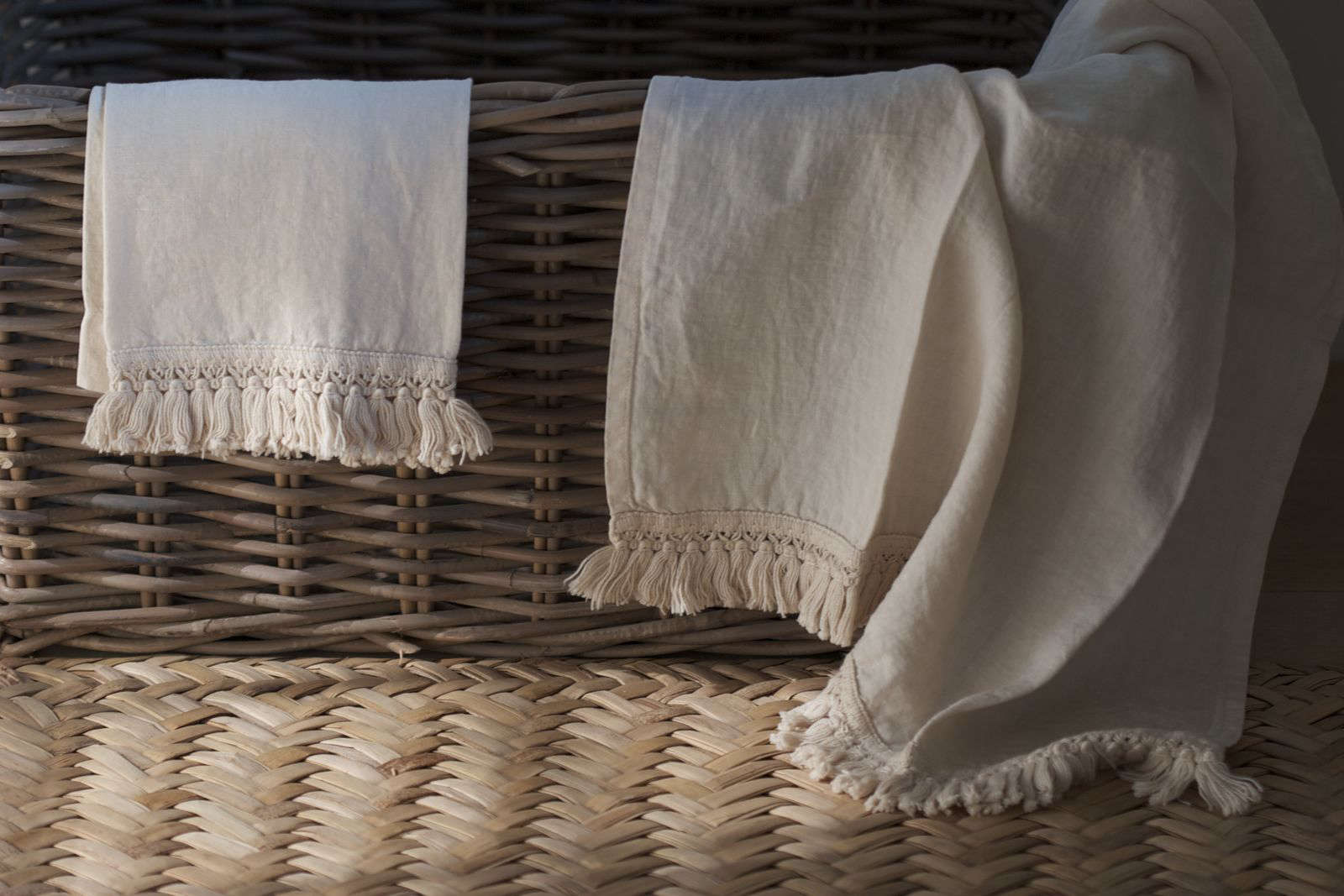
Some towels simply dry your hands. Others quietly persuade your bathroom that it belongs in a sunlit Italian villa. Linen towels with short fringe in cream fall into the second category: practical household textiles that also happen to look effortlessly elegant.
With their natural texture, warm neutral color, lightweight construction, and understated fringe, these towels offer an appealing alternative to thick terry cloth. They fit comfortably into modern, coastal, farmhouse, Scandinavian, rustic, and spa-inspired interiors without looking as though they are trying too hard. That is useful because nothing ruins “effortless style” faster than décor visibly gasping for compliments.
This guide explores what short-fringe cream linen towels are, how they perform, where they work best, what to examine before buying, and how to care for them without turning laundry day into a textile emergency.
What Are Linen Towels With Short Fringe in Cream?
The product name is pleasantly literal. These are towels woven from linen, finished in a pale cream shade, and decorated with a relatively short fringe along one or more edges. Unlike thick cotton bath towels covered in raised terry loops, many linen towels use a smoother, flatter weave.
The phrase is also associated with handmade Italian linen towel collections, including retail listings for Once Milano towels. One listed set contains two sizesapproximately 40 by 60 centimeters and 60 by 100 centimetersand is described as handmade in Italy from linen. Larger heavy-linen beach towels with short fringe are also sold in white and cream, demonstrating how the same design can move from the guest bathroom to the pool deck.
Understanding the Four Parts of the Name
Linen identifies the fiber. True linen is produced from flax, a bast fiber taken from the stem of the flax plant. The Smithsonian documents flax and linen fibers as historically important textile materials, while modern textile references continue to recognize linen for home goods, clothing, and decorative fabrics.
Towels describes the function, although a linen version may feel quite different from a fluffy hotel towel. It is generally thinner, smoother, and easier to fold.
Short fringe refers to the decorative loose threads or compact tassels at the edge. The shorter length supplies texture without producing the dramatic, sometimes unruly tassels found on certain beach blankets and traditional hammam towels.
Cream indicates a warm off-white tone. It is softer than optic white and usually coordinates well with wood, stone, brass, plaster, ceramic, and other natural-looking materials.
Why Linen Works So Well for Towels
It Absorbs Moisture Without Feeling Excessively Heavy
Linen is naturally absorbent, which explains its long history in household textiles. It can take in moisture while maintaining a comparatively crisp, lightweight character. That makes a linen hand towel useful beside a bathroom sink, in a powder room, or near a kitchen prep area where towels are used repeatedly.
Although a flat-woven linen towel will not provide the cloudlike sensation of an 800-GSM cotton towel, it also will not resemble a damp winter coat after one shower. Its appeal is efficiency rather than maximum fluff. Linen references consistently describe the fabric as absorbent, breathable, and capable of becoming softer through washing and use.
It Tends to Dry Quickly
Drying speed is one of the strongest reasons to choose a lightweight linen towel. A flatter weave exposes more surface area to circulating air and contains less bulky material than dense terry cloth. This can be particularly convenient in humid bathrooms, compact apartments, guest rooms, boats, vacation homes, and other places where ventilation is less than perfect.
Testing and guidance covering lightweight Turkish and flat-woven towels show the same practical tradeoff: thinner towels are less plush, but they are compact, airy, versatile, and generally faster to dry. Linen is a different fiber from Turkish cotton, yet the construction principle is similar. Less bulk usually means easier hanging, storage, packing, and air-drying.
It Gets More Comfortable With Use
New linen can initially feel crisp. That is not necessarily a quality defect; it is part of the fiber’s natural personality. Repeated washing and everyday handling tend to relax the fabric, producing a softer and more lived-in surface.
This aging process is one reason linen suits relaxed interiors. The towel does not need to remain perfectly pressed to look attractive. Gentle wrinkles, softened edges, and slight tonal variations can contribute to its character. In other words, linen understands that nobody has time to iron a hand towel before guests arrive.
It Stores and Travels Easily
A stack of flat-woven linen towels generally occupies less shelf space than an equivalent stack of plush terry towels. A larger version can also fit into a beach bag, gym tote, picnic basket, or suitcase without requiring a separate piece of luggage and an emotional support zipper.
The Design Appeal of Short Fringe
Fringe provides movement and softness at the edge of an otherwise simple textile. Long tassels can create a distinctly bohemian or beach-oriented appearance. Short fringe is quieter. It delivers visible craftsmanship while preserving a clean silhouette.
Decorative Without Being Fussy
The fringe can make a solid cream towel feel finished even when no embroidery, stripe, or printed pattern is present. It acts as a small visual break, adding interest to a towel ladder, hook, open shelf, or guest basket.
Well-constructed towel borders also matter for durability. Conventional bath towels often use woven borders to help the fabric retain shape and resist fraying. A fringed linen towel relies on its own edge-finishing method, so buyers should inspect how evenly the fringe is formed and how securely the woven body ends.
Why Short Fringe Is Easier to Live With
Short fringe is less likely than very long tassels to become heavily tangled, drag across a wet counter, or emerge from the washer looking like it spent the evening arguing with a ceiling fan. It still requires reasonable care, but maintenance is usually straightforward when the towel is washed gently and reshaped while damp.
Why Cream Is an Especially Versatile Color
Cream occupies the comfortable space between white and beige. It brightens a room without creating the high contrast of brilliant white, and it introduces warmth without becoming visually heavy.
Neutral bathroom palettes can feel sophisticated and calming when they combine varied materials and textures. Cream linen adds that texture naturally, especially beside marble veining, handmade tile, woven baskets, pale oak, walnut, brushed brass, or matte black fixtures.
Colors That Pair Well With Cream Linen Towels
- Warm white: Creates a layered monochromatic look without making everything appear identical.
- Sage and olive: Adds an organic, garden-inspired mood.
- Terracotta: Brings warmth and Mediterranean character.
- Charcoal: Produces modern contrast while keeping the overall palette soft.
- Dusty blue: Works well in coastal and country interiors.
- Natural wood: Reinforces linen’s relaxed, material-focused appearance.
Texture Prevents a Neutral Room From Looking Flat
A cream room can become boring when every surface is equally smooth. Linen solves this problem with visible slubs, subtle creases, and woven variation. Add a ribbed soap dispenser, stone tray, wooden stool, or woven hamper, and the space gains depth without requiring a single neon accent pillow.
How to Choose Quality Cream Linen Towels
Confirm the Fiber Content
Look for a clear label stating the percentage of linen. A product labeled simply as “linen style” may be made from cotton, polyester, viscose, or a blend. Blends are not automatically inferior, but they may feel, dry, age, and wrinkle differently from pure linen.
Textile products sold in the United States are generally subject to labeling rules that require disclosure of fiber content, manufacturer or marketer identity, and country of origin. Reading the tag is therefore more useful than attempting to identify linen through an intense staring contest.
Choose the Right Size
A small linen towel works well as a guest towel or hand towel. Medium sizes can serve as kitchen towels, hair towels, or compact bath towels. Oversized versions may function as bath sheets, beach towels, throws, sarongs, picnic cloths, or lightweight travel blankets.
Check actual dimensions rather than relying entirely on labels such as “bath towel” or “guest towel.” Sizing conventions vary widely between brands.
Examine the Weave
A dense, even weave tends to feel more substantial and may provide better durability. A looser weave can feel airy and dry rapidly but may require gentler handling. Hold the towel up to the light when possible. Some light transmission is normal, but large gaps, distorted threads, or irregular edges can indicate inconsistent construction.
Inspect the Fringe
The fringe should appear relatively even and intentional. A handcrafted piece may have minor variations, but the woven edge should not already be unraveling into the towel body. Check product photographs closely when shopping online, especially enlarged images of corners and borders.
Consider Prewashed Linen
Prewashed or garment-washed linen usually arrives softer and more relaxed than untreated linen. Crisp, unwashed fabric may appeal to shoppers who prefer structure, but it can change more noticeably during initial laundering. Whatever the finish, follow the manufacturer’s care directions before applying general laundry advice.
Where to Use Short-Fringe Cream Linen Towels
In the Primary Bathroom
Hang a larger towel from a hook or wooden peg rather than folding it into a rigid rectangle. The natural drape and short fringe become part of the décor. Pair it with matching hand towels for a coordinated effect, or mix cream with muted clay, gray, or olive linens for a collected look.
In a Powder Room
This is arguably the perfect setting. A cream fringed hand towel immediately adds texture to a small room, and guests can use it without wrestling with a bulky bath towel. Keep two or three folded towels in a basket so a fresh one is always available.
In the Kitchen
A linen towel can dry glassware, cover rising bread dough, line a serving basket, or handle light cleanup. Reserve separate towels for hand drying and food-related tasks. Cream is beautiful, but tomato sauce sees it as a personal challenge.
At the Beach or Pool
Oversized linen towels are appealing for warm-weather use because they are packable and can double as wraps or lounging cloths. Shake out sand before packing and allow the towel to dry fully before leaving it in a closed beach bag.
As a Decorative Textile
Drape one over the arm of a chair, the end of a bed, a bathroom stool, or an open shelf. A short-fringe linen towel can behave like a miniature throw, bringing softness to hard surfaces without overwhelming the room.
How to Wash and Care for Cream Linen Towels
Read the Care Label First
Brand instructions should take priority because finishes, dyes, fringe construction, and fabric weights differ. Some handmade linen towels are machine washable and are specifically intended to retain a relaxed, unironed look.
Use Cool or Lukewarm Water
Cold or cool water is commonly recommended to protect linen’s dimensions, color, and finish. Hot water can contribute to shrinkage and unnecessary fiber stress. A gentle or permanent-press cycle is usually preferable to an aggressive heavy-duty wash.
Choose a Mild Detergent
Use a modest amount of mild liquid detergent. Too much product may leave residue in the fibers, making the towel feel stiff or less fresh. Wash cream linen with similar pale colors and lightweight textiles to reduce dye transfer, abrasion, and lint contamination.
Be Careful With Bleach and Fabric Softener
Chlorine bleach can weaken fibers or alter a cream finish, so it should not be used unless the care label expressly permits it. Fabric softeners can deposit water-repelling ingredients on textiles, potentially interfering with absorbency. The American Cleaning Institute notes the concern that hydrophobic softener ingredients may affect how fabric takes in water.
Dry Gently
Air-drying is an excellent option. Shake the towel, straighten the edges, lightly separate the fringe with your fingers, and hang it where air can circulate on both sides. When machine drying is allowed, use low heat and remove the towel before it becomes severely overdried.
Laundry experts also recommend allowing towels to hang loosely and dry completely between uses. Leaving damp linen crumpled in a basket invites musty odors and creates a tiny luxury resort for mildew.
Treat Stains Promptly
Blot spills rather than rubbing them deeper into the weave. Apply an appropriate mild stain treatment, rinse thoroughly, and inspect the area before drying because dryer heat can make some stains more difficult to remove. University textile-care guidance similarly emphasizes prompt treatment and checking stains before items enter the dryer.
Skip Ironing for a Relaxed Look
Natural wrinkles suit this style. Smooth the towel by hand while damp and let it dry with its characteristic texture. When a sharper presentation is required, press according to the care label while the fabric remains slightly damp. Avoid ironing directly across loose fringe.
Advantages and Potential Drawbacks
Advantages
- Lightweight and relatively compact
- Absorbent without excessive bulk
- Often faster to air-dry than thick terry towels
- Suitable for bathrooms, kitchens, travel, beaches, and decorative use
- Becomes softer and more relaxed with regular use
- Cream coordinates with a wide range of interior colors
- Short fringe adds texture without oversized tassels
Potential Drawbacks
- Less fluffy and insulating than plush cotton terry
- May feel crisp during the first few uses
- Cream can show makeup, hair dye, or food stains
- Fringe may tangle when washed carelessly
- Premium handmade linen can cost considerably more than ordinary towels
- Natural wrinkles may not appeal to people who want a perfectly pressed appearance
Real-World Experience With Cream Short-Fringe Linen Towels
A realistic ownership experience usually begins with surprise. The package arrives, the towel is unfolded, and the first thought may be, “This is thinner than my bath towel.” That observation is correct. A flat-woven linen towel is not trying to impersonate a fluffy terry robe. Its advantages become clearer during use rather than during the initial squeeze test.
In a frequently used powder room, the difference is noticeable within the first week. The towel hangs neatly from a small hook without dominating the wall. After someone dries their hands, it does not remain heavily saturated for hours. The cream color warms up a white sink and pairs naturally with wood, ceramic, and brass accessories. Even when slightly rumpled, it looks intentional rather than neglected.
The first wash can change the texture. Linen that initially felt crisp may emerge more relaxed, with a softer drape and slightly more visible creasing. The fringe may need a quick shake and a little finger-combing while damp. That takes perhaps ten secondsless time than locating the missing partner of a sock, an investigation that may continue indefinitely.
After several wash cycles, the towel often begins to feel more personal. The weave loosens subtly, the surface feels gentler, and folding becomes easier. Instead of appearing worn out, good linen develops a comfortable, broken-in quality. This is one reason many owners stop worrying about perfectly symmetrical folds. A casual stack often suits the material better.
The cream color performs best when everyday habits are considered. It works beautifully for clean hands and post-shower use, but it is not the ideal towel for removing foundation, mascara, self-tanner, or fresh hair color. Keeping a darker utility washcloth nearby prevents most problems. When a spill occurs, immediate blotting generally produces a better result than allowing the stain to become a permanent historical record.
Travel reveals another advantage. A medium or large linen towel folds into a surprisingly small bundle, leaving more room in a suitcase or beach bag. At the pool, it can serve as a towel, wrap, seat cover, or lightweight layer. After use, it can dry on a balcony or rack without the heavy, waterlogged feeling associated with some oversized terry towels.
There are tradeoffs. On a cold morning, anyone expecting the enveloping warmth of a thick hotel towel may find lightweight linen a little too practical. Some owners therefore use linen hand towels throughout the room but keep plush cotton bath towels for full-body drying. This combination offers the decorative character and quick-drying convenience of linen without giving up winter comfort.
The short fringe generally proves easier to manage than long tassels. It adds enough detail to make the towel look handmade and considered, but it is less likely to knot severely or trail into the sink. Gentle washing, low heat, and reshaping while damp are usually sufficient to keep it orderly.
Over time, the most satisfying quality may be versatility. A towel initially purchased for the guest bathroom can migrate to the kitchen, beach bag, garden table, or bedroom chair. It does not look limited to one purpose. That flexibility helps justify a higher price, particularly when the linen is well woven and the edges remain stable after repeated washing.
The overall experience is therefore less about instant plushness and more about long-term ease: faster drying, compact storage, graceful aging, and simple styling. Cream short-fringe linen towels suit people who appreciate useful objects that become more attractive when they are actually usednot objects that demand museum lighting and a strict no-touch policy.
Are Linen Towels Short Fringe Cream Worth Buying?
They are an excellent choice for shoppers who value natural texture, lightweight performance, neutral styling, and multipurpose design. They are especially practical in guest bathrooms, warm climates, compact homes, travel kits, and interiors where conventional terry towels feel visually too heavy.
They may not replace every towel in the house. A thick cotton bath sheet still wins when maximum warmth and plushness are the goal. However, linen towels offer something different: a refined appearance, quick everyday usability, efficient storage, and a fabric that tends to grow more comfortable with time.
Choose a clearly labeled linen product, confirm its dimensions, examine the weave and fringe, and follow the care instructions. With those details handled, a cream short-fringe linen towel can be both a hardworking household textile and an easy decorative upgradeproof that even the humble hand towel can have excellent taste.
Note: Product construction and care requirements vary. Always follow the manufacturer’s label, especially for handmade, dyed, prewashed, or blended linen towels.