If phone shopping were a cooking show, Samsung’s Galaxy A Series would arrive with a full pantry: big screens, multiple cameras, huge batteries, several price points, and enough model names to make a spreadsheet blush. Apple’s iPhone 16e would walk in with one very sharp knife, one excellent pan, and the confidence of someone who knows the recipe already works.
That is the real story behind the Samsung Galaxy A Series vs iPhone 16e comparison. Samsung gives shoppers choice. Apple gives shoppers focus. The Galaxy A lineup, including models such as the Galaxy A16 5G, Galaxy A26 5G, Galaxy A36 5G, and Galaxy A56 5G, targets budget and mid-range buyers who want modern Android features without paying flagship prices. The iPhone 16e, meanwhile, is Apple’s more affordable entry into the iPhone 16 family, bringing the A18 chip, Apple Intelligence support, a 48MP Fusion camera, Face ID, USB-C, and the familiar iOS experience.
So which one is better? That depends on what “better” means to you. Faster? The iPhone 16e has the edge. Bigger screen? Samsung usually wins. More cameras? Samsung. Longer software polish inside Apple’s ecosystem? iPhone. Better value at the checkout counter? Galaxy A Series, especially if your budget is below $500. Let’s break it down without turning the spec sheet into a bedtime story.
Quick Verdict: Galaxy A Series or iPhone 16e?
The iPhone 16e is the better pick for users who want powerful performance, excellent video quality, Apple Intelligence, long-term iOS support, strong privacy controls, and smooth integration with AirPods, Apple Watch, Mac, iPad, iMessage, and FaceTime. It feels like a “real iPhone,” not a stripped-down emergency phone your carrier found in a drawer.
Samsung’s Galaxy A Series is better for users who want more hardware for less money. Many A-series phones offer larger 6.7-inch Super AMOLED displays, smoother 90Hz or 120Hz refresh rates, big 5,000mAh batteries, multiple rear cameras, expandable or larger storage options on some models, and lower starting prices. If you stream videos, scroll social media, take casual photos, and want a screen the size of a small airport runway, Samsung makes a very convincing case.
Price and Value: Samsung Gives You More Doors to Enter
The iPhone 16e launched at $599 in the United States with 128GB of storage, with higher storage options costing more. That price is lower than the standard iPhone 16, but it is not exactly “cheap.” It is more like Apple saying, “We made a budget iPhone, but we still wore a blazer to the meeting.”
Samsung’s Galaxy A Series covers a much wider price range. Entry-level models like the Galaxy A16 5G have typically competed around the $200 category, while mid-range models such as the Galaxy A36 5G and Galaxy A56 5G climb higher with better displays, faster charging, stronger durability, and more advanced camera features. This means Samsung can serve students, casual users, parents buying for teens, budget-conscious professionals, and people who simply refuse to spend flagship money on a device that may eventually meet a sidewalk.
From a value perspective, Samsung wins if your main goal is to spend less while still getting a modern smartphone. The iPhone 16e wins if you want the lowest-cost path into Apple’s current ecosystem with strong performance and future-ready AI features.
Design and Build: Minimalist iPhone vs Big-Screen Galaxy
The iPhone 16e uses a compact 6.1-inch OLED design with Face ID and a familiar notch. It is smaller and easier to use one-handed than most Galaxy A phones. For people tired of phones that feel like ceramic floor tiles, this matters. It also has an IP68 rating, meaning it offers stronger water and dust resistance than many Galaxy A models.
The Galaxy A Series leans into bigger displays. The Galaxy A26 5G, Galaxy A36 5G, and Galaxy A56 5G all emphasize large 6.7-inch screens, making them great for YouTube, TikTok, maps, gaming, reading, and pretending you are “checking one thing” before losing 40 minutes to short videos. Many newer A-series phones also feature slimmer bezels, flat frames, and cleaner camera layouts that make them look more premium than their price suggests.
Samsung’s higher A-series models often include IP67 water and dust resistance, while lower-end models may have lighter protection such as IP54. Apple still has the durability advantage with the iPhone 16e’s IP68 rating, but Samsung has narrowed the design gap significantly.
Display: Samsung’s Smooth Screens Are Hard to Ignore
This is one of Samsung’s strongest categories. The iPhone 16e has a 6.1-inch Super Retina XDR OLED display with sharp resolution, HDR support, great color, and excellent contrast. It looks crisp and polished, exactly as you would expect from Apple. The downside is refresh rate: it remains a 60Hz display.
Many Galaxy A models offer larger Super AMOLED screens with 90Hz or 120Hz refresh rates. The Galaxy A36 5G, for example, features a 6.7-inch FHD+ Super AMOLED display with a 120Hz refresh rate and strong brightness for outdoor viewing. The Galaxy A56 5G also brings a large 6.7-inch Super AMOLED display with a smooth experience for scrolling and gaming.
In plain English, the iPhone 16e display is sharp and color-rich, but Samsung’s mid-range A phones can feel smoother and more immersive. Once you get used to 120Hz scrolling, going back to 60Hz can feel like watching someone walk through peanut butter.
Performance: The iPhone 16e Has the Muscle
Performance is where Apple swings a very large hammer. The iPhone 16e uses the A18 chip with a 6-core CPU, 4-core GPU, and 16-core Neural Engine. That gives it excellent everyday speed, strong gaming performance, and enough power for Apple Intelligence features. Apps open quickly, video editing is smoother, and demanding tasks are handled with confidence.
Samsung’s Galaxy A Series varies widely. The cheaper models are built for basic use: messaging, browsing, streaming, social media, navigation, and casual gaming. The higher-end models, such as the Galaxy A36 5G and Galaxy A56 5G, use stronger processors and improved cooling, making them much better for multitasking and games. Still, even the best Galaxy A models generally do not match the raw processing power of the iPhone 16e.
If you keep a phone for years and want it to feel fast deep into its lifespan, the iPhone 16e is the safer bet. If your usage is mostly social media, videos, email, shopping apps, and photos, a Galaxy A36 5G or A56 5G will feel plenty capable.
Camera Comparison: One Strong iPhone Lens vs Samsung’s Multi-Camera Flexibility
The iPhone 16e has a 48MP Fusion main camera with optical image stabilization and a 2x telephoto-style crop from the main sensor. It does not have an ultrawide lens, which is one of its biggest compromises. However, Apple’s image processing is excellent. Photos tend to look balanced, video quality is strong, and the camera is reliable in the “pull phone from pocket, capture dog doing something ridiculous” scenario.
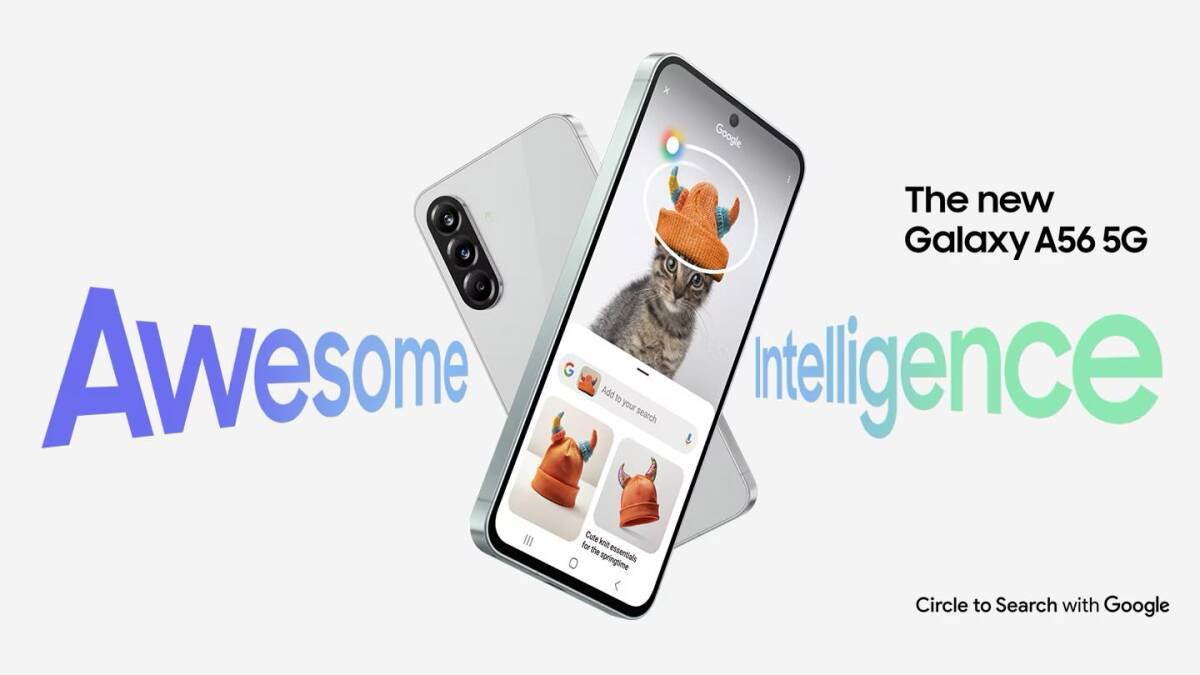
Samsung’s Galaxy A Series usually offers more lenses. The Galaxy A26 5G, Galaxy A36 5G, and Galaxy A56 5G include triple-camera systems, commonly led by a 50MP wide camera and supported by ultrawide and macro lenses depending on the model. The Galaxy A56 5G, for instance, includes a 50MP wide camera, 12MP ultrawide camera, 5MP macro camera, and 12MP front camera.
Samsung wins on versatility. Ultrawide shots are useful for landscapes, rooms, group photos, architecture, and dramatic “look at this huge sandwich” moments. Apple wins on consistency, especially with video, skin tones, processing, and app camera quality in platforms like Instagram, Snapchat, and TikTok.
Battery Life and Charging: Samsung Brings the Big Tank
The iPhone 16e is rated for up to 26 hours of video playback and benefits from Apple’s efficient A18 chip and Apple C1 modem. For most users, it can comfortably last a full day. Apple also added USB-C, which is a welcome change for anyone tired of owning one cable for every device except the iPhone.
Samsung’s Galaxy A Series often uses 5,000mAh batteries, and that is one reason these phones are so popular. The Galaxy A36 5G and Galaxy A56 5G both focus on long battery life, and the A56 5G supports 45W Super Fast Charging. The Galaxy A36 5G also moved to faster 45W charging compared with older A-series models.
Apple’s charging is steady but not thrilling. The iPhone 16e supports fast charging to around 50% in about 30 minutes with a compatible adapter, but it lacks MagSafe. It still supports standard Qi wireless charging, but the missing MagSafe magnets make it less convenient for magnetic chargers, wallets, stands, car mounts, and bedside setups.
For battery size and charging speed, Samsung has the advantage. For efficiency and standby behavior, the iPhone 16e remains excellent.
Software and Updates: iOS Simplicity vs Android Flexibility
The iPhone 16e runs iOS and supports Apple Intelligence. That means features such as Writing Tools, notification summaries, smarter photo cleanup, and improved Siri-related experiences are part of the package. The real strength, though, is Apple’s ecosystem. If you use a Mac, iPad, Apple Watch, AirPods, iCloud, iMessage, or FaceTime, the iPhone 16e fits in like it already had a key to the house.
Samsung’s Galaxy A Series runs Android with One UI. Newer models such as the Galaxy A26 5G, A36 5G, and A56 5G offer up to six generations of OS upgrades and six years of security updates, which is a major improvement for budget and mid-range Android phones. Samsung also includes useful features like Quick Share, Samsung Wallet, Knox security, Modes and Routines, Object Eraser, Circle to Search on supported models, and deep customization.
Choose iPhone if you want simplicity, privacy polish, long-term app consistency, and Apple ecosystem magic. Choose Galaxy A if you want more control over your home screen, default apps, file management, split-screen multitasking, and device customization.
AI Features: Apple Intelligence vs Galaxy AI-Style Tools
The iPhone 16e is important because it brings Apple Intelligence to a lower-priced iPhone. That gives buyers access to Apple’s AI direction without needing to buy an iPhone Pro. The A18 chip and Neural Engine make the 16e feel future-ready, especially as AI features continue to expand through iOS updates.
Samsung’s newer Galaxy A models include selected intelligent tools rather than the complete flagship Galaxy AI package found on premium Galaxy S and Z devices. Features such as Circle to Search, Object Eraser, Filters, Auto Trim, and Best Face on supported A-series models are practical and easy to understand. Samsung’s approach is less about sounding futuristic and more about helping you fix photos, search what is on screen, and edit content without needing a degree in software wizardry.
Apple has the stronger AI hardware foundation in the iPhone 16e. Samsung has useful everyday AI features spread across several affordable models. Neither phone will make your coffee yet, which is rude, frankly.
Storage, Ecosystem, and Everyday Use
The iPhone 16e starts with 128GB and also comes in higher storage options. There is no microSD card slot, which is normal for iPhones. Apple wants you to choose your storage upfront and then possibly become very familiar with iCloud notifications later.
Some Galaxy A phones offer more flexible storage configurations, and certain lower or regional models may support microSD expansion. That can be a major benefit for people who store lots of photos, videos, downloads, music, or offline Netflix episodes for long trips. Samsung also plays nicely with Windows PCs, Google services, Galaxy Buds, Galaxy Watch, Samsung TVs, and SmartThings devices.
For everyday use, the iPhone 16e is smoother if you live in Apple’s world. The Galaxy A Series is more adaptable if your digital life is spread across Google, Windows, Samsung, and other platforms.
Gaming and Entertainment
The iPhone 16e has stronger gaming performance because of the A18 chip. It can handle demanding games better than most Galaxy A phones, especially over the long term. If mobile gaming is a serious hobby and not just something you do while waiting for pasta water to boil, Apple’s chip advantage matters.
Samsung’s advantage is the screen. A large 6.7-inch 120Hz AMOLED display can make games, videos, and social feeds look more immersive, even if the processor is not as powerful. For casual gaming and streaming, the Galaxy A36 5G or A56 5G may actually feel more enjoyable because of the bigger, smoother display.
In short: iPhone 16e for performance, Galaxy A for the viewing experience.
Who Should Buy the iPhone 16e?
Buy the iPhone 16e if you want the most affordable modern iPhone experience with serious performance. It is ideal for users upgrading from an older iPhone SE, iPhone 11, iPhone 12, or iPhone 13 who want better battery life, Face ID, USB-C, Apple Intelligence, and a much improved camera without jumping to the standard iPhone 16 or a Pro model.
It is also the better choice for families already using iMessage, FaceTime, AirDrop, Find My, Screen Time, Apple Watch, and iCloud. Apple’s ecosystem may be a walled garden, but to be fair, the grass is trimmed very neatly.
Who Should Buy a Samsung Galaxy A Series Phone?
Buy a Samsung Galaxy A Series phone if you want more screen, more camera options, more price choices, and more Android flexibility. The Galaxy A16 5G is best for tight budgets. The Galaxy A26 5G is a strong step up for entertainment and everyday use. The Galaxy A36 5G is one of the most balanced options, with a smooth 120Hz AMOLED screen, long update support, good durability, and a large battery. The Galaxy A56 5G is the best pick if you want the most premium A-series experience without paying flagship Samsung prices.
Samsung is especially attractive for students, casual users, Android fans, and anyone who watches a lot of video. If your phone is basically your TV, notebook, camera, wallet, GPS, and boredom-defense device, the Galaxy A Series gives you a lot for the money.
Real-World Experience: Living With These Phones Day to Day
On paper, the iPhone 16e and Galaxy A Series comparison looks like a neat battle of specs. In real life, it feels more like choosing between two lifestyles. The iPhone 16e is quiet, fast, and predictable. You unlock it with Face ID, open apps, answer messages, take photos, and move through the day with very little friction. It is the phone equivalent of a reliable friend who shows up on time and already knows where to park.
The biggest everyday advantage of the iPhone 16e is confidence. You rarely wonder whether an app will work well. You rarely worry about video quality. You rarely need to adjust settings to get a good photo. If your family uses iMessage and FaceTime, the social pressure alone may push you toward iPhone. Blue bubbles are not a technical feature, but in the United States, they sometimes behave like one.
The Galaxy A Series feels different. It is more generous physically. The screen is larger. The battery feels reassuring. The interface gives you more choices. You can customize your layout, use split-screen apps, change default apps, manage files more freely, and tune the phone to your habits. It feels less locked down and more personal. Of course, that also means there are more settings, more menus, and occasionally more “why is this notification here?” moments.
For media consumption, the Galaxy A phones are often more fun. A 6.7-inch AMOLED display with a smooth refresh rate makes scrolling, reading, and watching videos feel modern. If you spend hours on YouTube, Netflix, TikTok, sports highlights, recipes, or online shopping, Samsung’s big-screen approach is easy to love. The iPhone 16e’s 6.1-inch screen is sharper than it is exciting. It is excellent, but it does not have the same couch-friendly, binge-friendly feel.
For photography, the experience depends on your habits. The iPhone 16e is excellent for quick shots, portraits, food, pets, kids, and video clips. It is reliable in the way Apple cameras usually are. Samsung’s A-series phones are more flexible because they often include ultrawide and macro lenses, but results can vary more depending on lighting and model. In bright daylight, Samsung can look vibrant and punchy. In tricky lighting, Apple often feels more natural and consistent.
Battery life is another daily difference. Galaxy A phones with 5,000mAh batteries are built for people who do not want to babysit a battery icon. The iPhone 16e is efficient and capable, but Samsung’s larger battery and faster charging on models like the A36 5G and A56 5G can be more convenient for heavy users. If you routinely leave home at 8 a.m. and come back at 10 p.m., Samsung’s battery-first design may feel less stressful.
After a few weeks, the decision becomes clear. The iPhone 16e is better if you value speed, simplicity, app polish, privacy, and Apple ecosystem benefits. The Galaxy A Series is better if you value display size, affordability, battery capacity, camera flexibility, and Android freedom. Neither is perfect. The iPhone 16e should have had a higher refresh rate and MagSafe. Some Galaxy A models could use stronger processors and more consistent cameras. But both make sense for different buyers, and that is the point.
Final Verdict
The iPhone 16e is not the cheapest phone in this comparison, but it is the performance champion. It brings the A18 chip, Apple Intelligence, excellent video quality, strong privacy, USB-C, and years of iOS relevance in a compact package. If you want an iPhone and do not want to pay flagship prices, it is the obvious entry point.
Samsung’s Galaxy A Series is the better value playground. It gives shoppers more choices, bigger displays, smoother refresh rates, strong battery life, multiple cameras, and lower prices. The Galaxy A36 5G and Galaxy A56 5G are especially compelling for buyers who want premium-feeling features without premium-phone financial drama.
So, Samsung Galaxy A Series vs iPhone 16e: which should you buy? Choose the iPhone 16e if you want speed, iOS, Apple Intelligence, and ecosystem reliability. Choose Samsung Galaxy A if you want more screen, more battery, more flexibility, and more phone for less money. Either way, your old phone with the cracked screen and mysterious battery percentage has suffered enough. Let it retire with dignity.
SEO Tags
Note: This article is written for web publishing in standard American English and is based on current official product specifications and reputable technology review information available at the time of writing.