Some kitchens whisper. Some kitchens politely clear their throat. And then there is the cheerful kitchen in Echo Park that practically throws open the door, hands you coffee, and says, “Yes, the shelf brackets are brass. No, we are not apologizing for the yellow.”
Inspired by the sunny, compact Los Angeles kitchen associated with designer Beatrice Valenzuela and artist-designer Ramsey Conder, this look is proof that a small kitchen does not need to behave like a sad storage closet with a sink. It can be bright, hardworking, colorful, personal, and surprisingly calm all at once. The secret is not buying every decorative object within a six-mile radius of Sunset Boulevard. The secret is editing: warm wood, white walls, open shelving, brass accents, handmade tile, practical tools, and a few confident hits of color.
This guide breaks down how to steal the look without copying it like a nervous intern with a clipboard. We will study the design logic behind the space, explain why the elements work together, and show how to recreate the mood in your own kitchenwhether you live in a 1920s California bungalow, a city apartment, a rental, or a suburban home where the builder beige is still emotionally present.
Why This Echo Park Kitchen Works
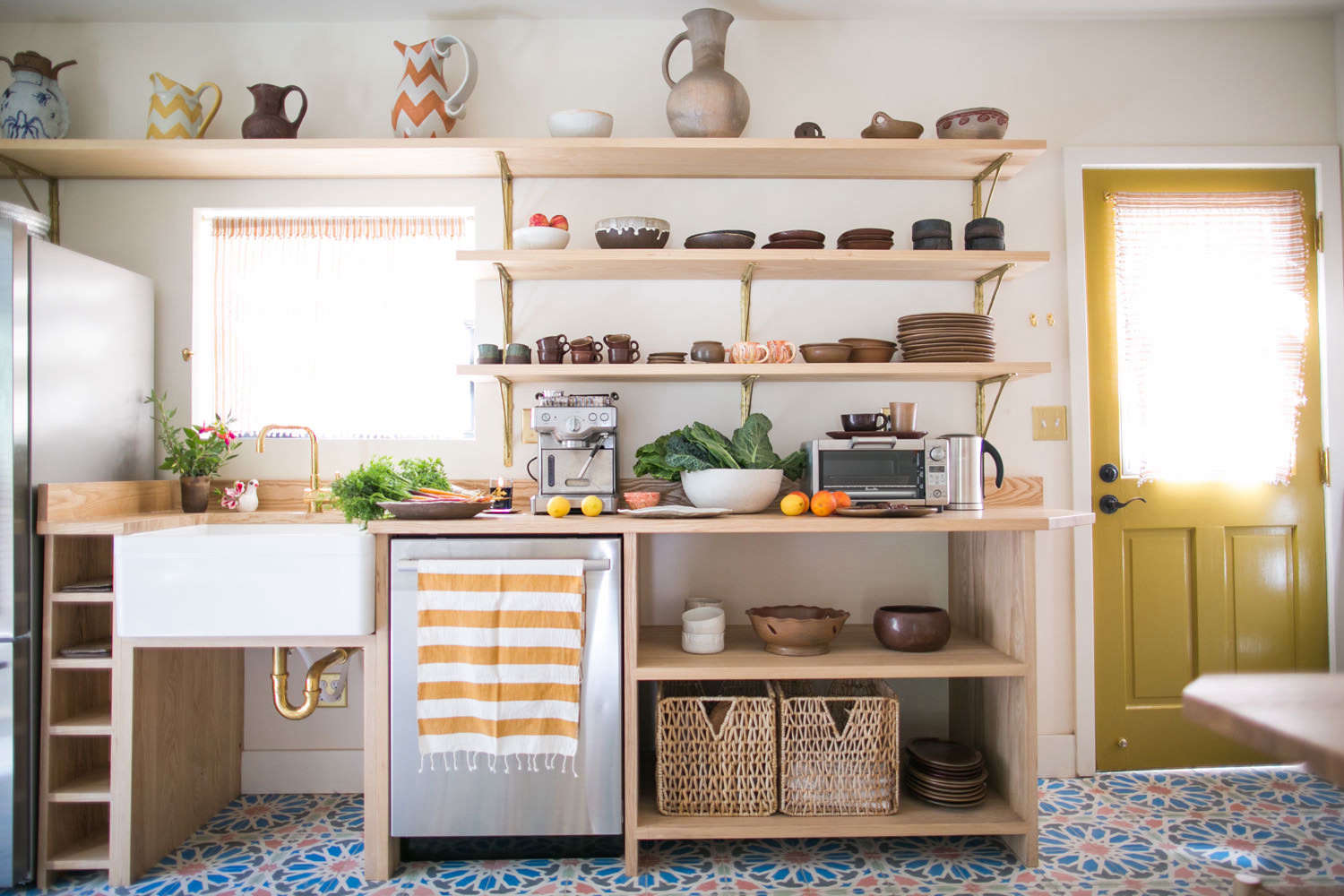
The charm of this cheerful kitchen comes from contrast. It is modest in size but generous in personality. It uses a simple white backdrop, then layers in warm ash wood, golden-yellow accents, ocean-blue tile tones, brass and bronze hardware, a farmhouse-style sink, and ceramics that feel collected rather than staged. Nothing screams for attention, but everything seems to have a little story. That is the design equivalent of good dinner conversation.
Echo Park homes often carry a mix of old Los Angeles soul, hillside informality, creative energy, and indoor-outdoor ease. In this kitchen, that spirit shows up through materials that feel touched by hand. The open ash shelving keeps dishes, pottery, towels, and tools visible. Brass hooks turn basic storage into decoration. A compact wall-mounted breakfast table makes the most of limited space. The room is practical, but it refuses to be boring. Bless it.
The Core Design Formula
To recreate this look, think in layers rather than products. The kitchen is not about one exact faucet or one exact tile. It is about a formula:
- White or warm-white walls for visual breathing room
- Natural wood surfaces for warmth and texture
- Open shelving for function and display
- Brass or bronze details for glow
- Handmade or handmade-looking tile for color
- Ceramics, towels, and small objects that add personality
- A compact eating area or breakfast ledge if space allows
The result is a kitchen that feels sunny without being chaotic, colorful without becoming a circus tent, and useful without looking like a restaurant supply aisle had a nervous breakdown.
Start with a Clean White Canvas
White walls are the quiet hero of this look. They make the small kitchen feel brighter, help the wood and brass stand out, and allow colorful pieces to shine without turning the room into visual soup. The key is to avoid a harsh, blue-white paint that feels like an operating room. A warm white or soft off-white usually works better, especially when paired with natural wood and yellow tones.
If your kitchen gets plenty of natural light, a creamy white can keep the space relaxed. If your kitchen is darker, consider a lighter warm white with enough reflectance to bounce light around. The goal is not sterile perfection. The goal is “sunny morning in Los Angeles,” not “forgotten hallway in a municipal building.”
How to Apply It
Paint the walls, trim, or even upper shelving background in a cohesive white shade. Keep the ceiling light as well. If you have old cabinets that cannot be replaced, paint the surrounding walls warm white and let the cabinetry become one of the room’s textures rather than the whole personality.
Bring in Warm Wood
Natural wood is what keeps this cheerful kitchen grounded. Ash shelving and wood counters bring warmth, grain, and craft to the room. The wood balances the cooler notes of blue tile and the brightness of white walls. It also makes the space feel more human. In a small kitchen, wood can be the difference between “efficient” and “I actually want to make toast here.”
Ash, white oak, maple, and birch are all good choices for a similar pale-to-medium wood effect. If custom shelving is outside your budget, install sturdy floating shelves or bracketed wood shelves. The shelves do not need to be fancy; they need to be well-proportioned, properly anchored, and finished for kitchen use.
Wood Countertop Tips
Wood counters are beautiful, but they are not magic. They need sealing, cleaning, and a little common sense. Use cutting boards, wipe spills quickly, and avoid letting water sit around the sink. If you love patina, wood is your friend. If one tiny mark makes you spiral into a three-act tragedy, consider wood shelves instead of wood countertops.
Use Open Shelving, But Be Honest With Yourself
Open shelving is one of the signature moves in this kitchen. It makes a small room feel lighter because it removes the visual bulk of upper cabinets. It also keeps everyday objects easy to reach. Plates, bowls, jars, pitchers, mugs, and hand tools can become part of the design.
But open shelving has one tiny requirement: you must edit. If every novelty mug, plastic souvenir cup, and mysterious lid from 2014 goes on display, the look collapses quickly. The Echo Park approach works because the visible items are useful, attractive, and arranged with restraint.
What to Put on Open Shelves
Start with everyday pieces: white plates, simple bowls, glassware, a few mugs, and a pitcher. Add ceramics in yellow, blue, terracotta, or cream. Keep the color palette tight. Use baskets or lidded containers for smaller items. Leave breathing room between objects. Negative space is not wasted space; it is the thing that keeps your kitchen from looking like a yard sale with plumbing.
What Not to Put on Open Shelves
Skip greasy appliances, mismatched plastic containers, half-empty supplement tubs, and anything you do not want to dust. Open shelving is best for items you use often, because regular use keeps dust from staging a hostile takeover.
Add Brass and Bronze for a Warm Glow
Brass and bronze fittings are central to the cheerful Echo Park kitchen mood. They add warmth, depth, and a slightly artisanal sparkle. A brass faucet, bronze shelf brackets, metal hooks, or a small sconce can make simple materials feel intentional and special.
The trick is not to overdo it. You are not decorating a pirate ship. Choose two or three places for warm metal: faucet, brackets, hooks, light fixture, or cabinet hardware. Unlacquered brass will darken and patina over time, which is part of its charm. Polished brass stays brighter but needs more maintenance if fingerprints make you twitch.
Budget-Friendly Brass Ideas
If a high-end brass faucet is not in the budget, try brass hooks, a brass rail, cabinet knobs, switch plates, or a small wall light. Even a few warm metal details can shift the whole kitchen from generic to considered.
Choose Cheerful Tile With Handmade Character
The original inspiration uses a lively mix of warm yellow and bright blue, including Moroccan-style cement tile. This is where the kitchen gets much of its personality. Handmade and handmade-looking tiles bring variation, texture, and movement. They look less perfect than machine-flat surfaces, which is exactly the point.
Blue and yellow are a classic pairing because they balance each other beautifully. Yellow brings warmth and optimism. Blue cools the room down and keeps the palette from becoming too sugary. Together, they feel sunny, coastal, and a little bohemianbasically Echo Park after a good night’s sleep.
Tile Options to Consider
If you want the full effect, use patterned cement tile on a small backsplash, behind a sink, or along a compact work zone. If that feels too bold, choose a blue handmade subway tile or zellige-style tile and add yellow through paint, towels, pottery, or a door. For renters, peel-and-stick tile can suggest the mood without requiring a security-deposit funeral.
Paint One Feature in Golden Yellow
A golden-yellow door or accent is a powerful move. Dunn-Edwards Pirate’s Gold is one real-world example of a warm, earthy yellow that feels rich rather than neon. In a kitchen inspired by Echo Park, this kind of color works well because it feels sun-baked, handmade, and slightly vintage.
Use yellow on a pantry door, back door, stool, shelf edge, small cabinet, or breakfast nook. The point is to create a happy punctuation mark. You do not need to paint every surface yellow unless you want your kitchen to feel like it is auditioning to become a lemon.
Install a Farmhouse Sink or Fake the Feeling
A white apron-front fireclay sink fits beautifully into this look. It feels classic, sturdy, and unfussy. It also pairs well with open shelving and exposed details because it has an honest, utilitarian shape. A large single-bowl sink is useful for sheet pans, big pots, and those moments when dishes mysteriously reproduce while you are not looking.
If a farmhouse sink is not realistic for your space, choose a deep white undermount or drop-in sink with a simple silhouette. Pair it with a brass or warm-metal faucet to capture the same balance of function and charm.
Make the Small Breakfast Spot Count
One of the smartest details in the Echo Park kitchen is the compact wall-mounted breakfast table. In a small kitchen, a full dining table can feel like inviting a rhinoceros to brunch. A fold-down table, narrow ledge, or wall-mounted counter gives you a place for coffee, emails, homework, or a quick meal without eating the entire floor plan.
Small-Space Alternatives
Try a drop-leaf wall table, a slim café table, a built-in ledge, or a small bistro set. Add one or two stools that tuck away. If possible, place the eating spot near a window or colorful wall so it feels intentional instead of squeezed in by desperation.
Style With Ceramics, Textiles, and Useful Beauty
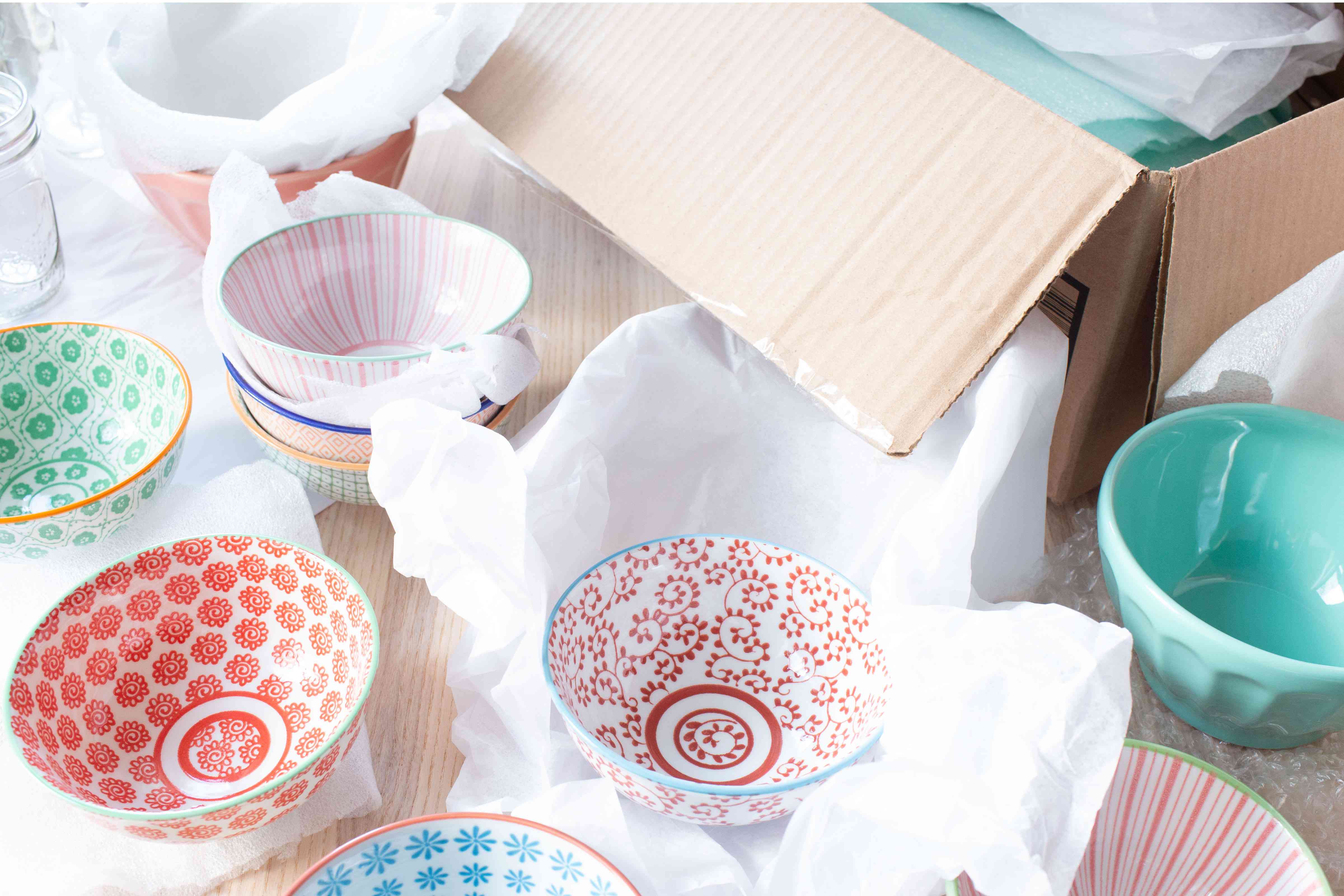
This kitchen succeeds because the decorative pieces are not random. Talavera-style pottery, handmade bowls, colorful pitchers, woven baskets, and patterned towels all support the story. They connect the kitchen to craft, travel, heritage, and daily ritual. They also bring color in a flexible way. If you get tired of a towel, you can change it. If you get tired of tile, you need tools, money, and emotional support.
Look for ceramics in cobalt blue, golden yellow, cream, terracotta, and green. Mix sizes, but repeat colors. Hang beautiful hand towels where they can be seen. Use a small vase for herbs or flowers. Choose a broom, dustpan, or brush that looks good enough to hang on the wall. In an open kitchen, even cleaning tools are part of the cast.
Lighting: Small Fixtures, Big Mood
Lighting should feel warm, flattering, and practical. A brass sconce, simple pendant, or wall-mounted fixture can add glow without taking up counter space. In a compact kitchen, layered lighting matters. You want general light for cooking, task light for prep, and a little atmospheric light for the evening, when the dishes are done and you are pretending tomorrow’s breakfast will not create more.
Best Bulb Temperature
For this style, warm white bulbs usually work best. Aim for light that flatters wood, brass, and yellow paint. Very cool bulbs can make the room feel clinical and can flatten the warmth of the materials.
How to Steal the Look on Different Budgets
Under $250
Paint one door or small wall area golden yellow. Add two brass hooks, new tea towels, a blue-and-white pitcher, a wooden cutting board, and a small piece of art. Edit your shelves or counters ruthlessly. This version is less renovation and more “personality transplant.”
Under $1,000
Add wood open shelves, quality brackets, a brass rail, a new faucet if plumbing allows, handmade-style ceramics, and warm under-shelf lighting. Paint the walls warm white. This level can significantly change the mood without tearing the kitchen apart.
Renovation Budget
Consider ash or white oak shelving, a fireclay sink, brass or bronze fixtures, a patterned cement tile backsplash, wood countertops, and a custom breakfast ledge. Keep the layout simple and spend on tactile details. The magic is in the touch points: faucet, shelf, hook, tile, towel, cup.
Common Mistakes to Avoid
Too Many Colors
Cheerful does not mean every color gets a speaking role. Stick to white, warm wood, brass, yellow, blue, and perhaps terracotta or green as supporting tones.
Too Much Open Storage
Open shelving works best when balanced with hidden storage. Keep pantry chaos, appliances, and backup supplies behind doors if possible. Nobody needs to see your emergency pasta collection unless it is emotionally important to you.
Ignoring Maintenance
Wood, brass, and handmade tile age beautifully, but they do age. Choose them because you like character, not because you expect showroom perfection forever.
Buying Everything New
The Echo Park look feels collected. Mix new pieces with vintage finds, handmade ceramics, old baskets, flea-market art, and objects from local makers. Too much newness can make the room feel like a catalog page that has never met an onion.
Experience Notes: Living With a Cheerful Echo Park Kitchen Look
Here is the real-life part: a cheerful kitchen changes how you behave. When a kitchen has open shelves, warm wood, good light, and objects you actually like looking at, you tend to use it differently. You make coffee more slowly. You put fruit in a bowl instead of abandoning it in the plastic bag. You may even wash a mug immediately because it is part of the view. Miracles happen.
The best experience with this style comes from treating the kitchen as a living workspace, not a museum. Open shelves should hold the bowls you reach for every morning. The pitcher should pour water, not sit there like a ceramic celebrity. The tea towel should dry hands. The brass hooks should hold tools. The breakfast ledge should catch toast crumbs, laptops, elbows, and the occasional very serious conversation about what to eat for dinner even though everyone knows it will be tacos.
In daily use, the happiest detail is often the color. A golden door or blue tile backsplash gives the eye somewhere pleasant to land. On gray mornings, yellow helps. During busy weeks, a bright kitchen can make routine tasks feel less like chores. It is not that paint solves life. Paint is not therapy. But a warm color in the right place can make dishwashing feel slightly less dramatic, and that is not nothing.
Open shelving also teaches discipline in a gentle but firm way. You quickly learn which objects deserve to be visible. The chipped mug from a conference you barely remember? Probably not. The handmade bowl you use for oatmeal, berries, and late-night popcorn? Absolutely. Over time, the shelves become a record of your habits. The kitchen starts to look like you, but ideally the edited version of youthe one who owns matching plates and knows where the measuring spoons are.
For families, this design can be especially useful because visibility reduces friction. Kids can see bowls. Guests can find glasses. Cooking tools are within reach. The kitchen becomes intuitive. There is less opening of random cabinets and more “Oh, it’s right there.” That small shift can make the space feel welcoming instead of guarded.
The caution is that cheerful design must still support real life. If you fry food often, do not place delicate display pieces near the stove. If you hate dusting, limit open shelves to one wall. If your kitchen is tiny, prioritize a few beautiful functional objects instead of crowding every surface. The goal is a room that feels joyful on a Tuesday, not just photogenic for five minutes after you hide everything in the oven.
Ultimately, the Echo Park kitchen look works because it respects both beauty and use. It says a small kitchen can be artistic, but it still has to make breakfast. It can have brass jewelry, but it still needs a place for the sponge. It can be sunny, soulful, and a little bohemian without losing the plot. That is the experience worth stealing.
Conclusion
To steal the look of a cheerful kitchen in Echo Park, focus on warmth, craft, and smart restraint. Start with a white canvas, add natural wood, use open shelving thoughtfully, choose brass or bronze accents, bring in handmade-style tile, and finish with ceramics and textiles that feel personal. The design is not about perfection. It is about a kitchen that looks loved, works hard, and greets the day with a little golden swagger.
Whether you are planning a full remodel or just trying to rescue your kitchen from the land of “fine, I guess,” this style offers practical lessons. Use color with confidence. Let everyday tools be beautiful. Make small spaces work harder. And remember: a cheerful kitchen does not need to be huge. It just needs character, light, and a few details that make you happy before the coffee kicks in.
Note: This article is written as original web-ready content in standard American English and is based on real design details, current kitchen design practices, and practical remodeling experience.