Shoes are funny little rebels. You buy them in pairs, place them neatly by the door, and somehow by Tuesday they have formed a small village across the entryway. One sneaker is under the console table, one boot is leaning dramatically against the wall, and a sandal has chosen a new life behind the umbrella stand. If your front door looks like a footwear traffic jam, adding shoe storage by the door is one of the simplest upgrades you can make to your home.
The good news? You do not need a mansion-sized mudroom, a custom carpenter, or a reality-show renovation budget. With the right entryway shoe storage, even a narrow hallway, apartment foyer, garage entrance, or tiny front-door corner can become organized, attractive, and easier to use every day. The goal is not just to hide shoes. The goal is to create a smooth landing zone where your household can come in, kick off, grab what they need, and leave without performing an obstacle course in socks.
This guide covers practical shoe storage ideas by the door, from slim shoe cabinets and storage benches to baskets, boot trays, wall-mounted options, cubbies, and family-friendly systems. We will also look at what works best for small spaces, busy households, renters, pet owners, and anyone who has ever whispered, “Whose shoe is this?” while holding a mysterious single loafer.
Why Shoe Storage By The Door Matters
Adding shoe storage near the entryway is not only about making the area look pretty for guests. It supports daily routines, protects floors, reduces clutter, and helps keep dirt from traveling through the home like it has a passport.
Most homes need a “drop zone” near the entrance. This is the place where shoes, coats, keys, bags, umbrellas, dog leashes, and everyday items naturally land. If there is no clear system, the floor becomes the system. Unfortunately, the floor is not a very sophisticated organizer. It accepts everything and sorts nothing.
The Main Benefits
A good front door shoe storage setup can help you:
- Keep shoes off walking paths and reduce tripping hazards.
- Protect hardwood, tile, laminate, and carpet from mud, water, and grit.
- Make mornings faster because everyday shoes are easy to find.
- Create a cleaner first impression when guests enter.
- Give every household member a clear place for their footwear.
- Make small entryways feel more intentional and less chaotic.
In other words, shoe storage is not just décor. It is tiny household management with shelves.
Start With The Real Problem: How Many Shoes Actually Live By The Door?
Before buying a shoe rack, bench, cabinet, or stylish woven basket that looks like it belongs in a magazine spread, count the shoes that truly need to stay near the door. This step is less glamorous than shopping, but it saves you from buying a cute organizer that holds six pairs when your family owns enough sneakers to outfit a small marching band.
For most homes, the entryway should hold only daily-use shoes. Think sneakers, school shoes, work shoes, rain boots, sandals in summer, or snow boots in winter. Dress shoes, out-of-season boots, hiking shoes, and special-occasion footwear can usually live in bedroom closets, under-bed storage, or labeled bins.
A Simple Shoe Audit
Try this quick method:
- Gather all shoes currently near the door.
- Remove anything that is broken, outgrown, uncomfortable, or rarely worn.
- Group the remaining shoes by person and season.
- Choose a realistic limit, such as two or three pairs per person at the entry.
- Store the rest elsewhere.
This one step can cut entryway clutter in half before you buy a single storage piece. Shoe storage works best when it is not asked to perform miracles. Even the strongest cabinet cannot save a doorway if every family member insists on keeping twelve pairs there “just in case.”
Best Shoe Storage Ideas By The Door
The best shoe storage by the door depends on your layout, style, budget, and household habits. Some people love hidden storage. Others need open shelves because if shoes disappear behind a door, they become emotionally unavailable. Here are practical options that work in real homes.
1. Entryway Shoe Storage Bench
A shoe storage bench is one of the most useful choices for a front entry, mudroom, or garage entrance. It combines seating with storage, which is especially helpful for kids, older adults, or anyone who prefers not to hop on one foot while wrestling with a boot.
Look for a bench with open shelves, pull-out drawers, cubbies, or baskets underneath. Open shelves are best for shoes used every day because they allow quick access and better airflow. Drawers and baskets create a cleaner look but may need labels if multiple people use them.
For a small entryway, choose a narrow bench that does not block the door swing or walking path. Measure carefully before buying. A bench that looks perfect online can become a shin-bruising monument if it sticks too far into a hallway.
2. Slim Shoe Cabinet
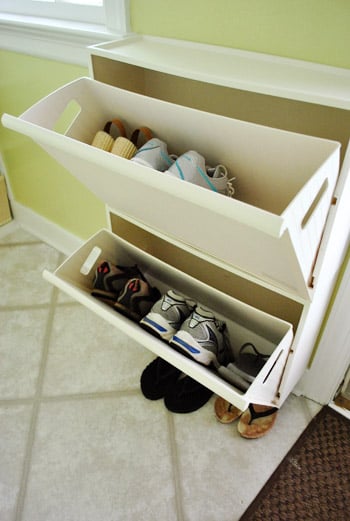
A slim shoe cabinet is ideal when you want hidden shoe storage near the door without making the entry feel crowded. Many cabinets use tilt-out compartments, which allow shoes to stand vertically inside a shallow frame. This design works well in apartments, narrow foyers, and hallways where every inch matters.
The biggest advantage is visual calm. Closed doors hide mismatched sneakers, muddy soles, and the mysterious flip-flop collection that nobody admits owning. The top of the cabinet can also work as a landing spot for keys, sunglasses, mail, or a small tray.
One caution: measure shoe size and cabinet depth. Some slim cabinets are better for flats, sandals, and low-profile sneakers than bulky boots or large athletic shoes. If your household wears lots of high-tops or winter boots, choose adjustable compartments or combine the cabinet with a boot tray.
3. Open Shoe Rack
The classic shoe rack remains popular because it is simple, affordable, and easy to move. A two-tier or three-tier rack can fit under a console table, inside a coat closet, beside a bench, or along a garage wall.
Open shoe racks are excellent for ventilation, especially when shoes are damp. They also make it obvious where shoes belong. This matters because the easier a system is, the more likely people will use it. If putting shoes away requires opening three doors and solving a puzzle, the shoes will simply stay on the floor and laugh at your optimism.
Choose metal, bamboo, or easy-clean materials for high-traffic areas. For a polished look, avoid overloading the rack. Leave a little breathing room so it looks organized rather than like a shoe buffet.
4. Baskets For Casual Shoe Storage
Baskets are a relaxed and attractive option for families, renters, and busy households. A large woven basket or sturdy fabric bin can hold kids’ shoes, flip-flops, slippers, or sports footwear near the door.
The beauty of basket storage is speed. Shoes go in. Done. No alignment. No shelf politics. No one has to decide whether the left sneaker deserves to face east.
However, baskets work best for casual shoes, not delicate footwear. If you toss leather dress shoes or heels into a deep basket, they can become scratched or misshapen. Use baskets for rugged everyday pairs and keep finer shoes in a closet or cabinet.
5. Boot Tray With A Mat
A boot tray is a small hero during rainy, snowy, or muddy seasons. Place it beside the door, in a mudroom, or near the garage entry to catch water, salt, leaves, and dirt. Pair it with a durable mat so shoes can dry before being stored.
Boot trays are especially helpful for families with kids, gardeners, dog walkers, or anyone who lives in a climate that enjoys turning sidewalks into soup. Choose a tray with raised edges to contain drips. For style, look for rubber, metal, stone-look, or textured plastic designs.
A smart setup is to keep wet shoes on the tray temporarily, then move dry shoes into shelves or cubbies later. This prevents moisture from sitting inside cabinets, where odors can build up.
6. Hall Tree With Shoe Storage
A hall tree is like the Swiss Army knife of entryway furniture. It often combines coat hooks, a bench, shelves, cubbies, and shoe storage in one vertical unit. For homes without a mudroom, a hall tree can create a mini mudroom against a blank wall.
This option works beautifully for families because each person can have a hook, a cubby, and a shoe spot. Add baskets for gloves, hats, pet supplies, or sports gear. The vertical design makes good use of wall height, which is important in small spaces.
Before choosing a hall tree, check the width, depth, and height. Make sure the unit will not crowd the door or make the entry feel boxed in. If the piece is tall and freestanding, use wall anchors for safety.
7. Over-The-Door Shoe Organizer
If you have a coat closet near the entrance, an over-the-door shoe organizer can add instant vertical storage. Pocket-style organizers work well for lightweight shoes, sandals, slippers, hats, gloves, scarves, and small accessories.
This is a smart solution for renters because it usually requires no drilling. It also keeps shoes off the floor and uses space that often goes completely ignored. For a cleaner look, place the organizer on the inside of a closet door rather than the main front door.
8. Built-In Cubbies
Built-in cubbies are the dream solution for mudrooms and larger entryways. They create dedicated spaces for shoes, bags, coats, and seasonal items. Each family member can have a personal cubby, which reduces the classic morning question: “Where is my other shoe?”
Built-ins can be custom-made, but you can also create a similar look with modular storage units, cube organizers, or ready-made benches with compartments. Add labels for kids or use picture labels for younger children. The more obvious the system, the better it performs.
How To Choose The Right Shoe Storage For Your Entryway
Adding shoe storage by the door is easier when you match the solution to the space instead of forcing the space to obey the furniture. Every entryway has its own personality. Some are wide and welcoming. Some are tiny strips of floor that barely tolerate a doormat. Both can work with the right plan.
For Small Entryways
In a small entryway, think vertical and slim. Use narrow cabinets, wall hooks, floating shelves, over-the-door organizers, or tall shoe racks. Avoid bulky furniture that blocks traffic. A slim cabinet with a top tray can provide shoe storage and a mini command center without taking over the hallway.
Mirrors can also help a small entry feel larger. Pair a narrow shoe cabinet with a mirror above it, and suddenly your entry looks intentional instead of like a storage emergency.
For Families With Kids
For families, convenience wins. Children are more likely to use open cubbies, low baskets, and clearly labeled shelves than closed cabinets with complicated hinges. Place kids’ shoe storage at their height. If they can reach it, they can use it. Maybe not every time, because they are still kids, but we believe in progress.
Assign one bin or cubby per child. Limit the number of shoes allowed by the door. Add hooks above for backpacks and jackets to create a complete drop zone.
For Renters
Renters should look for freestanding and damage-free options. Consider a narrow shoe rack, bench, basket system, rolling cart, tension shelf, or over-the-door organizer. Use removable hooks where appropriate, but check weight limits carefully.
A renter-friendly entryway can still look stylish. Use matching baskets, a washable mat, a small tray, and a compact cabinet to create a polished setup without touching a power drill.
For Mudrooms And Garage Entrances
Mudrooms and garage entrances usually handle the messiest shoes. Choose durable storage that can survive dirt, water, sports gear, and the occasional grocery bag avalanche. Metal racks, boot trays, washable mats, and sturdy benches are great choices.
Closed cabinets may look neat, but open storage often works better for wet or muddy footwear. Add a cleaning station nearby with a towel, small brush, or mat for wiping soles.
Design Tips To Make Shoe Storage Look Good
Shoe storage should be functional, but it does not have to look like a locker room moved into your foyer. A few design choices can help the area feel calm and welcoming.
Use Matching Containers
Matching baskets or bins create instant visual order. Even if the contents are chaotic, the outside looks calm. This is one of the great secrets of home organization: matching containers make everyone seem more responsible than they actually are.
Keep The Color Palette Simple
Choose storage that works with your home’s existing colors. Wood tones, white, black, natural fiber, and soft neutrals are easy to blend into most entryways. Add personality with a rug, artwork, plant, or wall hooks.
Add A Tray For Small Items
If your shoe cabinet or bench has a top surface, place a tray on it for keys, wallets, sunglasses, and mail. This prevents the top from becoming a clutter platform. A tray says, “I am organized.” A random pile says, “The mail has staged a coup.”
Use Labels Carefully
Labels are helpful for family entryways, shared homes, and kid zones. But do not over-label every tiny thing unless that genuinely helps your household. The best system is one people will actually follow.
Common Mistakes To Avoid
Even a beautiful shoe storage idea can fail if it does not match real habits. Avoid these common mistakes when adding shoe storage by the door.
Choosing Storage That Is Too Small
A tiny rack may look adorable, but if it only holds half the shoes, the rest will return to the floor. Count before buying and leave room for seasonal changes.
Ignoring Wet Shoes
Wet shoes need airflow and a place to drip. Do not put soaked boots directly into a closed cabinet. Use a boot tray or mat first.
Blocking The Doorway
Entryway storage should improve movement, not create a furniture obstacle. Measure the door swing, hallway width, and walking path before adding a bench or cabinet.
Keeping Too Many Shoes By The Door
The entryway is not a complete shoe museum. Keep daily shoes nearby and rotate seasonal pairs. Your future self will thank you every time you walk in without stepping over a sneaker pile.
DIY Shoe Storage Ideas By The Door
You can create effective entryway shoe storage without spending much. DIY options are great for oddly shaped spaces, tight budgets, or anyone who enjoys saying, “I made that,” with casual pride.
Crate Cubbies
Stack wooden crates horizontally to create simple cubbies. Secure them together and anchor them if needed. Paint or stain them to match your entryway. Add baskets inside for a softer look.
Repurposed Bookshelf
A low bookshelf can become a shoe shelf near the door. Use the lower shelves for shoes and the top for a tray, plant, or lamp. This works especially well in apartments and small foyers.
Bench Plus Baskets
Place a basic bench near the entrance and slide baskets underneath. This gives you seating and storage without custom construction. Choose baskets with handles so they are easy to pull out.
Wall-Mounted Shelves
Floating shelves or wall-mounted racks can hold shoes off the floor in narrow spaces. Install them low enough for easy access but high enough to clean underneath.
How To Maintain Shoe Storage Long-Term
The real test of shoe storage is not how it looks on day one. Day one is easy. Everyone is excited. The baskets are empty. The shoes are behaving. The real test is day thirty, when life has resumed and someone has left cleats beside the door like a tiny mud sculpture.
To keep the system working, build in simple maintenance habits.
- Do a weekly reset and return extra shoes to closets.
- Wipe the boot tray and shake out the mat regularly.
- Rotate shoes seasonally so the entry only holds what is useful now.
- Use one-in, one-out rules for crowded spaces.
- Teach everyone where their shoes belong and keep the system easy.
A shoe storage system should not require a family meeting every time someone comes home. The best setup is obvious, quick, and forgiving.
Real-Life Experience: What Actually Works When Adding Shoe Storage By The Door
After trying different entryway shoe storage ideas in real homes, one lesson becomes clear: the best system is the one that matches how people already behave. If everyone kicks shoes off immediately at the front door, putting the only shoe rack inside a distant closet will not work. That is not organization. That is wishful thinking wearing a cardigan.
In a small apartment, a slim shoe cabinet near the door can be a game changer. It hides visual clutter, gives the entry a finished look, and provides a small surface for keys or mail. The experience is especially satisfying when the cabinet is shallow enough to fit the wall but still holds the shoes worn most often. The trick is to avoid overfilling it. Once the compartments are stuffed, shoes become hard to remove, and the whole system starts to feel annoying. A good rule is to leave a little empty space. Storage should breathe, even if your hallway cannot.
In a family home, open cubbies and baskets often perform better than closed storage. Kids usually respond well to simple systems: one basket, one name, one job. A low basket by the door may not look as elegant as a custom cabinet, but it can prevent a daily pileup. When children can toss their shoes into their own bin, the entry stays cleaner with less reminding. Is every shoe perfectly paired and facing forward? Absolutely not. But the floor is clear, and that is a victory worth celebrating with a quiet cup of coffee.
For homes with pets, gardeners, or rainy climates, the humble boot tray deserves more respect. It catches wet soles, muddy paws, garden clogs, and dripping umbrellas. One practical experience is to place the boot tray slightly away from the main walking path, then add a washable mat directly inside the door. Shoes can land on the tray first, dry out, and move to storage later. This two-step system keeps cabinets cleaner and reduces odors.
Another helpful lesson is that seating matters more than many people expect. A small storage bench by the door makes it easier to put on shoes, especially for guests, kids, and older family members. Without a seat, people lean against walls, balance awkwardly, or sit on stairs. A bench turns the entryway into a more comfortable transition space. Even a narrow bench with two baskets underneath can feel like a major upgrade.
Finally, the most successful shoe storage systems include limits. The door area should not store every shoe in the house. It should hold the shoes used today, this week, or this season. When the entryway becomes overflow storage, clutter returns. A monthly five-minute edit helps: remove out-of-season shoes, donate pairs nobody wears, clean the mat, and reset the shelves. It is simple, but it works. Adding shoe storage by the door is not about creating a perfect showroom. It is about making daily life smoother, cleaner, and less likely to involve stepping on a rogue sandal in the dark.
Conclusion
Adding shoe storage by the door is one of those small home upgrades that creates a surprisingly big difference. It makes the entryway cleaner, protects floors, speeds up daily routines, and gives your home a calmer first impression. Whether you choose a slim shoe cabinet, a storage bench, open shelves, a boot tray, baskets, cubbies, or a full hall tree, the best solution is the one that fits your space and your real habits.
Start by editing the number of shoes near the door. Then choose storage that is easy to use, easy to clean, and sized for your household. Add a mat, a tray, a few labels if needed, and a simple weekly reset. Suddenly, the entryway becomes less of a shoe battlefield and more of a welcome zone. Your floors will look better, your mornings will feel smoother, and your shoes may finally stop plotting against you.
Note: This article was written in original American English for web publishing and synthesized from current home-organization, entryway design, and storage best practices without copying source text.