Picture a classic ceramic piggy bank on a kitchen counter. Now picture it with the emotional energy of a carry-on suitcase
that’s been sitting on someone’s lap since 2019: overstuffed, rattling, and one coin away from a dramatic zipper failure.
That’s the vibe of America’s cash stash latelymoney market funds at eye-watering levels, chunky deposit balances, and a
whole lot of “I’m not spending that… yet.”
But “full” doesn’t mean the same thing for everyone. For some households, it’s a comfy cushion earning interest. For others,
it’s a checking account trying its best to survive grocery prices with the determination of a single paper towel in a rainstorm.
So let’s unpack what’s actually going onwhere the money is sitting, why it’s sitting there, and what that means for 2026 and beyond.
What “full” looks like in the real world
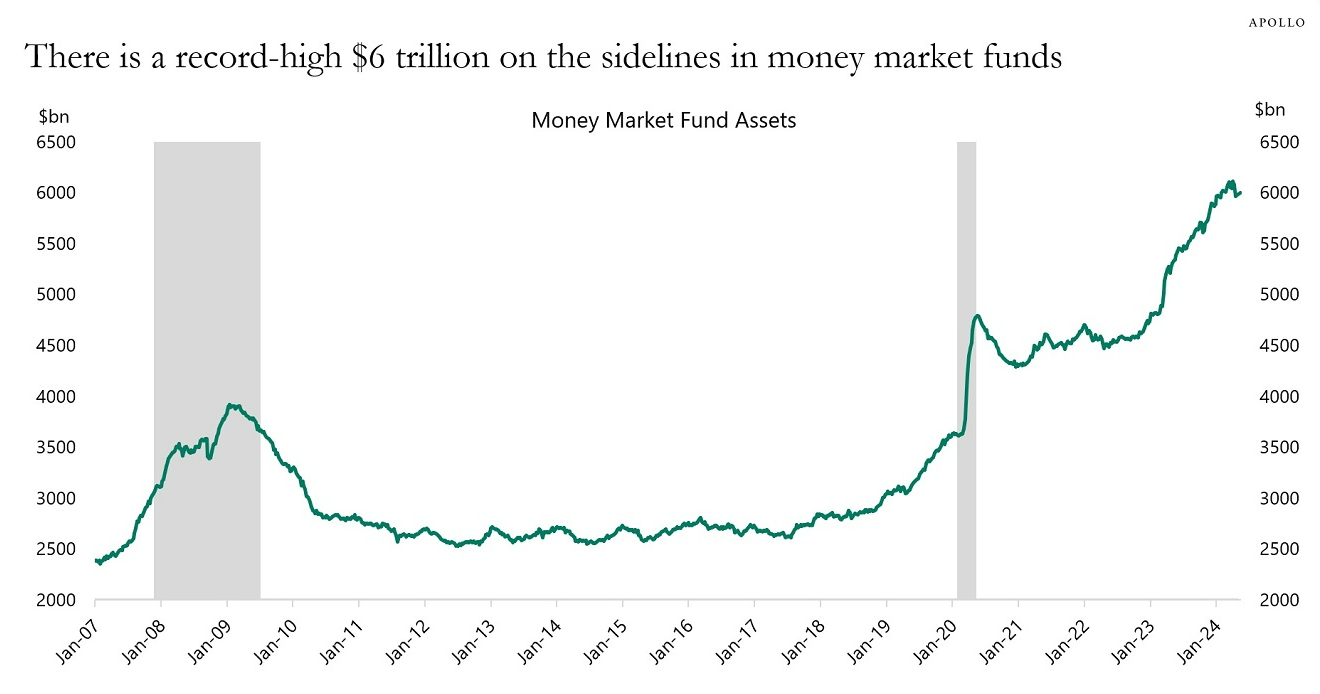
Start with the biggest “piggy bank” people don’t keep in a drawer: money market funds. By late January 2026, total money market
fund assets were hovering around $7.71 trillion. That’s not spare changethat’s “this could buy a small planet”
territory.
Zoom in further and you’ll find that households (and their nonprofit neighbors) have also been sitting on massive piles across the
usual cash-like buckets: money market fund shares, checking-type money, and time/savings-style deposits. Add it up and you get a
picture of an economy where liquidity is abundant in the aggregatewhether or not it feels that way at the individual level.
If your brain just whispered, “Wait… if everyone’s flush, why does everybody sound stressed?” congratulations: you are officially
paying attention.
The cash paradox: big piles, small saving rate
One reason this story gets confusing is that we mix up flows (how much people are saving this month) with stocks
(how much they already have parked). The monthly saving rate has been relatively low recentlythink “not exactly stuffing cash under
the mattress every payday.” Yet the stock of cash-like assets remains enormous.
How can both be true? Easy: you can stop adding much to the piggy bank and still have a piggy bank the size of a Labrador.
Large balances don’t vanish overnight unless people spend them, move them, or lose themand in the last few years, many households
and businesses have done a lot more moving than spending.
Translation into normal-human language
Americans didn’t necessarily become saving superheroes month-to-month. Instead, many already had a pileand then got very picky
about where to park it.
Why the piggy bank got so stuffed
1) Higher yields made “doing nothing” feel productive
When cash starts paying meaningful interest, people suddenly develop a deep spiritual connection to “liquidity.”
The appeal is simple: you keep your money accessible, you take less market risk than stocks, and you actually earn something.
That’s how you end up with record-setting balances in cash-like funds even when people swear they’re “not really saving.”
2) Uncertainty turned cash into emotional support
In uncertain periods, cash becomes more than moneyit becomes a coping mechanism. Job worries, rate changes, geopolitical headlines,
student loan whiplash, and price fatigue all encourage the same reflex: keep a bigger buffer. Even people who invest regularly often
keep extra cash “just in case,” because “just in case” has been having a busy decade.
3) Wealth effects made some piggy banks explode
Household wealth rose sharply in 2025’s third quarter, largely driven by gains in equities. When portfolios rise, higher-income
households often rebalance: they take some winnings off the table and park it in cash-like instruments. That can inflate cash totals
even if day-to-day saving behavior is modest.
Important reality check: “full” is not evenly distributed
Here’s the part that gets lost in the “Americans are sitting on piles of cash” headline: national totals can be true while many people
still feel squeezed.
Survey-based measures of financial resilience suggest improvement from recent lows, but not a return to universal comfort. A slim
majority of adults report having set aside enough to cover several months of expenses in an emergency fundmeaning a large minority
still hasn’t.
Meanwhile, credit data show stress pockets: rising balances, delinquency patterns that vary by loan type, and notable strain linked to
the return of certain payment obligations. In other words, some piggy banks are full… and some are basically a decorative bowl that
holds exactly three receipts and one sad nickel.
Where the money is actually sitting
Money market funds: the “cash but make it fancy” bucket
Money market funds have been the superstar parking lot for cash. They’re designed to be stable and liquid, and when short-term yields
are attractive, they become the place people stash money they might spend lateror invest lateror simply admire like a dragon
admiring its hoard.
Checkable money: the everyday operating account
Checking-type balances are still huge, even after some normalization from peak pandemic-era levels. That’s partly because modern life
runs through debit cards, autopay, and “I swear I cancelled that subscription” monthly surprises. People keep more cash handy just to
keep the machine running.
Time and savings deposits: the “I want interest but I also want to sleep” bucket
Traditional deposits remain massive too. A chunk of households prefer the simplicity of insured accounts, or they’re using CDs as a
“set it and forget it” way to earn yield without fiddling with markets. It’s boring. It’s effective. It’s basically the financial
equivalent of eating oatmeal: not thrilling, but you can’t argue with the results.
What Americans are doing with their cash (besides staring at it)
Spending is still happeningand it’s surprisingly steady
Recent official data show consumer spending continuing to rise month to month. That’s one reason the cash pile story matters: when
people have liquidity, they can keep spending even if prices are annoying and headlines are dramatic.
Debt is rising, but the payment burden hasn’t exploded
Household debt levels have increased, including credit card balances reaching new highs. Yet broad debt-service metrics (how much of
disposable income goes to required debt payments) have remained in a range that looks manageable compared to the worst pre-crisis
extremes. That doesn’t mean everything is finejust that the average household isn’t in a universal debt spiral.
The “two economies” vibe is real
If you own assets, high cash yields plus market gains can feel like you’re playing finance on “easy mode.”
If you don’t, you may be using credit cards to smooth basic expenses, and your “cash pile” is basically a timing strategy between
paychecks. Same country, wildly different game settings.
So… are America’s piggy banks actually full, or just rearranged?
The fairest answer is: both. In aggregate, cash-like assets are enormous. Money market funds are near all-time highs.
Total wealth has hit record territory. That’s the “full piggy bank” headline.
At the household level, it’s a split screen. Many people do have buffers and are earning real interest on cash again. Many others are
still juggling costs, debt payments, and the occasional “my car decided it’s an artisanal sculpture now” repair bill.
The interesting economic question for 2026 isn’t whether Americans have money. It’s whether Americans feel safe enough to
deploy itinto spending, investing, or big life moves like homes and carsor whether they keep treating cash like a security blanket
with a routing number.
How to make a “full piggy bank” work harder (without getting weird about it)
Friendly reminder: this is general information, not personalized financial advice.
1) Separate “sleep-at-night money” from “goal money”
Keep emergency funds liquid and boring. Then create a separate bucket for near-term goals (like a down payment) and another for
long-term goals (like retirement). Mixing them leads to either panic-selling or accidentally spending your emergency fund on a
vacation you “totally deserved,” which can be true and still financially inconvenient.
2) Audit your cash like it’s a leaky faucet
Big balances can hide slow leaks: unused subscriptions, insurance creep, autopays you forgot, bank fees you never agreed to in the
first place. Plugging leaks is the easiest guaranteed return you’ll ever earn.
3) If you’re carrying expensive debt, don’t ignore the math
If your cash is earning a modest yield but your credit card is charging a much higher rate, paying down that balance can be the
equivalent of a risk-free “return.” The emotional benefit is real too: fewer bills = fewer stress spirals at 2:00 a.m.
Real-Life Money Moments: 10 mini-experiences from the “full piggy bank” era (extra)
1) The “I moved my money and suddenly I care about Wednesdays” experience.
A lot of people discovered that certain cash accounts update yields, balances, or fund totals on a weekly rhythm. Suddenly, Wednesday
became a minor holiday. Not because anyone loves weekdays, but because watching cash earn interest feels like a tiny win in a world
full of push notifications.
2) The “my checking account is not a museum” experience.
One couple realized they’d been keeping way too much in checking “just in case.” The money wasn’t doing anythingno interest, no plan,
just sitting there like a couch potato with excellent posture. They kept a comfortable buffer, then moved the rest into a higher-yield
cash option. The result: fewer “why are we not earning anything?” arguments and more “wow, money can actually multitask.”
3) The “I have a fat emergency fund and still feel anxious” experience.
This is surprisingly common. Having money set aside doesn’t automatically delete stress. For many people, the buffer helpsbut what
really reduces anxiety is a simple system: what bills are due, what savings are for, and how much is truly free to spend. Clarity is
the underrated superpower.
4) The “I’m rich in theory, broke in practice” experience.
Some households saw home values and retirement accounts rise, but monthly budgets still felt tight. That’s because wealth gains aren’t
always spendable without tradeoffs. You can’t pay for groceries with “unrealized appreciation” unless you sell something, borrow
against it, or dramatically reinvent barter.
5) The “my piggy bank is full… of gift cards” experience.
Not all “cash-like assets” feel like cash. Some people had a stack of gift cards and store credits and called it savings. Technically,
it’s spending power. Practically, it’s a scavenger hunt. They finally used themand felt like financial geniuses while buying things
they were going to buy anyway.
6) The “I started a CD ladder and now I’m 43% more smug” experience.
A simple ladderstaggering maturities so some money comes due regularlymade one saver feel like they’d cracked a secret code. It
wasn’t glamorous, but it was dependable. And dependable is the new glamorous when life is unpredictable.
7) The “student loan surprise” experience.
A number of borrowers were caught off guard when missed payments began showing up again in credit records after the long pause era.
The lesson wasn’t “be perfect”it was “set alerts, confirm autopay, and assume nothing.” Financial systems love paperwork the way cats
love knocking things off shelves: with absolute commitment.
8) The “I used my cash pile to avoid a bad loan” experience.
Some people used savings to make bigger down payments or buy used instead of financing at unfavorable terms. It didn’t feel exciting
in the moment, but later they realized they’d basically paid themselves by avoiding years of higher payments.
9) The “cash is a strategy, not a personality” experience.
Holding cash made sense while yields were attractive and uncertainty was high. But a few folks went overboard and frozeno investing,
no plan, just hoarding. Eventually they set rules: keep a solid emergency fund, keep near-term goal money safe, and invest long-term
money consistently. The relief was immediate, like finally putting labels on every kitchen container.
10) The “my piggy bank got full because I stopped leaking money” experience.
One person didn’t earn more or get a windfallthey simply tracked spending for a month and trimmed the quiet budget vampires:
subscriptions, delivery fees, unused memberships, and impulse purchases. Their “savings” showed up the old-fashioned way: by
not spending.
Conclusion
America’s piggy banks really are full in the aggregate: massive cash-like balances, near-record money market totals, and record-level
household wealth. But the lived experience is uneven. For plenty of people, “full” means flexibility and calm. For others, it means a
brief moment of relief before the next bill lands.
The good news is that even in a split economy, the basics still work: build a buffer if you can, reduce expensive debt, make sure your
cash is doing something useful, and give your money a job. Because a piggy bank is cutebut a piggy bank with a plan is downright
unstoppable.