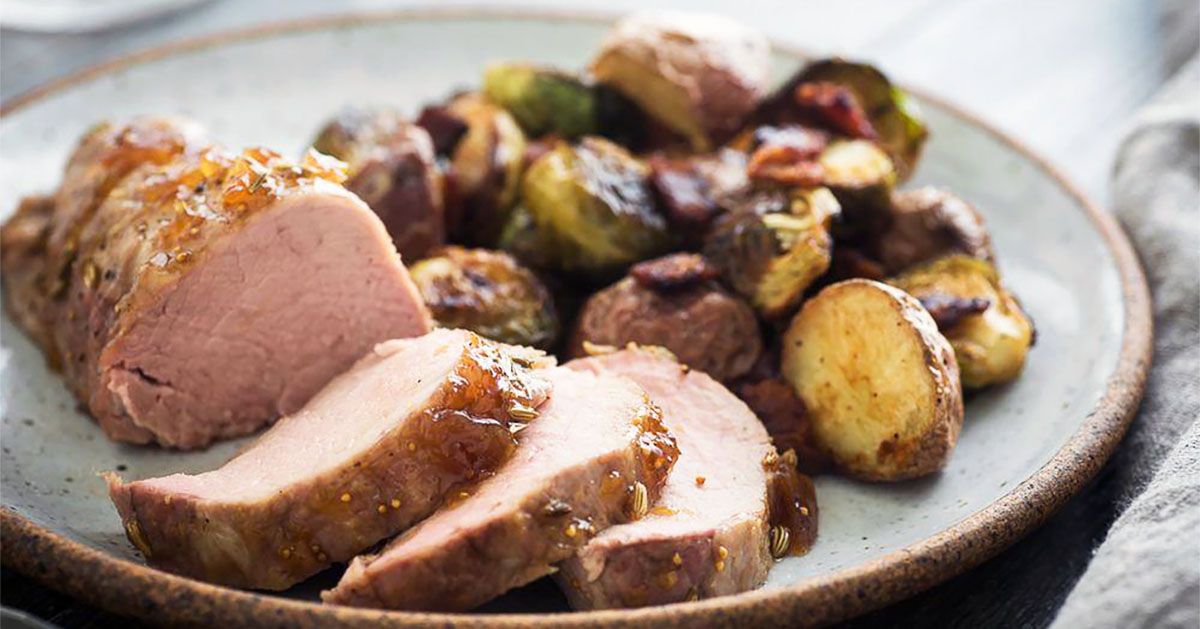
Some dinners walk into the room wearing sweatpants. This one arrives in a crisp linen shirt, carrying a platter, smelling like rosemary, garlic, caramelized vegetables, and a glossy fig glaze that makes everyone suddenly remember they “weren’t that hungry” is a complete lie. Fig-glazed pork loin with roasted potatoes and Brussels sprouts is the kind of meal that looks holiday-worthy but behaves like a weeknight dinner: straightforward prep, familiar ingredients, and one glorious sheet pan doing most of the heavy lifting.
The magic is in the balance. Pork loin is mild, lean, and wonderfully sliceable, which makes it a perfect canvas for a sweet-tangy glaze. Fig preserves bring jammy depth, balsamic vinegar adds a grown-up zing, Dijon mustard keeps the sweetness from running wild, and garlic and herbs make the whole thing taste like you planned dinner before 5:47 p.m. The roasted potatoes turn crisp at the edges, the Brussels sprouts become nutty and caramelized, and the pan juices tie everything together like the culinary equivalent of a group project where everyone actually did their part.
Why This Fig-glazed Pork Loin Works So Well
Pork and fruit have been best friends for generations. Apples, cherries, apricots, peaches, and figs all play nicely with pork because they bring sweetness and acidity to a rich, savory protein. Fig glaze is especially useful because figs have a honeyed, earthy flavor that tastes more elegant than plain sugar. When reduced with balsamic vinegar and mustard, fig preserves become glossy, tangy, and slightly stickythe good kind of sticky, not the “toddler touched the remote” kind.
Pork loin also benefits from bold seasoning. Because it is leaner than pork shoulder, it needs two things: proper cooking temperature and flavorful protection. A glaze helps with both. It coats the surface, encourages browning, and adds moisture and flavor without drowning the meat. The key is not to dump all the glaze on too early. Brush some on during roasting, then reserve a clean portion for finishing so the pork gets shine, flavor, and that “did you secretly go to culinary school?” look.
Pork Loin vs. Pork Tenderloin: Do Not Let the Names Bully You
Pork loin and pork tenderloin are not the same cut, even though grocery stores sometimes place them close together just to keep life spicy. Pork loin is larger, wider, and ideal for roasting into neat slices. Pork tenderloin is smaller, thinner, and cooks much faster. For this recipe, use a boneless pork loin roast, usually about 2 1/2 to 3 pounds.
If you only have pork tenderloin, you can still use the fig glaze, but the timing will change dramatically. Tenderloin may cook in 20 to 30 minutes, while pork loin needs longer. A thermometer is your best friend here. Guessing doneness by color is a thrilling hobby if your hobby is ruining dinner. For juicy pork loin, aim for an internal temperature of 145°F, then let it rest before slicing.
Ingredients for Fig-glazed Pork Loin with Roasted Potatoes and Brussels Sprouts
For the Pork
- 1 boneless pork loin roast, about 2 1/2 to 3 pounds
- 2 tablespoons olive oil
- 1 1/2 teaspoons kosher salt
- 1 teaspoon freshly ground black pepper
- 1 teaspoon garlic powder
- 1 teaspoon chopped fresh rosemary, or 1/2 teaspoon dried rosemary
- 1 teaspoon chopped fresh thyme, or 1/2 teaspoon dried thyme
For the Fig Glaze
- 1/2 cup fig preserves or fig jam
- 2 tablespoons balsamic vinegar
- 1 tablespoon Dijon mustard
- 1 tablespoon honey or maple syrup, optional for extra shine
- 1 small garlic clove, finely grated
- 1 tablespoon unsalted butter, optional
- Pinch of salt
- Pinch of red pepper flakes, optional
For the Roasted Potatoes and Brussels Sprouts
- 1 1/2 pounds baby Yukon Gold potatoes, halved or quartered
- 1 pound Brussels sprouts, trimmed and halved
- 3 tablespoons olive oil
- 1 teaspoon kosher salt
- 1/2 teaspoon black pepper
- 1/2 teaspoon smoked paprika, optional
- 3 garlic cloves, smashed or thinly sliced
- 1 tablespoon chopped fresh parsley, for serving
- Fresh lemon zest, optional for brightness
How to Make Fig-glazed Pork Loin
Step 1: Preheat and Prep the Pan
Preheat the oven to 400°F. Line a large rimmed baking sheet with parchment paper or foil for easier cleanup. If you want extra-crispy potatoes and Brussels sprouts, place the bare sheet pan in the oven while it preheats, then carefully add the vegetables later. A hot pan gives vegetables a head start on browning instead of steaming. Translation: more crispy edges, fewer sad beige cubes.
Step 2: Season the Pork Loin
Pat the pork loin dry with paper towels. This small step matters because moisture on the surface prevents browning. Rub the roast with olive oil, then season it all over with salt, pepper, garlic powder, rosemary, and thyme. Let it sit at room temperature for about 20 minutes while you prep the vegetables and glaze. Do not leave it out for hours; we are making dinner, not conducting a science fair experiment.
Step 3: Make the Fig Glaze
In a small saucepan over medium heat, combine fig preserves, balsamic vinegar, Dijon mustard, honey if using, grated garlic, salt, and red pepper flakes. Stir until smooth and bubbling, then simmer for 3 to 5 minutes until slightly thickened. Remove from the heat and whisk in butter if you want a silkier finish. Divide the glaze into two bowls: one for brushing onto the pork while it cooks and one clean bowl for serving. This keeps the finishing glaze safe and fresh.
Step 4: Roast the Potatoes First
Potatoes usually need more time than Brussels sprouts, so give them a head start. Toss the potatoes with olive oil, salt, pepper, smoked paprika, and garlic. Spread them cut-side down on the hot sheet pan, leaving space in the center for the pork loin. Roast for 15 minutes before adding the Brussels sprouts. This timing helps the potatoes become golden and tender instead of acting like tiny starch rocks.
Step 5: Add Pork and Brussels Sprouts
Carefully remove the pan from the oven. Push the potatoes to the sides, place the seasoned pork loin in the center, and scatter the Brussels sprouts around it. Arrange the sprouts cut-side down when possible. Brush the pork with part of the fig glaze, then return the pan to the oven.
Roast for 35 to 50 minutes, depending on the size and thickness of your pork loin. Brush with more glaze once or twice during cooking. Stir the vegetables halfway through if needed, but try not to fuss with them too much. Vegetables need contact with the hot pan to caramelize; constant stirring is how crispiness goes to live on a farm upstate.
Step 6: Check the Temperature
Start checking the pork after about 35 minutes. Insert an instant-read thermometer into the thickest part of the roast. Pull the pork from the oven when it reaches 145°F. If the vegetables need more browning, transfer the pork to a cutting board and return the sheet pan to the oven for another 5 to 10 minutes.
Step 7: Rest, Slice, and Serve
Let the pork rest for at least 10 minutes before slicing. Resting allows the juices to redistribute, which means the pork stays tender instead of leaking all over the cutting board like a dramatic soap opera character. Slice into 1/2-inch pieces, drizzle with the reserved clean fig glaze, and serve with roasted potatoes and Brussels sprouts. Finish with parsley and lemon zest if desired.
Pro Tips for Juicy Pork Loin
Use a Meat Thermometer
The best way to avoid dry pork is to stop cooking it at the right temperature. Pork loin is lean, and once it goes too far, no amount of glaze can fully rescue it. A thermometer turns dinner from a guessing game into a confident victory lap.
Do Not Skip the Rest
Resting is not optional. It is the quiet little pause that makes the pork juicy. Slice too early and the juices run out. Wait 10 minutes and the pork rewards you with tenderness. It is basically culinary patience with benefits.
Give Vegetables Space
Crowded vegetables steam. Spacious vegetables roast. Use a large sheet pan, and if your pan looks overloaded, divide everything between two pans. Brussels sprouts need room for their cut sides to brown, and potatoes need direct heat to become crisp and golden.
Balance the Glaze
If your fig preserves are very sweet, add another splash of balsamic vinegar or a squeeze of lemon juice. If the glaze tastes too sharp, add a teaspoon of honey. The best fig glaze should taste sweet, tangy, savory, and slightly mysteriousin a good way, not in a “what is that container in the back of the fridge?” way.
Flavor Variations
Holiday-style Fig Pork Loin
Add orange zest, a pinch of cinnamon, and a sprig of rosemary to the glaze. This version smells like December without requiring you to untangle a single string of lights.
Garlic Herb Fig Pork Loin
Add extra garlic, chopped sage, and thyme to the pork rub. Serve with a simple green salad and crusty bread to catch the glaze.
Spicy Fig-glazed Pork
Add red pepper flakes, a spoonful of chili crisp, or a dash of hot sauce to the glaze. The sweetness of the figs can handle heat beautifully.
Apple Fig Pork Loin
Add sliced apples to the sheet pan during the last 20 minutes of roasting. Apples soften, caramelize, and mingle with the fig glaze in a way that makes the kitchen smell like someone’s grandmother is giving you a hug.
What to Serve with Fig-glazed Pork Loin
This recipe already includes roasted potatoes and Brussels sprouts, so it is basically a complete dinner on one pan. Still, if you want to stretch the meal for guests, add a crisp salad with lemon vinaigrette, warm dinner rolls, or a simple wild rice pilaf. For a holiday table, pair it with cranberry sauce, roasted carrots, or a shaved fennel salad.
For drinks, pork loin with fig glaze pairs nicely with Pinot Noir, Zinfandel, hard cider, or sparkling water with lemon. The glaze has sweetness and acidity, so avoid anything too syrupy. You want the drink to refresh the palate, not audition to become dessert.
Storage and Reheating
Store leftover pork loin and vegetables in airtight containers in the refrigerator for up to 3 to 4 days. Keep extra fig glaze separate if possible. To reheat pork without drying it out, warm slices gently in a covered skillet with a splash of broth or water. You can also reheat in a low oven at 300°F until warmed through.
The roasted potatoes and Brussels sprouts reheat best in an oven or air fryer because dry heat helps bring back some crispness. The microwave works in emergencies, but potatoes can turn soft and Brussels sprouts may develop a personality that is, frankly, too strong for the office break room.
Leftover Ideas
Leftover fig-glazed pork loin is excellent in sandwiches. Layer thin slices on toasted bread with arugula, sharp cheddar, and a swipe of Dijon. You can also chop the pork and add it to grain bowls with roasted vegetables, quinoa, and a drizzle of extra fig glaze. For a cozy lunch, serve slices over mashed potatoes or tuck them into wraps with greens and pickled onions.
If you have leftover Brussels sprouts, chop them and toss them into scrambled eggs or a breakfast hash. Roasted potatoes can be crisped in a skillet the next morning with onions and a fried egg. That is not just leftovers; that is breakfast wearing a tiny crown.
Common Mistakes to Avoid
Using Pork Tenderloin Without Adjusting Timing
Pork tenderloin cooks faster than pork loin. If you swap cuts, reduce the cooking time and check early. Otherwise, you may end up with pork that tastes like it has been through a motivational seminar and lost.
Adding Too Much Glaze Too Soon
Fig glaze contains sugar, which can burn if exposed to high heat for too long. Brush it on in layers rather than coating the pork heavily from the start. Save some clean glaze for serving.
Overcrowding the Pan
If vegetables are stacked on top of each other, they will steam. Use two pans if necessary. A crowded sheet pan is where crispy dreams go to become soft apologies.
Slicing Immediately
Let the pork rest. This is the moment when doing nothing is actually doing something useful. Embrace it.
Experience Notes: Cooking Fig-glazed Pork Loin in a Real Kitchen
The first time you make fig-glazed pork loin with roasted potatoes and Brussels sprouts, the biggest surprise is how fancy it feels compared with how little chaos it creates. There is no complicated stuffing, no trussing, no flambé moment where someone has to check whether the smoke alarm still has batteries. It is a practical roast dinner with a polished finish, and that is why it works so well for both family meals and guests.
One useful experience is learning how your oven behaves. Some ovens run hot, some run cool, and some seem to have been designed by raccoons with engineering degrees. If your potatoes brown too quickly, move them toward the edges or lower the temperature to 375°F after the first 20 minutes. If your Brussels sprouts are not caramelizing, give them more space and place them cut-side down. That simple cut-side-down trick can turn Brussels sprouts from “vegetable obligation” into “who ate the last one?”
Another lesson is that fig glaze is forgiving. If you only have fig jam, use it. If your preserves are chunky, even betterthe little fig bits make the finished pork look rustic and delicious. If you are out of balsamic vinegar, apple cider vinegar can work in a pinch, though the flavor will be brighter and less deep. Dijon mustard is the quiet hero here. It keeps the glaze from tasting like dessert sauce and gives the pork a savory backbone.
When serving this dish to guests, slice the pork before bringing it to the table and fan the pieces slightly on a platter. Spoon a little glaze over the top, scatter the potatoes and Brussels sprouts around the edges, and finish with parsley or lemon zest. It looks abundant and thoughtful without requiring restaurant plating skills. No tweezers, no foam, no mysterious dots of sauce. Just real food that smells incredible.
For meal prep, this recipe is a strong performer. Pork loin slices hold well for lunches, and the flavor of the fig glaze deepens overnight. The only thing to remember is that lean pork can dry out if reheated aggressively. Gentle heat is your friend. Add a spoonful of broth, cover the pan, and warm slowly. If using leftovers cold, slice the pork thin and pair it with something sharp or crunchy, such as pickled onions, arugula, mustard, or apple slaw.
The best part of this meal is the way it bridges cozy and elegant. The potatoes are familiar and comforting. The Brussels sprouts bring a roasted, nutty edge. The pork is tender and satisfying. Then the fig glaze swoops in like a dinner-party cape and makes the whole plate feel special. It is the kind of recipe that teaches an important kitchen truth: you do not need a dozen complicated steps to make food memorable. Sometimes you just need good seasoning, a hot oven, a thermometer, and a jar of fig preserves waiting in the pantry like a tiny edible secret weapon.
Conclusion
Fig-glazed pork loin with roasted potatoes and Brussels sprouts is a beautiful example of smart, flavor-forward home cooking. It uses simple ingredients, reliable roasting techniques, and a sweet-savory glaze to create a meal that feels special without becoming fussy. The pork stays juicy when cooked to the proper temperature, the vegetables become deeply caramelized, and the fig-balsamic finish gives every bite a glossy, restaurant-style finish.
Whether you are planning a Sunday dinner, a small holiday gathering, or a weeknight meal that politely refuses to be boring, this recipe deserves a spot in your rotation. It is hearty, colorful, easy to adapt, and impressive enough to make people hover near the kitchen asking, “Is it ready yet?” And honestly, that is one of the highest compliments a roast can receive.
Note: Always use an instant-read thermometer to confirm doneness, and reserve a clean portion of glaze for serving rather than reusing glaze that touched raw pork.