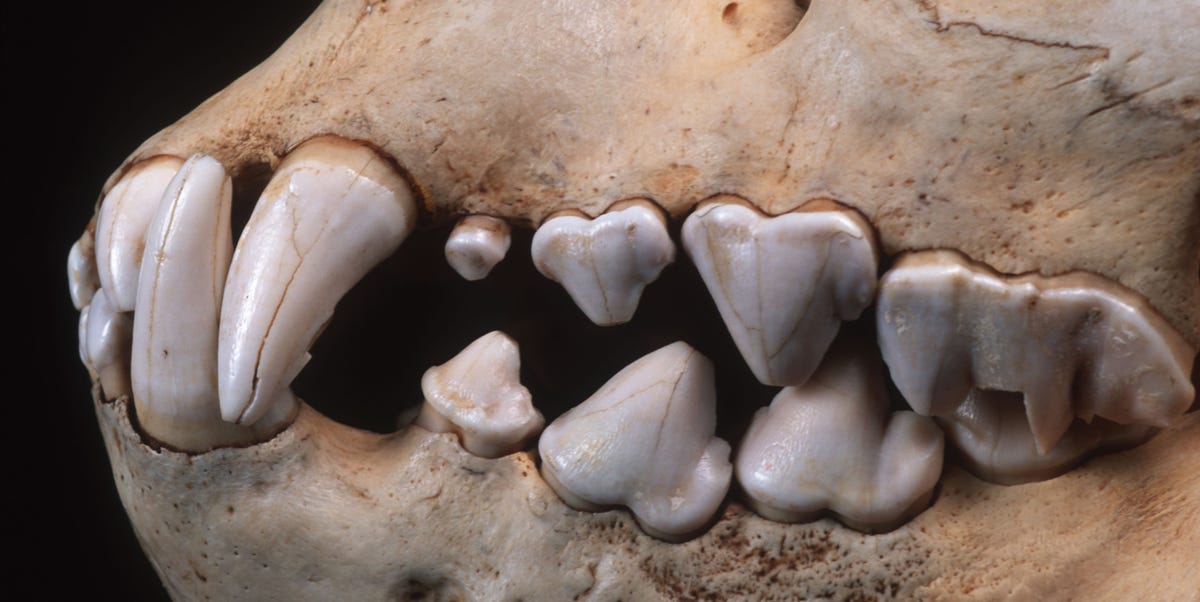
Sometimes the biggest scientific surprises arrive in the smallest packages. In this case, the package is not a glittering dinosaur skull, a complete saber-toothed skeleton, or a fossil so dramatic it deserves its own movie trailer. It is a set of tiny ancient teeth from small Jurassic mammal relatives that lived while dinosaurs were still busy being the main characters.
These little teeth, along with remarkably preserved jaw and ear structures, are helping scientists answer one of the great questions in mammal evolution: how did early mammal-like animals transform from reptile-jawed creatures into the warm-blooded, sharp-hearing, molar-chewing mammals we know today? That includes bats, whales, dogs, elephants, and yes, humans standing in the kitchen wondering why they opened the refrigerator.
The discovery centers on fossils from China, including a newly described species called Feredocodon chowi and another called Dianoconodon youngi. These animals were small mammaliaforms, meaning they belonged to the broader evolutionary neighborhood that includes mammals and their extinct close relatives. They were not roaring across Jurassic landscapes. They were more likely scurrying, sniffing, listening, and trying not to become lunch.
Yet their teeth and ear bones preserve evidence of evolutionary changes so important that they reach all the way into your own face. Every time you chew a sandwich or hear a notification ping, you are benefiting from an ancient remodeling project that took millions of years and involved jaw bones changing jobs. Evolution, apparently, is not above a career change.
Why Ancient Teeth Matter So Much
Teeth are the overachievers of the fossil record. Bones can crumble, skulls can flatten, and delicate body parts rarely fossilize well. Teeth, however, are tough. Enamel is the hardest tissue in the vertebrate body, which means fossil hunters often find teeth when almost everything else has vanished.
For paleontologists, teeth are not just leftovers from ancient meals. They are data. A molar can reveal what an animal ate, how its jaws moved, where it may fit on the evolutionary family tree, and whether it was experimenting with new ways of processing food. In early mammal evolution, molars are especially important because mammals became masters of chewing. Unlike many reptiles that mostly grab and swallow, mammals developed teeth that could slice, crush, grind, and process food with impressive precision.
That dental precision may sound boring until you realize it helped mammals expand into a buffet of ecological roles. Insects, seeds, fruit, meat, leaves, nectar, fish, and eventually suspicious gas-station snacks all became possible because mammal teeth became specialized tools.
The Puzzle of Shuotheriids
The fossils at the heart of this story belong partly to a mysterious group called shuotheriids. Since the 1980s, shuotheriids have annoyed scientists in the way only confusing fossils can. Their molars looked strange. They had a dental pattern known as “pseudotribosphenic,” a term that sounds like a spell shouted by a wizard with a geology degree.
In simple terms, their tooth cusps and basins did not line up neatly with the standard patterns paleontologists expected from early mammals. Modern therian mammals, the group that includes placentals and marsupials, have tribosphenic molars with cutting and grinding structures arranged in a particular way. Shuotheriids had a similar-looking but differently arranged setup, especially in the lower molars.
That odd arrangement created a major classification problem. Were shuotheriids close to the ancestors of modern mammals? Were they related to monotremes like platypuses and echidnas? Were their molars an independent experiment in dental engineering? For decades, the answer was basically: “Interesting question. Please pass the microscope and the aspirin.”
Meet Feredocodon chowi, the Tiny Tooth Detective
The newly described Feredocodon chowi helped clear up the confusion because its fossils preserve unusually complete dental information. Instead of trying to reconstruct an evolutionary story from isolated teeth, researchers could study the tooth rows, jaw relationships, and chewing surfaces in much richer detail.
What they found was surprising. The molars of Feredocodon showed strong similarities to those of docodontans, another extinct group of early mammaliaforms. Docodontans are famous for their complex teeth and ecological variety. Some were adapted for digging, some for swimming, and some for climbing. They were not direct ancestors of modern mammals, but they were important players in the broader mammal story.
By comparing the molars carefully, researchers concluded that shuotheriids likely belong closer to docodontans than many earlier interpretations suggested. This matters because it reshapes the map of early mammal relationships. It means that some complex tooth patterns evolved early and diversified in branches that were not necessarily on the direct road to modern humans, cats, or golden retrievers.
In other words, mammal evolution was not a straight hallway. It was more like a crowded airport terminal, with many gates, several delays, and at least one creature dragging a very weird molar design through security.
The Mystery Was Bigger Than Teeth
The tiny teeth are only half the story. The same fossils also help explain one of the most famous transformations in vertebrate evolution: how bones once used in the jaw became bones used for hearing.
Modern mammals have three tiny bones in the middle ear: the malleus, incus, and stapes. These auditory ossicles transmit sound vibrations from the eardrum to the inner ear. They are part of the reason mammals can hear with such sensitivity, especially at higher frequencies.
Reptiles and birds have a different arrangement. They have one main middle-ear bone. In ancient synapsids, the larger evolutionary group that eventually produced mammals, some bones involved in jaw joints gradually became smaller, detached from the jaw, and took on hearing-related roles. This idea has been supported for a long time by anatomy, embryology, and fossils, but the step-by-step transition has remained difficult to document because the relevant structures are tiny and fragile.
Then along came Dianoconodon youngi and Feredocodon chowi, looking small but arriving with evolutionary receipts.
From Jaw Joint to Hearing Machine
Dianoconodon youngi, the older of the two key fossils, lived roughly between 201 and 184 million years ago. Its skull and jaw preserve evidence of a transitional condition. It appears to have had a double jaw-joint arrangement: one joint more like the mammalian condition and another tied to older reptile-like jaw mechanics.
The important detail is that the reptile-like joint seems to have been losing its load-bearing role in chewing. That suggests the bones were already shifting away from heavy jaw duty and toward a new function related to hearing. Think of it as evolutionary retirement planning: less chewing, more listening.
Feredocodon chowi, which lived later, around 168 to 164 million years ago, shows a more advanced condition. Its middle-ear structures appear more clearly adapted for hearing rather than chewing. Together, the two fossils provide snapshots from different points along the transition from jaw bones to auditory ossicles.
This is why the discovery is so exciting. Scientists are not simply saying, “Here is an old animal with interesting teeth.” They are saying, “Here is fossil evidence showing how the mammalian jaw and ear were being reorganized over time.” That is the kind of evidence evolutionary biologists dream about, usually while drinking coffee from a mug that says “I Brake for Transitional Forms.”
Why This Discovery Changes the Mammal Family Tree
Evolutionary trees are hypotheses built from evidence. When new fossils appear, especially well-preserved ones, they can move entire branches. That is what these tiny ancient teeth have done.
Before the new research, shuotheriids were difficult to place because their teeth seemed to point in conflicting directions. The new dental evidence suggests they should be grouped with docodontans in a broader branch called Docodontiformes. This does not mean every debate is magically finished. Science rarely ends with a confetti cannon. But it does provide a stronger framework for understanding how early mammaliaforms diversified.
The discovery also reinforces a major theme in evolution: similar structures can evolve in different branches, and not every impressive innovation belongs only to the lineage that survives today. Complex molars, sensitive hearing systems, and specialized jaws were being tested in multiple early mammal relatives. Some branches vanished. Others led onward. But all of them help reveal what evolution was capable of during the Jurassic.
What These Fossils Tell Us About Life in the Jurassic
When people picture the Jurassic, they usually imagine dinosaurs stomping around like oversized celebrities. That is fair; dinosaurs were spectacular. But beneath the dinosaur spotlight, small mammaliaforms were quietly diversifying.
These early mammal relatives were likely nocturnal or crepuscular, active in dim light when sharp hearing and sensitive whisker-like touch would have been useful. Their small bodies helped them hide, forage, and exploit tiny ecological niches. They may have eaten insects, other small animals, or a mix of available foods depending on their tooth shapes and habitats.
Teeth helped them process food more efficiently. Improved hearing may have helped them detect predators, prey, mates, or environmental cues. In a world where many neighbors had claws, beaks, teeth, and terrible manners, better sensory equipment could mean the difference between surviving the night and becoming a fossil in a very different way.
Evolution Is Not a Ladder
One of the most useful lessons from these fossils is that evolution is not a ladder with humans waving from the top. It is a branching process. Species adapt to local pressures. Lineages split. Some experiments succeed for millions of years and then disappear. Others leave descendants. Many do both: they vanish as living creatures but remain as evidence.
The tiny teeth of Feredocodon show that early mammaliaforms were already experimenting with complex dental solutions. The jaw and ear structures of Dianoconodon and Feredocodon show that one of the defining mammalian traits, the three-boned middle ear, emerged gradually through modification of existing anatomy.
That is evolution at its most elegant. It does not start from scratch. It tinkers. It repurposes. It turns jaw bones into hearing bones and turns small, odd molars into clues that can redraw an ancient family tree.
Why the Discovery Matters Today
At first glance, a Jurassic tooth smaller than a popcorn kernel may not seem relevant to modern life. But these fossils matter because they help explain the origin of traits that define mammals. Our ability to chew precisely, hear sharply, and process the world through specialized anatomy is rooted in deep time.
The discovery also shows why paleontology is not just about naming old animals. It is about reconstructing processes. A fossil is not only a thing; it is a moment in a transformation. When scientists compare enough moments, they can begin to see motion across millions of years.
That motion is the real story here. The fossils do not show a single magical leap from reptile-like jaw to mammalian ear. They show a sequence of changes: jaw joints shifting function, bones becoming less important for chewing, ear structures becoming more specialized for sound, and teeth revealing unexpected relationships among early mammal relatives.
Specific Examples of Evolution Hidden in the Fossils
1. The strange molars were not random
For years, the unusual molars of shuotheriids made them hard to classify. The new fossils show that those molars share meaningful patterns with docodontans. That turns a dental oddity into a family clue.
2. The jaw joint was losing an old job
In Dianoconodon, the older reptile-like jaw joint appears to have been weakening as a chewing structure. This supports the idea that certain bones were gradually freed from jaw mechanics.
3. The middle ear was becoming specialized
In Feredocodon, the relevant ear structures were more clearly adapted for hearing. This helps fill a missing stage in the origin of the mammalian middle ear.
4. Early mammaliaforms were more diverse than expected
The fossils show that Jurassic mammal relatives were not simple background animals waiting for dinosaurs to disappear. They were actively diversifying in anatomy, diet, and sensory ability.
Experience Section: What Tiny Ancient Teeth Can Teach Us About Seeing Big Stories
There is something oddly satisfying about the idea that tiny ancient teeth can solve a major mystery of evolution. It feels like a reminder that important answers do not always arrive wearing a dramatic cape. Sometimes they sit quietly in a drawer, embedded in stone, waiting for the right scientist, the right scanner, and the right question.
Anyone who has visited a natural history museum has probably had this experience: you walk in expecting the giant skeletons to steal the show. The towering dinosaurs get the gasps. The mammoth gets the photos. The huge jaws make children point and adults pretend they are not also completely impressed. But then, somewhere in a smaller display case, there is a tiny fossil tooth, a delicate jaw, or a fragment of skull. At first it seems modest. Then the label explains that this little piece changed what scientists know about an entire branch of life. Suddenly, the tiny object feels enormous.
That is the emotional magic of fossils like Feredocodon chowi and Dianoconodon youngi. They are not impressive because of size. They are impressive because of meaning. They remind us that evolution works through details. A cusp on a molar, a groove in a jaw, or the position of a small ear bone can reveal a transition that took millions of years. The fossil does not need to be big. The question it answers is big enough.
For students, writers, teachers, and curious readers, this discovery is also a great lesson in patience. Science often advances through careful comparison rather than instant revelation. A paleontologist may study a fossil tooth from multiple angles, compare it with related species, examine wear patterns, evaluate jaw mechanics, and place the evidence into a larger evolutionary framework. That process can sound slow, but it is how reliable knowledge is built. Evolutionary history is not a jigsaw puzzle with the box lid still available. It is more like finding pieces from several puzzles mixed together and slowly realizing which picture each one belongs to.
There is also a personal kind of wonder in connecting those fossils to our own bodies. The bones that help you hear a bird outside your window, a favorite song, or the suspicious silence of a toddler in another room have an ancient backstory. The molars you use to chew dinner belong to a long tradition of mammalian dental innovation. Your body is not separate from deep time; it is one of its latest drafts.
That perspective can make everyday life feel a little stranger in the best way. Brushing your teeth becomes a meeting with evolutionary history. Hearing your phone buzz becomes a tiny tribute to Jurassic anatomy. Eating a crunchy apple becomes proof that ancient experiments in chewing worked out rather well. The next time someone says fossils are just old rocks, you can politely disagree. Fossils are old rocks with receipts, and sometimes those receipts explain why mammals became mammals.
Conclusion
The story of tiny ancient teeth solving a major mystery of evolution is really the story of how small evidence can illuminate huge transformations. The fossils of Feredocodon chowi and Dianoconodon youngi help explain two central chapters in early mammal evolution: the diversification of complex molars and the gradual transformation of jaw bones into the three-boned mammalian middle ear.
These discoveries show that early mammal relatives were far more varied and inventive than once assumed. They also show that evolution is a practical tinkerer, reshaping existing structures into new tools over vast stretches of time. A jaw joint can become part of a hearing system. A strange molar can redraw a family tree. A tiny fossil can carry a message across 160 million years.
So yes, the teeth were tiny. But the mystery they helped solve was anything but small.