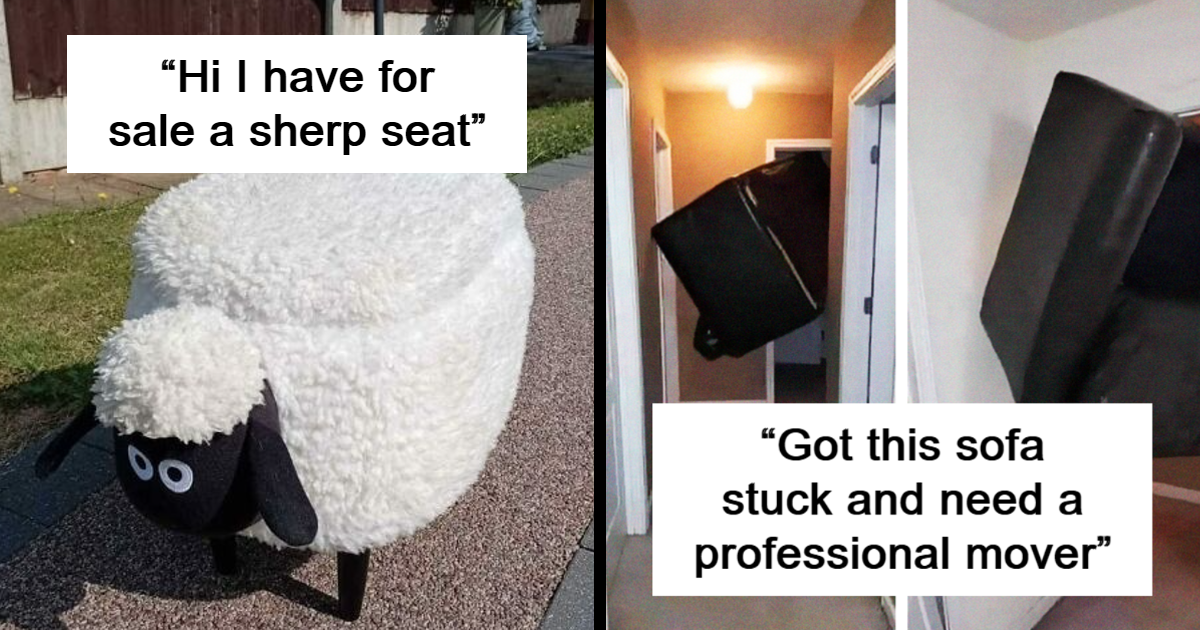
Online marketplaces are digital treasure chests. Unfortunately, somebody occasionally forgets the treasure and uploads a damp couch, one used flip-flop, or a suspicious jar labeled “authentic mountain air.”
Most sellers understand the basic formula: take clear photos, describe the item honestly, mention its condition, research comparable prices, and answer the questions a reasonable buyer might ask. Major selling platforms consistently emphasize accurate descriptions, useful details, realistic pricing, and photographs that clearly show the actual product.
Then there are sellers who reject that formula entirely. They upload one blurry photograph taken from another room, demand more than the original retail price, and write a description that raises seven new questions for every one it answers.
The following 30 entries are original composite sketches inspired by recurring patterns found in bizarre classifieds, funny marketplace listings, and famously optimistic online ads. The exact wording and details have been rewritten, but the strange selling strategies will feel painfully familiar to anyone who has browsed local listings after midnight.
Why Wild Online Ads Are So Entertaining
A bad advertisement is usually forgettable. A spectacularly bad advertisement becomes entertainment. The funniest listings combine complete confidence with almost no evidence that the product deserves that confidence.
The seller may describe obvious damage as “character,” call an ordinary object “rare,” or insist that an item is practically new despite visible stains, missing parts, and a small animal living inside it. Buyers are not merely being offered a product. They are being invited into a mystery.
30 Hilariously Wild Ads That Tested the Limits of Optimism
1. The Free Couch With Mandatory Wildlife
The couch was technically free, but the description revealed one small complication: a family of wasps had moved into the cushions. The seller would not remove them because they were “part of nature.” Pickup required a truck, protective clothing, and apparently the courage of a documentary filmmaker.
2. A Haunted Mirror Priced Above Retail
The seller admitted that the mirror occasionally reflected “a woman who is not in the room.” Instead of lowering the price, they added $200 because paranormal activity made it unique. Delivery was unavailable, possibly because the ghost had not agreed to travel.
3. Half a Candle Marketed as Vintage
This candle had already provided approximately six romantic evenings. What remained was a blackened wick surrounded by tired wax. The seller called it “vintage farmhouse décor” and requested $18, proving that the word vintage can apparently perform miracles.
4. The Mystery Box of Unidentified Cables
A plastic tub containing decades of tangled cords was listed for $450. The seller did not know what any cable connected to, but confidently suggested that “some could be valuable.” Buyers were essentially purchasing an archaeological dig from the age of dial-up internet.
5. One Designer Shoe
The missing shoe was never discussed. The remaining shoe was photographed from nine angles and described as “perfect for collectors, display, or someone with one foot.” At least the seller had identified several extremely specific target audiences.
6. A Potato That Resembled a Celebrity
The resemblance required imagination, flattering lighting, and perhaps a minor head injury. Nevertheless, the potato was offered as a collectible piece of celebrity memorabilia. Refrigerated shipping cost extra, because even famous vegetables have standards.
7. The Treadmill That “Works When Motivated”
The treadmill turned on occasionally, stopped without warning, and made what the seller described as “an encouraging grinding sound.” It was advertised as ideal for serious runners, although serious runners generally prefer equipment that does not attempt to throw them through a wall.
8. A Wedding Dress With “Complicated Energy”
The dress was beautiful, barely worn, and associated with three canceled weddings. The seller avoided the word cursed, choosing “complicated energy” instead. Buyers were encouraged to cleanse it with sage before alterations.
9. An Amplifier for an Air Guitar
The photo showed an empty patch of carpet. The description promised infinite volume, perfect portability, and total compatibility with all imaginary instruments. The price was negotiable, although payment presumably had to be imaginary too.
10. A Jar of Premium Beach Air
The seller claimed the sealed jar contained air collected during a particularly beautiful sunset. Buyers were warned not to open it too quickly or the experience would escape. Shipping cost more than the product, which seems unreasonable for an item containing almost nothing.
11. A “Brand-New” Toaster With Crumbs
The seller insisted the toaster had never been used. The photograph included crumbs, melted cheese, and a piece of bread still inside. When asked about the evidence, the seller reportedly clarified that it had never been used “professionally.”
12. A Fourteen-Year-Old Gaming Beast
This computer featured a missing side panel, a cracked keyboard, and enough dust to support agriculture. It could allegedly run “all games,” provided those games were released before smartphones became popular. The asking price suggested the seller had mistaken nostalgia for processing power.
13. The Minimalist Chair Without a Seat
Four legs and a wooden back were presented as a bold experiment in minimalist furniture. The missing seat was not damage; it was an “opportunity for customization.” Buyers could add fabric, wood, rope, or the basic structural component normally included with a chair.
14. A Lawnmower That Only Starts in Winter
The lawnmower refused to operate during grass-growing season but reportedly started beautifully when snow covered the yard. The seller called this behavior “temperamental.” Mechanics might call it broken, but mechanics clearly lack imagination.
15. A Mattress With One Mysterious Outline
The listing described the mattress as clean “except for the person-shaped mark.” No explanation followed. The seller emphasized that the mark was probably removable, which was comforting until the word probably entered the conversation.
16. The Duct-Taped Banana Investment
Inspired by expensive conceptual art, someone taped a grocery-store banana to a piece of cardboard and requested several thousand dollars. The seller promised a certificate of authenticity, although authenticity was not the main concern. Fruit flies were.
17. A Car Without an Engine
The vehicle was advertised as a “great commuter car.” Several paragraphs later, the seller casually mentioned that it had no engine. Technically, it could still commute downhill, making the description only geographically misleading.
18. An Emotionally Unavailable Houseplant
The plant had no leaves and appeared to be mostly soil. The seller explained that it was “taking time to heal” and needed an owner who respected boundaries. Watering instructions were included, along with a warning not to expect immediate affection.
19. An Antique Mug Manufactured in 2019
A date printed on the bottom clearly showed 2019. The seller maintained that it was antique because “2019 feels like a long time ago.” Emotionally, that argument has merit. Historically, the Smithsonian is unlikely to call.
20. An Empty Perfume Bottle With “Invisible Fragrance”
The perfume was gone, the label was peeling, and the cap was missing. According to the advertisement, a “subtle memory of the original scent” remained. Buyers with less poetic noses might describe that feature as an empty bottle.
21. A Cracked Phone With a Free Screen Protector
The screen looked like a spider had studied geometry across it. The seller generously included a new screen protector, apparently hoping a thin sheet of plastic could reverse structural damage through positive thinking.
22. Custom Jeans Redesigned by a Dog
The jeans had been chewed from the knee to the ankle. Rather than admit defeat, the seller presented the damage as one-of-a-kind distressed detailing. The dog was credited as the designer but would not receive royalties.
23. A Treadmill Used Exclusively as a Clothes Rack
This treadmill had never experienced running, but it had supported an impressive collection of laundry. The seller called it “lightly used,” which was technically accurate. Its cardiovascular history was nonexistent; its fashion career was extensive.
24. A Pallet of Expired Holiday Candy
Several hundred pounds of candy from previous holiday seasons were available to one lucky buyer. Some pieces had changed color, but the seller described this as “natural flavor evolution.” Perfect for parties, science experiments, or discouraging trick-or-treaters permanently.
25. An Aquarium With Complimentary Algae
The fish were not included, but the algae certainly was. The glass had not been cleaned because the seller wanted the buyer to receive a “fully established ecosystem.” The ecosystem appeared to have established its own government.
26. A Mystery Key With Unlimited Possibilities
The seller had no idea what the key opened. That uncertainty became the entire sales pitch. It might unlock a forgotten safe, an old mansion, or absolutely nothing. For $75, buyers could purchase several minutes of exciting speculation.
27. An Invisible Bookshelf
The seller photographed an empty wall and claimed it contained an invisible shelf. No mounting hardware, receipt, or evidence was included. This was either advanced interior design or a person discovering that online listings do not require adult supervision.
28. A Rare Rock From a Local Parking Lot
The rock was gray, small, and almost certainly surrounded by thousands of identical relatives. The seller called it “museum quality” and refused offers below $100. The parking lot had apparently become an undiscovered geological wonder.
29. A Set of Three Tires
The listing promised a “nearly complete set.” That phrase does heroic work when discussing a vehicle that generally requires four tires. The seller suggested using the third as a spare, leaving buyers to solve the remaining mathematical problem.
30. A Taxidermy Squirrel Dressed as a Wedding Officiant
The squirrel wore a tiny suit, held a miniature book, and was described as suitable for rustic ceremonies. The seller claimed it had already “officiated” two weddings. Whether either marriage remained legally valid was not addressed.
What Makes a Marketplace Listing Go Spectacularly Wrong?
The Seller Confuses Sentimental Value With Market Value
A chair may remind someone of a beloved relative, a first apartment, or the afternoon they successfully assembled furniture without starting an argument. Those memories matter to the owner, but buyers are pricing the chair, not purchasing access to the seller’s childhood.
Damage Gets Rebranded Instead of Disclosed
There is a difference between creative copywriting and attempting to hypnotize the customer. A cracked surface is not “rustic texture.” A missing component is not “minimalist engineering.” Honest condition details help buyers understand exactly what they are considering and reduce unpleasant surprises.
The Photos Create More Questions Than Answers
Dim lighting, cluttered rooms, accidental reflections, and distant photographs can make an ordinary item look suspicious. Clear images should show the whole product, important details, labels, defects, and useful angles. The actual item should be photographed rather than replaced with a catalog image that represents what it looked like three owners ago.
The Price Comes From Another Dimension
Wild sellers frequently calculate prices using the original retail cost, emotional attachment, and a completely unrelated number they saw online. Successful pricing usually requires looking at comparable products, current condition, demand, shipping expenses, and completed sales rather than ambitious unsold listings.
Field Notes From the Wild World of Online Selling
Anyone who spends enough time browsing online marketplaces develops a useful instinct. You begin to recognize which listings deserve a message, which deserve a cautious question, and which deserve to be admired briefly before you continue scrolling.
The first lesson is that confidence is not evidence. A seller may write “I know what I have” in capital letters, but the item still needs to justify the price. Buyers should compare similar listings, examine the photographs closely, and ask direct questions about age, condition, repairs, missing pieces, and ownership. A detailed answer is reassuring. An angry speech about “serious buyers only” is not.
The second lesson is that photographs often reveal more than descriptions. A seller may say a table is in excellent condition while the corner of the image quietly shows a missing leg. Zoom in. Look at reflections. Check whether the photos show the actual item from multiple angles. A listing that includes only a manufacturer’s image cannot prove what is currently sitting in the seller’s garage.
Third, unusual does not automatically mean valuable. Collectors may pay for rare objects, but rarity needs context. A manufacturing error, discontinued design, documented history, or limited production run can create value. A common mug from five years ago does not become an antique because the seller has become tired of looking at it.
Fourth, a funny listing can still involve a serious transaction. Buyers and sellers should communicate through the marketplace whenever possible, verify payments through their own accounts, avoid sharing verification codes, and be suspicious of requests involving gift cards, unexpected overpayments, or urgent off-platform arrangements. Consumer agencies and major marketplaces repeatedly warn that fake payment notices, account-verification tricks, counterfeit products, and non-delivery schemes can target both sides of a sale.
For local transactions, practical caution matters more than politeness. Meet in a public, well-lit location, bring another person when appropriate, inspect the item before paying, and test electronics or equipment whenever possible. Community exchange locations near businesses or police stations can offer a safer setting than an unfamiliar home or isolated parking area.
Sellers can learn from the chaos too. Clean the product, photograph it in good light, research a realistic price, disclose flaws, provide measurements, and write a title containing the words buyers are likely to search. “Wood dining table, 60 inches, scratched corner” may sound less exciting than “majestic gathering platform with character,” but it is considerably more useful.
Finally, preserve your sense of humor. Online marketplaces are one of the last places where human creativity remains completely unsupervised. Somewhere, right now, a person is photographing a broken garden gnome, calling it a rare sculpture, and preparing to reject every reasonable offer. The item may never sell, but the advertisement has already given the internet something valuable: a story.
Conclusion
Hilariously wild ads are funny because they transform ordinary selling mistakes into miniature works of accidental comedy. Blurry photographs, impossible prices, mysterious stains, missing components, and heroic descriptions make buyers wonder whether the seller is jokingor simply operating with extraordinary confidence.
Behind the entertainment is a practical lesson. The best online listings respect the buyer’s time. They show the real item, explain its condition, acknowledge its flaws, and set a price supported by the market. Sellers do not need supernatural mirrors, celebrity potatoes, or emotionally complicated houseplants to attract attention. They need clarity, honesty, and enough lighting to prove the product actually exists.
Note: The 30 humorous examples in this article are original composite scenarios inspired by common online marketplace behavior. They do not reproduce any single seller’s advertisement or personal information.