Note: Clean HTML body only for publishing; unnecessary placeholder elements removed.
CPR has spent the last 30 years doing something rare in modern life: getting simpler while becoming more powerful. That is not a bad glow-up for a skill that often begins with one panicked question: “Is this person breathing?” In an emergency, nobody wants a 47-step interpretive dance. They want a clear action that buys time, moves blood, and gives a human being a fighting chance until professional help arrives.
That is exactly what cardiopulmonary resuscitation does. CPR is not magic, and it is definitely not the dramatic TV move where someone gets one heroic shove on the chest and immediately wakes up ready to deliver a heartfelt monologue. Real CPR is exhausting, urgent, and deeply ordinary. It is performed by parents in living rooms, teachers in gymnasiums, airport workers near gate B12, and strangers who did not expect their Tuesday to turn into a test of courage.
Over the past three decades, the story of CPR in the United States has been a story of science meeting common sense. Researchers learned more about what works in the first minutes of cardiac arrest. Public health leaders pushed for better training. Dispatchers became more skilled at coaching callers through emergencies. Automated external defibrillators, or AEDs, became more common in public places. And perhaps most importantly, the message changed from “leave this to the experts” to “you can help right now.”
That shift matters because cardiac arrest does not wait politely for a medical team to arrive. It strikes at home, at work, on sidewalks, in gyms, in schools, and in all the inconvenient places where life actually happens. A person’s survival can depend on what happens in the first few minutes, long before an ambulance pulls up with lights flashing and sirens singing their stressful little song. CPR fills that gap. It keeps oxygenated blood moving to the brain and vital organs. It buys time. Sometimes, that time becomes a life.
Why CPR Still Matters More Than Ever
Even after decades of progress, sudden cardiac arrest remains one of the biggest emergency health threats in America. The challenge is not just medical. It is social, educational, and behavioral. People freeze. People second-guess themselves. People worry about doing it wrong. Meanwhile, the clock is out here acting like a villain.
That is why CPR matters so much. It is one of the few emergency interventions where an ordinary person can make a measurable difference before the professionals arrive. When bystanders start CPR quickly, survival chances rise. When they do nothing, the odds fall fast. In other words, CPR is the bridge between collapse and care, between “something is terribly wrong” and “help is finally here.”
The science behind that message has become clearer over time. More than 350,000 out-of-hospital cardiac arrests happen in the United States each year, and immediate CPR can double or even triple the chance of survival. At the same time, overall survival remains far from where anyone wants it to be, which is exactly why fast action from bystanders still matters so much. CPR is not the whole answer, but it is often the first answer that gives the rest of the rescue a chance to work.
From Complicated Training to Clear Public Action
The 1990s: CPR Was Important, but Often Felt Like Expert Territory
Thirty years ago, CPR was already recognized as lifesaving, but the public conversation around it was different. Training often felt formal, technical, and a little intimidating. Many people associated CPR with certification classes, medical professionals, or the sort of person who owns a whistle and says “scenario-based learning” with great enthusiasm.
The general public knew CPR was good. Fewer people felt ready to perform it. That gap mattered. A lifesaving skill is only lifesaving when someone actually uses it, and old-school CPR training could feel hard to remember under pressure. Rescue breaths, compression counts, airway steps, and fear of doing harm all created hesitation. The science was there, but public confidence lagged behind.
The 2000s: Evidence Began to Favor Simplicity
As research improved, the CPR field started asking a practical question: what is the best way to get more bystanders to act immediately? The answer turned out to be refreshingly simple. In many adult sudden cardiac arrest cases, uninterrupted chest compressions from a bystander could be highly effective in the first critical minutes. That finding helped reshape public guidance in a big way.
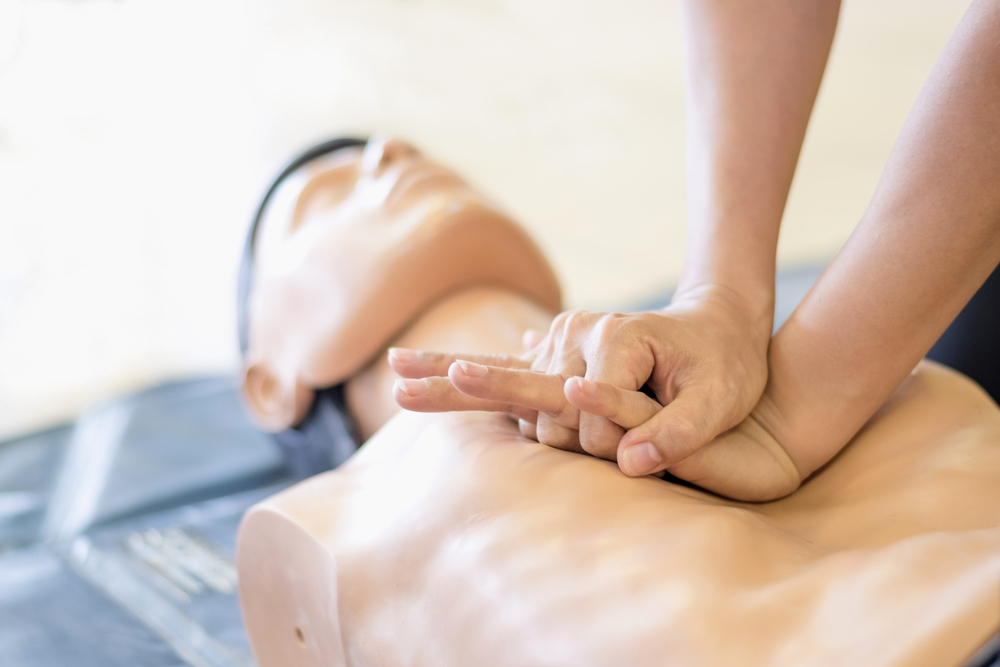
In 2008, the American Heart Association backed Hands-Only CPR for untrained bystanders who witness a teen or adult suddenly collapse. That change was more than a technical update. It was a communication revolution. Suddenly the message became shorter, clearer, and much easier to remember: call 911 and push hard and fast in the center of the chest. No one had to stop and wonder whether they had perfectly memorized a classroom script from seven years ago while their brain was busy panicking.
The 2010s: C-A-B, Better Systems, and More Public AEDs
The next major change was not just about what people did, but in what order they did it. CPR guidance shifted from the old A-B-C sequence to C-A-B, meaning chest compressions came first. That was not a branding exercise. It reflected a growing understanding that delays in compressions could cost precious seconds. The new order pushed action to the front of the response.
During this decade, CPR also became less of a stand-alone skill and more of a system. Public health leaders emphasized the “Chain of Survival,” which links early recognition, early CPR, rapid defibrillation, advanced medical care, and recovery support. In plain English, the goal was no longer just “teach CPR.” It was “build communities where every link works better.”
AEDs became a bigger part of that story. Public-access defibrillation programs expanded, and more workplaces, schools, airports, and community buildings started placing AEDs where bystanders could reach them. The device itself is one of the least dramatic heroes in modern medicine. It talks calmly, analyzes rhythm, and tells people what to do while everyone else is trying not to turn into soup. When paired with quick CPR, it can make a major difference.
The 2020s: Progress, Data, and a More Honest View of the Gaps
Today, CPR science is stronger, data systems are better, and public messaging is far more direct than it was 30 years ago. Researchers have shown that bystander CPR is associated with better survival, and recent large-scale U.S. analyses continue to support what emergency experts have been saying for years: ordinary people save lives when they step in early.
But the modern era has also brought a more honest conversation about inequality. Not every neighborhood sees the same response rates. Not every person receives the same benefit from bystander action. Not every school, workplace, or apartment building is equally prepared. The CPR journey is a success story, yes, but it is also a reminder that lifesaving knowledge means less when access to training, confidence, and equipment is uneven.
What Actually Changed Survival Over 30 Years?
If you zoom out and look at the last three decades, a few changes stand out as especially powerful.
- Simpler messaging: Hands-Only CPR gave the public a clear response instead of a memorization test.
- Faster compressions: The move to prioritizing chest compressions reduced delays in action.
- Dispatcher coaching: Emergency call centers increasingly guide callers through CPR in real time.
- More AED access: Public defibrillators made early shocks more possible outside hospitals.
- Better systems of care: Survival depends on the full chain, not one isolated action.
- School and community training: CPR education became more mainstream and less niche.
These changes helped move CPR from a classroom skill to a public expectation. That distinction matters. A skill locked inside a training binder is basically decorative. A skill that lives in communities can save a stranger in a grocery store aisle.
Researchers have also documented meaningful improvement over time. In one influential U.S. analysis, pre-hospital survival after out-of-hospital cardiac arrest improved substantially from the mid-2000s into the early 2010s, with rising bystander CPR and AED use contributing to the change. More recent data still show that overall survival remains limited, but the long-term direction has been encouraging: better recognition, more action, more survivors, and more people leaving the hospital with favorable neurological outcomes than in earlier eras.
Why Bystander CPR Is the Real Main Character
When people imagine lifesaving medicine, they usually picture doctors, hospitals, and machines that beep like they have somewhere important to be. All of that matters. But in cardiac arrest, the first hero is often not a clinician. It is a bystander.
That bystander may be a spouse who has never felt more terrified. It may be a coworker who once took a CPR class because HR sent a cheerful email. It may be a teenager who remembers a school demonstration well enough to act. It may be a stranger on a basketball court who decides that frozen fear is not an option today.
This is one of the most important lessons from the last 30 years: CPR works best when communities treat response as shared responsibility. The public does not replace emergency medicine. The public starts it. That is why modern CPR education focuses so much on confidence. You do not need to be flawless. You need to begin.
The Role of AEDs in the CPR Story
If CPR is the bridge, the AED is often the turning point. CPR keeps blood moving. The AED can restore a shockable rhythm when appropriate. Together, they form one of the most effective early responses to sudden cardiac arrest outside the hospital.
Over the past 30 years, AEDs have moved from specialized equipment to familiar public devices. They now appear in airports, schools, government buildings, community centers, and sports facilities. Federal guidance emphasizes that rapid treatment with an AED can be lifesaving, and public access laws have helped normalize both placement and training.
Still, the AED journey is not finished. Many people walk past these devices daily without noticing them. Some are unsure whether they are “allowed” to use one. Others assume a license, special permission, or magical confidence cape is required. It is not. Modern AEDs are designed to guide lay rescuers. In a crisis, clarity is everything, and AED design has steadily moved in that direction.
The Hard Truth: CPR Progress Is Real, but So Are the Gaps
It would be lovely if the CPR story ended with, “And then everyone learned it, used it perfectly, and the nation collectively became brilliant under pressure.” That is not how humans work. Progress has been real, but so are the remaining problems.
Many cardiac arrests happen at home, where the bystander is likely to be a family member rather than a trained responder. Some communities have lower CPR training rates, lower bystander intervention rates, or less access to AEDs. Research also suggests that outcomes can vary by sex, race, location, and circumstance. That means the next stage of CPR progress is not just about better science. It is about better reach.
There is also the problem of misinformation. Television has spent years treating CPR like a neat plot device rather than a physically demanding emergency response. Real CPR is sweaty, repetitive, emotionally overwhelming, and usually longer than viewers expect. That gap between fiction and reality can make people hesitate. The solution is not fear. It is honest education.
What the Next 30 Years Should Look Like
If the last 30 years were about simplifying CPR and expanding public action, the next 30 should be about making lifesaving response unavoidable in the best possible way. CPR training should be as common as fire drills. AEDs should be as visible as exit signs. Dispatcher-assisted CPR should be optimized for speed, clarity, and multiple languages. Schools should not treat emergency readiness as an optional extra tucked between fundraising emails and mascot updates.
The next phase should also focus on confidence, not just certification. Many people technically “learn” CPR, but under stress, memory gets slippery. Communities need refreshers, public demonstrations, short digital practice tools, and clear signage that tells people where AEDs are located. The future of CPR is not only about science in journals. It is about design, communication, and habit.
Most of all, the future should make room for a simple truth: a lifesaving culture is built before the emergency happens. The moment of collapse is too late to begin caring whether people know what to do.
Experiences Behind the Science: What a 30-Year CPR Journey Feels Like
The science of CPR is powerful, but the lived experience of CPR is what gives the science its heartbeat. Over 30 years, one of the clearest lessons has been that CPR is not only a medical intervention. It is also a human experience shaped by fear, memory, adrenaline, doubt, and relief. The people who perform it rarely describe the moment as heroic while it is happening. They describe it as surreal. Time slows down. The room gets loud and strangely quiet at once. Someone says, “Call 911.” Someone else starts crying. A dispatcher’s voice becomes the calmest person in the building.
For many bystanders, the first experience with CPR begins with disbelief. The person on the floor is not supposed to be on the floor. It is a dad after mowing the lawn, a teacher at practice, a traveler near baggage claim, a grandparent halfway through a sentence. In those first seconds, people often hope the situation is less serious than it is. Then reality arrives all at once. Training, if it exists, comes back in fragments. Hands go to the chest. Compressions begin. It is not elegant. It is not movie-ready. It is urgent and awkward and absolutely necessary.
There is also the experience of the learner. Millions of Americans have encountered CPR first in a classroom, workplace seminar, school gym, or community center. Sometimes they walk in expecting a boring certification requirement and walk out realizing they have just learned one of the few skills that could genuinely save a life before dinner. That realization changes people. They begin to notice AED cabinets on walls. They mentally rehearse what they would do. They stop thinking of emergencies as somebody else’s department.
For survivors and families, CPR often becomes part of family history. Not always in a cheerful way, and not always with a perfect ending, but always with emotional weight. A spouse may remember the rhythm of compressions for years. A child may remember the ambulance lights reflecting off the windows. A coworker may remember that the office felt permanently different after one person decided to act. Even when the outcome is not the one everyone hoped for, families often remember that someone tried, and that effort matters deeply.
There is also the experience of the dispatcher, the instructor, the school nurse, the coach, and the workplace safety trainer. Over three decades, these roles have quietly helped turn CPR from a technical skill into a public norm. They are often the people who convert panic into action. Their impact is not always visible in headlines, but it lives in every community where a bystander says, “I knew enough to start.”
And then there is the strange emotional aftershock that follows CPR. People replay the event. They wonder if they pressed hard enough, started quickly enough, counted correctly, or froze for too long. That self-questioning is incredibly human. It is also why CPR education must teach not just mechanics, but mindset. The goal is not perfection. The goal is action. A person who starts CPR has already changed the story.
That may be the deepest truth in this 30-year journey. CPR has grown more effective because science improved, yes, but also because culture slowly changed. More people now understand that lifesaving action does not begin in the hospital. It begins wherever someone collapses and another human being decides to step forward instead of stepping back.
Conclusion
The lifesaving power of CPR is not just found in guideline updates, training charts, or impressive statistics. It lives in the space between collapse and rescue, where ordinary people make extraordinary decisions. Over the last 30 years, CPR has evolved from a more complicated, expert-coded skill into a clearer, faster, more public form of action. Hands-only guidance, stronger emergency systems, wider AED access, and better public education have all helped move the field forward.
But the journey is not over. The next chapter depends on whether communities keep pushing CPR training into schools, homes, workplaces, and public spaces until helping becomes the default. CPR does not promise miracles. What it offers is something just as meaningful: a real chance, created by human hands, at exactly the moment that chance matters most.