If most tech events feel like they were designed by a committee powered entirely by coffee breath and slide decks, Hackaday Prize Worldwide LA felt like the exact opposite. It was hands-on, gloriously nerdy, and refreshingly human. Held in Pasadena at the Hackaday Design Lab, this two-day gathering combined a practical hardware workshop, a lineup of smart speakers, a laid-back social night, and an open build day for people who would rather make weird and wonderful things than merely talk about making them.
That combination is what made Hackaday Prize Worldwide LA special. It was not just a hackathon. It was not just a workshop. It was not just a party for people who think oscilloscopes are a form of home decor. It was all of those things at once. And that made it a rare kind of event: one where beginners could learn, experienced builders could trade ideas, and everyone could leave with more than a tote bag and vague optimism.
In the broader story of the Hackaday Prize, the Los Angeles stop mattered because it showed what the competition was really about. Yes, there were prizes. Yes, there was prestige. But the real engine behind the event was community. The Hackaday crew built the Prize around open design, practical engineering, and a belief that hardware can solve real-world problems when smart people share what they know. LA turned that idea into a weekend-long reality.
What Hackaday Prize Worldwide LA Actually Was
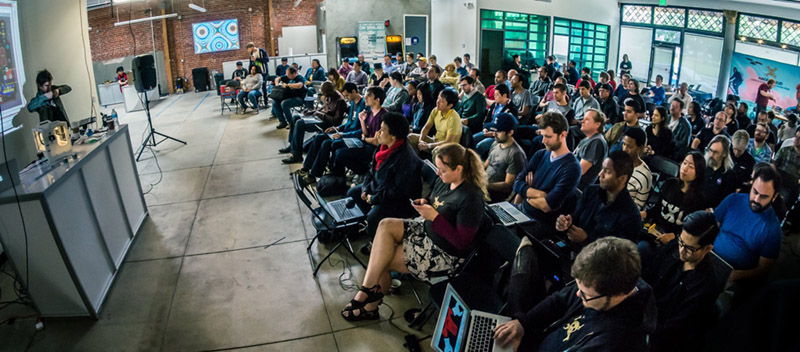
Hackaday Prize Worldwide LA took place over two days and was built around a simple but powerful formula: learn on Saturday, socialize on Saturday night, and build on Sunday. That structure sounds obvious now, but it was unusually smart for a hardware-focused event. Software hackathons often sprint straight into coding chaos. Hardware is messier. It involves parts, tools, test gear, layout decisions, assembly mistakes, smoke, and occasionally the kind of failure that makes everyone in the room lean back and say, “Well, that was educational.”
By giving attendees a full day of structured learning before turning them loose for open hacking, the event created a bridge between inspiration and execution. Saturday featured the “Zero to Product” workshop, talks from respected builders and engineers, and social time that helped turn strangers into collaborators. Sunday opened the doors for free build time, with tools, components, and development boards ready for anyone who wanted to keep the momentum going.
In other words, Hackaday Prize Worldwide LA was a hardware event designed by people who clearly understood hardware people. It recognized that the best projects do not appear out of thin air. They grow out of conversation, troubleshooting, serendipity, and the magical moment when someone across the room says, “Wait, I’ve had that exact problem before.”
Why the “Zero to Product” Workshop Was the Real Secret Sauce
The headline workshop, “Zero to Product,” was not some fluffy motivational session about disrupting industries while wearing expensive sneakers. It was a grounded, practical deep dive into how you move from an idea to a real, manufacturable hardware product. That distinction matters. A lot of people can build a prototype that works once on a desk surrounded by jumper wires and hope. Building something reliable, repeatable, and ready for other humans to use is a completely different sport.
Led by Matt Berggren, the workshop focused on the realities of production-quality board design. That included PCB layout, schematic thinking, manufacturing concerns, component selection, enclosures, assembly, testing, and the unglamorous but deeply important details that separate a cool demo from a credible product. One of the featured examples involved an ESP8266 breakout board, which was especially timely in 2015 when low-cost Wi-Fi hardware was becoming catnip for the maker community.
This is one reason the Los Angeles event still feels relevant. It taught a lesson that continues to matter in today’s hardware world: prototyping is exciting, but productization is where ideas either grow up or go home. Adafruit’s own educational materials on PCB creation, open-source design workflows, and board reuse echo that same spirit. So do open-source hardware resources from SparkFun and All About Circuits, which emphasize accessible design, documentation, and the path from concept to usable board. Hackaday Prize Worldwide LA sat right in that sweet spot where experimentation met engineering discipline.
And let’s be honest: there is something deeply satisfying about an event that says, in effect, “Yes, dream big. But also, please label your nets, think about manufacturability, and maybe avoid turning your first revision into a decorative smoke machine.”
The Talks Were Not Filler. They Were Fuel.
A weak event stuffs random talks into the schedule because apparently every conference needs a microphone and a projector. Hackaday Prize Worldwide LA used talks the right way. They were there to sharpen people’s thinking and kick ideas loose before the open build sessions began.
The announced lineup included Elecia White, an embedded systems expert and Hackaday Prize judge, along with privacy and security researcher Samy Kamkar. That pairing alone tells you a lot about the event’s tone. This was not a narrow gathering for one type of builder. It embraced embedded systems, sensors, security, practical hardware design, and the kind of cross-disciplinary curiosity that often leads to the best hacks. Add lightning talks and short presentations from other hackers, and the event became an idea-exchange as much as a workshop.
That format fits a broader truth about hackathons and makerspaces. The best gatherings do not just showcase finished work; they help people think in public. Whether it is a focused engineering challenge, a local maker meetup, or a student hackathon, the act of showing a project, explaining it, and hearing feedback often reveals the next step faster than a week of solo tinkering. Hackaday itself later described the worldwide tour as a place where attendees helped each other spot the “unknown unknowns,” and that phrase nails the value perfectly. Sometimes the smartest person in the room is not the keynote speaker. It is the person standing next to your table asking one inconveniently brilliant question.
Yes, the Party Mattered Too
It is tempting to treat the social side of Hackaday Prize Worldwide LA like a side dish. It was not. The party element was part of the design. After the workshop and talks, the chairs were cleared, the beverages appeared, the room loosened up, and the event shifted from structured learning into what might be called productive chaos. People showed off their projects, swapped stories, and turned casual conversations into technical problem-solving sessions.
That matters because hardware culture has always depended on informal spaces. Makerspaces, hackerspaces, and community labs thrive because they blend tools with people. WIRED’s coverage of maker maps and hackerspace challenges captured this years ago: builders need places where they can share resources, compare notes, and figure out what comes after the prototype. Supplyframe’s DesignLab has leaned into exactly that mission, positioning itself as a space where hardware ideas can be brought to life and pushed toward market reality.
So yes, the “party” in the title was fun. But it was also functional. It created the kind of low-pressure environment where collaboration happens naturally. Someone pulls out a project. Someone else spots a flaw. Another person recommends a part. A fourth says they know a better manufacturing approach. Suddenly a social hour becomes free consulting, accidental mentorship, and the beginning of a future collaboration. Not bad for an evening that probably also included someone explaining a very weird circuit with the confidence of a late-night philosopher.
Sunday’s Open Hack Day Was Where the Event Proved Itself
Plenty of events are inspiring on Saturday and forgotten by Monday. Open Hack Day made sure this one had real carryover. On Sunday, the Design Lab became a build space filled with components, development boards, soldering gear, and room to work. Attendees could apply what they had learned, keep developing their Hackaday Prize entries, or simply dive into a new idea while the energy was still high.
That final phase is what transformed the event from a conference into a maker ecosystem in miniature. A workshop gives you knowledge. A talk gives you perspective. A party gives you connections. A hack day gives you motion. When those four pieces are aligned, people stop consuming an event and start participating in it.
This hands-on ending also fit the Hackaday Prize itself. The competition was designed to highlight open hardware projects with real-world potential, and the 2015 season drew nearly 900 entrants. Later retrospectives on the Prize highlighted not just the winners, like Eyedrivomatic and Vinduino, but the wider culture of people building socially useful tools through open design. LA embodied that spirit. It was not just about polishing pitches; it was about helping people build better things.
How LA Fit Into the Bigger Hackaday Prize Story
Los Angeles was one stop on a much larger Hackaday Prize Worldwide tour that reached cities including Chicago, Mumbai, Toronto, New York, Bangalore, Shenzhen, New Delhi, Boston, Washington, Zurich, Berlin, and San Francisco. That scale is important because it shows that Hackaday was not treating hardware innovation as something that belonged to one city, one startup scene, or one narrow slice of engineering culture. The Prize was global, but each local event gave that big idea a face, a room, and a workbench.
LA, however, had a special flavor. Pasadena already had credibility as a home for serious engineering, and the Design Lab added a practical product-development angle that made the event feel more grounded than a typical meetup. It was the kind of place where “cool project” could quickly turn into “credible prototype,” and where “I built this for fun” might become “I think this could actually ship.”
That is why the Los Angeles stop still stands out. It represented the best version of the maker movement: open, ambitious, collaborative, and willing to sweat the technical details. It also avoided the trap that some hackathons fall into, where novelty gets rewarded more than usefulness. Hackaday’s culture has always had room for humor and spectacle, but the underlying question is usually practical: does this hack do something interesting, meaningful, or teachable? In LA, the answer seemed to be yes, repeatedly.
Why This Event Still Feels Important
Hackaday Prize Worldwide LA still resonates because it captured a turning point in modern hardware culture. Around that period, the barriers to prototyping were falling fast. Affordable microcontrollers, accessible PCB tools, open-source hardware designs, and better shared resources were making it easier for individuals and small teams to build serious things. But easier did not automatically mean easy. Builders still needed guidance, community, and pathways from idea to product.
That is exactly what this event offered. It treated hardware development as both craft and community. It respected beginners without talking down to them. It gave experts reasons to show up beyond ego. It mixed design, manufacturing, security, embedded systems, and social problem-solving into one weekend. And most importantly, it assumed that learning should lead to making.
In a world now crowded with livestreamed panels and online tutorials, there is still something powerful about putting people, parts, and ideas in the same room. Hackaday Prize Worldwide LA understood that. It knew a soldering iron can teach you something a webinar never will. It knew feedback lands differently when the person giving it is pointing at your actual board. And it knew the line between hobbyist and inventor gets very thin when the right event gives people permission to build boldly.
Experience Section: What a Weekend Like This Actually Feels Like
Imagine walking into the Hackaday Design Lab on a Saturday morning with a backpack full of cables, a half-finished project, and the quiet suspicion that everyone else in the room is smarter than you. This is a standard hardware-event emotion, right between “Did I pack the right USB cable?” and “Please let there be enough outlets.” Within about twenty minutes, that anxiety usually fades. Someone is already asking what you are working on. Someone else is debating board layout over coffee. A speaker is setting up, and suddenly the room feels less like a competition and more like a tribe reunion for people who enjoy debugging for fun.
The workshop energy builds slowly, then all at once. Not because it is flashy, but because the details start clicking. You hear about PCB layout, manufacturing, enclosures, design choices, and test strategy, and your brain begins revisiting every questionable prototype you have ever built. The LED that was “good enough.” The connector you placed in the worst possible location. The board you designed as if future-you would never need to repair it. A good workshop does not just teach new skills. It gently roasts your old habits.
By the time the talks begin, the room has changed. People are no longer just attendees. They are participants. The talks add momentum, but also permission. One speaker shows that sensors can become intuitive learning tools. Another reminds you that security research can be playful and unsettling at the same time. Someone in a lightning talk presents an idea that is half genius, half glorious nonsense, and somehow that only makes the room more creative. Hardware people love competence, but they also love audacity.
Then the social night kicks in, and this is where the magic gets sneaky. You are no longer in “conference mode.” You are leaning over a table while someone explains a board revision, or laughing at a project that should not exist but absolutely does. You ask one question and get five opinions. Two of them conflict. Three are brilliant. All of them are useful. This is how maker culture works at its best: not as a polished performance, but as a living, noisy, generous exchange of ideas.
Sunday has a different mood. Less presentation, more purpose. People settle into build mode. Tools come out. Laptops open. Parts scatter. The room hums with concentration, small victories, minor disasters, and the occasional triumphant phrase: “Okay, now it’s actually working.” You start seeing the event for what it really is. Not a spectacle. A catalyst. A place built to help ideas move.
And that may be the strongest memory of something like Hackaday Prize Worldwide LA. You leave with more than notes. You leave with momentum. Maybe your project is better. Maybe your design process is sharper. Maybe you finally understand the gap between a hack and a product. Or maybe you just leave with renewed confidence, a few new collaborators, and a slightly dangerous desire to redesign everything you own around an ESP module. Either way, it is the kind of weekend that sticks. Not because it was perfect, but because it made building feel possible, communal, and genuinely exciting.
Conclusion
Hackaday Prize Worldwide LA earned its reputation by doing something rare in tech culture: it treated hardware development as a full-spectrum experience. It taught real skills, featured thoughtful speakers, created space for social exchange, and ended with actual making. That is why the event still feels memorable. It was not a buzzword machine. It was a build machine. For anyone interested in open-source hardware, PCB design, product development, or the maker movement at its most alive, this Los Angeles gathering was exactly what its title promised: the ultimate workshop, party, and hackathon.