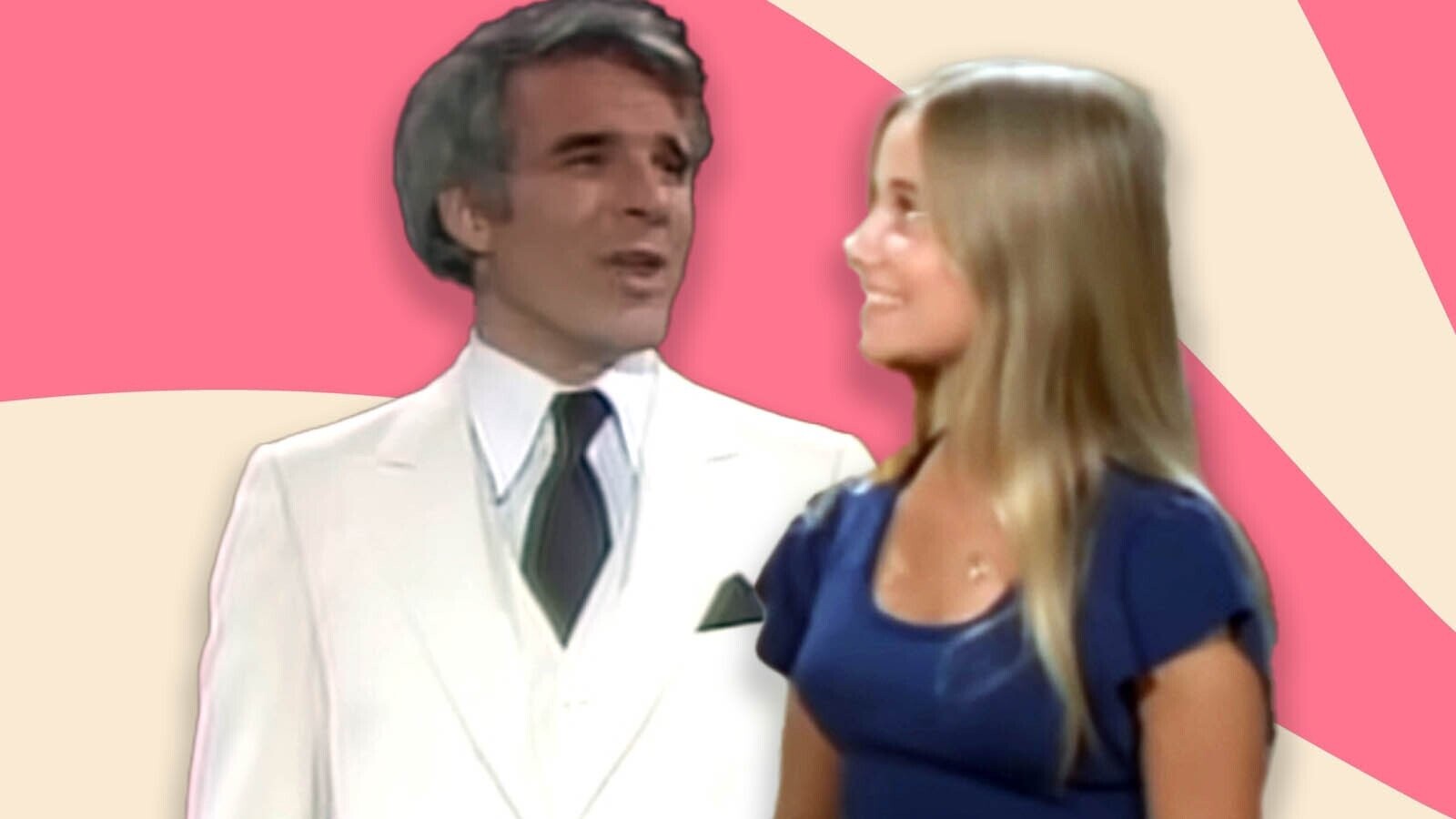
Hollywood has produced plenty of legendary couples, almost-couples, and “wait, they knew each other?” stories. But few celebrity dating anecdotes feel as wonderfully odd as this one: Chevy Chase once helped set up Steve Martin with Maureen McCormick, better known to millions of television viewers as Marcia Brady from The Brady Bunch. On paper, it sounds like a pop-culture Mad Lib: one original Saturday Night Live star, one soon-to-be comedy icon, one beloved sitcom daughter, and one date that apparently floated away like a balloon animal at a sad birthday party.
The story has survived because it captures a very specific slice of 1970s Hollywood. The old family-sitcom world was bumping into the new comedy scene. Variety shows were still trying to dance their way into America’s living rooms. Steve Martin was becoming one of the most electric stand-up performers in the country. Chevy Chase had already become a breakout name from SNL. And Maureen McCormick was trying to move beyond the impossible glow of Marcia Brady, the fictional “perfect girl” who made even dental appointments and school dances look like national events.
The result was not a grand romance. It was an awkward evening, a missed connection, and later, a surprisingly human confession from McCormick: she regretted how the date went and seemed to believe she had not shown up as her best self. That is what makes the anecdote more than celebrity trivia. It is a tiny story about fame, timing, insecurity, and how even funny, attractive, famous people can still have a date so uncomfortable that everyone involved quietly lets it vanish into the shag carpet.
The Setup: Chevy Chase, Florence Henderson, and One Very 1977 Chain Reaction
The date reportedly began through a very Hollywood relay system. Chevy Chase, who knew Steve Martin, passed along the message that Martin wanted Maureen McCormick’s phone number. The message reached McCormick through Florence Henderson, who played Carol Brady, Marcia’s TV mom. In other words, Steve Martin did not slide into anyone’s DMs. He went through Chevy Chase and Mrs. Brady. It was the 1970s; romance required networking, patience, and possibly a landline attached to a kitchen wall.
At the time, McCormick was around 20 and still closely associated with The Brady Bunch, even after the original series had ended. She was also involved in the larger Brady orbit, including variety-show projects that brought the cast back into the public eye. Chase and Martin were part of a different cultural wave: sharper, weirder, more ironic, and powered by stand-up clubs, late-night television, and the fresh chaos of Saturday Night Live.
That contrast is part of the charm. Marcia Brady represented polished, family-friendly television. Steve Martin represented anti-comedy, absurdity, banjo bits, white suits, and jokes that sometimes seemed to be making fun of jokes themselves. Chevy Chase was the bridge between them, the guy with just enough showbiz access and comic mischief to make the introduction happen. If a casting director had written this as a sitcom subplot, someone would have said, “Too obvious.” Real life, naturally, said, “Hold my polyester jacket.”
Who Was “Marcia Brady” Beyond the Catchphrase?
To understand why this story still grabs attention, it helps to remember what Maureen McCormick meant to American pop culture. The Brady Bunch premiered in 1969 and followed a blended family with six children, a live-in housekeeper, and a home that somehow became famous despite having a bathroom situation that continues to inspire architectural questions. McCormick played Marcia, the oldest Brady daughter: pretty, popular, confident, and forever linked to the phrase “Marcia, Marcia, Marcia!”
Marcia was not just a character. She became a shorthand for a certain kind of TV perfection. She was the girl with the hair, the smile, the social calendar, and the kind of teenage problems that could usually be solved before the final commercial break. A football to the nose? A dating misunderstanding? A sibling rivalry? Marcia could survive it all with a tidy lesson and a theme song waiting in the wings.
But McCormick’s real life was much more complicated than the sunny image suggested. In her memoir, she wrote about struggling after the show, including insecurity and substance-use issues. That context matters because it changes the Steve Martin date from a silly “celebrity went out with celebrity” headline into something more honest. McCormick was not simply Marcia Brady walking into a restaurant. She was a young actress carrying the weight of a role America refused to let her remove.
Steve Martin Was Becoming a Comedy Rock Star
Steve Martin in the late 1970s was not merely “a funny guy.” He was turning stand-up comedy into something closer to a rock concert. His act was strange, confident, polished, and deliberately ridiculous. He played with expectations rather than simply delivering punchlines. He could be silly without being sloppy, intellectual without being dusty, and theatrical without looking like he was begging for approval. That is a difficult combination. Many comics try it and end up looking like a substitute teacher who found a magic wand.
By the time he crossed paths with McCormick, Martin had already made a strong impression on television audiences. He had hosted Saturday Night Live and was building the kind of momentum that would soon lead to major films, including The Jerk. He was not yet the elder statesman of comedy we know today, but the ingredients were already there: the timing, the intelligence, the weirdness, and the complete refusal to look desperate even while doing something completely absurd.
That made him an exciting date prospect. McCormick reportedly saw him as brilliant and funny, someone whose confidence and talent were obvious. In modern terms, this was not a random dinner invitation. This was like being asked out by the guy everyone knew was about to become impossible to ignore. The pressure must have been enormous. Imagine trying to be charming while sitting across from Steve Martin, knowing that if he says something funny and you do not laugh, history may one day write an article about it. No pressure. Just the entire comedy future of America ordering dinner.
Why the Date Went Wrong
The date itself reportedly involved dinner at Musso & Frank, the classic Hollywood restaurant that has hosted generations of writers, actors, comics, and people who look like they are writing a screenplay even when they are only reading the menu. McCormick and Martin each brought a friend at first, possibly to keep things casual and reduce awkwardness. That is a wise strategy in theory. In practice, group-date buffers can only do so much. Eventually, two people still have to talk to each other.
According to McCormick’s later reflections, the evening did not turn into the sparkling connection she might have hoped for. She remembered feeling insecure and not fully present. She also recalled that she did not respond well to Martin’s humor. For most dates, not laughing at a joke is survivable. When the person across from you is Steve Martin, not laughing at the jokes is basically pulling the emergency brake on the romance train.
To his credit, Martin was described as polite. There is no dramatic villain in this story. Nobody stormed out. Nobody delivered a monologue under a streetlamp. The date simply failed to catch fire. They did not continue seeing each other, and McCormick later expressed regret. That regret gives the story its emotional texture. It is easy to laugh at the headline, but underneath it is a familiar feeling: realizing after the fact that nerves, personal struggles, or bad timing got in the way of a moment that might have gone differently.
Why the Story Feels So Perfectly 1970s
This anecdote could only have happened in a very particular entertainment ecosystem. The 1970s were a bridge decade. The clean-cut sitcom era had not vanished, but it was sharing space with edgier comedy, looser celebrity culture, and late-night experimentation. The Brady Bunch belonged to the world of bright family rooms and tidy morals. Saturday Night Live belonged to a world that preferred irony, risk, and sketches that occasionally looked like they had been assembled at 3:00 a.m. by brilliant people with no fear of confusing the audience.
Chevy Chase stood at the center of that shift. He was one of SNL’s original breakout stars, known for a dry, smug comic persona that made him seem both charming and dangerous to invite to a dinner party. Steve Martin, while not a regular cast member, became so closely associated with the show that many people still assume he was part of the original group. He was a frequent host, a favorite guest, and one of the faces of the new comedy movement.
Maureen McCormick, meanwhile, represented the previous TV generation’s idealized youth culture. That is what makes the “Marcia Brady dates Steve Martin” idea so irresistible. It is not just two celebrities at dinner. It is wholesome sitcom America meeting absurdist comedy America over plates of food, with Chevy Chase playing matchmaker like a mischievous maître d’ of cultural transition.
The Marcia Brady Problem: When a Role Becomes a Shadow
One reason the date may have felt so loaded is that McCormick was still living under the enormous shadow of Marcia Brady. Child and teen actors often face the same challenge: audiences love the character so much that they resist seeing the performer as a real person. McCormick was not just an actress who had played a role. She was frozen in the public imagination as a perfect TV teenager with perfect hair and perfectly manageable problems.
That can create a strange emotional trap. The public wants nostalgia. Casting directors want range. The performer wants to grow up. Everyone is pulling in a different direction, and the actor is left trying to prove she is more than the face on a lunchbox. McCormick’s later honesty about her struggles helped explain how difficult that transition could be.
In that light, the lousy date becomes more understandable. Meeting Steve Martin was not simply meeting a funny man. It was meeting someone whose career was expanding at exactly the moment she was trying to figure out where her own identity belonged. He was moving toward cultural reinvention. She was trying to escape cultural preservation. That is not a date; that is a psychological obstacle course with appetizers.
Chevy Chase as Accidental Cupid
Chevy Chase’s role in the story is small but essential. He did not create chemistry, but he created the opportunity. That is often how Hollywood works. A whispered message, a mutual acquaintance, a shared studio lot, a casual introductionsuddenly two people from different corners of fame are sitting at dinner together. Sometimes it becomes a marriage. Sometimes it becomes a funny paragraph in a memoir. Sometimes it becomes both, if the memoir is spicy enough.
Chase’s involvement also adds comic seasoning because his public persona has always carried a bit of chaos. He was handsome, sharp, and famous for making arrogance funny. As a matchmaker, he feels less like a soft-hearted romantic and more like someone who might toss two celebrities into a room just to see what happens. Yet the setup was not cruel. It was a favor for a friend. Steve Martin was interested, McCormick was flattered, and Henderson helped pass the message along. The system worked. The chemistry did not.
That distinction is important. A bad date does not mean the setup was bad. It means human beings are complicated little machines, and sometimes the gears make a noise like a fork hitting a plate.
What the Lousy Date Reveals About Celebrity Culture
Celebrity dating stories often get treated like gossip candy: sweet, sticky, and not exactly nutritious. But this one has more to offer. It reminds us that fame does not remove awkwardness. If anything, fame gives awkwardness better lighting. Steve Martin may have been one of the funniest people in America, but he could still sit through a date that did not click. Maureen McCormick may have been America’s favorite TV crush, but she could still feel insecure, distracted, and unable to connect.
The story also challenges the fantasy that the “right” people automatically create the “right” chemistry. On paper, Martin and McCormick made for a fascinating pairing. Both were famous. Both were attractive. Both knew television. Both were navigating careers shaped by public expectation. But chemistry is not a casting decision. It cannot be forced by fame, talent, or even a very helpful Chevy Chase.
That is why the anecdote continues to feel relatable. Most people have had some version of this experience: someone impressive shows interest, the setup seems promising, the evening begins with hope, and then the whole thing slowly becomes a polite exchange of signals reading, “Well, this is not going to be our grandchildren’s origin story.”
Why People Still Click on This Story
The headline works because it compresses decades of pop culture into one sentence. “Chevy Chase Set Steve Martin Up on Lousy Date With Marcia Brady” sounds like a lost TV Guide blurb from a universe where every channel was run by a comedy historian. It invites curiosity immediately. How did Chase get involved? Why Marcia Brady? What made the date lousy? Did Steve Martin bring a banjo? Was Alice nearby with snacks? The questions practically write themselves.
There is also a nostalgia factor. The Brady Bunch remains one of those shows that people know even if they did not grow up watching it in first run. Its reruns, parodies, movies, and catchphrases have kept it alive for decades. Steve Martin and Chevy Chase, meanwhile, became major comedy figures whose careers stretch across stand-up, film, television, and beyond. Bringing them together in one anecdote makes the story feel like a pop-culture crossover episode.
But the lasting appeal is not just nostalgia. It is the gentle absurdity. The idea that someone as beloved as Steve Martin could have a date go nowhere is strangely comforting. The idea that Maureen McCormick could regret not being more present feels deeply human. And the idea that Chevy Chase was involved makes the whole thing feel like the universe briefly hired a sitcom writer.
Lessons From a Date That Went Nowhere
1. Timing Matters More Than Star Power
The date happened at a moment when both people were carrying very different pressures. Martin was rising fast. McCormick was struggling with the gap between her public image and private life. Even when two people are interesting and available, timing can still behave like a raccoon in the attic: loud, unpredictable, and not helpful.
2. First Impressions Are Not Always Fair
McCormick later seemed to believe she made a poor impression. That is painful, but common. People often meet each other during imperfect moments. A bad mood, a stressful week, insecurity, or personal struggles can distort a first meeting. The person across the table may never know the full story.
3. Famous People Have Normal Awkward Moments
Celebrity culture often edits stars into glossy characters. This story does the opposite. It shows two recognizable people having the kind of awkward date that could happen to anyone. The only difference is that most people’s lousy dates do not involve a future comedy legend, a Brady Bunch star, and Chevy Chase acting as the social switchboard.
Extra Reflections: Experiences Related to the Story
One reason this story resonates is that almost everyone has experienced a “wrong moment, wrong version of me” situation. You meet someone impressive, and instead of becoming your most charming self, your personality decides to leave the building without forwarding its mail. You laugh at the wrong time, fail to laugh at the right time, talk too much, talk too little, or become deeply fascinated by the bread basket because eye contact suddenly feels like an Olympic sport.
That is what makes McCormick’s regret so believable. The specific details belong to Hollywood, but the emotional pattern is universal. A person looks back and thinks, “I wish I had been calmer. I wish I had been healthier. I wish I had understood what was happening inside me before I sat across from someone else.” Many people have a version of that memory. It may not involve Steve Martin, but it might involve a school dance, a first job interview, a college visit, a dinner with someone’s family, or a conversation with a person you really wanted to impress.
The anecdote also says something about the danger of being trapped inside an image. McCormick was famous for playing Marcia Brady, a character who seemed effortlessly bright and popular. But real people are not sitcom characters. They do not get perfect lighting, a laugh track, and a resolution in 22 minutes. When the world expects someone to be sunny all the time, that person may feel even more pressure to hide confusion, sadness, or insecurity. The brighter the public image, the darker the private contrast can feel.
In everyday life, this happens outside Hollywood too. A student known as “the smart one” may be afraid to admit confusion. A funny friend may feel unable to say they are having a rough week. A confident-looking person may be quietly terrified of rejection. People become roles in other people’s minds, and then they have to spend years proving they are more than the role. McCormick’s story is a celebrity example of a very ordinary human problem.
The Steve Martin part of the story adds another layer. Humor can be intimidating when it comes from someone brilliant. People assume that funny people make every situation easier, but sometimes the opposite happens. Sitting with a very funny person can make someone self-conscious: Am I supposed to laugh? Was that a joke? Did I miss the joke? What if I laugh and it was serious? What if I do not laugh and now I have personally insulted comedy?
That may be why the “she did not laugh at his jokes” detail has such staying power. It is funny, yes, but also a little heartbreaking. The date did not fail because someone was terrible. It failed because connection requires presence, and McCormick later felt she had not been fully present. That is a much more human explanation than the usual gossip version of celebrity romance, where every failed date must be blamed on ego, scandal, or someone ordering soup weirdly.
There is also a useful lesson here about regret. McCormick’s reflection does not sound like self-pity as much as self-awareness. She recognized that Martin had impressed her and that she would have liked another chance. But life did not provide one. That happens. Not every missed opportunity returns for a sequel. Sometimes the lesson is simply to become more ready for the next moment, the next conversation, the next person who deserves your attention.
And honestly, that may be the best reason to keep telling this story. It is not just “Marcia Brady had a bad date with Steve Martin.” It is a reminder that timing can be cruel, fame can be heavy, and even the most glittery people can fumble a connection. The trick is to learn from the fumble without letting it define you. After all, one lousy date is not a life sentence. It is just one scene. Sometimes it is even a scene funny enough to survive for decades.
Conclusion
The story of Chevy Chase setting up Steve Martin with Maureen McCormick is funny because the cast list sounds impossible, but it lasts because the emotional truth is simple. Two famous people met at the wrong time, under the strange pressure of public identity, personal insecurity, and Hollywood expectation. The date did not become a romance, but it became something almost as durable: a revealing little anecdote about the gap between image and reality.
McCormick was more than Marcia Brady. Martin was more than the wild-and-crazy comic persona audiences loved. Chase was more than the wisecracking SNL star. For one brief moment, they were just people in the same Hollywood orbit, trying to make a connection. It did not work, but that is exactly why the story works. Perfect dates disappear into private memory. Lousy dates become legends.