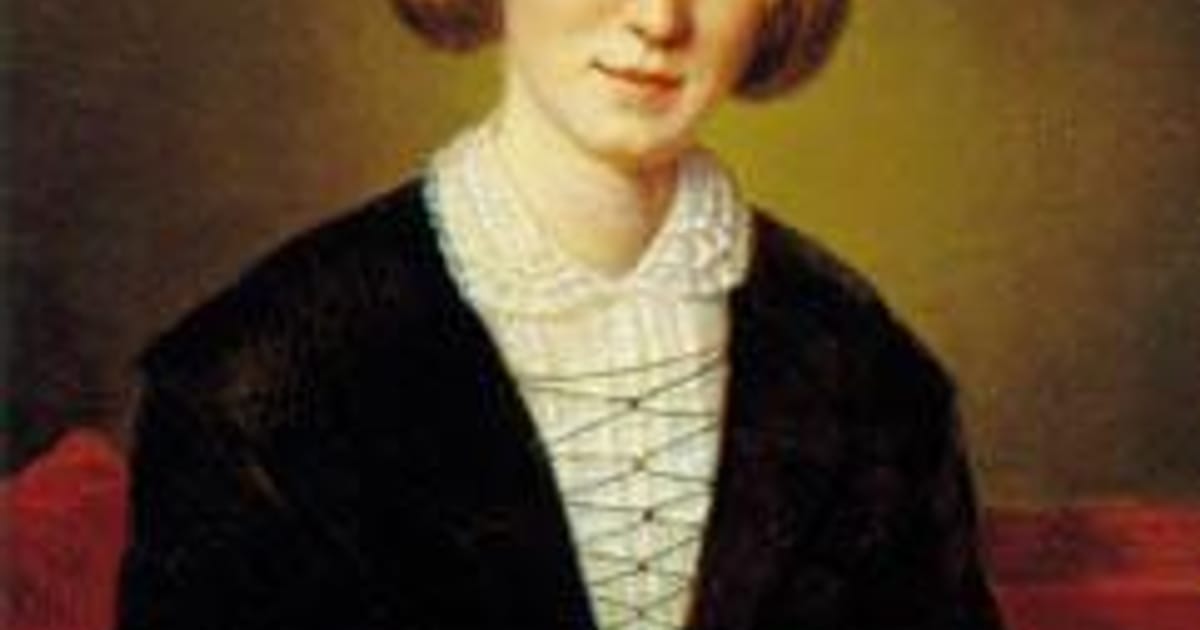
If you’ve ever fallen down a literary rabbit hole wondering where to start with
George Eliot, you’re not alone. Every few years a new ranking of her novels appears,
critics argue about whether Middlemarch really is the greatest English novel,
and readers on forums confess that they’ve owned Daniel Deronda for a decade
without getting past page thirty. Rankings and opinions around Eliot are intense,
affectionate, and occasionally a little dramatic which, honestly, she’d probably
enjoy.
This guide walks through how critics and readers rank George Eliot’s works, why
certain novels consistently land at the top, and how to pick the right starting point
for your own reading journey. Think of it as a friendly map to a very rich, very
Victorian universe.
Who Was George Eliot, and Why Do People Still Rank Her?
George Eliot was the pen name of Mary Ann Evans, a Victorian novelist known for her
psychological depth, moral seriousness, and very sharp eye for social detail. She grew
up in rural Warwickshire, spent years immersing herself in philosophy and theology,
and eventually became one of the most respected writers of her era. Her major works
include Adam Bede, The Mill on the Floss, Silas Marner,
Middlemarch, and Daniel Deronda, along with shorter fiction like
Scenes of Clerical Life.
Eliot wrote about provincial England country parishes, small towns, and the people
who lived there but her focus was never just scenery. She was fascinated by how
inner life collides with social expectations: ambition rubbing against duty, desire
bumping into religion, private doubts hiding under public respectability. That blend
of realism, philosophy, and emotional intelligence is exactly why critics keep
revisiting her work, making lists, and declaring winners.
The Core George Eliot Rankings: A Rough Consensus
No two rankings are identical, but if you look across critic lists, academic
discussions, and reader polls, a clear pattern appears. A typical “Eliot power ranking”
of the major fiction looks something like this:
- Middlemarch (1871–72)
- The Mill on the Floss (1860)
- Adam Bede (1859)
- Silas Marner (1861)
- Daniel Deronda (1876)
- Scenes of Clerical Life (1857)
- Felix Holt, the Radical (1866)
- Romola (1862–63)
Why this order? It reflects a mix of critical prestige, influence on later writers,
and how much modern readers actually enjoy the books. Let’s break down the key titles
and the opinions that surround them.
Middlemarch: The Unshakeable #1
If George Eliot novels were a league table, Middlemarch would be the club
that always finishes at the top with 30 points clear and a smug goal difference.
Critics have called it “one of the few novels written for grown-up people,” and modern
polls frequently place it at or near the very top of the “greatest novels in English”
lists.
What makes it rank so highly?
-
Scope: Instead of following a single hero or heroine, Eliot tracks
multiple intertwined lives in the town of Middlemarch from idealistic Dorothea
Brooke to ambitious doctor Tertius Lydgate and beyond. -
Psychological depth: Eliot dives into why people make the choices
they do, especially when they’re trying (and failing) to be good. -
Social detail: Politics, medicine, religion, money, marriage
they’re all woven into the story without turning it into a dry treatise. -
Emotional payoff: Readers often describe it as a slow burn that
suddenly becomes life-changing in the last third. It’s the literary equivalent of a
long hike with a spectacular view at the end.
The main “negative” opinion is really more of a warning label: the novel is long,
dense, and not particularly interested in instant gratification. Some readers bounce
off it once or twice before finally clicking with it. Others adore it from the first
pages. Either way, when people rank Eliot, Middlemarch is almost always the
benchmark.
The Mill on the Floss: The Emotional Favorite
If Middlemarch is the critics’ darling, The Mill on the Floss is
often the emotional favorite. Many readers say it was their first George Eliot novel
and the one that made them seek out the rest of her work.
This is Eliot at her most autobiographical. Maggie Tulliver, passionate and clever,
struggles against the narrow expectations of family and community. The sibling
relationship between Maggie and her brother Tom is one of the most vivid in Victorian
fiction: full of loyalty, resentment, love, and mutual misunderstanding.
Opinions here divide in interesting ways:
-
Fans praise its emotional intensity and the way it captures
childhood, family loyalty, and the cost of defying social norms. -
Critics sometimes argue that the ending is melodramatic, even
manipulative the kind of finale that sparks long book-club debates about whether
Eliot “cheated.”
Still, when readers rank Eliot’s work in order of personal impact, The Mill on
the Floss regularly lands in the top three, if not directly behind
Middlemarch.
Adam Bede and Silas Marner: Reliable Crowd-Pleasers
Adam Bede
Adam Bede is Eliot’s first full-length novel and was immediately recognized
as something special. It combines a compelling village scandal a seduction, an
illegitimate child, and a trial with careful portraits of ordinary people trying to
do the right thing.
Many readers rank it highly for a few reasons:
- It’s more accessible than some of her later, longer works.
-
The moral conflicts are clear without feeling simplistic; Eliot gives everyone a
human face, even when they make selfish choices. -
It offers the kind of emotional satisfaction that makes classic fiction feel
surprisingly modern.
Silas Marner
Silas Marner tends to show up as an early school read or a “short Eliot” for
busy adults. It’s a compact novel about a reclusive weaver who loses his hoarded gold
but gains something more precious when he adopts an abandoned child.
In rankings, it usually sits in the upper-middle:
-
Pros: Short, beautifully structured, and thematically rich. Readers
love the redemptive arc and the way Eliot links personal transformation to community
life. -
Cons: Because it’s often assigned in school, some readers meet it
before they’re ready and remember it mainly as “that book with the weaver and the
baby.”
Among fans, though, it’s frequently described as a “quiet favorite” maybe not the
loudest title on the list, but one people keep coming back to.
Daniel Deronda and the Late, Ambitious Eliot
Late-career Eliot is where opinions really start to diverge, and nowhere more so than
with Daniel Deronda. Some readers rank it just below Middlemarch;
others place it near the bottom of the list and gently recommend you read something
else first.
The novel is structurally unusual: half follows Gwendolen Harleth, a self-absorbed yet
fascinating young woman whose moral awakening is painfully gradual; the other half
follows Daniel Deronda himself, whose search for identity leads him into debates about
Judaism, nationalism, and purpose.
Typical opinions:
-
Pro-Gwendolen readers argue that her storyline is one of Eliot’s
finest psychological achievements a bracing, occasionally uncomfortable portrait
of a flawed person trying to become better. -
Mixed reactions center on the “Daniel” sections, which weave early
ideas of Zionism and political destiny into the narrative. Some find this visionary
and ahead of its time; others find it heavy and didactic.
The result is that Daniel Deronda often sits in the middle of rankings:
admired, argued over, and best approached when you’re already comfortable with
Eliot’s style.
The Lower-Ranked but Still Interesting Works
Every great author has their “for completists only” titles, and Eliot is no exception.
These novels rarely top rankings but still attract devoted champions:
-
Scenes of Clerical Life: A set of early tales that introduced
Eliot’s gift for small communities, moral conflict, and quiet tragedy. Readers who
love village settings often rank it above her more experimental work. -
Felix Holt, the Radical: Combines political reform, elections, and
questions of class. Admirers praise the political energy; others find the plot less
compelling than in her best-known books. -
Romola: A dense historical novel set in Renaissance Florence.
Ambitious and richly researched, it tends to be ranked lowest simply because it
doesn’t play to Eliot’s home-field advantage: provincial English society.
If you’re the type of reader who loves seeing a favorite author stretch and take
risks, these “lower-ranked” works might end up much higher on your personal
list.
What Do Critics vs. Casual Readers Think?
When we talk about “rankings,” we’re really juggling two different conversations:
academic criticism and everyday reader response.
Critical Opinions
For literary scholars, Eliot is a major figure in the history of the novel. They tend
to:
-
Emphasize how she developed psychological realism showing not just what characters
do, but how they reason, rationalize, and self-deceive. -
Highlight her engagement with philosophy, religion, and ethics. Eliot read deeply in
thinkers like Spinoza and Feuerbach, and it shows in the way her characters wrestle
with meaning and morality. -
Return to Middlemarch as her peak achievement: formally complex, morally
nuanced, and socially panoramic.
Reader Opinions
Everyday readers, on the other hand, often talk more about:
-
Relatability: Many readers see themselves in Dorothea’s idealism,
Maggie’s frustration, or Silas’s late-in-life transformation. -
Pace: Some people love sinking into the slow, detailed rhythm of
Eliot’s prose; others describe it as “homework with feelings.” -
Payoff: A common pattern is “struggle at first, then suddenly it
clicks and becomes a favorite.” There’s a reason readers talk about Eliot novels as
life milestones as much as books.
Put simply: critics rank her for her innovation and depth; readers rank her for how
much her characters feel like real, complicated people they’ve actually met.
Where Should You Start? Rankings by Reading Personality
Your ideal “George Eliot reading order” depends less on abstract rankings and more on
who you are as a reader. Here’s a quick guide:
If You Want the Big One Right Away
Go straight to Middlemarch. Accept that it may take a few
chapters to find your footing. Read it like a TV series rather than a single movie:
one or two chapters at a time, letting the intertwined plots unfold.
If You Prefer Emotional Intensity and Family Drama
Try The Mill on the Floss. It’s overflowing with sibling
conflict, parental expectations, and the aching feeling of wanting more from life than
your surroundings seem willing to offer.
If You Want Something Short but Powerful
Pick Silas Marner. It’s slim, beautifully structured, and
offers a redemptive arc that many readers find deeply moving, especially on a reread
later in life.
If You Like Political and Philosophical Questions
Try Daniel Deronda or Felix Holt.
They’re more overtly engaged with social reform, nationalism, and what it means to
live by convictions in a messy world.
No matter where you start, your own ranking will almost certainly evolve over time.
Many readers begin with one favorite, then switch allegiances as they age, change
careers, or see relationships differently. That’s part of the fun.
Living With Eliot: Reading Experiences and Personal Impressions
Rankings are tidy; actual reading experiences are not. Ask a group of readers about
George Eliot and you’ll hear stories rather than bullet points.
Someone will talk about meeting The Mill on the Floss as a teenager and
feeling like Maggie Tulliver had reached through time, grabbed them by the collar, and
said, “Yes, I also felt trapped and misunderstood.” Years later, the same reader might
revisit the novel as an adult and suddenly sympathize more with Maggie’s weary parents
and stubborn brother. The ranking hasn’t changed on paper, but emotionally the book
has shifted now it’s a story about a whole family, not just one fiery girl.
Another reader might confess that they tried Middlemarch three times and
bounced off every attempt until one slow winter when they decided to read just ten
pages a night. Somewhere around the middle, the book stopped feeling like a duty and
started feeling like a life. Dorothea’s idealism, Lydgate’s pride, and even secondary
characters like Celia and Mr. Brooke stopped being “Victorian figures” and became
people whose choices felt painfully familiar. By the end, that reader wasn’t just
ranking Middlemarch at the top of their Eliot list; they were using it as a
private reference point for their own decisions.
Book clubs add another layer of experience. In group discussions, readers often split
into “Team Dorothea” and “Team Casaubon Was Clearly a Red Flag,” or argue about
whether Gwendolen Harleth in Daniel Deronda deserves compassion or harsher
judgment. These debates don’t just sort characters into “good” and “bad”; they reveal
how differently people read the same moral situation. The same scene that looks like
selfishness to one reader looks like desperation to another.
Online communities echo this diversity of response. One person posts that
Silas Marner healed something in them after a difficult year, because its
story of loss and late-found love felt like a quiet promise that change is still
possible. Another admits that Romola defeated them completely, but they’re
weirdly proud of having tried. A third says they only truly appreciated Eliot when
they stopped racing and allowed themselves to read slowly savoring the metaphors,
the sly humor, and the way she occasionally breaks the fourth wall to talk directly to
the reader.
Over time, these layered experiences become their own kind of ranking system, one
that’s less about “best” and more about “which book found me at the right moment.”
For many readers, Middlemarch becomes the book of early adulthood, when
idealism crashes into reality. Silas Marner might become a midlife favorite,
a story of second chances. Daniel Deronda might resonate later, when
questions about purpose, identity, and community feel especially pressing.
In the end, the most interesting opinions about George Eliot are rarely just “this
novel is a masterpiece” or “that one is too slow.” They sound more like diaries:
“This book helped me understand my sibling,” “That character made me feel less alone
in a bad relationship,” “This ending broke my heart in a way I weirdly needed.”
Rankings can guide you toward the books, but your own experience where you are in
life when you read them, how patient you feel, what you’re secretly worrying about
will do the real sorting.
Conclusion: Rankings Are a Door, Not a Verdict
So where does all this leave us? On paper, the consensus is pretty clear:
Middlemarch sits at the top; The Mill on the Floss, Adam
Bede, and Silas Marner form a strong middle; the remaining works have
more specialized fans. Critics praise Eliot for her realism, her psychological
insight, and her engagement with big moral and philosophical questions. Readers love
her for the messy, recognizable humanity of her characters and sometimes grumble
about the length along the way.
But the real value of these rankings and opinions is not to decide, once and for all,
what you should admire. It’s to help you choose a starting point, set your
expectations, and then make room for your own reactions. The best George Eliot novel
is ultimately the one that speaks to you whether that’s the critical titan
Middlemarch, the fiercely emotional Mill on the Floss, or the slim,
luminous Silas Marner.
Use the rankings as a compass, not a rule book. Then step into Eliot’s world and let
your own opinions join the conversation that’s been going on for more than 150 years.