Note: This article uses “Mormonism” because it is a common search term, but the official and preferred name is The Church of Jesus Christ of Latter-day Saints, and members are best referred to as Latter-day Saints.
Introduction: Why Mormonism Gets Misunderstood So Often
Mormonism is one of those topics that many people think they understanduntil someone asks a follow-up question. Suddenly, the conversation goes from “They live in Utah, right?” to “Wait, do they use the Bible?” to “What is a temple, and why can’t I just wander in with a latte?” The result is a giant casserole of half-truths, outdated history, pop-culture jokes, and a few truly strange rumors that have been reheated since the 1800s.
The Church of Jesus Christ of Latter-day Saints began in 1830 in upstate New York, founded by Joseph Smith during a period of intense religious revival in the United States. Since then, it has grown into a global faith with millions of members, congregations around the world, a large missionary program, and a highly recognizable religious culture. Yet public understanding often lags behind reality. Some misconceptions come from real historical issues, such as nineteenth-century plural marriage. Others come from unfamiliar practices, like temple worship or sacred religious clothing. And some are just internet fog machines running at full blast.
This article clears up 10 common misconceptions about Mormonism with a balanced, respectful, and easy-to-read look at what Latter-day Saints actually believe and practice today.
1. Misconception: All Mormons Practice Polygamy
This is probably the most famous misconception about Mormonismthe big one, the headliner, the rumor that refuses to retire even after being handed a gold watch.
Historically, some early Latter-day Saints practiced plural marriage in the nineteenth century. That part is real history. But the mainstream Church of Jesus Christ of Latter-day Saints officially ended the practice in 1890. Today, members who enter into polygamous marriages are not considered members in good standing and may face church discipline.
The confusion often comes from media coverage of polygamous splinter groups, including groups that broke away from mainstream Latter-day Saint authority. These groups are not affiliated with The Church of Jesus Christ of Latter-day Saints. So when a documentary shows isolated polygamous communities and labels them “Mormon,” many viewers assume the same thing applies to regular Latter-day Saint families attending Sunday services in Boise, Atlanta, Manila, or São Paulo. It does not.
A useful comparison: early American history includes duels, powdered wigs, and medical leeches. That does not mean your local history teacher is settling arguments with a pistol at sunrise while wearing a powdered wig and prescribing leeches for seasonal allergies.
2. Misconception: Latter-day Saints Are Not Christian
Whether Latter-day Saints are Christian is one of the most debated religious questions about Mormonism. The answer depends partly on who is defining “Christian.” Latter-day Saints identify as Christians, worship Jesus Christ, pray in His name, teach His atonement and resurrection, and include His name in the official name of the church.
However, Latter-day Saint theology differs from traditional Catholic, Orthodox, and many Protestant doctrines, especially regarding the Trinity, continuing revelation, scripture, priesthood authority, and the nature of God. For that reason, some other Christian groups do not classify Mormonism as orthodox Christianity.
The fair explanation is this: Latter-day Saints are Christian by their own belief, worship, and identity, but their theology is restorationist and nontraditional compared with historic creedal Christianity. In other words, it is not accurate to say they “do not believe in Jesus.” It is more accurate to say they believe in Jesus Christ in a distinctive way.
3. Misconception: Mormons Worship Joseph Smith
Joseph Smith is central to Latter-day Saint history, but Latter-day Saints do not worship him. They regard him as a prophet, similar in role to biblical prophets such as Moses, Isaiah, or Peter. That means they believe God called him to restore lost truths, translate the Book of Mormon, organize the church, and receive revelation.
To outsiders, the attention given to Joseph Smith can look unusually strong. His story appears in church lessons, hymns, artwork, missionary discussions, and historical sites. But admiration is not the same thing as worship. Latter-day Saint worship is directed toward God the Father and Jesus Christ.
A simple way to think about it: Latter-day Saints see Joseph Smith as the messenger, not the message. Confusing the two is like assuming people worship the mail carrier because they were excited to receive a very important letter.
4. Misconception: The Book of Mormon Replaces the Bible
Many people assume that because Latter-day Saints use the Book of Mormon, they must have thrown the Bible into a spiritual junk drawer. Not so.
Latter-day Saints use both the Bible and the Book of Mormon. The Bible is studied in church classes, sermons, personal devotion, and family scripture study. The Book of Mormon is considered another witness of Jesus Christ, not a replacement for the Old and New Testaments.
The difference is that Latter-day Saints have an expanded scriptural canon. In addition to the Bible and the Book of Mormon, they also use the Doctrine and Covenants and the Pearl of Great Price. This is one reason Mormonism is often described as a restorationist faith: it claims that God continues to reveal truth, rather than limiting revelation to ancient scripture alone.
You do not have to agree with that claim to describe it accurately. The misconception is not “Latter-day Saints have additional scripture”that is true. The misconception is “Latter-day Saints do not care about the Bible”that is false.
5. Misconception: Temples Are Secret and Suspicious
Latter-day Saint temples are often misunderstood because not everyone can enter after they are dedicated. That can sound mysterious, and humans are very good at filling mystery with dramatic background music.
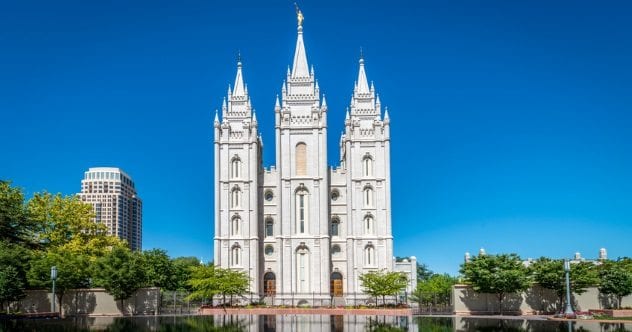
In Latter-day Saint belief, temples are sacred spaces where members make covenants with God, participate in ordinances, and focus on eternal family relationships. Temples are different from regular Sunday meetinghouses, which are open to visitors. Anyone can attend a regular Latter-day Saint worship service. Temples, by contrast, are reserved for members who meet specific standards of belief and practice.
Before many temples are dedicated, the public is invited to tour them during open houses. After dedication, entrance is limited because members view temple ordinances as sacred, not because they are trying to host a secret underground wizard convention. The better word is “sacred,” not “secret.”
6. Misconception: Temple Garments Are “Magic Underwear”
This phrase is common online, but it is inaccurate and offensive to many Latter-day Saints. Temple garments are sacred religious clothing worn under regular clothing by adult members who have participated in certain temple ordinances. They serve as a physical reminder of covenants made with God.
Many religions use clothing as a symbol of faith, identity, commitment, or humility. Examples include clerical collars, prayer shawls, head coverings, habits, robes, and other sacred garments. Latter-day Saint temple garments fit into that broader category of religious clothing.
Do Latter-day Saints believe garments are magical? No. They are not treated as lucky socks from heaven. They are symbolic, sacred, and personal. A respectful article about Mormonism should avoid mocking language and explain the practice in the same tone it would use for any other faith’s sacred clothing.
7. Misconception: Mormons Cannot Drink Any Caffeine
This misconception is half rumor, half soda fountain theology.
Latter-day Saints follow a health code known as the Word of Wisdom. In modern practice, this means avoiding alcohol, tobacco, coffee, tea, and harmful drugs. Many members also emphasize healthy living, moderation, and care for the body.
The caffeine question gets tricky because coffee and tea are prohibited, but caffeinated soft drinks have not been universally banned in the same way. Individual members may choose to avoid caffeinated soda, energy drinks, or other stimulants, but that is usually a personal or family choice rather than a formal churchwide rule.
So, if you see a Latter-day Saint drinking a cola, you have not uncovered a scandal. Put down the detective notebook. The real rule is more specific than the popular rumor.
8. Misconception: All Latter-day Saints Live in Utah
Utah is historically important to Latter-day Saint identity, but Mormonism is not just a Utah religion. The faith began in New York, moved through Ohio, Missouri, Illinois, and eventually became strongly associated with Utah after the pioneer migration led by Brigham Young. Because Salt Lake City remains the church’s headquarters, people often assume most Latter-day Saints live there.
In reality, The Church of Jesus Christ of Latter-day Saints is global. There are members across North America, Latin America, Africa, Europe, Asia, and the Pacific. Many Latter-day Saints have never lived in Utah, do not ski, do not own pioneer bonnets, and cannot explain why funeral potatoes became a cultural icon.
In the United States, Latter-day Saints are more concentrated in the West, but they are not limited to it. Globally, the faith includes many languages, cultures, races, and national backgrounds. Treating Mormonism as only a Utah phenomenon misses the modern church’s international reality.
9. Misconception: Missionaries Are Forced to Serve
Latter-day Saint missionaries are among the most visible representatives of the faith. They are the young adults in name tags, often riding bikes, knocking on doors, or politely asking if you have a few minutes to talk about Jesus Christ. They are also the reason many people have practiced saying “No, thank you” with Olympic-level precision.
Missionary service is strongly encouraged in Latter-day Saint culture, especially for young men, and many families treat it as an important milestone. But missionaries still choose to apply, prepare, and serve. Young teaching missionaries usually serve for 18 to 24 months, depending on age, gender, assignment, and mission type. There are also service missions and senior missions.
The social expectation can be strong, and experiences vary. Some missionaries feel deeply called; others wrestle with pressure, homesickness, language barriers, or doubts. A fair view recognizes both realities: missionary work is voluntary in structure, but culturally significant enough that some young members may feel heavy expectations.
10. Misconception: Mormonism Is One Uniform Culture
People often talk about “Mormons” as if every member has the same politics, personality, family structure, playlist, casserole recipe, and opinion about board games. Real life is more complicated.
Latter-day Saints share core beliefs and practices, such as worship services, scripture study, family emphasis, temple worship, and missionary service. But members differ widely in background, education, nationality, race, personality, economic status, and how they navigate culture. A Latter-day Saint in Ghana, a convert in New York City, a fifth-generation member in Utah, and a young adult in Brazil may share religious commitments while living very different daily lives.
There are also cultural differences between official doctrine and local habits. Some things outsiders think are “Mormon rules” may actually be regional customs, family preferences, or unofficial church culture. For example, modest dress is a religious value, but not every fashion choice has a secret handbook footnote. Family life is emphasized, but not every member fits the same household pattern. Church members may lean conservative in many U.S. contexts, but political views still vary.
Understanding Mormonism means separating doctrine, history, culture, stereotype, and individual experience. That is more work than repeating a meme, but the results are much better.
Why These Misconceptions Stick Around
Misconceptions about Mormonism survive for several reasons. First, Mormonism has unusual features compared with many mainstream American religions: additional scripture, temples, modern prophets, missionary service, sacred garments, and a distinctive health code. Anything unfamiliar tends to attract rumors. If people do not know what something means, they often invent a meaningand the invented version is usually more dramatic.
Second, the church has a complicated history. Plural marriage, racial restrictions in priesthood and temple access before 1978, tensions with the U.S. government in the nineteenth century, and debates over gender and sexuality are all real parts of the story. Some criticism comes from sincere concern, historical research, or personal experience. But a real historical issue can still be distorted when it is flattened into a slogan.
Third, pop culture loves shorthand. A television show, comedy sketch, or viral post rarely has time to explain the difference between mainstream Latter-day Saints, former members, cultural Mormons, fundamentalist splinter groups, and the Community of Christ. So everything gets tossed into one blender. The smoothie is not always nutritious.
Finally, Latter-day Saints themselves sometimes use language that outsiders do not understand. Words like “ward,” “stake,” “endowment,” “sealing,” “testimony,” and “calling” have specific meanings inside the faith. Without translation, normal church vocabulary can sound like secret code. In reality, a “ward” is a local congregation, not a hospital wing; a “stake” is a group of congregations, not vampire equipment; and a “calling” is a volunteer church assignment, not necessarily a thunderclap from the sky.
Experiences Related to Misunderstanding Mormonism
Many everyday experiences show how misconceptions about Mormonism appear in ordinary conversations. Imagine a Latter-day Saint student introducing herself at college. Someone asks where she is from. She says Arizona. The reply comes instantly: “Oh, so how many moms do you have?” The question may be meant as a joke, but it shows how deeply the polygamy stereotype has traveled. The student now has to decide whether to laugh, correct the person, or pretend she suddenly remembered an urgent appointment with a vending machine.
Another common experience happens at work lunches. A Latter-day Saint coworker turns down coffee, and someone whispers, “Is it because caffeine is illegal in your religion?” That opens the door to a friendly explanation of the Word of Wisdom: no coffee or tea, yes, many members make personal choices about soda, and no, there is not a secret caffeine police force hiding behind the office printer. These small moments can be awkward, but they can also become useful bridges when people ask with genuine curiosity.
Temple questions are another frequent source of misunderstanding. A Latter-day Saint friend may invite neighbors to a temple open house before dedication, and someone says, “I thought outsiders were never allowed inside.” The open house becomes an eye-opening experience. Visitors see bright rooms, religious artwork, quiet spaces, and instruction areasnot trapdoors, treasure vaults, or mysterious movie-villain architecture. Even if visitors do not share the beliefs, they often leave with a more accurate understanding of why temples matter to members.
Missionary experiences can also challenge stereotypes. Many people assume missionaries are robotic salespeople with identical scripts. Then they meet one who loves basketball, another who studied engineering, another who is learning English, and another who is painfully shy but trying hard anyway. Whether someone accepts the message or not, meeting actual missionaries often makes the stereotype feel too small for real human beings.
Former members add another layer of experience. Some leave the church peacefully; others leave with pain, frustration, or difficult family dynamics. Their stories matter too. Understanding Mormonism honestly means allowing room for believing members, questioning members, former members, converts, lifelong participants, and people with mixed experiences. A mature conversation does not require pretending everyone has the same story.
The best experiences usually happen when questions are asked respectfully. “Can you explain what your church teaches about that?” works much better than “So, is it true you people believe something weird?” Curiosity opens doors. Mockery locks them, then complains that the room is too quiet.
In real life, most Latter-day Saints are not walking stereotypes. They are neighbors, parents, students, coworkers, business owners, teachers, nurses, engineers, artists, and retirees. Some are deeply devout. Some are culturally connected but less active. Some are converts with no pioneer ancestry at all. Some love church potlucks; some attend because they love Jesus; some are still figuring things out. The experience of Mormonism is far more varied than the misconceptions suggest.
Conclusion: Better Questions Lead to Better Understanding
Mormonism is often misunderstood because it combines familiar Christian language with distinctive beliefs and practices. That mix can confuse outsiders. Latter-day Saints talk about Jesus, scripture, prayer, family, service, and salvationbut they also talk about modern prophets, temples, the Book of Mormon, eternal families, and continuing revelation. When people only hear fragments, misconceptions grow quickly.
The solution is not to avoid hard topics. Polygamy, race, gender roles, LGBTQ questions, religious authority, and church history deserve thoughtful discussion. But thoughtful discussion starts with accuracy. It is possible to disagree with Latter-day Saint beliefs while still describing them fairly. It is possible to critique history without pretending all modern members practice nineteenth-century customs. And it is possible to ask questions without turning sacred beliefs into punchlines.
In the end, the most common misconceptions about Mormonism fade when people replace rumor with context. Latter-day Saints are not all polygamists, do not worship Joseph Smith, do not replace the Bible, do not treat garments as magic, and do not all live in Utah. They belong to a global, complex, restorationist Christian tradition with real history, real diversity, real controversies, and real people behind the label.
And as with most things in life, the best rule is simple: before assuming, ask. Preferably without a casserole in handbut if you bring one, make sure it is labeled.