Editor’s note: This article critiques disruptive or unsafe behavior, not people’s looks, careers, or harmless attempts to create content. Filming in public is normal. Acting as though everyone else has been cast as an unpaid extra is where things get weird.
There are two versions of nearly every viral photo. Version one is the finished post: a person gazing thoughtfully at the ocean, holding an immaculate coffee, or appearing to have accidentally wandered into a sunset that looks suspiciously like it was manufactured by a luxury candle company. Version two is what happens just outside the frame: a friend crouching in a bush, a line of impatient people waiting for the sidewalk to reopen, or someone posing next to wildlife as though nature signed a talent-release form.
That second version is the reason pages such as Influencers in the Wild became such a popular corner of the internet. The account and similar crowd-sourced feeds highlight the behind-the-scenes absurdity of social media performance: dramatic poses in busy public places, photo shoots that inconvenience strangers, and elaborate setups designed to look casual. The humor is not that someone wants a nice photo. We all want a nice photo. The humor arrives when “nice photo” evolves into “temporary takeover of the airport gate, please respect the creative process.”
The collection behind the title, “40 Times People Spotted Influencers Doing Questionable Things To Get ‘The Shot,’” works because it captures a modern contradiction. Social media rewards images that appear spontaneous, but creating that spontaneous look can require lighting, retakes, props, strategic angles, several friends, and the confidence of a person who believes a public staircase is their personal film studio.
Why “The Shot” Has Become Such Serious Business
Influencer culture is not just about vanity. For many creators, content is work. A polished post can lead to a partnership, a product sale, a hotel stay, a booking, or a larger audience. Pew Research Center has found that many social media users follow influencers and that a meaningful share have bought products after seeing influencer content. That economic incentive helps explain why creators care about presentation, consistency, and images that stop people mid-scroll.
But there is a gap between being professional and being performatively inconsiderate. A photographer taking ten seconds to capture a portrait in a park is not a public menace. A creator who blocks a path, tramples landscaping, demands strangers move, or ignores staff instructions is not “committed to the craft.” They are simply making everyone else pay the inconvenience bill for their content.
That is why the funniest posts in this genre often contain a tiny visual betrayal. The finished image may promise serenity, wealth, romance, adventure, or effortless glamour. The candid photo reveals a folding chair, a borrowed handbag, a crowded tourist zone, or a boyfriend holding a phone at the exact angle required to make a parking lot look like a Mediterranean escape.
There is nothing wrong with staging a photograph. Fashion magazines have done that forever. The issue is pretending that a staged image is proof of a lifestyle while treating the people and places around you like disposable props. The internet may love an illusion, but it also loves discovering where the illusion keeps its extension cords.
40 Questionable Things People Notice When Influencers Chase “The Shot”
The following moments reflect recurring patterns found in viral “influencers in the wild” content. Some are merely awkward. Others cross the line into inconsiderate, misleading, or unsafe behavior.
- Turning a narrow sidewalk into a runway while pedestrians squeeze around a tripod.
- Taking twenty near-identical photos of a meal while everyone else’s food quietly reaches room temperature.
- Posing beside a memorial as though grief were a decorative background texture.
- Standing in a flower bed because apparently the path was not emotionally available enough.
- Using a busy airport terminal as a personal fashion studio.
- Asking strangers to move because they “ruin the aesthetic” of a public beach.
- Blocking a store entrance for a transition video that lasts eight seconds online and forty minutes in real life.
- Climbing on signs, railings, or displays that were not built for posing.
- Filming a dramatic coffee sip while an exhausted friend takes 200 photos from below table height.
- Staging a “candid” laugh so loudly that nearby diners receive a free dinner theater performance.
- Dragging furniture across a public space to create a more luxurious background.
- Using a hotel lobby as a studio without checking whether filming is allowed.
- Borrowing a luxury car for a photo and framing it as everyday transportation.
- Renting a set that imitates private travel or high-end living, then presenting it as reality.
- Standing too close to wild animals for a “fearless” nature photo.
- Ignoring ropes, barriers, or warning signs because the restricted side has better lighting.
- Making a friend repeatedly toss a hat, jacket, or scarf until it falls in the right direction.
- Holding traffic in place for an outfit video.
- Using a crowded museum or gallery as a backdrop while blocking artwork for everyone else.
- Filming strangers without asking, then acting surprised when they dislike being part of the content.
- Leaving disposable props behind after a picnic-style photo shoot.
- Creating a fake “just woke up like this” scene with a full makeup kit hiding nearby.
- Balancing drinks, cameras, and accessories where they could spill onto other people.
- Demanding a partner retake a photo until the partner’s soul visibly leaves their body.
- Turning a gym into a production set during peak hours.
- Blocking a staircase because the stairwell happens to match the outfit.
- Doing a loud skit in a quiet space where everyone else came for peace.
- Placing props in public fountains, gardens, or displays to make a scene feel more “editorial.”
- Using restaurant staff as unpaid photographers without asking whether they have time.
- Performing exaggerated surprise for a product they clearly opened before recording.
- Taking a romantic couple photo while a friend stands three feet away giving directions.
- Creating fake luxury by shooting from one flattering corner of an otherwise ordinary setting.
- Standing in the middle of a popular viewpoint while everyone behind them waits for the mountain to become visible again.
- Recording a “solo travel” video that visibly requires a camera operator, stylist, luggage handler, and snack courier.
- Moving public chairs or decorations because they clash with a color palette.
- Filming in places of worship, remembrance, or reflection without considering the setting.
- Using fragile natural areas as a backdrop for shoes, bags, or elaborate poses.
- Trying to create a dangerous-looking image simply because danger performs well online.
- Editing a location so heavily that visitors arrive expecting a fantasy and find a parking lot.
- Forgetting that people can see the entire production happening before the final photo is posted.
When a Funny Photo Becomes a Real Problem
Many awkward influencer moments are harmless enough to earn a laugh and a dramatic eye roll. The more serious cases involve safety, environmental harm, deception, or disrespect for people who never agreed to participate.
Nature Is Not a Content Set
National Park Service guidance is blunt for a reason: visitors should not approach wildlife, and photos that encourage unsafe behavior can inspire copycats. Park officials have also warned visitors not to post selfies while engaging in prohibited behavior, such as feeding wildlife.
A beautiful outdoor photo is not worth damaging a fragile landscape, stressing an animal, or teaching followers that boundaries are optional when the lighting is excellent. The most impressive nature content often comes from patience, distance, and respect. A telephoto lens may not be glamorous, but neither is explaining to a ranger why your “just one picture” became a problem.
Public Places Are Shared, Not Reserved
Influencers are allowed to create in public. So are tourists, families, commuters, restaurant staff, students, joggers, and the person who simply wants to walk through a doorway without accidentally appearing in a skincare ad. Courtesy matters because public space belongs to everyone at once.
The easy rule is simple: take the photo, keep the setup brief, ask before involving workers or strangers, and move when someone needs access. A creator who can make a great image without obstructing everyone around them is showing more skill than someone who needs a crowd-control strategy for a mirror selfie.
Transparency Is More Attractive Than Pretending
Some influencer content creates an unrealistic impression of wealth, travel, beauty, or ease. A rented studio can look like a penthouse. A borrowed car can look like a daily driver. A sponsored getaway can look like a random Tuesday. There is nothing inherently wrong with a set, sponsorship, or professional shoot. The problem begins when the audience is led to believe that a manufactured moment is an ordinary life.
The Federal Trade Commission advises influencers to disclose material relationships with brands clearly and conspicuously. In plain English: if someone was paid, gifted an item, or has another meaningful connection to a product, the audience should not have to solve a tiny detective mystery to figure that out.
Why People Love Watching Influencers Get Caught
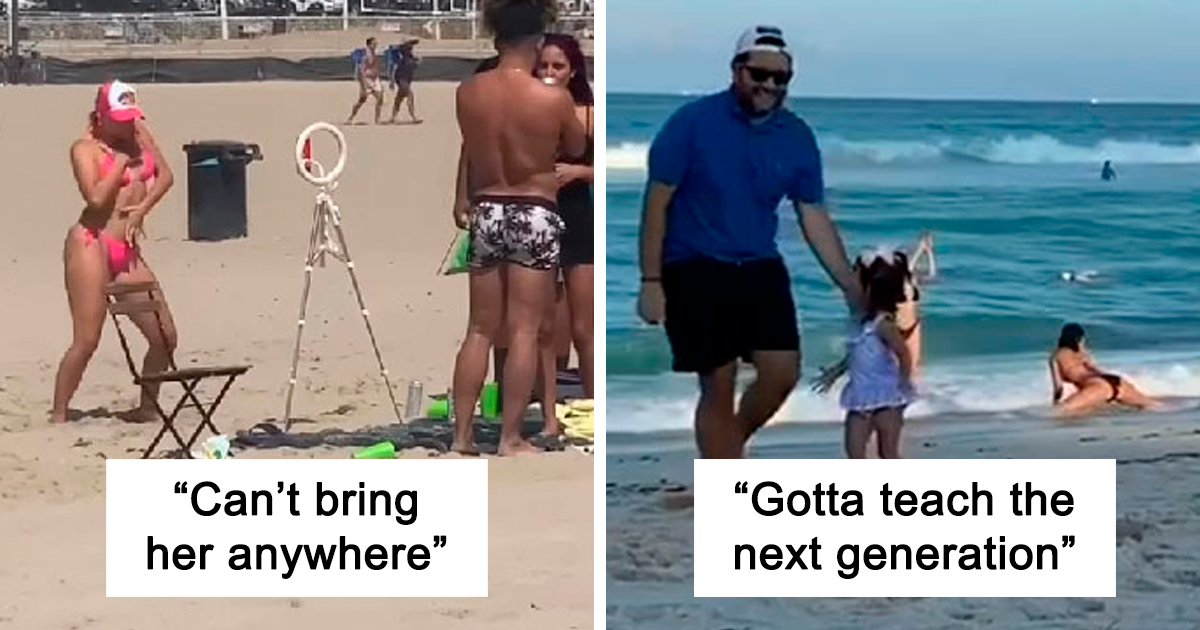
Part of the appeal is comedy. The candid behind-the-scenes photo punctures the illusion with the force of a balloon meeting a cactus. We see a perfect beach shot and then discover the creator was lying on the sand next to a garbage can while a friend shouted, “Chin down! More mysterious!” It is hard not to laugh.
But there is also a deeper reason. Social media often encourages viewers to compare their regular lives with someone else’s most polished ten seconds. The behind-the-scenes view reminds us that many “effortless” posts are carefully planned performances. The lighting is arranged. The location is selected. The image is edited. The candid laugh may have been attempted seventeen times, and the first sixteen were apparently too human.
The American Psychological Association encourages young viewers to think critically about influencer content because it may be curated, sponsored, or inaccurate. That does not mean every creator is dishonest. It means audiences deserve to remember that a post is a product, a performance, or both.
There is a difference between laughing at questionable conduct and building an online dogpile around a stranger. The healthiest version of influencer criticism focuses on actions: blocking a path is inconsiderate, misleading advertising should be disclosed, and disrespecting wildlife is unacceptable. It does not require cruelty, harassment, or treating every awkward person with a phone as a villain.
How Creators Can Get Better Content Without Becoming “That Person”
Good creators do not need to abandon ambition. They just need a few boundaries. Ask before filming in a business. Respect posted rules. Avoid recording people who do not want to be included. Keep gear compact in crowded places. Leave landscapes exactly as you found them. Tell followers when something is sponsored, staged, rented, or edited. These choices do not make content less glamorous; they make it more trustworthy.
Creators can also be honest about the work behind the image. Showing the outtakes, the tripod, the friend behind the camera, or the normal mess outside the crop can make content more engaging. Audiences are often more loyal to personality than perfection. A creator who says, “Yes, this took thirty photos and my friend deserves fries,” is instantly more relatable than someone pretending the universe arranged a flawless photo shoot around them.
Brands have a role too. They can reward transparent storytelling, clear disclosures, respectful travel practices, and content that does not glamorize unsafe behavior. Research on outdoor social media use has found an association between influencer status and reported outdoor risk-taking, though association does not prove that one causes the other. The takeaway is still useful: the content economy should not make risky conduct look like a career requirement.
The Real Lesson Behind “Influencers in the Wild”
The funniest influencer photos are not really about influencers. They are about the strange modern pressure to convert every moment into proof that life is exciting, beautiful, expensive, romantic, productive, and perfectly color-coordinated.
There is nothing wrong with taking photos. Take photos at dinner. Take photos on vacation. Take photos with your friends, your dog, your coffee, your new shoes, and the spectacular sunset that absolutely deserves its own close-up. Just remember that the best content does not require trampling a flower bed, blocking a doorway, misleading followers, or asking a stranger to relocate because they are standing in the wrong place in reality.
Sometimes the most influential thing a person can do is take one good photo, put the phone down, and let everyone else enjoy the view.
Experience-Based Lessons From Life Outside the Frame
Anyone who spends time in busy restaurants, parks, airports, beaches, shopping districts, or tourist attractions has probably seen a small version of the “influencer in the wild” phenomenon. It may not involve a famous creator with millions of followers. More often, it is a couple trying to make an ordinary day look cinematic, a friend group filming a dance video, or someone taking forty photos of one iced drink before the ice begins planning its own retirement.
The first lesson is that preparation changes everything. People who know what they want to shoot can take a photo quickly and move on. They choose a less crowded spot, bring the right equipment, and avoid forcing everyone nearby to wait. The people who create the most disruption are often not the most creative. They are simply unprepared and hoping that a public place will pause while they figure out their angle.
The second lesson is that the best memories rarely come from the most staged images. A photo that captures a real laugh, a slightly crooked outfit, or an unexpected moment often feels warmer than one that looks like it was built by a committee of filters. Perfection may attract a quick glance, but personality gives people a reason to stay.
The third lesson is that friends behind the camera deserve appreciation. Many viral-looking photos depend on someone holding bags, watching traffic, carrying props, finding the right light, and hearing “one more” enough times to qualify for a loyalty program. A simple thank-you, a snack, or a turn behind the camera can keep a photo shoot from becoming a friendship stress test.
The fourth lesson is that honesty is surprisingly powerful. Audiences know that social media is curated. They are not shocked to learn that someone used editing tools, picked a flattering angle, or spent time making a post look polished. What frustrates people is the attempt to sell a staged scene as effortless truth. Showing a few outtakes or admitting that a photo involved trial and error can make a creator more likable, not less aspirational.
Finally, the most useful experience is learning how to enjoy a place without treating it as a backdrop. A beach is not just a background. A restaurant is not just a lighting source. A national park is not just an oversized wallpaper file. These places have other visitors, workers, wildlife, history, and rules. Respecting all of that does not ruin the shot. It gives the shot a better story.
In the end, the funniest “influencers in the wild” moments remind us that everyone is performing a little online. The goal is not to stop creating. The goal is to create without making strangers, staff, nature, or friends regret being within camera range.