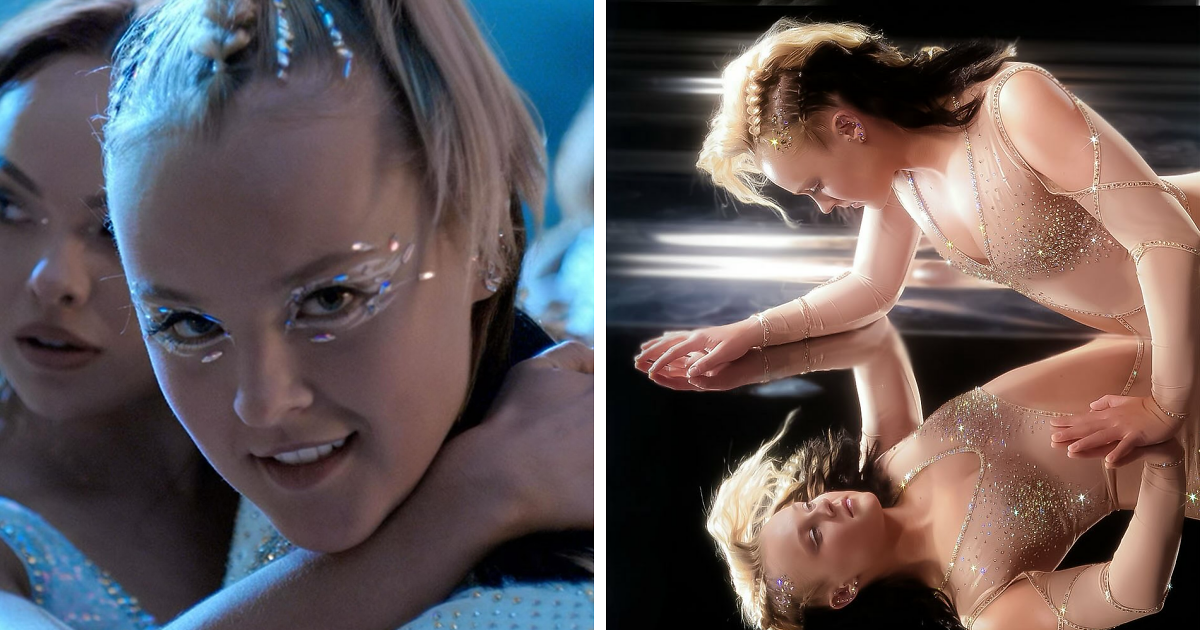
JoJo Siwa has never exactly been a quiet celebrity. She built a brand on giant bows, rainbow sparkle, dance-floor energy, and a level of enthusiasm that could power a small theme park. So when she entered her adult pop era with the single “Karma,” fans expected noise. What they got was a full internet weather event.
The storm began when Siwa spoke about her new music and described wanting to start a music genre called “gay pop.” In the now-viral interview clip, she compared the idea to K-pop, saying it would be pop music with a queer identity and performance style at the center. The internet, as it tends to do, immediately put on its glasses, opened the history books, and said, “JoJo, please report to the principal’s office.”
The backlash was fast because the phrase sounded, to many people, like Siwa was claiming ownership over something that has existed for decades. Queer pop did not suddenly appear because a former child star wore black rhinestones and released an edgy music video. LGBTQ+ artists, queer-coded performers, gay icons, club legends, drag-influenced pop stars, and boundary-pushing musicians helped shape pop culture long before this interview ever trended.
What Did JoJo Siwa Actually Say About “Gay Pop”?
The controversy centered on Siwa explaining how she described her new musical direction after signing with Columbia Records. She said she wanted to start a new genre of music and called it “gay pop.” She compared it to familiar hybrid styles, suggesting that it was not simply regular pop, but a more specific world of sound, performance, attitude, and queer expression.
On paper, the idea of giving LGBTQ+ pop artists a bigger category is not outrageous. Music platforms separate songs into pop, dance, rock, R&B, country, hip-hop, Latin, electronic, and endless micro-genres. A dedicated queer pop category could help listeners discover artists whose music centers queer identity, same-sex love, chosen family, drag culture, Pride energy, gender play, and club-floor liberation.
The problem was not only the concept. The problem was the wording. Saying “I want to start a new genre” made it sound as if Siwa had just invented glitter, eyeliner, heartbreak, Pride anthems, and the concept of dancing dramatically under purple lighting. That is a lot to place on one pair of rhinestoned shoulders.
Why The Internet Called The Interview “Cringey”
Many fans felt the interview was awkward because it seemed historically unaware. Queer listeners immediately pointed to artists who have been making gay pop, queer pop, LGBTQ+ pop, disco-pop, dance-pop, glam pop, and proudly queer anthems for generations. Elton John, Freddie Mercury, George Michael, Madonna, Lady Gaga, Scissor Sisters, Tegan and Sara, Sam Smith, Troye Sivan, Janelle Monáe, Hayley Kiyoko, Kim Petras, Lil Nas X, Chappell Roan, and many others were quickly brought into the conversation.
That reaction was not just nitpicking. For LGBTQ+ audiences, music history is cultural memory. Queer pop has often been a shelter, a diary, a dance floor, a protest sign, and sometimes a coded message when artists could not be fully open. To suggest that the genre needed to be “started” in 2024 felt, to critics, like walking into a packed Pride parade and announcing, “Great news, everyone, I invented walking.”
The word “cringey” stuck because Siwa’s rebrand already felt theatrical to many viewers. Her new era arrived with warnings that her content was “not made for children,” a darker visual style, explicit lyrics, intense choreography, and a “bad girl” persona. Some fans saw that as a natural transition from child star to adult performer. Others saw it as a little too rehearsed, like a Disney villain origin story staged at a glitter outlet.
The “Karma” Rebrand Made Everything Louder
Siwa’s single “Karma” was released in April 2024 and became the centerpiece of her adult pop rollout. The song moved away from her kid-friendly image and leaned into EDM-flavored dance-pop, dramatic styling, and a music video filled with intense choreography and queer romantic imagery. It was designed to announce a transformation, and in that sense, it worked. People absolutely noticed.
However, attention is not the same thing as universal applause. The song and video became viral partly because people debated whether the new image felt authentic, forced, campy, brave, awkward, or all of the above. Siwa wore bolder costumes, darker makeup, and glam-rock-inspired looks that drew comparisons to KISS and other theatrical performers. The shift from rainbow bows to black sparkle was so extreme that it practically needed its own customs declaration.
The “gay pop” comment landed in the middle of that already chaotic rollout. Instead of being received as a thoughtful idea about platforming queer artists, it became another piece of evidence for critics who felt Siwa was trying too hard to shock people.
JoJo Siwa Later Clarified Her Comments
After the backlash, Siwa clarified that she did not mean she personally invented gay pop. She acknowledged that queer pop artists already exist and explained that her point was about making “gay pop” a more official, searchable, visible genre in the music industry. In other words, she was not trying to erase past artists, she said; she wanted to create a bigger home for them.
That clarification helped some people understand her intent, but it did not erase the original reaction. Online culture rarely rewards nuance after a quote has already escaped into the wild. Once a phrase becomes meme fuel, it sprints faster than a teenager leaving a family group chat.
Still, the clarification matters. There is a meaningful difference between saying “I invented gay pop” and saying “I want gay pop recognized as an official category.” The first sounds historically careless. The second raises a real question about how music platforms categorize identity-driven art.
Why “Gay Pop” Is Bigger Than One Viral Interview
The debate around Siwa’s comments reveals something important about pop culture: audiences are protective of history, especially marginalized history. Queer artists have often had to fight for visibility, radio play, label support, award recognition, and the freedom to sing honestly about love and desire. When a younger celebrity appears to claim the space as new, the reaction can feel personal.
Queer pop is not one sound. It can be disco, synth-pop, hyperpop, dance-pop, indie pop, glam rock, electronic, country-pop, or piano balladry. What connects it is often perspective: songs about queer love, gender expression, liberation, chosen family, secrecy, coming out, heartbreak, nightlife, self-invention, and survival. Sometimes it is loud and proud. Sometimes it is subtle, coded, or hidden beneath metaphor.
That is why fans were quick to mention earlier icons. Madonna built major pop moments around queer club culture. Lady Gaga turned outsider identity into stadium-sized catharsis. George Michael and Elton John shaped generations of pop listeners. Tegan and Sara helped carve out mainstream space for queer indie-pop. Lil Nas X transformed internet virality into unapologetically queer spectacle. Chappell Roan turned drag-inspired performance and queer romance into a modern pop movement.
Siwa may be part of this conversation, but she did not begin it. At best, she entered a party that had already been going for years, grabbed the microphone, and accidentally introduced herself as the landlord.
Was The Backlash Fair?
The backlash was understandable, but not all of it was equally fair. Criticizing a celebrity’s wording, musical strategy, or lack of historical context is one thing. Turning that criticism into personal cruelty is another. Siwa has been famous since childhood, and her public growing pains have unfolded in front of millions of people who often treat young celebrities like group projects they are allowed to grade in permanent ink.
Some criticism focused on real issues: the phrasing, the rebrand, the commercial packaging of queer identity, and the risk of presenting LGBTQ+ culture as a marketing costume. Those are legitimate points. When a pop star uses queer language to define a new era, listeners have the right to ask whether the art feels grounded, respectful, and aware of its lineage.
Other reactions simply mocked Siwa for being awkward, loud, or theatrical. That is less useful. Pop has always been full of awkward reinventions. Some become iconic later. Some become cautionary tales. Some become Halloween costumes. Sometimes all three happen before lunch.
The Role Of Child-Star Reinvention
Siwa’s rebrand also fits a familiar celebrity pattern. Child stars often reach a point where they need to separate their adult identity from the brand that made them famous. Miley Cyrus had her “Bangerz” era. Demi Lovato moved into more mature pop-rock themes. Britney Spears fought against being trapped in a schoolgirl image. Christina Aguilera shifted from teen pop to the bold styling of “Dirrty.”
Siwa’s challenge is even stranger because her original brand was not just youthful; it was aggressively wholesome, colorful, and merchandised. JoJo bows, Nickelodeon projects, dance competitions, and kid-friendly anthems made her a household name among young fans. When someone that recognizable changes lanes, the public does not quietly wave from the sidewalk. It honks, screenshots, debates, and makes reaction videos.
The “gay pop” controversy became part of that larger struggle. Siwa was not only trying to release a song. She was trying to convince the public that she could be an adult artist, a queer pop performer, and a serious entertainer. That is a difficult pivot when many people still remember you as the kid with the bow bigger than most studio apartments.
What The Controversy Says About Branding And Authenticity
Modern pop stars are expected to be authentic, but also strategic; vulnerable, but also marketable; bold, but not embarrassing; polished, but not fake; online, but somehow not too online. That is an impossible checklist, and Siwa ran directly into it.
Her “gay pop” framing sounded like branding language. That is likely why it annoyed people. Queer pop fans do not want a boardroom to discover them as if they are a new flavor of sparkling water. They want recognition for artists and communities that have already shaped music history.
At the same time, Siwa’s instinct was not entirely wrong. LGBTQ+ artists do deserve more visibility. Queer music should be easier to find. Streaming platforms could do a better job highlighting queer creators beyond Pride Month. Award shows, playlists, radio formats, and editorial coverage often still treat queer identity as a niche rather than a major force in pop.
The lesson is that good ideas need careful language. If Siwa had said, “I want to help make queer pop more visible as an official category,” the internet might still have teased her, but the conversation would have been very different. Words matter, especially when they step onto history’s toes wearing platform boots.
Specific Examples Of Artists Fans Used To Push Back
Many people responded to Siwa by naming artists whose work already fits the idea of gay pop. Lady Gaga’s catalog has long been embraced by LGBTQ+ fans, especially songs centered on self-acceptance, club liberation, and chosen-family energy. Elton John and Freddie Mercury represent earlier eras of queer-coded and openly queer musical influence. George Michael’s work blended pop stardom with complicated public conversations about sexuality.
More recent examples are just as clear. Lil Nas X built a pop-rap universe that openly challenged religious imagery, masculinity, and queer visibility. Kim Petras became a major trans pop figure in dance music. Troye Sivan made same-sex desire central to sleek mainstream pop. Janelle Monáe has created futuristic, sensual, gender-expansive art. Chappell Roan has brought drag aesthetics, lesbian desire, and theatrical pop performance into a new mainstream moment.
That list does not even cover the full history. It simply proves the point: Siwa’s “new genre” already had a very crowded VIP section.
Experience-Based Reflections: What This Moment Teaches About Pop Culture, Queer Art, And Public Mistakes
There is a very human lesson inside the JoJo Siwa “gay pop” controversy: people often speak in slogans before they understand the weight of the room they are standing in. Many creative people, especially young performers, want to name what they are building. They want a label, a lane, a movement, a headline. That instinct is not evil. In music, naming a sound can help audiences find it. But naming something without acknowledging the people who built it first can make the name feel less like celebration and more like accidental colonization with a glitter cannon.
Anyone who has worked in content, branding, music, or social media has seen this happen. A person gets excited, tries to package an idea quickly, and chooses words that sound bigger than intended. Then the internet hears only the biggest version. “I want to contribute to this space” becomes “I invented this space.” “I want to popularize this sound” becomes “Nobody did this before me.” That gap between intent and impact is where viral backlash lives.
For artists, the practical experience is simple: study before you speak. If you are stepping into a genre tied to identity, history, or marginalized communities, learn the lineage. Mention the people who came before you. Name your influences clearly. Say “I am inspired by” more often than “I am starting.” Audiences are usually more generous when they feel an artist is joining a tradition rather than trying to trademark it.
For fans, there is another lesson: criticism can be sharp without becoming cruel. It is fair to say Siwa’s comment was poorly worded. It is fair to say the rebrand felt forced. It is fair to roll your eyes at the idea that gay pop needed a ribbon-cutting ceremony in 2024. But public mockery can become excessive quickly, especially when aimed at a young adult who has grown up under constant surveillance. The better conversation is not “How do we humiliate her?” but “What does this reveal about how entertainment markets queer identity?”
For publishers and bloggers covering this topic, the takeaway is to avoid flattening the story into a cheap dunk. The headline is funny, yes. The interview was awkward, yes. The memes wrote themselves and probably demanded co-writing credit. But the deeper story is about pop music history, LGBTQ+ visibility, celebrity reinvention, and the tension between personal expression and commercial branding.
For JoJo Siwa, this may ultimately become a useful scar rather than a career-ending wound. Pop culture has a short memory for many controversies, but it has a long memory for growth. If she continues making music, gives credit generously, embraces queer pop history, and lets the art mature beyond shock-value packaging, this messy moment could become part of a larger evolution. Reinvention is rarely graceful on the first try. Sometimes it enters the room wearing too many rhinestones, trips over a microphone cable, and still finds a way to keep dancing.
Conclusion
JoJo Siwa’s “gay pop” interview became a viral controversy because it collided with two powerful forces: queer music history and the internet’s love of a cringey celebrity moment. Her wording made it sound like she was claiming to invent a genre that countless LGBTQ+ artists and gay icons had already shaped. Fans pushed back hard, and Siwa later clarified that she did not mean she created gay pop, but wanted it to be recognized more clearly as an official category.
The backlash was not just about one quote. It was about respect, memory, branding, and how artists enter communities that existed long before their latest era. Siwa’s new image may be divisive, but the conversation around it proves that queer pop is not a novelty. It is a long, loud, glittering, complicated, joyful, rebellious tradition. And no, it did not begin with “Karma”—although karma certainly helped everyone talk about it.
Note: This article is based on publicly reported information about JoJo Siwa’s 2024 “gay pop” comments, the release of “Karma,” public reactions, and her later clarification. It is written as original editorial content for web publication.