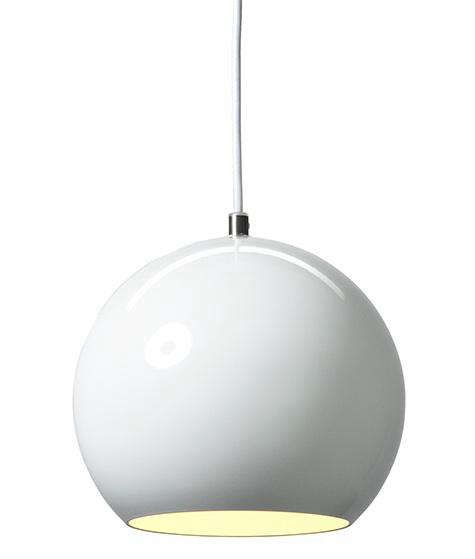
The Topan Pendant is proof that a lamp does not need to shout, wave, sparkle, or arrive wearing rhinestone boots to become unforgettable. Designed by Danish design legend Verner Panton in 1959, the Topan VP6 pendant looks almost impossibly simple: a compact aluminum sphere with a clean opening at the bottom, a neat fabric cord, and a personality much bigger than its diameter. It is small, round, confident, and quietly coolthe lighting equivalent of someone who walks into a room wearing a black turtleneck and somehow makes everyone else reconsider their outfit.
Today, the Topan Pendant is produced by &Tradition, the Copenhagen-based design brand known for reviving and preserving important Scandinavian lighting and furniture classics. While many pendant lights try to win attention through complicated silhouettes, oversized shades, or enough exposed bulbs to make a restaurant feel like a movie set, Topan does the opposite. It wins by being precise. The form is reduced, the geometry is pure, and the effect is surprisingly warm. This is why the Topan pendant light continues to feel relevant in modern homes, boutique hotels, creative studios, dining rooms, kitchens, and anywhere else that could use a little architectural charm without visual chaos.
In short, the Topan Pendant is not just a lamp. It is a compact lesson in modern design: keep the shape honest, make the color matter, and let good proportions do the heavy lifting.
What Is the Topan Pendant?
The Topan Pendant, often listed as the Topan VP6 Pendant, is a small spherical hanging light designed by Verner Panton. Its shade is typically made from lacquered aluminum, giving it a smooth, polished, and durable surface. The pendant measures approximately 8.3 inches wide and 7.5 inches high, making it compact enough for grouped installations but distinctive enough to stand alone over a small table, counter, reading corner, or bedside area.
The design is intentionally uncomplicated. There are no unnecessary decorative parts, no fussy ornament, and no “look at me, I have twelve adjustable arms” drama. The Topan pendant uses a round shade with a downward-facing opening, creating focused yet comfortable illumination. Depending on the bulb and finish, it can provide soft ambient light, task-friendly downward light, or a cozy glow that makes a dining nook feel like it belongs in a stylish Copenhagen apartmenteven if the apartment is actually above a garage in Ohio.
Its charm comes from the tension between playfulness and restraint. The Topan looks cheerful because of its globe-like shape and color options, yet it also feels mature because the silhouette is so clean. That balance is why it works in mid-century modern interiors, Scandinavian rooms, contemporary apartments, minimalist kitchens, colorful eclectic spaces, and even transitional homes that need one bold piece without turning the room into a design museum.
The Design History Behind the Topan Pendant
Verner Panton and the Courage to Go Round
Verner Panton was one of the most experimental Danish designers of the 20th century. While many Scandinavian modernists focused on wood, restraint, and quiet functionalism, Panton explored color, plastic, metal, geometry, futuristic forms, and immersive interiors. He was not afraid of making a room feel like a full experience rather than a polite arrangement of furniture. If classic Scandinavian design often whispered, Panton occasionally pulled out a megaphonebut in a very stylish way.
The Topan Pendant was designed in 1959, early in Panton’s career. It is widely recognized as one of his earliest lighting designs and his first mass-produced lamp. That matters because it came before some of his more famous lighting pieces, including the Flowerpot series. The Topan helped establish a visual language that Panton would continue to explore: pure shapes, strong color, sculptural impact, and lighting that contributes to the atmosphere of an entire space rather than simply brightening a corner.
Originally Created for the Astoria Hotel and Restaurant
The Topan Pendant was originally designed for the Astoria Hotel and Restaurant in Trondheim, Norway. Panton was not merely choosing lamps for a room; he was shaping an environment. The pendant became part of a larger design approach that included textiles, furniture, color, and spatial rhythm. Instead of treating lighting as an afterthought, Panton used the Topan as one of the elements that helped define intimate zones within a larger interior.
This origin story explains why the Topan still feels so adaptable. It was born in a hospitality setting, where lighting must be practical, flattering, durable, and atmospheric all at once. Restaurant lighting has a tough job: it must help people read menus, make food look appealing, flatter faces, and avoid making the room feel like a dentist’s office. Topan handles that challenge with a small but deliberate form that brings light downward while also adding sculptural presence above.
Why the Topan Pendant Still Looks Modern
Some designs age like milk. Others age like jazz records, black coffee, and well-cut denim. The Topan Pendant belongs in the second group. More than six decades after its debut, it still looks crisp because it avoids trend-heavy details. There is no awkward decorative flourish that screams “1959.” Instead, the pendant relies on a sphere, one of the most universal and enduring forms in design.
The globe shape gives Topan its friendly personality. Round objects naturally feel softer and more approachable than angular ones. At the same time, the aluminum construction and clean opening prevent it from becoming cute in a toy-like way. It remains architectural. This mix of softness and precision is exactly why the Topan pendant light works so well in modern interiors.
Another reason for its longevity is scale. Oversized pendants can be dramatic, but they also demand space, ceiling height, and confidence. The Topan is smaller and easier to use. A single pendant can highlight a side table or breakfast nook. Two or three can line up above a kitchen island. A cluster in mixed colors can become a playful installation. It is flexible without becoming generic.
Materials, Dimensions, and Technical Features
The Topan VP6 Pendant is generally specified with a lacquered aluminum shade and a fabric-covered cord. The aluminum keeps the shade lightweight while giving it a crisp, durable body. The lacquered finish allows the pendant to carry color beautifully, whether the choice is quiet and neutral or bold enough to make beige furniture sit up straighter.
Typical specifications include an overall size of about 7.5 inches high by 8.3 inches in diameter. Many U.S. listings describe the fixture with an E26 socket, a maximum wattage around 40 watts, and indoor use. The cord length is commonly listed at approximately 118 inches, which gives installers flexibility for different ceiling heights. Some U.S. retailers also identify the pendant as UL listed, an important detail for buyers who want a fixture suitable for American residential electrical standards.
Because lighting specifications can vary by market, finish, and retailer, homeowners should always confirm the exact socket type, canopy details, voltage, and bulb recommendations before purchasing. A beautiful pendant is wonderful; a beautiful pendant that does not match your electrical setup is a very expensive ceiling ornament.
Topan Pendant Colors and Finishes
Color is part of the Topan story. Verner Panton loved strong visual experiences, and although the pendant’s form is minimal, its finishes can completely change the mood. Common finish options include restrained tones such as white, grey beige, and black, as well as richer or more expressive shades like dark red, dark green, blue, vermillion red, and chrome-plated versions depending on current availability.
A white or grey beige Topan pendant blends easily into Scandinavian, Japandi, coastal, or soft contemporary interiors. Black adds a graphic note and pairs beautifully with stone counters, walnut furniture, or matte hardware. Dark green has a sophisticated, almost library-like feel. Red and vermillion shades bring energy, ideal for homeowners who believe a room should have at least one object with a pulse. Chrome is the show-off of the family, in the best possible way. It reflects the room around it and leans into Panton’s futuristic side.
The trick is to choose color based on the role the pendant will play. If the Topan is supporting the room, go neutral. If it is the focal point, go bold. If you are buying three, consider repeating one color for rhythm or mixing related tones for a more playful composition. The pendant is small enough to handle color without overwhelming the space.
Where to Use the Topan Pendant in the Home
Over a Kitchen Island
The Topan Pendant works beautifully above a kitchen island, especially when installed in multiples. Because each shade is compact, two or three pendants can provide visual rhythm without blocking sightlines. This is especially useful in open-plan homes where the kitchen connects to the dining or living area. Large pendants can sometimes feel like hanging helmets; Topan feels more like a clean row of design punctuation marks.
Above a Dining Table
A single Topan can work over a small round dining table, while a pair may suit a longer table. The downward opening helps direct light toward the surface, making meals feel intimate. For best results, use a warm bulb and consider a dimmer if compatible with the fixture and bulb. Dining rooms are better when the lighting can shift from “homework and invoices” to “pasta and conversation.”
In a Bedroom
Topan pendants can replace traditional bedside lamps, freeing up nightstand space and adding a boutique-hotel feeling. A pendant on each side of the bed creates symmetry without heaviness. This is especially helpful in small bedrooms where every square inch of tabletop space is already occupied by books, lip balm, chargers, and that glass of water everyone forgets to drink.
In an Entryway or Hallway
Because the Topan has strong sculptural identity, it can make a small entryway feel intentional. A black, chrome, or bold-color finish can create an instant design moment near the front door. In hallways, repeated Topan pendants can add rhythm and warmth without making the ceiling feel cluttered.
How to Style the Topan Pendant
The Topan Pendant pairs naturally with mid-century modern furniture, but it should not be trapped there. It looks excellent with walnut dining chairs, marble counters, terrazzo floors, painted cabinetry, linen curtains, and even vintage rugs. Its shape is simple enough to cooperate with many styles, while its heritage gives it more character than a generic globe pendant.
For a classic Scandinavian look, choose a neutral finish and combine it with pale wood, natural textiles, and simple ceramics. For a bolder Panton-inspired room, use a saturated finish with colorful art, curved furniture, or patterned textiles. For a modern luxury look, try chrome with dark stone, polished metal accents, and clean-lined furniture. For an eclectic home, use Topan as the calm geometric anchor among more expressive objects.
One useful styling rule is to echo the pendant’s round shape elsewhere in the room. A round mirror, circular dining table, curved chair back, or globe vase can make the lighting feel connected rather than random. The goal is not to turn the room into a bubble festival. Just repeat the curve lightly, like a visual rhyme.
Topan Pendant vs. Flowerpot Pendant
Because both designs are associated with Verner Panton and &Tradition, the Topan Pendant is often compared with the Flowerpot Pendant. The two share a love of geometry, color, and compact scale, but they have different personalities.
The Flowerpot Pendant is more immediately recognizable because of its two half-sphere composition. It has a playful, almost pop-art presence. The Topan Pendant is simpler and more understated, with a single spherical shade. If Flowerpot feels like the charismatic guest at a party, Topan is the quietly stylish friend who knows exactly where to stand for the best lighting.
Choose Topan if you want a cleaner silhouette, a subtler mid-century reference, or a pendant that can blend into more architectural interiors. Choose Flowerpot if you want a stronger decorative statement. Both are excellent, but Topan is often easier to use in multiples because of its simpler form.
Buying Tips for the Topan Pendant
Before buying a Topan Pendant, measure the space carefully. The pendant is compact, so one fixture may not be enough over a large dining table or island. In those cases, consider a pair or trio. Spacing depends on the surface below, but equal distance between pendants usually creates the cleanest look.
Next, check finish availability. Colors and special finishes may vary by retailer and production cycle. If you are trying to match existing hardware or cabinetry, request finish details or samples where possible. Product photos are helpful, but screens can lie. Anyone who has ordered a “warm beige” object online and received something closer to “sad oatmeal” understands the risk.
Finally, confirm installation requirements. Make sure the canopy, cord length, voltage, socket type, and bulb recommendations fit your home. Hire a qualified electrician for installation, especially if you are replacing an existing fixture or installing multiple pendants. Good lighting deserves good wiring.
Experience Notes: Living With the Topan Pendant
The best thing about living with the Topan Pendant is that it does not try too hard. Some designer lights demand constant attention. They interrupt the room. They ask guests to admire them before anyone has even taken off a coat. Topan behaves differently. It has presence, but it also understands manners. You notice it because the proportions are right, not because it is screaming from the ceiling.
In daily use, the compact scale is a major advantage. Over a breakfast table, it creates a defined pool of light without making the area feel boxed in. In a kitchen, multiple Topan pendants can make an island feel finished, like the room finally got its punctuation. In a bedroom, hanging one on each side of the bed feels practical and polished. The nightstands stay clear, the lighting feels intentional, and suddenly the room looks like someone had a planeven if the laundry chair remains undefeated in the corner.
The pendant also teaches a useful decorating lesson: small objects can carry big design value. Many people assume a room needs a large chandelier or dramatic fixture to feel designed. Topan proves otherwise. A modest pendant with excellent shape, finish, and history can shift the entire tone of a room. It adds confidence. It tells the eye, “Yes, this choice was deliberate.”
Color choice has a huge effect on the experience. A neutral Topan becomes part of the architecture. It is calm, timeless, and easy to live with. A red or green version behaves more like a design accent. It can wake up a white kitchen, add charm to a reading nook, or give a hallway a small moment of surprise. Chrome is especially interesting because it changes throughout the day, reflecting windows, furniture, and movement. It is the most glamorous option, but still disciplined because the shape remains simple.
Another pleasant surprise is how well Topan works with both old and new furniture. It can hang above a vintage teak table and look historically appropriate, or it can sit in a very contemporary kitchen and look crisp. That flexibility is rare. Many mid-century pieces look best only when surrounded by other mid-century pieces, which can make a home feel like a time capsule. Topan avoids that trap. It brings heritage without forcing the entire room to dress like 1962.
The only real caution is scale. Because the pendant is small, it should be used thoughtfully. One Topan over a large rectangular table may look lonely, like it arrived early to a meeting. In bigger spaces, multiples usually work better. But that is part of the fun. A row or cluster of Topan pendants captures the spirit of Panton’s immersive interiors while staying practical for everyday homes.
Overall, the experience of the Topan Pendant is one of quiet delight. It is easy to use, easy to admire, and hard to outgrow. It does not depend on trends, and it does not need excessive styling to make sense. It simply hangs there, round and calm, making the room better. Honestly, that is more than can be said for many decorative objectsand several houseplants.
Conclusion: A Small Pendant With Serious Design Power
The Topan Pendant remains one of Verner Panton’s most elegant lighting designs because it combines simplicity, history, and personality in one compact form. Designed in 1959 and still produced today by &Tradition, it offers everything people love about great Scandinavian lighting: clean lines, practical function, durable materials, and enough visual charm to make a room feel considered.
Whether used above a kitchen island, beside a bed, in a dining nook, or as part of a colorful pendant cluster, the Topan VP6 proves that timeless design does not have to be complicated. Sometimes the most memorable object in the room is just a perfect little sphere, glowing warmly and minding its own beautiful business.