“`
Note: This article is written in standard American English for web publication and is based on verified historical information about “The Star-Spangled Banner,” Francis Scott Key, Fort McHenry, the War of 1812, and the evolution of the American national anthem.
Most Americans know the opening line of the national anthem. Many can sing at least the first few words with confidence, especially if there is a stadium scoreboard, a school assembly, or a Fourth of July fireworks show involved. But after “O say can you see,” things often get a little shaky. By the time “o’er the ramparts” arrives, half the room is wondering what a rampart is, and the other half is silently praying nobody asks them to hit the high note.
The American national anthem, “The Star-Spangled Banner,” is more than a song played before baseball games or Olympic medal ceremonies. It is a wartime poem, a flag story, a musical remix, a political compromise, a museum treasure, andlet’s be honesta vocal obstacle course. Behind its familiar melody is a surprisingly dramatic history filled with cannon fire, oversized stitching, legal paperwork, patriotic marketing, and a few awkward details that rarely make it into the school concert program.
Here are 10 things you probably didn’t know about the American national anthem, explained with enough history to be useful and just enough humor to keep the British fleet from returning.
1. The Anthem Was Not Written During the American Revolution
Because “The Star-Spangled Banner” feels so deeply connected to American independence, many people assume it came from the Revolutionary War. It did not. The song was born during the War of 1812, a later conflict between the United States and Great Britain. By then, the United States was already an independent nation, but it was still young, vulnerable, and occasionally unsure whether it had ordered enough cannons.
The key event happened in September 1814 during the Battle of Baltimore. British forces had recently burned public buildings in Washington, D.C., including the White House and the Capitol. Their next target was Baltimore, a major port city. Fort McHenry guarded the city’s harbor, and if the fort fell, Baltimore could be in serious trouble.
That is why the sight of the flag still flying over Fort McHenry at dawn mattered so much. It was not just a pretty sunrise moment. It meant the fort had survived the bombardment, Baltimore had held, and the United States had avoided another humiliating disaster. The anthem is therefore not a “birth of America” song as much as a “we are still here” song. That makes its emotional power very differentand maybe even stronger.
2. Francis Scott Key Was Not Standing on the Battlefield
Francis Scott Key did not write the anthem while heroically dodging cannonballs on the walls of Fort McHenry. That would make a dramatic movie scene, but history had other plans. Key was a lawyer from Georgetown who had gone to help negotiate the release of Dr. William Beanes, an American civilian captured by the British.
Key and others succeeded in securing Beanes’s release, but there was a catch. Because they had learned British plans for the attack on Baltimore, they were not allowed to return immediately. Instead, they remained aboard a vessel near the British fleet while the bombardment of Fort McHenry unfolded.
So Key watched the battle from a distance, unable to intervene. Imagine being stuck on a boat, knowing your country’s fate might be decided by whether a fort can survive the night. No phone. No livestream. No group chat named “Fort McHenry Updates.” Just darkness, rockets, bombs, and waiting.
That distance is one reason the anthem begins with a question. Key could not clearly see the flag through the smoke and night. He was asking, in poetic form, what everyone around him must have been wondering: did the fort hold?
3. The Original Title Was Not “The Star-Spangled Banner”
Before it became the American national anthem, the words were a poem titled “Defence of Fort M’Henry.” The spelling looks old-fashioned because it was. In 1814, punctuation and spelling had not yet received the memo about modern branding.
The poem was soon printed and circulated as a broadside, a kind of single-sheet publication commonly used for songs, poems, announcements, and political material. It eventually became known by a phrase from the poem itself: “The Star-Spangled Banner.” That title had a certain sparkle to it, and history loves a good rebrand.
The original title is important because it reminds us that the anthem was tied to a specific military event. It was not written first as a general patriotic hymn. It was a reaction to the defense of a specific fort, on a specific morning, after a specific night of danger.
Over time, the song became bigger than its setting. Fort McHenry became a symbol of national endurance. The flag became an icon. Key’s poem became a public ritual. That transformationfrom local wartime poem to national anthemtook more than a century.
4. The Tune Came From a British Song
Here is a fun bit of anthem trivia for your next barbecue: the American national anthem uses the melody of a British song. Yes, the song Americans sing to celebrate national pride is set to a tune that crossed the Atlantic from Britain. History enjoys irony almost as much as it enjoys paperwork.
The melody was associated with “To Anacreon in Heaven,” a song connected to an 18th-century London gentlemen’s music society. The tune was already well known in the United States by Key’s time, and it had been used for other lyrics before. In other words, Key did not compose the melody. He wrote words that fit a familiar tune.
This was common in the 18th and early 19th centuries. People often wrote new lyrics for melodies audiences already knew. It was the pre-radio version of remix culture. If a tune was popular, writers borrowed it, adapted it, and gave it new meaning.
The result is one of the anthem’s most surprising contradictions: a song about American resilience against British attack is sung to a British melody. Fortunately, the tune has since been thoroughly Americanized through two centuries of parades, ballgames, school assemblies, military ceremonies, and singers bravely attempting the final note.
5. The Flag Was Absolutely Enormous
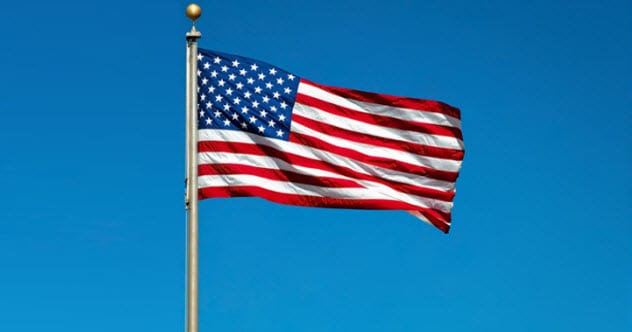
The flag that inspired the anthem was not a modest little banner fluttering politely in the breeze. It was hugeoriginally about 30 by 42 feet. That is roughly the size of a small apartment, except with more stars and fewer questionable plumbing decisions.
The massive flag was made by Mary Pickersgill, a Baltimore flag maker, with help from others in her household and workshop. It was commissioned for Fort McHenry so large that the British could see it from a distance. Mission accomplished. If your goal is to send a message, a 30-by-42-foot flag is not subtle.
The flag had 15 stars and 15 stripes, not the 50 stars and 13 stripes we know today. At the time, the United States had added Vermont and Kentucky to the Union, and the flag design had been updated to include two additional stars and two additional stripes. Later, Congress returned the flag to 13 stripes to honor the original colonies while adding stars for new states.
Today, the Star-Spangled Banner flag is preserved by the Smithsonian’s National Museum of American History. It is no longer the same size it was in 1814 because pieces were lost or removed over time, but it remains one of the most treasured artifacts in the United States.
6. The Anthem Has Four Verses, But Almost Nobody Sings Them
Most Americans know only the first verse of “The Star-Spangled Banner,” and even that verse can feel like a vocal mountain climb. But Key’s poem has four verses. The familiar first verse ends with the famous line about “the land of the free and the home of the brave,” but the full poem continues with more imagery, more wartime emotion, and more language that sounds like it arrived wearing a waistcoat.
The additional verses expand the poem’s themes of battle, survival, victory, and divine protection. They also include language that has been debated and criticized, especially in the third verse. Modern audiences often focus on the first verse because it is the most adaptable for public ceremony and the least complicated to present at events.
That selective singing has shaped how Americans understand the anthem. Many people experience it as a short patriotic song rather than a longer War of 1812 poem. The version performed before a basketball game is not the whole historical text; it is the part that fits the ritual.
This matters because national symbols are rarely simple. They gather meaning over time. The anthem can inspire pride, reflection, debate, unity, discomfort, or all of those feelings in the same minute and a half. That complexity is part of its history.
7. It Did Not Become the Official National Anthem Until 1931
Although “The Star-Spangled Banner” was written in 1814, it did not become the official national anthem of the United States until March 3, 1931. President Herbert Hoover signed the law making it official, more than 116 years after Key wrote the poem.
Before that, the United States had patriotic songs, military songs, and popular national tunes, but no official anthem. Songs such as “Hail, Columbia,” “My Country, ’Tis of Thee,” and “America the Beautiful” all held important places in public life. “The Star-Spangled Banner” gradually gained influence, especially through military use and patriotic ceremonies.
Its path to official status was not automatic. Some Americans objected that the melody was too difficult to sing. Others preferred songs with less military imagery. Supporters argued that its history, emotional force, and connection to the flag made it uniquely suitable.
In the end, the supporters won. Congress passed the measure, Hoover signed it, and the United States finally had an official national anthem. It is strangely comforting to know that even national symbols sometimes have to wait in line for approval.
8. It Is Famously Hard to Sing
“The Star-Spangled Banner” is not a casual singalong. It covers a wide vocal range, which is why many performances begin confidently and end with the singer looking as if they are trying to launch a satellite using only their throat.
The melody rises dramatically, especially near the end. That high point can be thrilling when performed well and painfully memorable when it is not. This difficulty has become part of the anthem’s modern identity. Every major televised performance comes with a tiny suspense plot: will the singer land the notes?
Its difficulty was one of the objections raised before it became official. Critics argued that a national anthem should be easy for ordinary citizens to sing together. That is a fair point. A song meant for the people should probably not require the vocal confidence of an opera singer and the lung capacity of a competitive swimmer.
Still, the challenge has also helped make the anthem iconic. Its dramatic shape mirrors the story it tells: uncertainty, danger, endurance, and release. When the final line works, it really works. When it does not, well, America is also a nation built on second chances.
9. Sports Helped Turn the Anthem Into a National Ritual
Today, many Americans associate the national anthem with sports. Football games, baseball games, basketball games, hockey games, NASCAR races, and Olympic ceremonies all use the anthem to create a moment of shared attention before competition begins.
The connection between the anthem and sports developed over time. “The Star-Spangled Banner” appeared at baseball games in the 19th century, but it became more prominent during World War I. A famous moment came during the 1918 World Series, when the song was played during a period of wartime patriotism. The crowd response helped cement the anthem’s association with public sporting events.
During World War II, improved sound systems made it easier to play recorded music in stadiums, and the anthem became a regular pregame tradition. By then, it was already the official national anthem, and sports gave it a huge national stage.
This is why millions of Americans know the anthem less from history class than from hot dogs, bleachers, flyovers, and someone whispering, “Take your hat off.” The stadium turned a 19th-century war poem into a recurring civic ritual.
10. The Anthem Is Both a Unifying Symbol and a Subject of Debate
Like many national symbols, “The Star-Spangled Banner” does not mean exactly the same thing to everyone. For some, it represents sacrifice, freedom, military service, and national resilience. For others, it raises questions about whose freedom was recognized in 1814, whose voices were excluded, and how patriotic rituals should function in a diverse democracy.
Francis Scott Key himself is a complicated historical figure. He was a lawyer, poet, and public official, but he was also connected to the institution of slavery and held views that modern Americans rightly examine critically. The anthem’s third verse has also drawn attention because of its reference to “the hireling and slave,” a phrase that has generated significant historical debate.
None of this erases the anthem’s importance, but it does make the story more honest. National history is not a marble statue with perfect lighting. It is a crowded room full of courage, contradiction, achievement, failure, hope, and argument.
The anthem endures partly because Americans continue to wrestle with it. They sing it, reinterpret it, protest during it, defend it, study it, and teach it. That ongoing conversation is not a weakness. In a democracy, the meaning of national symbols is always being negotiated by the people who inherit them.
Why “The Star-Spangled Banner” Still Matters
The American national anthem survives because it captures a powerful emotional moment: looking through darkness and smoke for proof that a nation has endured. That image is simple enough for a child to understand and deep enough for historians to keep unpacking two centuries later.
At its heart, the anthem is about uncertainty. It does not begin with a declaration. It begins with a question. “Can you see it?” That question is historical, poetic, and civic. Can we see the flag? Can we see the country clearly? Can we see both its ideals and its contradictions? Can we see what survived the night, and what still needs repair?
That is why the anthem can feel ceremonial in one setting and deeply personal in another. It belongs to military memorials and Little League fields, presidential inaugurations and high school graduations, Olympic podiums and quiet museum galleries. It is both official and emotional, familiar and strange.
And yes, it is still difficult to sing. But maybe that is appropriate. The story of the United States has never been an easy melody. It rises, strains, surprises, and occasionally makes everyone nervous near the end.
Personal and Everyday Experiences Connected to the American National Anthem
For many people, the first real experience with the American national anthem does not happen in a museum or history book. It happens in a school gym, under fluorescent lights, with a slightly squeaky microphone and a crowd of students who suddenly become very interested in their shoes. The anthem is often one of the first patriotic songs children are asked to learn, but learning it is not always simple. The words are old, the melody leaps around, and “ramparts” is not exactly a word most kids use at recess.
That early awkwardness is part of the anthem’s cultural life. People remember trying to sing it in music class, standing before assemblies, or mouthing the words at a ballgame while hoping the camera does not find them. Unlike a pop chorus, “The Star-Spangled Banner” does not invite casual confidence. It asks for attention. Even when people do not know every word, they usually understand that the moment is supposed to matter.
At sporting events, the anthem creates one of the rare pauses in American public life. A stadium that was loud with vendors, conversations, and pregame hype suddenly becomes still. Hats come off. Players line up. Fans turn toward the flag. For a minute or two, the game has not started, nobody has lost, and nobody is yelling at the referee. The anthem temporarily gathers thousands of strangers into the same frame.
That shared frame can feel powerful. A veteran may hear the anthem differently from a child attending a first baseball game. An immigrant becoming a citizen may hear it differently from someone whose family has lived in the United States for generations. A singer performing it may feel pride, fear, responsibility, and panic about the high note all at once. The song becomes a mirror, reflecting different experiences back to different people.
The anthem also appears during moments of national grief or celebration. After tragedies, it can become a way to express resilience. During Olympic ceremonies, it becomes a marker of achievement. At military funerals and memorial events, it carries a solemn weight. In these settings, the song is not background music. It becomes a container for emotion that ordinary speech might not hold.
Of course, modern experiences with the anthem are not always unified or uncomplicated. Public debates about standing, kneeling, singing, protesting, and respecting the flag show that the anthem remains a living symbol, not a frozen relic. Some people see protest during the anthem as disrespectful. Others see it as a deeply American form of speech aimed at forcing the country to live up to its own ideals. The disagreement can be intense because the anthem is not just music; it is a symbol of belonging.
Visiting Fort McHenry or seeing the preserved Star-Spangled Banner flag at the Smithsonian can change how people hear the song. The words become less abstract when you imagine Key watching through the night, unsure whether the fort had survived. The flag becomes less like a logo and more like an object that passed through smoke, rain, battle, human hands, and time. Suddenly, “our flag was still there” sounds less like a line from a ceremony and more like a report from the edge of disaster.
That is the lasting experience of the American national anthem: it invites people to ask what has endured and what still needs courage. Whether sung perfectly by a trained vocalist or imperfectly by a crowd of ordinary citizens, it remains one of the most recognizable sounds in American life. It is difficult, dramatic, controversial, historic, and stubbornly persistent. In other words, it is very American.
Conclusion
“The Star-Spangled Banner” is far more than a song people sing before kickoff. It began as a poem written after a terrifying night during the War of 1812, borrowed a melody from a British tune, celebrated a giant 15-star flag, and waited until 1931 to become the official American national anthem. Its history includes patriotism, controversy, craftsmanship, politics, sports traditions, and a musical range that has humbled many brave performers.
Understanding these lesser-known facts does not make the anthem smaller. It makes it richer. The song’s power comes from its mix of drama and difficulty, pride and contradiction, memory and debate. Like the country it represents, the anthem is not simple. It is a question asked at dawn: after the darkness, what can we still see?