“`
The Nintendo Entertainment System was never supposed to care whether you defeated Bowser without warping, cleared Mega Man 2 with one life, or finally stopped blaming the controller for missing that jump in Castlevania. The NES was born in the 1980s, a time when “cloud sync” meant looking at the sky and “online profile” sounded like something a detective might keep in a filing cabinet. Yet here we are, decades later, seriously discussing how to bring achievements to original NES hardware.
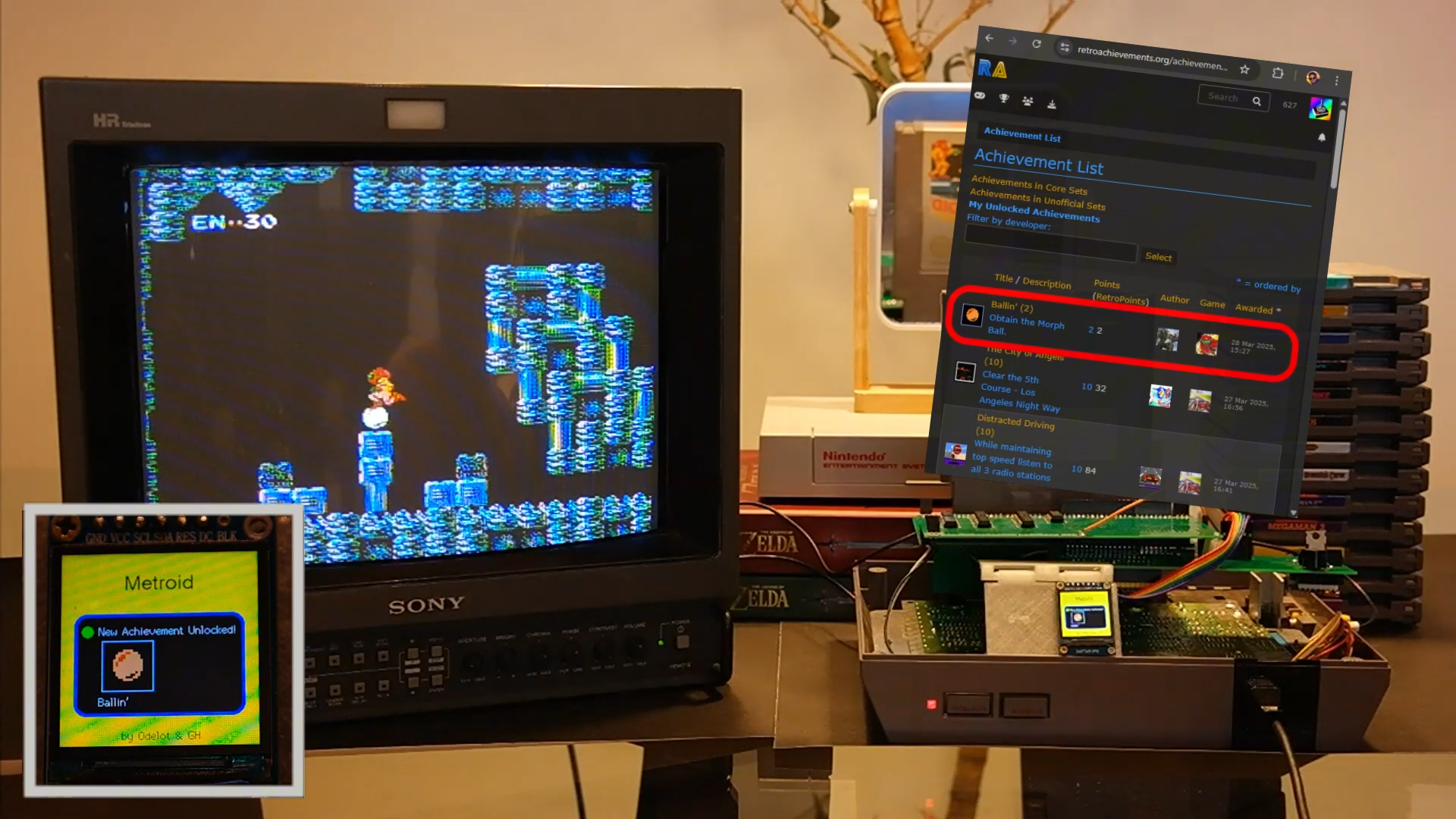
That idea sounds like retro-gaming sorcery, but it is very real. Modern makers, emulator developers, and preservation-minded players have been experimenting with ways to connect classic games to modern achievement systems. The most exciting example is the NES RetroAchievements Adapter, a hardware project that sits between an authentic NES cartridge and the console, watches game activity, and communicates with the RetroAchievements platform. In plain English: it lets an old gray box from 1985 unlock modern-style achievements without replacing the soul of the machine.
This is not just a novelty. It is a fascinating collision of original hardware, memory tracking, microcontrollers, Wi-Fi, game preservation, and player motivation. It asks a surprisingly deep question: can we modernize the experience of playing the NES without sanding off what made it magical in the first place?
Why NES Achievements Feel So Strangeand So Perfect
Achievements became common in modern gaming because they add structure around play. They reward exploration, challenge runs, hidden tricks, speed, completion, and occasionally very questionable life choices like collecting 900 tiny objects because a menu told you to. On modern consoles and PC platforms, achievements are built into the software environment. The game reports progress, the platform verifies it, and the player gets a digital badge.
The NES has none of that. It has no operating system in the modern sense, no native internet connection, no user account, and no background service waiting to congratulate you. It has a Ricoh 6502-derived CPU, a Picture Processing Unit, a small amount of RAM, cartridges with mapper hardware, and a design philosophy based on squeezing miracles out of very little space. That limitation is exactly why adding achievements to the Nintendo Entertainment System is so interesting.
Instead of asking the game to report progress, achievement systems can observe the game’s memory. If a certain RAM value means the player is on World 8-4, another value means the player has not used a warp zone, and another value confirms the final boss is defeated, an achievement can be triggered when all those conditions become true. It is like hiring a tiny referee to sit inside the console and say, “Yes, that ridiculous stunt actually happened.”
How RetroAchievements Changed Retro Gaming
RetroAchievements is the best-known platform for bringing achievement systems to classic games. In emulation, it works by reading game memory and checking whether specific conditions have been met. Achievement developers identify RAM addresses, create logic, test edge cases, and design badges, leaderboards, and rich presence features. For many players, this turns a familiar game into a fresh challenge.
For example, a basic achievement might trigger when a player finishes a stage. A better achievement might require finishing the stage without taking damage, without using a password, or while collecting a certain item. Good achievement design does not simply hand out digital confetti for pressing Start. It encourages players to understand a game more deeply.
That matters for NES games because many of them were built around mastery. They were short by modern standards, but difficult, dense, and replayable. Ninja Gaiden, Contra, Metroid, Super Mario Bros. 3, and The Legend of Zelda all reward knowledge. Achievements make that knowledge visible. They give players a reason to return, experiment, and discover that yes, the game can still humble them faster than a school gym rope climb.
The Hardware Challenge: Real NES, Real Cartridge, Real Problems
Running achievements in an emulator is relatively straightforward compared with doing it on original hardware. An emulator already has access to the simulated CPU, RAM, video timing, and ROM data. It can inspect everything internally. A real NES, however, is not politely offering a debug menu. It is doing exactly what it did in 1985: reading cartridges, drawing pixels, playing audio, and assuming the human in front of it is happy with blinking red lights and occasional cartridge blowing rituals.
To bring achievements to an original NES, a device must somehow understand what the console and cartridge are doing in real time. The NES RetroAchievements Adapter takes a clever approach by sitting between the cartridge and the console, similar in spirit to pass-through devices such as the Game Genie. Instead of modifying the console’s main board or forcing players to use an emulator, the adapter observes communication between the cartridge and the NES.
The project uses a Raspberry Pi Pico-class microcontroller to communicate with the NES side and monitor relevant activity. It also uses an ESP32 for Wi-Fi and internet communication, plus extras like a small screen and buzzer for feedback. The result is a physical bridge between 1980s cartridge hardware and a modern online achievement platform.
Why Memory Tracking Is the Secret Sauce
The core idea behind retro achievements is memory tracking. Games store temporary information in RAM: player position, score, health, current level, inventory, boss status, timers, flags, and other state data. When a player opens a door in Metroid or collects a Triforce piece in The Legend of Zelda, the game must store that fact somewhere while running.
An achievement system watches for meaningful combinations of values. One RAM address alone may not be enough. A value that means “level 4” could be reached through normal play, a password, a cheat, or a glitch. Good achievement logic often checks multiple conditions: previous state, current state, player actions, timing, and whether disallowed shortcuts were used.
This is where the project becomes more than a gadget. It becomes a study in how games work internally. Achievement design requires reverse engineering, patience, and testing. Developers must understand the game’s behavior well enough to avoid false positives. Nobody wants an achievement for “Defeat Dracula” to pop because the player opened the options menu and the RAM happened to sneeze.
The NES Was Built for Limits, Not Notifications
The NES is a masterpiece of constraints. The NTSC CPU runs at roughly 1.79 MHz. The system has only 2 KB of internal RAM. The PPU handles graphics through its own memory and registers. Cartridges often include mappers to expand what games can do, such as bank switching larger ROMs, adding save RAM, or supporting special effects.
These limitations are part of the reason NES games have such a distinct feel. Developers could not throw memory at a problem. They had to design around scarcity. Sprites flicker because there are limits on how many can appear on a scanline. Backgrounds are built from tiles. Music is made from a handful of sound channels. It is a machine where every byte has a job, probably two jobs, and possibly a side hustle.
Adding achievements must respect that environment. A good adapter should not change the timing, corrupt cartridge communication, introduce lag, or alter gameplay. The best version of this idea is invisible until something is earned. The NES should still feel like an NES. Mario should still run with that familiar momentum. Link should still stab suspicious bushes. The player should still wonder why old games were allowed to be this mean.
Why Real-Hardware Achievements Matter
Some players are perfectly happy earning RetroAchievements through emulators, and that is a great option. Emulation supports accessibility, preservation, convenience, save management, video filters, and portability. But original hardware has a special appeal. The cartridge slot, controller feel, CRT display, audio output, and physical ritual all matter to collectors and purists.
Real-hardware achievements offer a middle path. They allow players to keep the tactile experience while adding a modern progress layer. That combination is powerful because it does not ask the NES to pretend it is a new console. It lets the old machine remain old, while surrounding it with respectful technology.
There is also an archival angle. Projects like this encourage people to study cartridges, memory maps, mappers, and timing behavior. They create documentation, code, hardware designs, and community discussion. In the long run, that helps preserve knowledge about how these systems actually work. Retro gaming is not only about nostalgia; it is also about technical literacy.
Examples of NES Achievement Ideas That Actually Make Sense
Not every achievement is worth adding. A lazy set can make a classic game feel like a checklist with music. A thoughtful set can make the same game feel newly alive. For the Nintendo Entertainment System, the best achievements usually reward mastery, curiosity, and restraint.
Skill-Based Achievements
These are the obvious crowd-pleasers. Beat a level without taking damage. Clear a boss with a weak weapon. Finish a game without continuing. Complete a difficult section under a time limit. In games like Mega Man, Batman, or Castlevania III, skill-based achievements can highlight mechanics that players may have ignored for years.
Exploration Achievements
NES games often hide secrets in walls, bushes, blocks, and suspiciously empty rooms. Exploration achievements can reward players for finding optional upgrades, secret exits, hidden shops, or alternate routes. The trick is to reward discovery without turning mystery into homework.
Challenge Run Achievements
Challenge runs are where NES achievements become deliciously cruel. No-warp runs, low-item runs, pacifist sections, limited weapon runs, and speed challenges can make old games feel brand new. Of course, there is a fine line between “fun challenge” and “please send snacks; I live here now.”
Completion Achievements
Completion achievements work well for games with collectibles, maps, upgrades, or multiple endings. Metroid, Zelda II, and Dragon Warrior are natural candidates because they already encourage long-term progress. Achievements can help players track what the original interface never bothered to explain.
The Role of Homebrew and Flash Cartridges
Modern NES development is alive and surprisingly energetic. Communities such as NESdev continue to document hardware behavior, discuss programming techniques, and support homebrew creators. Flash cartridges like the EverDrive N8 Pro make it possible to test and play ROMs on original hardware, while modern tools help developers build games that still respect NES limitations.
Achievements could become part of that ecosystem. New homebrew games might be designed with achievement-friendly memory states. Developers could intentionally expose clear progress flags or create optional challenge modes that work well with external tracking. That does not mean every homebrew title needs online badges, but it gives creators another tool for engagement.
There is also potential for community events. Imagine a weekend NES challenge where players compete to master a set of achievements on original hardware. Imagine leaderboards for classic speed tasks verified through memory logic. Imagine someone finally proving they beat Battletoads without developing a thousand-yard stare. This is the kind of harmless madness retro communities are built for.
Preservation Versus Modification: Where Is the Line?
Whenever modern features are added to old systems, the preservation question appears. Is this still authentic? Does online achievement tracking change the experience? Are we enhancing history or doodling a mustache on it?
The answer depends on implementation. If the original console and cartridge are not permanently modified, the game logic remains untouched, and the adapter can be removed, the project feels more like an accessory than a rewrite. It is similar in spirit to using a high-quality video scaler, a modern controller adapter, or a flash cartridge for homebrew. The original experience remains available; the player simply chooses an added layer.
That flexibility is important. Purists can still play the old way. Achievement hunters can chase badges. Developers can study the hardware. Everyone gets to keep their favorite version of fun, which is good because retro gaming arguments can become more intense than any final boss.
Technical Hurdles That Still Need Careful Handling
Bringing achievements to real NES hardware is not a solved problem for every game and every scenario. Cartridges vary widely. Mappers behave differently. Some games use unusual memory layouts. Timing matters. Certain achievement conditions may be easier to verify in an emulator than from a pass-through hardware adapter.
Game identification is another challenge. An achievement platform must know which ROM or cartridge version is being played. Different regional releases, revisions, hacks, and translations can store data differently. If the system identifies the wrong version, achievement logic may fail or unlock incorrectly.
Network behavior also matters. A Wi-Fi module can sync achievements online, but the player experience should not collapse if the connection drops. Ideally, the device should handle temporary offline play, queued unlocks, clear status indicators, and safe reconnection. Nothing ruins a heroic no-death run like a router deciding it needs a nap.
Why This Project Feels Bigger Than the NES
The NES RetroAchievements Adapter points toward a broader idea: classic consoles can be connected to modern services without losing their identity. Similar principles could apply to other cartridge-based systems, though every platform has its own hardware personality. The Super Nintendo, Game Boy, Sega Genesis, and other systems would each require different approaches.
The key lesson is not simply “add Wi-Fi to old consoles.” It is that retro hardware can still participate in modern play culture. Achievements, leaderboards, rich presence, and community challenges can help younger players discover older games in a format they understand, while giving longtime fans new reasons to revisit familiar cartridges.
This matters because the NES is not just a collectible. It is a design classroom. It teaches constraints, clarity, difficulty curves, input precision, memory management, and audiovisual creativity. When achievements encourage players to engage more deeply with those ideas, they can become more than digital trophies. They become guided tours through game design history.
Player Experience: The Magic of Hearing a Badge Pop on 8-Bit Hardware
There is something wonderfully absurd about earning an online achievement while playing on an original NES. The console itself has no idea what is happening. It is still dutifully reading the cartridge and producing chunky pixels. Meanwhile, an adapter is watching the action, checking conditions, talking to the internet, and announcing that you have done something impressive.
That contrast is the charm. It feels like giving a rotary phone caller ID, or teaching a cassette deck to send push notifications. It should not work, and yet the logic is elegant. The old machine keeps doing what it does best. The new hardware quietly handles the modern layer.
For players, the result can be motivating. A game you finished years ago may suddenly have new goals. A game you bounced off as a kid may become more approachable because achievements break the experience into smaller objectives. A game you thought you knew may reveal secrets you never bothered to find. The NES library is full of little mechanical mysteries, and achievements give players a reason to poke at them.
What Makes a Good NES Achievement Set?
A good NES achievement set should respect the game’s rhythm. It should avoid constant interruptions, reward real accomplishments, and account for how players actually experience old games. Password systems, continues, score exploits, and regional differences all need thoughtful handling.
The best sets also balance difficulty. Casual achievements can welcome new players, while advanced achievements give experts something spicy to chew on. A set made entirely of brutal no-hit challenges may impress elite players, but it can make everyone else quietly place the cartridge back on the shelf and go outside to remember sunlight.
Good achievement design also avoids spoiling everything. Some secrets should remain secrets until discovered. Descriptions can hint without handing players a spreadsheet of coordinates. The goal is to enhance curiosity, not turn a classic adventure into tax preparation.
Experience Section: Living With NES Achievements in the Real World
Playing NES games with achievements changes the emotional texture of the session. Without achievements, a typical retro night might be simple: insert cartridge, wiggle cartridge, remove cartridge, blow on cartridge even though everyone says not to, reinsert cartridge, pray, play. With achievements, the session gains a second layer. You are no longer just clearing a stage. You are watching for specific goals, testing routes, and thinking about the game’s internal logic.
The first experience that stands out is how achievements make familiar games feel less automatic. Suppose you have played Super Mario Bros. for years. You know the early jumps, the mushroom blocks, the warp zones, and the places where confidence becomes gravity’s favorite snack. Add a no-warp achievement, and suddenly the game changes. You pay attention to worlds you normally skip. You notice level pacing, enemy placement, and how much the game teaches through repetition. The achievement does not replace the game; it asks you to stop sleepwalking through it.
The second experience is humility. NES games already had a gift for making players feel both heroic and ridiculous. Achievements amplify that. A “no damage” challenge can turn a simple stage into a tiny courtroom where every mistake is evidence. You start blaming lag, the dog, the angle of the moon, and eventually yourself. Yet when the achievement finally unlocks, the satisfaction is real because the game did not bend for you. You improved.
The third experience is discovery. Many NES games hide systems behind simple visuals. Achievement hunting encourages you to ask questions. What counts as finishing a room? When does the game set a boss-defeated flag? Does collecting an item update memory instantly or after the screen transition? These are technical questions, but they make the game more interesting. You begin to appreciate the invisible machinery behind the pixels.
The fourth experience is social. Retro gaming can be solitary, especially when revisiting old cartridges at home. Achievements reconnect that experience to a community. When players compare badges, challenge routes, or leaderboard times, old games become shared events again. It recreates the playground feeling of swapping secrets, except now the playground has Wi-Fi and fewer juice boxes.
The fifth experience is preservation through play. A game that is actively played, discussed, challenged, and studied remains alive. Achievements can push players beyond nostalgia into deeper engagement. Instead of saying, “I remember this game,” players say, “I finally mastered this part.” That is a meaningful difference. Memory becomes participation.
Finally, real-hardware achievements create a rare blend of past and present. The controller is still simple. The graphics are still limited. The music still loops until your family questions your choices. But the moment an achievement unlocks, the room feels connected to a larger retro-gaming world. The NES does not become modern. It becomes newly relevant.
Conclusion
Bringing achievements to the Nintendo Entertainment System is more than a clever hardware trick. It is a respectful modernization of one of gaming’s most important consoles. By combining memory tracking, microcontrollers, Wi-Fi communication, RetroAchievements logic, and original cartridges, projects like the NES RA Adapter show how classic hardware can gain new layers without losing its identity.
The beauty of the idea is balance. The NES remains stubbornly itself: limited, direct, demanding, and charming. The achievement layer adds goals, community, and replay value. For players, it offers a reason to revisit old favorites with fresh eyes. For developers and preservationists, it encourages deeper study of hardware, software, and game design. For everyone else, it proves that even a console from 1985 can still surprise us.
The NES helped revive the American video game market and shaped generations of design. Now, with achievements, it can also participate in the modern culture of mastery and shared progress. Not bad for a gray box that once considered two buttons and a D-pad plenty of luxury.
“`