Note: This article is an original, fully rewritten synthesis based on real renovation details, U.S. kitchen design reporting, and current remodeling trends. Source links are intentionally omitted for clean web publishing.
A Portland Condo Kitchen Steps Out of Its Cherry-Cabinet Era
Every dated kitchen has a personality. Some whisper, “I was remodeled in 1998 and I still own a fax machine.” Others announce themselves with heavy cherry cabinets, tired appliances, dark corners, and the emotional atmosphere of a waiting room with a microwave. In a waterfront condo in Portland, Oregon, one kitchen had spent years doing exactly that: functioning, technically, but not exactly making dinner feel like a glamorous event.
The condo belonged to Ana Quiñones and Eric Karl, longtime owners who had lived with the space for about a decade before deciding the kitchen had earned retirement. The apartment sat in a large waterfront complex, and while the location had light, views, and the promise of easy urban living, the interiors were overdue for a thoughtful reset. The kitchen, in particular, had become the visual anchor nobody asked for: dark cabinetry, worn finishes, and appliances beginning to wave little white flags.
Then came the pandemic, that strange period when everyone suddenly became painfully aware of every squeaky cabinet, awkward corner, and countertop that was somehow both too large to ignore and too small to use. For a couple who cooked and entertained often, the kitchen was no longer just a room. It was headquarters, café, prep station, therapy corner, and occasionally the place where a person stood while wondering whether banana bread counted as a personality.
Enter Casey Keasler, founder of the Portland interior design studio Casework. Her approach began not with a trendy mood board, but with three guiding words: purposeful, clean, cultivated. Those words became the backbone of the renovation. The result is a kitchen that feels modern without being cold, edited without being empty, and elegant without behaving like it needs a velvet rope.
The Power of Three Words: Purposeful, Clean, Cultivated
Great kitchen design often starts with restraint. Not the boring kind of restraint, where everything becomes white, flat, and emotionally unavailable, but the useful kind: a clear design filter. “Purposeful, clean, cultivated” works because each word solves a different problem.
Purposeful: Nothing Is Just There to Look Pretty
In a condo kitchen, space is valuable real estate. Every cabinet, handle, light fixture, and surface needs a job. This kitchen renovation focused on additional storage, better work zones, and details that made daily cooking easier. That meant improving the relationship between prep space, storage, dining, and appliances without making the room feel packed to the gills.
The paneled refrigerator is a good example. By disguising the appliance behind cabinetry, the kitchen becomes quieter visually. The fridge still performs its noble duty of protecting leftovers and judging late-night snacking, but it no longer interrupts the design. That is purposeful design: function doing its job without shouting through a megaphone.
Clean: Calm Lines, Clear Surfaces, No Visual Traffic Jam
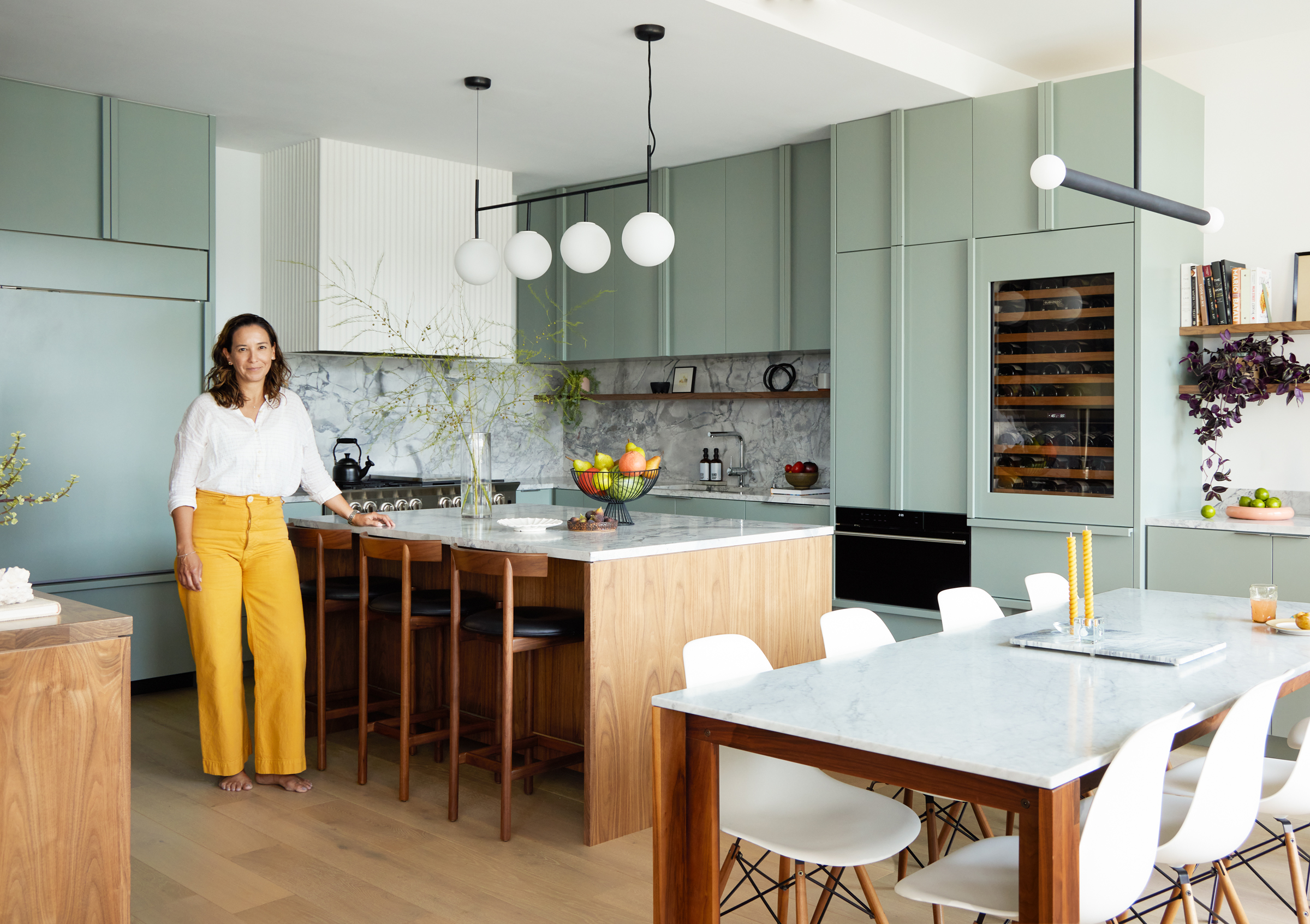
The old kitchen had heavy cherry cabinets that darkened the room. The new design lightened the mood with painted cabinetry in a soft gray-green tone. The color is not trendy in a loud way. It is more like a deep breath with excellent posture. Green cabinetry has become a favorite in American kitchen design because it brings nature indoors without requiring everyone to start composting with monk-like discipline.
Clean design also appears in the way the hood, counters, backsplash, and cabinetry relate to one another. There are no unnecessary decorative interruptions. The lines are controlled, the palette is calm, and the materials carry the personality. Instead of trying to impress with ten competing focal points, the kitchen lets a few strong decisions do the work.
Cultivated: A Kitchen With References, Not Randomness
“Cultivated” is the word that keeps the kitchen from becoming merely minimal. The design took cues from museums, design destinations, and hospitality spaces admired by the homeowners. References included places known for quiet sophistication, smart details, and natural material palettes. This matters because a personal renovation should not look like it was ordered from a catalog called “Modern Kitchen, Page 12.”
A cultivated space feels collected, not cluttered. It has layers. It knows the difference between “simple” and “unfinished.” In this Oregon condo, that sense of cultivation comes through in the fluted plaster hood, the dolomite stone, the globe-like pendant lighting, the warm dining table, and the confidence to let subtle details carry the room.
From Dark and Dated to Light, Layered, and Livable
The most dramatic transformation was emotional as much as visual. Before the renovation, the cherry cabinets weighed down the kitchen. Afterward, the room became lighter, softer, and more integrated with the rest of the condo. The project began as a kitchen overhaul and grew into a broader refresh that included new paint, lighting, flooring, and updated bathrooms. That expansion makes sense. Once a kitchen starts behaving beautifully, the surrounding rooms tend to look around nervously and say, “Are we next?”
The updated kitchen uses a gray-green cabinet color that feels particularly suited to Portland: calm, nature-adjacent, and not afraid of a cloudy afternoon. Unlike bright white, which can sometimes make a room feel clinical, this muted green brings depth while still reflecting light. It pairs well with stone, wood, plaster, and metal, giving the kitchen a composed Pacific Northwest character.
The countertops and backsplash are dolomite, a natural stone often chosen by designers who want the look of marble with better everyday resilience. Marble is beautiful, of course, but it can be a bit dramatic around acid, spills, and real life. Dolomite offers a similar elegance with a more forgiving personality. In a kitchen for people who actually cook, that distinction matters. A countertop should survive pasta sauce, strawberries, wine, olive oil, and the occasional “I thought the cutting board was closer” moment.
The Fluted Plaster Hood: A Quiet Scene-Stealer
The custom vent hood is one of the renovation’s most memorable details. Instead of using a standard metal hood or hiding the vent in a plain box, the design team created a fluted wood substrate and finished it with layers of plaster. The result is architectural, tactile, and refined.
Fluting has become popular in interiors because it adds rhythm without visual chaos. It catches light, creates shadow, and gives flat surfaces a crafted quality. In this kitchen, the fluted hood brings texture to an otherwise clean composition. It is not loud, but it is unmistakably special. Think of it as the kitchen’s tailored blazer: practical, structured, and much more interesting than a hoodie.
The hood also shows why custom details matter in compact or open kitchens. When the kitchen is visible from the dining area or living space, utilitarian features become part of the room’s overall design language. A beautiful hood can turn a necessity into architecture. That is the difference between “we installed ventilation” and “we created a focal point that happens to remove cooking odors.”
Why This Kitchen Fits Today’s Best Remodeling Trends
Although this Oregon condo renovation has its own distinct identity, it aligns closely with larger U.S. kitchen design trends. Homeowners are moving away from stark, all-white spaces and toward warmer palettes, natural materials, better storage, and layered lighting. The best kitchens now feel less like showrooms and more like rooms where life can unfold gracefully.
Natural Materials Are Doing the Heavy Lifting
Wood, stone, plaster, and muted paint colors are central to the new mood in kitchen design. These materials age better than ultra-slick surfaces because they have texture and depth. In the Portland condo, the dolomite counters and plaster hood give the kitchen a grounded quality, while the existing dining table and chairs add warmth and continuity.
This is a useful lesson for anyone remodeling a condo or apartment: you do not need to make every single element new. In fact, keeping a beloved table or vintage chair can prevent a renovation from feeling too sterile. A brand-new kitchen with one old friend in the corner usually feels more human.
Color Is Back, But It Has Manners
The gray-green cabinetry is a smart middle path between safe neutrality and dramatic color. It has personality, but it will not exhaust the room. For homeowners worried about resale value, muted nature-inspired shades such as sage, olive, mushroom, warm gray, and soft green can be more flexible than bolder colors. They pair well with wood floors, stone counters, brass or nickel hardware, and both modern and traditional furnishings.
The trick is choosing a color with complexity. A flat pastel green can feel nursery-adjacent. A gray-green with depth feels architectural. That small difference is the line between “fresh” and “why does my kitchen look like a mint-flavored dental office?”
Storage Is the New Luxury
Luxury in a condo kitchen is not always a giant island or a professional range. Sometimes luxury is having a place for sheet pans. Or a drawer that opens without attacking the dishwasher. Or enough hidden storage that the countertop does not become a museum of appliances you used twice and now feel guilty about.
This renovation prioritized practical storage because the homeowners cook and entertain. For small and mid-size kitchens, good storage planning is often more valuable than extra square footage. Deep drawers, appliance garages, integrated panels, vertical dividers, and well-planned upper cabinets can make an existing footprint work harder.
Lessons From the Oregon Condo Kitchen Remodel
One reason this kitchen resonates is that it does not rely on fantasy. Many homeowners are not renovating a sprawling farmhouse with a butler’s pantry, three sinks, and a window seat for a golden retriever named Biscuit. They are dealing with condos, apartments, townhomes, and compact kitchens where every inch has to negotiate for its existence.
1. Start With How You Actually Live
The homeowners cooked and entertained often, so the kitchen needed storage and work surfaces. That sounds obvious, but many renovations begin with aesthetics and only later ask, “Where do the pots go?” A good kitchen starts with habits: how you shop, cook, host, clean, snack, recycle, brew coffee, unload groceries, and avoid unloading the dishwasher until the last possible second.
2. Let One Strong Material Create Continuity
Using dolomite for both the countertop and backsplash creates a seamless, elevated effect. Running one material up the wall can make a kitchen feel taller and more polished, especially in a smaller space. It also reduces visual breaks, which helps the eye move smoothly around the room.
3. Hide What Does Not Need Attention
Panel-ready appliances, integrated storage, and a concealed vent system keep the room calm. Not everything in a kitchen deserves a spotlight. The best designs know when to celebrate an element and when to let it disappear.
4. Add Texture Where the Palette Is Quiet
A soft color palette can become flat if every surface is smooth. The fluted plaster hood solves that problem beautifully. It adds movement and craftsmanship without making the kitchen busy. Texture is especially important in neutral or near-neutral rooms because it creates interest without demanding more color.
5. Keep Something Personal
The dining table and chairs remained, giving the new kitchen a sense of continuity. This is a smart move. A renovation should improve a home, not erase the people who live there. Keeping one familiar piece can make the finished room feel less like a staged listing and more like a better version of real life.
How to Borrow the Look Without Copying It
You do not need a Portland waterfront condo or a full custom renovation to learn from this kitchen. The broader design ideas can work in many homes, including apartments, older condos, and small kitchens that currently look like they have been quietly losing an argument with time.
Choose a Muted Cabinet Color
Look for gray-green, sage, olive, mushroom, warm greige, or clay-based neutrals. Test samples vertically on cabinet doors and view them in morning, afternoon, and evening light. Kitchen colors change dramatically under artificial lighting, and the shade that looked “soft and organic” online may look like soup in your actual room.
Upgrade Lighting in Layers
A single ceiling fixture is rarely enough. Combine ambient lighting, task lighting, and decorative lighting. Under-cabinet lights make prep easier. Pendants add personality. Recessed or ceiling fixtures provide overall brightness. Good lighting is the difference between “calm dinner prep” and “squinting at garlic like a detective at a crime scene.”
Use Stone or Stone-Look Surfaces Wisely
Natural stone can be stunning, but it requires research. Dolomite, quartzite, marble, granite, and engineered quartz all perform differently. If you cook often, ask about staining, etching, sealing, heat resistance, and maintenance. Beauty matters, but so does not panicking every time someone squeezes a lemon.
Consider a Statement Hood
If your layout allows it, the range hood can become the visual center of the kitchen. It can be plaster, wood, metal, tile, or a simple custom enclosure. The key is proportion. A hood should feel intentional, not like a large decorative hat the kitchen is embarrassed to wear.
Edit the Countertops
The clean look of this renovation depends partly on visual breathing room. Store small appliances when possible. Group daily items on trays. Choose fewer, better objects: a ceramic bowl, a pepper mill, a cutting board, a small lamp, or a vase with branches. The goal is not to remove all signs of life. The goal is to stop the toaster, blender, mail pile, and six reusable water bottles from forming a committee.
Why the “Purposeful, Clean, Cultivated” Formula Works
This phrase works because it balances three needs that often compete in kitchen remodeling. “Purposeful” protects function. “Clean” protects calm. “Cultivated” protects personality. Remove one, and the design suffers.
A kitchen that is purposeful but not clean can feel efficient yet chaotic. A kitchen that is clean but not cultivated can feel bland. A kitchen that is cultivated but not purposeful can look amazing in photos while being mildly annoying every time you try to make toast. The Oregon condo kitchen succeeds because it respects all three.
It is also a reminder that sophistication does not require excess. The design is not maximalist, but it is not empty. It is not rustic, but it uses natural materials. It is not trendy, but it feels current. That balance is hard to achieve and easy to appreciate.
Extra Experience: What This Remodel Teaches Anyone Living With a Dated Kitchen
Living with a dated kitchen can be oddly educational. At first, you tell yourself it is fine. The cabinets close if you lift and push at the same time. The drawer only sticks in humid weather, which is merely eight months of the year in some places. The lighting is not terrible, exactly; it just makes lettuce look suspicious. Then one day you realize you have built your entire cooking routine around avoiding the room’s weaknesses.
The Oregon condo transformation shows that the first step is not always demolition. The first step is observation. Spend a week noticing where the kitchen frustrates you. Is the trash too far from the prep zone? Are spices hiding in three different cabinets like tiny fugitives? Does the dishwasher block the sink when open? Are your countertops full because the cabinets are badly planned? These everyday annoyances are clues. A successful remodel solves them before choosing finishes.
Another lesson is to be honest about your maintenance personality. Some people are marble people. They enjoy patina, sealing schedules, and saying, “That etch mark tells a story.” Other people are quartz or durable-stone people because they want to make coffee before becoming emotionally available to surface care. Neither group is wrong. Problems happen when you choose materials for the person you wish you were instead of the person who actually lives in your house.
Lighting is another experience many homeowners underestimate. A dated kitchen often has one overhead fixture trying heroically to illuminate every task, mood, and onion. It cannot. Once you add task lighting under cabinets, a warm pendant over a dining table, and better ambient light, the kitchen feels bigger and more expensive even before you change major materials. Lighting is the renovation equivalent of drinking water and standing up straight: basic, but strangely transformative.
Color also deserves patience. The gray-green cabinetry in this condo works because it is calm and complex. When choosing a similar tone, do not rely only on digital images. Paint large samples, move them around, and look at them beside flooring, counters, and existing furniture. A color that looks elegant next to stone may look muddy beside orange-toned wood. Undertones are sneaky little creatures, and they love embarrassing confident people.
Finally, the remodel proves the value of a design concept. “Purposeful, clean, cultivated” is not just poetic branding. It is a decision-making tool. Should the refrigerator be paneled? Yes, because clean. Should storage increase? Yes, because purposeful. Should the hood receive a custom plaster treatment? Yes, because cultivated. When choices become overwhelming, a clear concept becomes the polite but firm friend who says, “Put down the random tile sample. We came here for a reason.”
For anyone staring at a dated condo kitchen, the takeaway is encouraging: you do not need endless square footage to create a beautiful room. You need priorities, good materials, careful lighting, smart storage, and a willingness to edit. The best kitchen remodel is not the one that looks most expensive. It is the one that makes daily life feel easier, calmer, and more like you meant to live that way all along.
Conclusion: A Condo Kitchen With Quiet Confidence
The transformation of this dated Oregon condo kitchen is a strong example of modern remodeling done with intelligence and warmth. It avoids the trap of trend-chasing and instead focuses on livability, natural materials, and carefully chosen details. The gray-green cabinetry softens the space. The dolomite counters and backsplash add elegance and durability. The fluted plaster hood brings craft and character. The hidden refrigerator, improved storage, and layered lighting keep the room functional.
Most importantly, the kitchen feels personal. It reflects homeowners who appreciate design, cooking, entertaining, and thoughtful details. It also reflects a designer who understands that a beautiful kitchen should not simply photograph well; it should work well at 7 a.m., during a dinner party, and on an ordinary Tuesday when someone is eating leftovers directly from the container. No judgment. We have all been there.
“Purposeful, clean, cultivated” may have started as a project concept, but it is also a smart formula for any kitchen remodel. Make every element useful. Keep the visual language calm. Add enough texture, memory, and material richness to make the space feel alive. That is how a dated condo kitchen becomes not just updated, but quietly unforgettable.