If home design trends had a group chat in 2025, Zillow would be the friend dropping the receipts. After analyzing millions of for-sale listings and identifying the features showing up more often than the year before, Zillow’s forecast points to a clear mood shift: people still want style, but they also want comfort, practicality, resilience, and rooms that feel like actual human beings live in them.
In other words, the era of homes that look like sterile showrooms is losing a little steam. Buyers are leaning toward spaces with warmth, personality, and purpose. Think cozy rooms instead of endless open-concept sprawl. Think old-world details with modern electric upgrades. Think bathrooms that feel like boutique spas, and design choices that do more than look pretty in listing photos.
That mix of nostalgia and next-gen function is what makes Zillow’s 2025 home design trends especially interesting. They are not just about what looks good on Instagram for six minutes. They reflect how people want to live now: more intentionally, more comfortably, and with a sharper eye on energy use, climate concerns, and everyday well-being.
Below, we break down the five Zillow-predicted home design trends set to show up everywhere in 2025, why they matter, and how to bring each one home without accidentally turning your living room into a time machine or your bathroom into a slip-and-slide.
Why Zillow’s 2025 Trend Forecast Matters
Zillow is not pulling these ideas out of a velvet hat. Its annual trend roundup is based on the language that appears in home listings, which makes it a useful snapshot of what agents think buyers want to hear and what buyers are actively responding to. That is important because listing language often reveals where style is heading in the real world, not just in designer mood boards.
And the real-world message for 2025 is pretty clear: homeowners want homes that work harder and feel better. A beautiful house is still the goal, obviously. Nobody is campaigning for ugly countertops. But beauty alone is not enough. Buyers are looking for warmth, wellness, flexible layouts, energy-conscious features, and details that make a home feel rooted rather than generic.
That broader direction lines up with what other major home and design publications have been seeing too: richer textures, more layered interiors, a renewed love of vintage and heritage details, wet rooms on the rise, and a general move away from overly polished, one-note spaces. Translation: homes in 2025 are getting more soulful.
1. Cozy, Purpose-Driven Rooms Are Replacing Cavernous Open Plans
The Trend
One of the biggest 2025 home design trends, according to Zillow, is the return of cozy. That little word has become a compliment again, not a real-estate apology. Instead of huge undefined spaces where the kitchen, dining room, living room, homework station, and existential crisis all happen in one giant rectangle, buyers are gravitating toward smaller rooms with a clearer purpose.
Why It’s Happening
There are a few reasons this trend makes sense. First, people are more conscious of affordability and energy use. Heating and cooling a giant open space is not exactly a budget-friendly hobby. Second, many homeowners have discovered that truly open floor plans can be a little too open. It is hard to work, relax, host, and hide the breakfast dishes when every activity is happening in full view.
Cozy spaces also support something people increasingly want from home: emotional comfort. A den with bookshelves, moody paint, and a lamp that glows like it has a PhD in ambiance simply feels different from a giant white box with a sectional floating in the middle of it.
What It Looks Like in Real Life
This does not mean every house is suddenly turning into a maze of tiny rooms. It means layouts are becoming more intentional. You might see a snug breakfast nook, a tucked-away reading corner, a separate dining room making a comeback, or a living room with darker paint and layered textiles that feels cocoon-like instead of echo-prone.
Color plays a big role here too. Cozy rooms are often more saturated and immersive than the pale-gray everything of the past decade. Rich greens, warm browns, inky blues, muted reds, and creamy earth tones help rooms feel grounded and intimate. Add upholstered seating, layered rugs, wood tones, and soft lighting, and suddenly the room feels like a place you want to stay in, not just pass through.
How to Bring It Home
If you want to lean into this home design trend for 2025, start by giving spaces a stronger identity. A room should know what job it has. Create a small library wall in the living room. Add drapery and a reading chair to an underused corner. Use paint, wallpaper, or trim color to visually define one zone from another. Even a modest house can feel richer when every space has a purpose.
The big idea is simple: less “look how large this room is” and more “wow, I could actually exhale in here.”
2. Electric Features Are Becoming a Design Must, Not Just a Utility Upgrade
The Trend
Zillow says electric-forward features are one of the fastest-rising home trends for 2025, with growing interest in whole-home batteries, EV charging, solar support, and electric cooking. This is the less glamorous cousin of a velvet sofa, but make no mistake: buyers are paying attention.
Why It’s Happening
Homeowners want houses that are more efficient, more resilient, and better prepared for how people live now. As energy costs, extreme weather, and electric vehicles become bigger parts of everyday life, buyers are starting to see electric infrastructure as a quality-of-life feature. It is not just about being eco-conscious, though that matters. It is also about convenience, cost control, and future-readiness.
A garage that is EV-ready, a kitchen with an induction cooktop, or a home battery system that stores solar energy can make a property feel smart in the best sense of the word. Not gimmicky. Not “my fridge is tweeting.” Just capable.
Why It Matters for Design
This is where 2025 gets interesting. In older design conversations, practical upgrades and attractive interiors often lived in separate worlds. Now they are starting to merge. The modern dream home is not simply pretty; it is efficient and adaptable.
That means design is expanding beyond surfaces. A thoughtfully renovated kitchen in 2025 may look beautiful, but it also might include an induction range, better ventilation, energy-efficient lighting, and smart electrical planning. Likewise, a handsome garage or mudroom may be hiding an EV charging setup that buyers see as a major bonus.
How to Bring It Home
You do not need to install a full solar-battery ecosystem tomorrow unless your budget and contractor are both feeling heroic. Smaller moves count too. Upgrade to LED lighting throughout the home. Choose electric appliances during your next remodel. Plan an EV charger circuit even if you are not ready to install the charger yet. If you are renovating, ask about electrical capacity before spending all your money on backsplash tile you found at 1:14 a.m.
In 2025, smart electric features are becoming part of good home design because they make a house feel current, practical, and prepared.
3. Old-World Charm Is Back, and It Is Bringing Personality With It
The Trend
If you have been sensing a return of vintage furniture, floral fabrics, darker woods, layered rooms, and spaces that look collected over time, congratulations: your design radar works. Zillow predicts old-world charm will be one of the biggest home trends of 2025, and the wider design world agrees.
This is not about making your house look like a museum where nobody is allowed to sit down. It is about warmth, craftsmanship, patina, and rooms that tell a story. Home libraries, antique accents, sculleries or back kitchens, classic millwork, heritage patterns, and softly traditional details are all part of the vibe.
Why It’s Happening
After years of ultra-minimal, algorithm-friendly interiors, many homeowners want spaces that feel more personal and less copy-paste. Old-world-inspired design offers exactly that. It has texture. It has memory. It has a little drama. It says, “Yes, someone with taste lives here,” but in a quieter voice than a neon sign.
There is also comfort in familiarity. Vintage and traditional elements bring emotional warmth, especially when they are mixed with modern functionality. A scullery tucked behind a sleek kitchen? Smart. A library wall beside a modern sofa? Chic. A floral chair paired with contemporary lighting? Suddenly your room has a pulse.
What It Looks Like in Real Life
Expect to see more dark wood tones, antique or antique-inspired case goods, chintz and florals used in a fresher way, picture lights over art, skirted furniture, textured plaster walls, vintage brass, and rooms layered with books, ceramics, and collected objects. Formality is not the point. Character is.
This is also where the comeback of home libraries matters. Even a small built-in bookcase can signal the same feeling: a home that values retreat, intellect, and atmosphere. That is a lot of work for one wall of shelves, but books have always been overachievers.
How to Bring It Home
Start by mixing, not matching. Bring in one antique table, a vintage mirror, or a traditional rug instead of redecorating your entire house like an aristocratic estate. Add library sconces. Use framed art with real personality. Swap out flat, modern hardware for something with age and texture. If your kitchen allows it, consider a hidden prep area, pantry workspace, or butler’s pantry-inspired zone that gives the room more layered function.
The best version of this 2025 home design trend feels lived-in and confident, not costume-y. Think heritage with a Wi-Fi password.
4. Climate-Resilient Design Is Moving From Nice Idea to Buyer Priority
The Trend
Another major Zillow prediction for 2025 is the rise of climate-resilient home features. That includes things like flood barriers, seismic retrofitting, water catchment systems, and drought-tolerant landscaping. These are not flashy upgrades in the traditional sense, but they are becoming increasingly important in real-estate decisions.
Why It’s Happening
Because climate risk is no longer abstract. Between extreme heat, flooding, wildfire threats, storms, drought, and rising insurance costs, buyers are thinking harder about how a home will perform under stress. In many areas, resilience is becoming part of the value equation, right alongside layout, finish level, and neighborhood appeal.
This is one reason design in 2025 feels more grounded in reality. People still want beautiful homes, but beauty is being measured differently. A yard that looks lovely and handles drought well is a win. A house with materials, grading, and systems that help reduce risk feels more attractive because it promises peace of mind.
What It Looks Like in Real Life
Resilience can show up in obvious ways, like storm-resistant features or upgraded drainage, but it also appears in more subtle design choices. Think native and low-water landscaping, shade-conscious outdoor planning, durable materials, better insulation, improved ventilation, and exterior choices better suited to local climate realities.
Even the broader move toward smaller, more efficient rooms and electric upgrades ties into this. Homes are increasingly being designed to consume less, adapt better, and cost less to operate over time. That is not boring. That is intelligent design.
How to Bring It Home
The best place to start is with your region. A climate-smart home in Arizona will not look exactly like one in Florida or California. Prioritize the features that address the risks where you live. Maybe that means replacing thirsty turf with drought-friendly planting. Maybe it means improving drainage, adding battery backup, or investing in materials that can better withstand moisture, fire risk, or heat.
In 2025, one of the smartest home design trends is the one that helps your house stay beautiful and functional when conditions are not ideal. Not sexy? Maybe not. Important? Very.
5. Spa-Inspired Wet Rooms Are Turning Bathrooms Into Everyday Retreats
The Trend
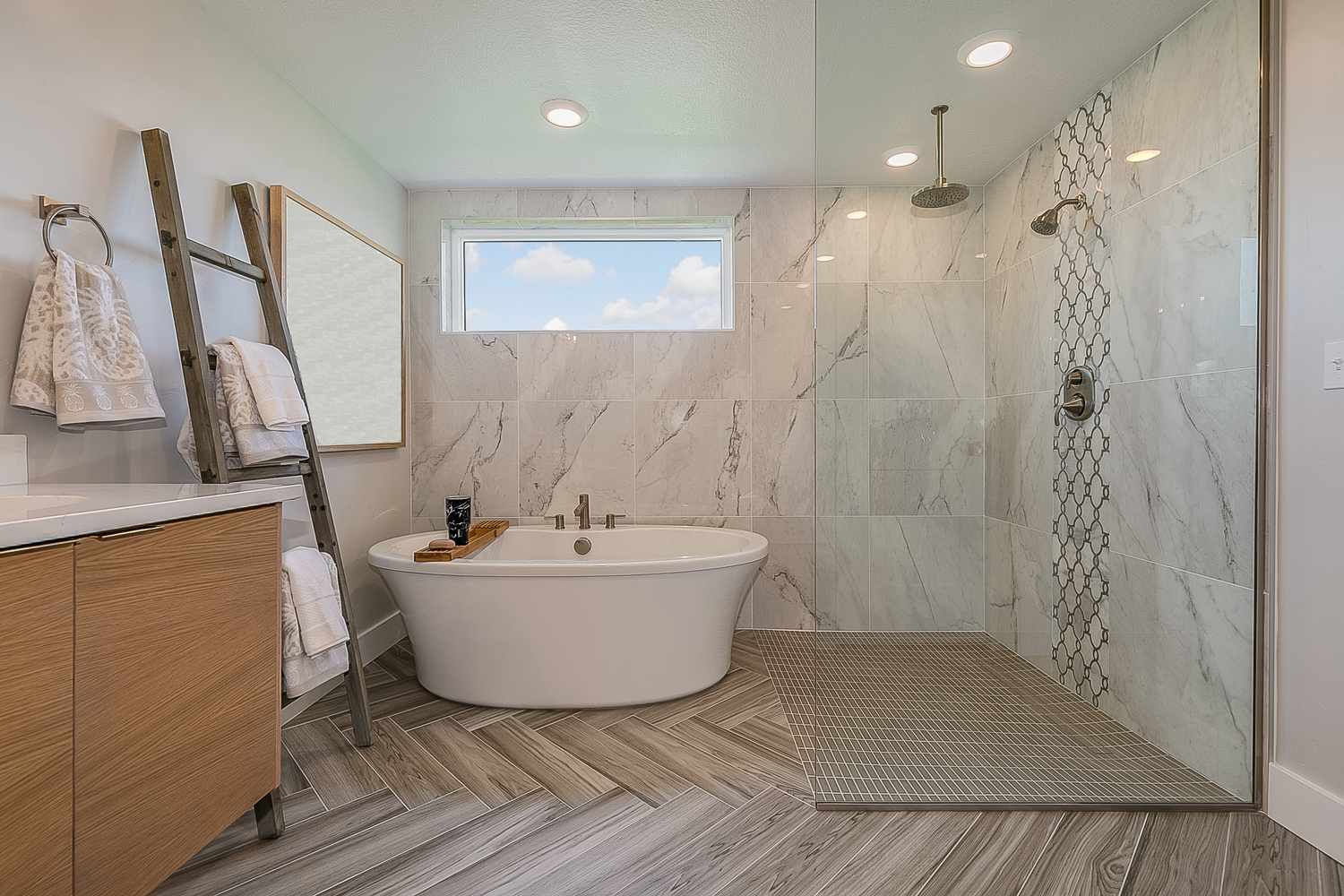
Bathrooms are having a moment, and Zillow says spa-inspired wet rooms are one of the top home design trends you will see everywhere in 2025. A wet room typically combines the tub and shower in one waterproofed space, often with a curbless or low-curb entry and a more open feel than a standard bath layout.
Why It’s Happening
People want more from bathrooms now. Not just function. Not just resale. They want restoration. The appeal of a wet room sits right at the intersection of wellness, accessibility, and luxury. It can make a bathroom feel larger, calmer, and more custom, even when the footprint is modest.
It also fits beautifully into the larger 2025 design mood. Wet rooms feel streamlined, but not cold. They are practical, but they also feel indulgent. In other words, they are exactly the kind of upgrade homeowners love right now: useful and a little fabulous.
What It Looks Like in Real Life
A great wet room often includes full-height tile, thoughtful drainage, layered lighting, natural stone or stone-look surfaces, integrated niches, frameless glass if any divider is used at all, and materials that make the whole room feel serene rather than clinical. Add a rain shower, warm metals, wood accents, or plaster-like finishes, and suddenly your bathroom starts acting like it charges resort fees.
The accessibility angle matters too. Curbless entries and more open layouts can make bathrooms easier to use across different ages and mobility needs, which is one reason wet rooms continue to gain traction beyond luxury homes.
How to Bring It Home
You do not need a giant bathroom to participate. Even a smaller remodel can borrow the look with a curbless shower, large-format tile, a floating vanity, better lighting, and a more restrained palette. The secret is to make the space feel cohesive. Fewer visual interruptions, better materials, softer lighting, and room to breathe.
Among all the Zillow 2025 home trends, this may be the one with the fastest emotional payoff. A beautiful wet room can make an ordinary Tuesday morning feel suspiciously close to a boutique hotel stay.
What These 2025 Home Design Trends Really Add Up To
When you step back, Zillow’s five biggest home design trends for 2025 tell one larger story: people want homes that feel better, work harder, and age more gracefully. Warmth is beating sterility. Character is beating sameness. Function is getting folded into style instead of sitting off to the side like an unloved folding chair.
That is why cozy rooms, old-world details, electric upgrades, resilience features, and wet rooms all fit together. They are not random. They reflect a homeowner mindset that values comfort, preparedness, beauty, and everyday ease.
And honestly, that may be the best news of all. Because these trends are not just for giant custom houses with unlimited budgets. Many of them can be interpreted at different price points. Paint can make a room feel cozier. Vintage pieces can add soul. Better lighting can shift a bathroom toward spa mode. Smart electrical planning can future-proof a house. A more climate-aware yard can look gorgeous while working harder.
So if you are updating your home in 2025, the goal is not to copy every trend all at once and end up with a house that feels like a showroom exploded. It is to borrow the ideas that match how you actually live. That is the sweet spot: trend-aware, but personal. Stylish, but usable. Beautiful, but with a pulse.
Extended Experience: What Living With These 2025 Trends Actually Feels Like
Reading about trends is one thing. Living with them is another. And that is where Zillow’s 2025 home design trends become much more interesting, because each one changes the everyday experience of home in small but meaningful ways.
A cozy room, for example, changes the mood of ordinary life. Morning coffee feels calmer when you are sitting in a defined nook with a lamp, a soft chair, and shelves nearby instead of floating in the middle of one giant multipurpose room. Family conversations feel less scattered. Even movie night gets better when the room is designed for actual lounging rather than vague architectural ambition.
Electric upgrades create a different kind of comfort. It is quieter, more practical, and maybe a little less photogenic, but it matters. There is a very real sense of satisfaction in knowing your kitchen runs efficiently, your lighting costs less to operate, or your garage is ready for an EV. These features do not scream for attention, but they make a house feel current and capable. They are the design equivalent of having your life together, or at least faking it convincingly.
Old-world charm brings something even harder to quantify: emotional texture. A vintage chest, library shelves, aged brass hardware, darker wood tones, or a scullery-inspired pantry workspace can make a newer home feel layered and rooted. It shifts the atmosphere from “new construction blankness” to “someone with stories lives here.” That is powerful. It makes spaces more memorable and, frankly, more lovable.
Climate-resilient design changes the experience of home by reducing anxiety. Good drainage, sensible landscaping, durable materials, better insulation, or backup power solutions may not be the details guests compliment first, but they can make homeowners feel far more secure. And that feeling matters. A home should not just impress people during a dinner party. It should support the people living there when the weather turns weird, the power flickers, or the utility bill shows up looking aggressive.
Then there is the wet room, which might be the clearest example of a trend changing everyday life. A well-designed bathroom can transform rushed routines into something slower and more enjoyable. Better light, fewer visual interruptions, a curbless shower, and materials that feel warm and tactile can make the room feel restorative rather than purely functional. It is not about pretending every shower is a spiritual awakening. It is just nice when your bathroom does not feel like a sad afterthought.
Put all five trends together, and the bigger experience is this: home in 2025 feels more intentional. Less performative. Less obsessed with looking perfect from every angle. More focused on comfort, flexibility, and how space supports real life. And honestly, that may be the most refreshing design trend of all.