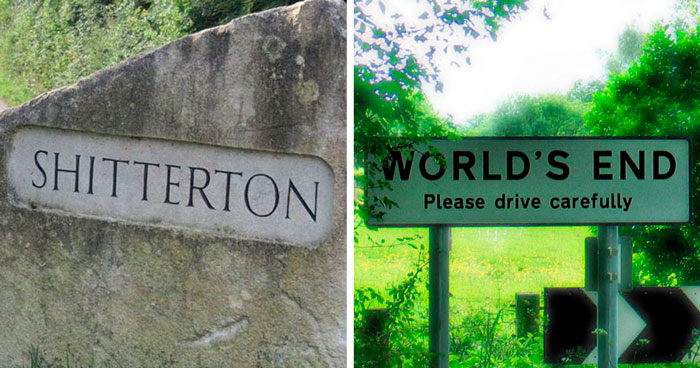
Britain has castles, cream teas, Shakespeare, rainy afternoons, and a national talent for naming places as if someone spilled alphabet soup onto a medieval map. Some UK place names sound poetic. Others sound like they were invented during a pub quiz after the third round. Yet many of the funniest UK town names are not jokes at all. They are real places with real homes, real postcodes, real history, and probably at least one resident tired of posing beside the road sign.
Before we begin, one tiny but important note: not every entry below is technically a “town.” Some are villages, hamlets, neighborhoods, parishes, or small settlements. But “32 UK Towns, Villages, Hamlets, Parishes, and Other Inhabited Bits With Hilarious Names That Actually Exist” is not exactly a headline; it is a cry for help. So we are using “towns” in the friendly travel-blog sense.
These names are funny because modern ears hear them differently from medieval ones. Many come from Old English, Old Norse, Celtic, Norman French, family names, landscape features, rivers, valleys, farms, churches, and forgotten local jokes. In other words, the map is not being rude. It is just very, very old.
Why Are UK Place Names So Weirdly Funny?
British place names often work like tiny history museums. The suffix “-ton” may point to an old farmstead or enclosure. “-ham” can suggest a homestead. “-bury” may connect to a fortified place. “Bottom” often means a valley or hollow, not what your giggling brain thinks it means. “Thwaite,” “wick,” “ley,” “ford,” “combe,” and “mouth” all carry clues about land, water, settlement, and ownership.
The comedy happens when old words survive but their meanings shift. A name that once described a wet field, a family estate, a woodland clearing, or a river mouth can suddenly sound like a punchline in modern English. That is the magic of British geography: one minute you are learning about Anglo-Saxon settlement patterns; the next, you are trying to say “Pratt’s Bottom” with a straight face.
32 UK Towns With Hilarious Names That Actually Exist
1. Shitterton, Dorset
Shitterton may be the heavyweight champion of unfortunate British place names. This small Dorset hamlet near Bere Regis is famous for its stone village sign, which was reportedly installed because ordinary signs kept disappearing. Historically, the name is linked to an old stream associated with waste water, so the modern laugh has medieval plumbing behind it. Charming thatched cottages, countryside views, and a name that makes sat-nav sound like it has lost all professionalism.
2. Scratchy Bottom, Dorset
Scratchy Bottom sounds like a medical complaint you should not Google, but it is actually a valley near Dorset’s Jurassic Coast. “Bottom” here refers to a hollow or valley, while “scratchy” likely points to rough ground. The result is a name that feels like countryside poetry written by a mischievous dermatologist.
3. Brokenwind, Aberdeenshire
Brokenwind in Scotland has the kind of name that makes school buses dangerous places for laughter. The name is real, though its origin is less certain than its comic impact. It sounds like a weather forecast delivered by a comedian: “Tomorrow will be cloudy with scattered Brokenwind.”
4. Twatt, Orkney
Twatt, in Orkney, is one of Britain’s best-known eyebrow-raising place names. The name is usually connected to Old Norse roots related to a small parcel of land or clearing. So, historically, it is perfectly innocent. Modern readers, however, may need a moment. Or two.
5. Wetwang, East Yorkshire
Wetwang is a village in the Yorkshire Wolds with a name that sounds like it escaped from a novelty T-shirt. Its origin may be Old Norse, possibly meaning a field used for legal meetings, though another explanation connects it to a wet field. Either way, the village has genuine archaeological history, including links to Iron Age discoveries. Funny name, serious past.
6. Bitchfield, Lincolnshire
Bitchfield is a real Lincolnshire village, and yes, the sign does all the heavy lifting. The name looks startling today, but like many old place names, it likely developed through historical language changes rather than modern slang. It is a reminder that English has aged like cheese: sometimes refined, sometimes pungent.
7. Pratt’s Bottom, Greater London
Pratt’s Bottom is a village in the London Borough of Bromley. “Bottom” means a valley or hollow, and “Pratt” refers to a family associated with the area. Therefore, the name is not an insult. It is geography plus genealogy. Still, if you can say “I’m spending the weekend in Pratt’s Bottom” without smiling, you may be legally declared furniture.
8. Ugley, Essex
Ugley is not ugly. In fact, it is a pleasant Essex village with countryside charm. The name was recorded historically as something like “Ugghelea,” likely meaning a woodland clearing connected to a person named Ugga. So Ugley is basically “Ugga’s clearing,” not a medieval review score.
9. Nasty, Hertfordshire
Nasty is another village whose name is much harsher than its appearance. The origin is thought to come from old wording meaning something like “at the eastern hedged enclosure.” In short: Nasty is nice. English, once again, has chosen chaos.
10. Pity Me, County Durham
Pity Me sounds like a village founded by someone who had just checked their heating bill. The County Durham name has several possible explanations, including theories involving a difficult or desolate patch of land, a shallow lake, or a shortened older name. Whatever the origin, it is one of Britain’s most emotionally dramatic addresses.
11. No Place, County Durham
No Place is a small village near Stanley in County Durham. Imagine filling out an online delivery form: “Where do you live?” “No Place.” “Please enter a valid address.” The origins are debated, with theories ranging from “North Place” or “Near Place” to a boundary dispute or a playful link to “utopia,” meaning “no place.”
12. Dull, Perthshire
Dull in Scotland has embraced its name with style. It has even been humorously linked with Boring, Oregon, and Bland, Australia, creating an international alliance of places that sound like product reviews. Dull itself is scenic, peaceful, and anything but dull if you enjoy countryside, history, and excellent deadpan tourism branding.
13. Cockermouth, Cumbria
Cockermouth is a real market town in Cumbria, and its name is far more geographical than giggle-inducing history class would suggest. It refers to the mouth of the River Cocker where it meets the River Derwent. It is also associated with William Wordsworth, which gives the name a literary dignity that almost survives roll call.
14. Beer, Devon
Beer is a coastal village in Devon, but the name is not a tribute to the pub. It likely comes from an Old English word meaning grove or woodland. Today, Beer is known for its seaside setting, cliffs, fishing history, and the fact that visitors can say, “I’m going to Beer,” and technically be making travel plans.
15. Booze, North Yorkshire
Booze is a tiny place in North Yorkshire, and the name is the kind of thing that makes hikers double-check the map. It is not a drinking instruction; it is just another old settlement name that looks wildly modern by accident. Still, “Booze, Yorkshire” sounds like a pub chain waiting to happen.
16. Curry Mallet, Somerset
Curry Mallet sounds like either a weaponized dinner or a kitchen accident. In reality, it is a Somerset village with roots going back to the Domesday era. “Mallet” is linked to a family name, while “Curry” has older geographical roots. No one is required to tenderize dinner with a hammer.
17. Barton in the Beans, Leicestershire
Barton in the Beans is a hamlet with a wonderfully cozy name. It sounds like a children’s book about a village that survives entirely on stew. The “Barton” element generally relates to an outlying farm or estate, while the bean connection reflects Leicestershire’s historical association with broad beans. Delicious? Possibly. Adorable? Absolutely.
18. Upton Snodsbury, Worcestershire
Upton Snodsbury sounds like an aristocrat who owns fourteen waistcoats and distrusts electric kettles. This Worcestershire village has a name that feels deeply, dramatically English. It is the sort of place name that makes Americans wonder whether Britain was assembled by novelists.
19. Pucklechurch, South Gloucestershire
Pucklechurch sounds whimsical, but the village has serious history. It was important in the Anglo-Saxon period and is associated with the death of King Edmund I in the 10th century. So yes, the name sounds like a fairy-tale parish, but the backstory arrives wearing armor.
20. Nether Wallop, Hampshire
Nether Wallop is one of a trio of Hampshire villages known as the Wallops, along with Over Wallop and Middle Wallop. “Nether” means lower, and “Wallop” is linked to springing water or a valley. Still, it sounds like something a cartoon knight might shout before falling into a moat.
21. Upperthong, West Yorkshire
Upperthong is a village near Holmfirth, and its name is innocent if you understand older language. “Thong” once referred to a strip of land. Modern underwear associations arrived much later, uninvited and impossible to ignore. The result is one of Yorkshire’s finest map-based surprises.
22. Fingringhoe, Essex
Fingringhoe is a village in Essex with a name that looks like your keyboard slipped on a banana peel. It is usually pronounced more elegantly than it appears, and “hoe” often refers to a spur of land or ridge. Still, written down, Fingringhoe is pure comedy typography.
23. Matching Tye, Essex
Matching Tye sounds like a dress code instruction. It is actually a village in Essex, near Matching Green and Matching. The “tye” element can refer to a common pasture or small settlement area. In modern ears, however, it sounds like someone is being very strict about formalwear.
24. Tiddlywink, Wiltshire
Tiddlywink is a small Wiltshire settlement with a name so cheerful it should come with a tiny hat. The name is real, and it shares its spelling with the parlor game. Whether you are navigating country lanes or planning a whimsical road trip, Tiddlywink delivers maximum charm per syllable.
25. Lickey End, Worcestershire
Lickey End is a village near Bromsgrove, and the name is not nearly as strange once you know the Lickey Hills nearby. But modern English does what modern English does, and suddenly a perfectly normal local name sounds like the final level in a comedy map game.
26. Westward Ho!, Devon
Westward Ho! is famous because the exclamation mark is officially part of the name. The village was named after Charles Kingsley’s 1855 novel of the same title, and the punctuation survived. Most places get a sign. Westward Ho! gets stage direction.
27. Blubberhouses, North Yorkshire
Blubberhouses sounds like a village built entirely out of sobbing whales, but it is a real place in North Yorkshire. The name may have older roots unrelated to modern “blubber.” It sits in a beautiful landscape, proving once again that the sillier the name, the prettier the scenery often is.
28. Marsh Gibbon, Buckinghamshire
Marsh Gibbon is a village in Buckinghamshire, and yes, it sounds like a damp monkey. The name is actually connected to marshy land and the Giffard family, with “Gibbon” developing through historical forms. But nobody can stop your brain from imagining a long-armed creature emerging from a bog with excellent local knowledge.
29. Great Snoring, Norfolk
Great Snoring is a village in Norfolk with a name that sounds like a championship event for tired people. The name is believed to come from an old personal name, connected to “Snear’s people,” rather than actual sleeping. Still, “Great Snoring” deserves its own pillow festival.
30. Little Snoring, Norfolk
Little Snoring is near Great Snoring, because Britain apparently believes every joke deserves a sequel. Despite the name, Little Snoring is actually the larger of the two in some modern contexts. That detail only makes it funnier. Geography has jokes; it just tells them slowly.
31. Dorking, Surrey
Dorking is a market town in Surrey, and the name has nothing to do with being a “dork” in the modern American sense. It is historically rooted, attractive, and surrounded by lovely countryside. Still, for U.S. readers, Dorking sounds like a verb for enthusiastically discussing model trains. Respectfully.
32. Bell End, West Midlands
Bell End is often listed among Britain’s funniest place names, though it is more of a locality or road-name area than a full town. Its name has historical associations that are far less cheeky than the modern reading. Residents have defended the name, and honestly, good for them. Some heritage is worth keeping, even when delivery drivers giggle.
What These Funny UK Place Names Teach Us
The funniest UK town names are not just random oddities. They show how language changes over time. A word that was practical in the 11th century can become hilarious in the 21st. A family name can sound like an insult. A valley can become a punchline. A legal field can become Wetwang.
They also reveal something lovable about British culture: people often keep the names. Instead of polishing every awkward corner off the map, communities preserve the weirdness. Some residents even lean into it with signs, souvenirs, festivals, jokes, and good-natured pride. That is why these hilarious UK town names are more than clickbait. They are tiny monuments to continuity, local identity, and the stubborn joy of not taking everything too seriously.
Travel Tips for Visiting Hilariously Named UK Places
If you decide to plan a road trip around funny British place names, remember that many are small residential communities. Some have no major attractions, no visitor center, and no convenient parking. The road sign may be the main event. Take photos respectfully, avoid blocking lanes, and do not treat someone’s home like a theme park. The joke is the name, not the people who live there.
The best way to enjoy these places is to combine them with nearby attractions. Visit Shitterton while exploring Dorset villages and the Jurassic Coast. Pair Wetwang with the Yorkshire Wolds. Add Beer to a Devon seaside route. Use Cockermouth as a Lake District stop. Let the funny name be the spark, then discover the landscape, history, pubs, churches, walking paths, and local stories around it.
Experiences Inspired by “32 UK Towns With Hilarious Names That Actually Exist”
A funny place-name road trip sounds simple: open a map, pick the silliest names, and go. In reality, it becomes a surprisingly rich travel experience. You start out chasing laughter, but you end up noticing hedgerows, church towers, local accents, weathered stone walls, old inns, narrow lanes, sheep with the confidence of traffic police, and the strange emotional power of a signpost.
The first experience is the photo moment. Everyone wants the classic “standing beside the sign” picture. It is harmless fun, but the best photos come when you treat the place with curiosity rather than just pointing and laughing. Look around. What kind of landscape shaped the name? Is there a valley, a stream, a hill, a field, a church, or an old road nearby? Many funny UK place names become less random when you see the land itself. Suddenly “bottom” really does look like a hollow. “Mouth” really is where waters meet. “Wet” may describe the soil better than any tourist brochure.
The second experience is talking to locals, when appropriate. Some residents are proud of their unusual names. Others have heard every joke since childhood and may not need your freshest material. A polite question often works better than a punchline. Ask whether the name brings visitors, whether signs have been stolen, or whether people enjoy the attention. You may hear stories that never make it into guidebooks: delivery mix-ups, wedding invitations, school jokes, souvenir hunters, and the occasional heroic campaign to keep a historic name from being “improved” by embarrassed officials.
The third experience is realizing that funny names make geography memorable. You may forget a random village on a normal drive, but you will remember Pity Me, No Place, Great Snoring, and Westward Ho! forever. That is powerful for travel writing and SEO content alike. These names invite clicks because they promise surprise, but they retain readers because they open doors into history, linguistics, and local culture. A good article should not simply list the names; it should explain why they exist and why they still matter.
The fourth experience is the joy of slow travel. Many of these places are not destinations in the commercial sense. They are not trying to sell you a giant attraction or a neon-lit experience package. They are just there, quietly existing with names that happen to break the internet. Visiting them encourages a different pace: a walk, a village green, a churchyard, a pub lunch, a coastal path, or a country lane where the biggest drama is a tractor moving at the speed of geological time.
Finally, there is the shared laughter. Funny place names are wonderfully democratic. You do not need to be a historian to enjoy them, but history makes them better. You can laugh first, learn second, and leave with more respect than you arrived with. That combination is rare. In a world full of polished branding, these real UK towns and villages remain beautifully unpolished. They are odd, old, stubborn, and unforgettable. In other words, they are exactly what makes a map worth reading.
Conclusion
The UK is packed with hilarious place names that actually exist, from Shitterton and Scratchy Bottom to Pity Me, No Place, Beer, Dull, Wetwang, and Westward Ho! Some names sound rude, some sound gloomy, some sound like snacks, and some sound like rejected characters from a fantasy novel. Yet behind nearly every laugh is a serious origin: old languages, family names, land features, rivers, churches, farms, legal fields, and centuries of local identity.
That is why these 32 funny UK town names are more than internet trivia. They are proof that language has a long memory and a sneaky sense of humor. Britain’s map may look dignified from a distance, but zoom in and it starts telling jokes in Old English.
Note: This article is written for publication and covers real UK towns, villages, hamlets, neighborhoods, and settlements with humorous or unusual names. The tone is playful, but the place-name discussion is based on genuine historical and geographic information.