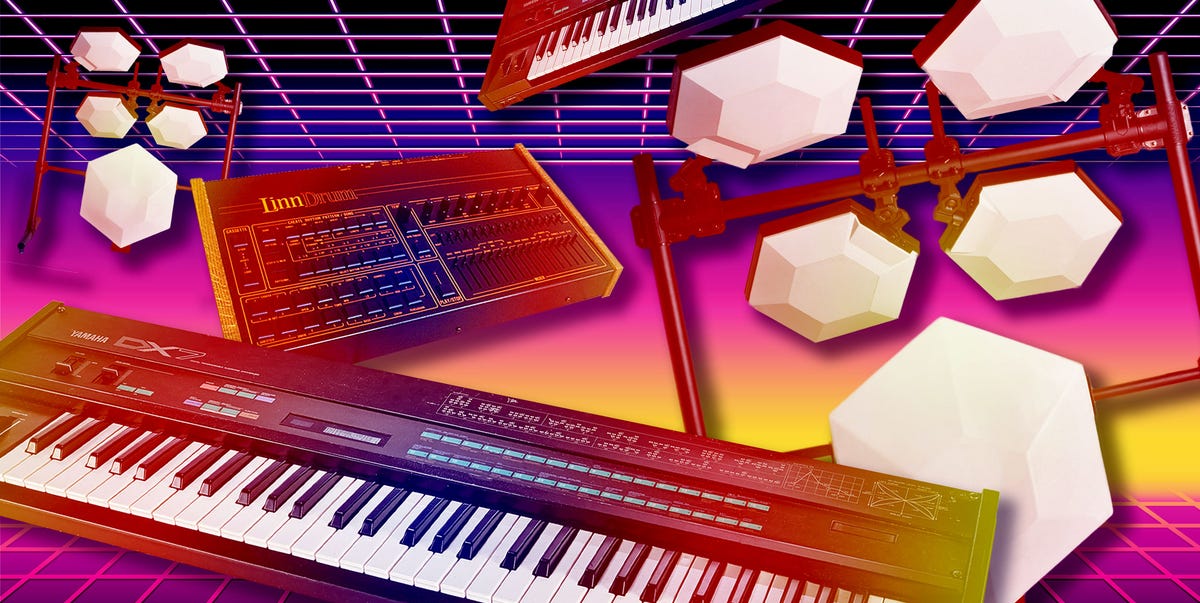
If the 1970s gave pop music bell-bottoms, guitar heroes, and disco balls, the 1980s handed it a glowing keyboard, a drum machine with attitude, and a music video budget large enough to buy a small island. The result was not just a new sound. It was a full-body makeover. Suddenly, pop songs sparkled, snapped, boomed, shimmered, and occasionally sounded like a robot had fallen in love under a neon sign.
The best ’80s music sounds and tech that changed pop music were not background details. They were the main characters. Synthesizers became hooks. Drum machines became bandmates. Samplers turned random noises into rhythm. MIDI let instruments talk to one another like a tiny electronic United Nations. MTV made artists look as important as they sounded. And somewhere in a studio, a giant gated snare drum entered the room and politely removed all subtlety from the decade.
Today, we still hear the fingerprints of 1980s music technology everywhere: in modern synth-pop, hip-hop 808 bass, retro movie scores, bedroom production, electronic dance music, and even pop ballads that want to sound expensive while staring emotionally out a rain-covered window. Let’s rewind the tape, press play, and explore the machines, sounds, and studio tricks that rewired pop music forever.
Why the 1980s Sounded So Different
The 1980s were a perfect storm of creativity and circuitry. Before the decade, many pop recordings were built around live drums, guitars, bass, piano, and analog tape. By the middle of the ’80s, studios were packed with digital synthesizers, programmable drum machines, samplers, sequencers, digital reverbs, and increasingly sophisticated mixing consoles. Music did not simply become “electronic.” It became more designed.
That word matters. A producer could now sculpt a snare drum into a thunderclap, program a bassline that never got tired, layer glassy electric piano over analog pads, or sample a voice and play it like a keyboard. Pop music became brighter, tighter, bigger, and more polished. Sometimes it was too polished, like a chrome toaster wearing sunglasses, but that was part of the charm.
One scientific analysis of the U.S. Billboard Hot 100 from 1960 to 2010 identified a major stylistic revolution around 1983. That timing is no accident. Around then, MIDI arrived, digital synths became commercially powerful, drum machines were everywhere, and music videos were turning songs into visual events. The sound of the charts shifted because the tools had changed.
MIDI: The Tiny Language That Connected the Decade
Before MIDI, electronic instruments could be brilliant but stubborn. A synthesizer from one company did not always communicate easily with a drum machine or sequencer from another. MIDI, short for Musical Instrument Digital Interface, changed that in the early 1980s by creating a standard way for gear to send performance information such as notes, timing, velocity, and control changes.
In plain English, MIDI let machines talk. A keyboard could trigger a synthesizer module. A drum machine could lock to a sequencer. A producer could build a small studio around interconnected gear instead of relying only on a giant commercial recording facility. This was revolutionary for pop music because it made precision, repetition, and layered electronic arrangement easier and more affordable.
MIDI did not carry actual audio. It carried instructions. Think of it as sheet music with electricity and better posture. That made it lightweight, flexible, and incredibly useful. Once MIDI became standard, the dream of the compact electronic studio moved closer to reality. The ’80s pop sound was not just a collection of cool instruments; it was a network.
The Yamaha DX7: The Glassy Crown Prince of ’80s Pop
If one instrument could be accused of spraying instant 1980s perfume over a track, it would be the Yamaha DX7. Released in 1983, the DX7 brought digital FM synthesis into mainstream music production. Its tones were sharp, bright, metallic, and glassy. It did not sound like a warm old analog synth trying to imitate strings in a sweater. It sounded like the future had learned jazz chords.
The DX7 became famous for electric piano sounds, bell tones, basses, plucked textures, and breathy digital patches. Its “E. Piano” style timbres became a signature of power ballads, R&B, adult contemporary pop, and glossy soundtrack music. If you have ever heard a sentimental ’80s ballad and imagined someone walking slowly through airport lighting while thinking about love, congratulations: your brain may have been visited by the DX7.
Part of the DX7’s impact came from timing. It arrived when pop producers wanted clean, modern textures that cut through radio mixes. It also supported MIDI, which made it part of the new connected studio ecosystem. The DX7 was not always easy to program, but its factory presets were so useful that many musicians simply used them as-is. In the ’80s, presets were not a crime. They were practically a chart strategy.
Roland TR-808: The Drum Machine That Refused to Stay Obsolete
The Roland TR-808 Rhythm Composer was produced only briefly in the early 1980s, but its afterlife has been enormous. At first, some musicians dismissed it because it did not sound like a real drummer. That criticism turned out to be exactly why it became legendary. The 808 did not imitate reality. It created its own reality.
Its booming kick, crisp snare, ticking hi-hats, cowbell, claps, and synthetic percussion gave producers a new rhythmic identity. The 808 was especially important in electro, hip-hop, R&B, dance music, and later trap and pop. Its bass drum could be tuned and extended into a musical low-end force, turning rhythm into melody and making speakers question their career choices.
In the context of ’80s pop music, the 808 helped normalize the idea that drums could sound electronic and still feel emotional, exciting, and deeply human. It also proved that a machine did not need to pass as a drummer to move people. Sometimes the most unforgettable groove is the one that sounds like it came from a nightclub on Mars.
The Linn LM-1 and LinnDrum: When Machines Learned to Groove Like Pop Stars
If the TR-808 sounded boldly synthetic, Roger Linn’s LM-1 Drum Computer and later LinnDrum offered a different revolution: digital samples of real drum sounds. Introduced at the beginning of the decade, the LM-1 was one of the first drum machines to use recorded drum samples. That made it attractive to artists who wanted the control of programming with a more realistic, radio-ready punch.
The Linn sound became central to early and mid-1980s pop, funk, rock, and new wave. Prince used Linn machines to create grooves that were spare, dry, funky, and instantly recognizable. The Human League, John Mellencamp, and many other artists benefited from drum programming that could feel both mechanical and stylish.
The Linn machines also changed how songs were written. Instead of waiting for a drummer to interpret an idea, artists and producers could build patterns directly. A groove could start as a programmed loop, then shape the entire song around it. This shifted power toward producers, solo artists, and studio experimenters. The drummer did not disappear, but the drum machine definitely pulled up a chair and said, “I live here now.”
Fairlight CMI and Sampling: Turning the World Into an Instrument
The Fairlight CMI was one of the most glamorous and intimidating machines of the early digital era. It was expensive, futuristic, and capable of sampling sounds so they could be played across a keyboard. For adventurous artists, this was a creative explosion. Why limit yourself to piano, strings, and drums when you could build music from voices, glass, engines, orchestral hits, or a noise your producer made while dropping a sandwich?
Sampling helped reshape pop arrangement. The Fairlight’s famous orchestral stabs, breathy vocal textures, and unusual percussive sounds became part of the decade’s sonic vocabulary. Artists such as Peter Gabriel, Kate Bush, Art of Noise, and many others explored sampling not as a gimmick but as composition. A sound could be captured, transformed, repeated, reversed, pitched, and placed into a song like a strange little jewel.
Sampling also pointed toward the future of hip-hop, electronic music, film scoring, and modern pop production. Today, nearly every digital audio workstation includes sampling tools that are more powerful than early systems that cost more than a house. The Fairlight helped prove the concept: the whole world could become a keyboard.
Gated Reverb: The Snare Drum That Ate the Stadium
No discussion of the best ’80s music sounds is complete without gated reverb. This studio effect created huge drum ambience that cut off abruptly instead of fading naturally. The result was dramatic, punchy, and completely unsubtle in the best possible way. It sounded like a snare drum had entered a cathedral, shouted one word, and slammed the door.
The sound is closely associated with Phil Collins, Hugh Padgham, Peter Gabriel, and the famous drum atmosphere that shaped tracks like “In the Air Tonight.” Once it caught on, gated reverb became a defining production move across pop, rock, and new wave. It made drums feel enormous without muddying the mix, which was perfect for radio and arena-sized emotion.
Gated reverb also represents a larger truth about ’80s production: accidents became aesthetics. A technical quirk could turn into a signature sound. Engineers and producers were not merely documenting performances; they were creating sonic architecture. And in the 1980s, that architecture often had very large shoulder pads.
Digital Reverb and Studio Polish
Beyond gated drums, digital reverb itself changed the emotional scale of pop music. Earlier recordings relied on physical echo chambers, plates, springs, and room ambience. Digital units gave producers more control over artificial spaces. A vocal could float in a bright hall. A snare could explode in a non-linear burst. A synth pad could stretch into a dream.
This helped define the glossy sound of the decade. Ballads became more cinematic. Rock drums became larger than life. Synth-pop could sound icy, spacious, and futuristic. Even intimate songs often carried a polished halo. Critics sometimes complain that ’80s production was excessive, and sometimes they are right. But excess was part of the language. The decade did not whisper “modern.” It rented a fog machine and announced it from a balcony.
Roland Juno, D-50, and the Rise of Lush Synth Texture
The Roland Juno series helped bring warm polyphonic analog synthesis to more musicians. The Juno-106, introduced in 1984, became beloved for its accessible design, solid basses, smooth pads, and famous chorus effect. It was not the most complicated synthesizer, and that was part of its genius. It sounded good quickly, which is exactly what busy musicians needed.
Later in the decade, Roland’s D-50 introduced a different kind of digital beauty. Released in 1987, it combined sampled attack portions with synthesized sustain tones and onboard digital effects. The result was lush, atmospheric, and polished. Its presets helped shape late-’80s pop, new age, film scoring, and adult contemporary music.
Together, instruments like the Juno and D-50 show that the ’80s were not only about hard drum machines and shiny FM bells. They were also about pads, atmospheres, and emotional color. Synths became a way to create mood instantly. One chord could suggest romance, mystery, luxury, heartbreak, or a detective driving through Miami at night.
MTV: When Pop Music Needed a Face, a Haircut, and Lighting
Technology changed how pop music sounded, but MTV changed how it looked. Launched in 1981, the cable channel made the music video a central part of pop success. Suddenly, a song was not just something you heard on the radio. It was something you watched, judged, replayed, and discussed with friends who had very strong opinions about jackets.
MTV rewarded artists who understood image, movement, fashion, storytelling, and attitude. Michael Jackson, Madonna, Prince, Duran Duran, Cyndi Lauper, Peter Gabriel, and many others used video to expand the meaning of their music. A great hook still mattered, but a great visual could push a song into cultural memory.
The music video era also influenced production. Songs needed memorable intros, dramatic moments, and strong identities. The sonic and visual sides of pop began working together more tightly. A synth riff could become a visual logo. A drum hit could match a cut. A chorus could arrive with choreography, smoke, or someone staring intensely through venetian blinds. Pop became multimedia before the internet made that word unavoidable.
How ’80s Tech Changed Songwriting
The tools of the 1980s did more than decorate finished songs. They changed the writing process itself. A drum machine pattern could inspire a bassline. A DX7 preset could suggest a chord progression. A sampled sound could become the hook. MIDI sequencing allowed parts to be built, edited, copied, and rearranged with new precision.
This encouraged loop-based thinking, tighter arrangements, and more producer-led creativity. Songs could be assembled in layers, almost like design projects. That approach is now standard in modern pop, hip-hop, EDM, and bedroom production. The ’80s helped move pop from the rehearsal room into the programmed studio, where composition, arrangement, engineering, and sound design began to merge.
Of course, great songs still needed emotion. Technology alone never saved a boring chorus. But the best artists used new machines to express old feelings in fresh ways: desire through a drum machine, loneliness through digital reverb, joy through synth brass, heartbreak through a glassy electric piano patch that sounded like it had its own credit score.
Why the ’80s Sound Still Works Today
The ’80s sound keeps returning because it is instantly recognizable. The combination of analog warmth, digital brightness, programmed rhythm, giant ambience, and strong visual identity gives the era a powerful personality. Modern artists borrow from it because it offers drama without apology.
Listen to contemporary synth-pop, retro wave, indie pop, R&B, electronic music, or film scores, and you will hear echoes of the decade: 808 kicks, gated snares, chorus-soaked synth pads, FM electric pianos, arpeggiated basslines, and glossy reverb. The tools have changed, but the emotional vocabulary remains useful.
The deeper reason is that ’80s music technology balanced control and character. The machines were precise but not sterile. They had quirks, limitations, and recognizable colors. A LinnDrum groove, a Juno pad, a DX7 bell, or an 808 kick does not feel generic when used well. It feels like a deliberate aesthetic choice. In a world of unlimited software options, those bold identities still matter.
Personal Listening Experiences: Hearing the ’80s Through Modern Ears
There is a special experience in listening to ’80s music today, especially if you grew up with modern streaming, laptop production, and songs that can be made on a phone before lunch. At first, the decade can sound almost too obvious. The drums are huge. The synths are shiny. The basslines often seem to arrive wearing leather gloves. But after a while, that obviousness becomes the fun. The sounds are not shy. They tell you exactly what world you are entering.
One of the best ways to understand the technology is to listen actively to a few classic tracks and focus on one element at a time. Start with the drums. Notice how some songs use machines not as replacements for drummers but as attitude generators. A programmed beat can feel icy and robotic, or it can feel unbelievably funky. The difference is in the pattern, swing, sound choice, and production. Prince’s drum programming, for example, often feels minimal but alive, proving that a machine groove can still have swagger.
Then listen for the keyboards. The Yamaha DX7’s glassy tones can make a ballad sound polished and expensive, while analog synths like the Juno create softer pads that fill the background like colored light. Once you recognize these textures, you start hearing them everywhere. The decade opens up like a museum where every exhibit has a chorus pedal.
Sampling offers another kind of listening pleasure. Early samplers had limitations, but those limits gave the sounds personality. A sampled orchestra hit or vocal chop could be dramatic, strange, and slightly unreal. Compared with today’s ultra-clean sample libraries, early digital sampling often has a crunchy confidence. It does not always sound natural, but it sounds memorable. That is usually more important in pop music anyway.
Gated reverb is the easiest ’80s effect to love and make fun of at the same time. It is ridiculous. It is magnificent. It can turn a single snare hit into a weather event. When used well, it gives a song instant drama. When overused, it sounds like the drummer is knocking over furniture in an aircraft hangar. Either way, you notice it, and that is part of why it became iconic.
MTV adds yet another layer to the experience. Watching ’80s videos today can be hilarious, stylish, awkward, and genuinely creative all at once. The budgets vary. The hair is often architecturally ambitious. But the best videos show how artists were learning a new language in real time. They were discovering that pop music could be theatrical, cinematic, fashionable, and strange. A song could now come with a universe.
For modern creators, the biggest lesson from ’80s music tech is not “use old sounds.” It is “make bold choices.” The decade’s producers were not afraid of identity. They pushed sounds to the front. They let machines be machines. They allowed studio effects to become hooks. That confidence is worth borrowing. You do not need a vintage DX7, an original 808, or a Fairlight that costs more than your neighborhood. You need the spirit of curiosity that made those tools matter.
That is why the best ’80s music sounds and tech still feel alive. They remind us that pop music changes when artists get new toys and take them seriously enough to be playful. The machines were powerful, but the real revolution was imagination. The decade plugged in, lit up, and proved that the future could dance.
Conclusion
The best ’80s music sounds and tech that changed pop music were not isolated gadgets. They formed a creative ecosystem. MIDI connected instruments. The Yamaha DX7 brought digital FM sparkle to the charts. Roland’s TR-808 and TR-909 gave rhythm a new electronic identity. Linn drum machines made programmed beats sound polished and funky. The Fairlight CMI turned sampling into high art. Gated reverb made drums enormous. MTV transformed songs into visual events.
Together, these innovations changed how pop was written, produced, marketed, and remembered. The 1980s proved that technology could be more than a studio convenience. It could define an era’s emotional language. And decades later, whether you are hearing an 808 boom in a modern hit or a retro synth pad in a movie score, the neon glow of that revolution is still very much switched on.